

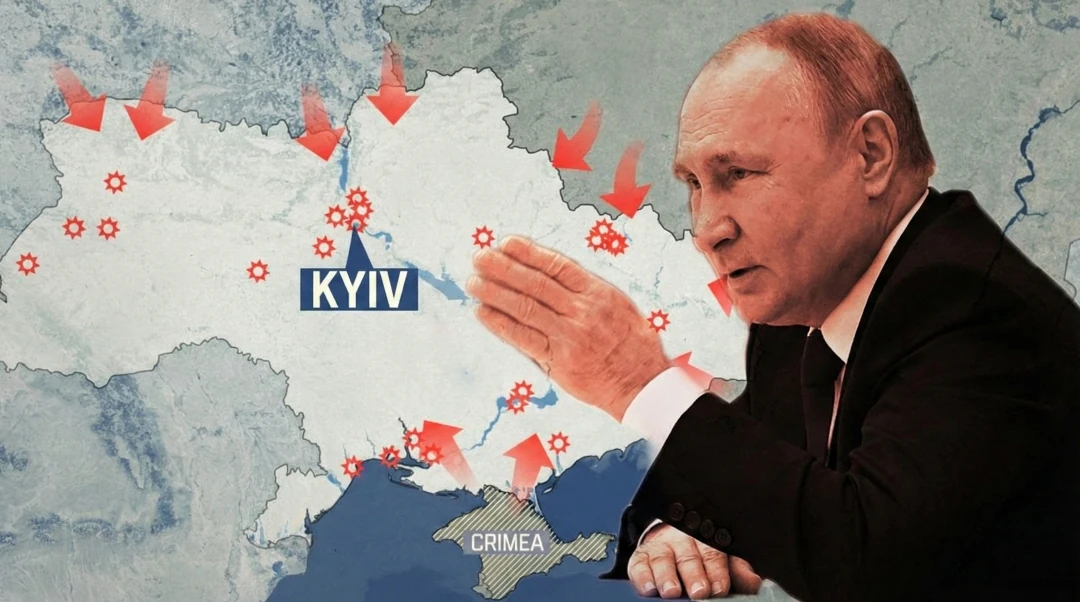
Kyiv isn’t just another dot on a battlefield map. It’s a nerve center. A symbol. A lever. And depending on who you ask in Moscow, it’s either a lost limb or a door that must never fully close.
When people ask, “Why is Kyiv important to Russia?” the usual answers sound familiar, NATO, history, security, politics. All true, but also incomplete. Kyiv’s importance runs deeper, into how Russia sees itself, how it measures power, and how it reads the future through the lens of the past.
Think of Kyiv less as a city and more as a switchboard. Political authority flows through it. Economic routes intersect there. Cultural memory lives there, too, messy, emotional, and fiercely contested.
Control over Kyiv doesn’t just change Ukraine’s trajectory; it reshapes Russia’s strategic environment in ways that ripple far beyond Eastern Europe.
There’s also a psychological dimension that rarely gets unpacked. Capitals aren’t only administrative hubs; they’re storytellers.
Paris tells France’s story. Washington tells America’s. Kyiv tells one that Russia has long claimed as partially its own, and losing control of that narrative stings in ways tanks can’t fix.
This post breaks down five strategic reasons Kyiv matters so much to Russia, but not in the usual checkbox way. We’ll look at power, yes, but also perception. Geography, absolutely, but also memory and momentum.
Along the way, we’ll connect hard facts with the quieter forces that don’t show up in military briefings yet still shape decisions at the highest levels.
1. Geopolitical and Security Significance: Kyiv as the Strategic Switchboard
To understand why Kyiv is important to Russia, you have to look at a map, and then look past it.
On paper, Kyiv sits hundreds of kilometers from Russia’s western border. In reality, it sits much closer to Russia’s deepest security anxieties. Ukraine occupies a long, flat stretch of land with few natural barriers.
Historically, that geography has worked like an open corridor, armies, ideas, and influence have passed through it for centuries. For Moscow, Kyiv is the gatekeeper of that corridor.

From a geopolitical standpoint, Kyiv isn’t just Ukraine’s capital; it’s the control room. Whoever governs Kyiv sets Ukraine’s foreign policy, defense posture, and alliance trajectory.
A Kyiv oriented toward NATO and the EU effectively pulls Ukraine, and its strategic depth, away from Russia’s sphere of influence. That shift compresses Russia’s buffer zone, something Russian military planners have obsessed over since the Cold War.
A simple comparison makes this clearer:
| Scenario | Strategic Impact on Russia |
| Kyiv aligned with Moscow | Expanded buffer, reduced NATO proximity |
| Kyiv aligned with NATO/EU | Shorter warning times, higher perceived threat |
Russian officials often frame this in stark terms: missiles in Ukraine could, in theory, reach Moscow in minutes. Whether that threat is realistic or rhetorical almost doesn’t matter. In security doctrine, perception is reality.
There’s also the signaling effect. A fully independent Kyiv choosing Western alignment sends a message to other post-Soviet states: Russia’s pull isn’t inevitable. That’s dangerous, not militarily, but politically.
Read also: The Reason Why Russia Invaded Ukraine in 2022
So when Russia fixates on Kyiv, it’s not about one city. It’s about preventing a strategic domino from tipping. Once it falls, the map, and the balance of power, looks very different.
2. Economic and Resource Leverage: Kyiv as the Brain Behind the Balance Sheet
At first glance, Kyiv doesn’t scream “economic powerhouse.” No massive oil fields. No sprawling ports like Odesa. But that’s exactly why it matters. Kyiv is where the levers are pulled.
If you’re asking why Kyiv is important to Russia from an economic angle, think less about what’s under the city and more about what flows through the decisions made there.
Ukraine has long been a transit state, especially for energy. For decades, roughly 30–40% of Russian natural gas exports to Europe passed through Ukrainian pipelines. While that share has dropped in recent years due to rerouting projects, the legacy still shapes strategy.

Control over Kyiv once meant influence over tariffs, transit fees, and political leverage in energy negotiations with Europe. Even today, regulatory decisions made in Kyiv affect infrastructure access, foreign investment, and long-term contracts.
Then there’s agriculture. Ukraine holds about 25% of the world’s black soil (chernozem), some of the most fertile land on Earth. It’s no accident Ukraine has ranked among the top global exporters of wheat, corn, and sunflower oil. Kyiv doesn’t harvest grain, but it decides who exports it, where it goes, and under what conditions.
Here’s the quiet part: food is power.
Disruptions in Ukrainian exports have already contributed to price spikes across Africa and the Middle East. Russia understands that controlling, or constraining, those flows amplifies its global influence without firing a shot.
And finally, money follows stability. A Kyiv aligned with Western financial systems pulls Ukraine deeper into EU markets, IMF frameworks, and U.S.-backed institutions. From Moscow’s view, that’s not just lost opportunity, it’s a competing economic model on Russia’s doorstep.
So while tanks grab headlines, budgets and balance sheets quietly shape the battlefield. Kyiv sits right at the center of that math.
3. Military and Strategic Depth: Why Distance Still Matters in the Missile Age
It’s tempting to think geography doesn’t matter anymore. Missiles fly fast. Drones go far. Satellites see everything. And yet, ask any military planner in Moscow why Kyiv is important to Russia, and you’ll hear a word that sounds almost old-fashioned: depth.
Strategic depth is breathing room. Time. The space between detection and impact. Russia has historically relied on it, from Napoleon to Hitler, letting distance absorb shock while logistics and weather did their work. Ukraine, and especially Kyiv, sits right inside that buffer.

If Ukraine were fully integrated into Western military structures, Russia’s western defensive line would effectively jump eastward. Early-warning times shrink. Supply routes feel exposed. Even routine NATO exercises suddenly look like rehearsals. Again, perception does the heavy lifting here.
Kyiv also matters because it anchors Ukraine’s military command. It’s where doctrine is written, procurement decisions are approved, and foreign training partnerships are negotiated. You don’t need to occupy every base if you influence the capital that coordinates them.
Consider this simplified breakdown:
| Factor | Kyiv’s Role |
| Command & control | Centralized military leadership |
| Foreign training | NATO-linked programs approved at state level |
| Logistics | Rail and road networks radiate from the capital |
There’s also the transport angle. Ukraine’s rail system, one of the largest in Europe, funnels through Kyiv. Rail wins wars quietly. It moves fuel, armor, food, and people. Control or disruption of that network complicates any long-term defense or mobilization effort.
What often goes unsaid is that Russia doesn’t need permanent control of Kyiv to gain military advantage. Even temporary pressure forces Ukraine to divert resources, harden defenses, and operate under constant uncertainty.
In modern warfare, uncertainty is a weapon. Kyiv generates, or neutralizes, a lot of it.
4. Historical and Cultural Gravity: Kyiv as the Story Russia Can’t Let Go Of
Strip away the maps, pipelines, and troop movements, and you hit something far more stubborn: memory.
One of the most emotionally charged answers to why Kyiv is important to Russia lives in history, but not the tidy, textbook kind. This is lived-in history. Argued-over history. The kind that gets invoked in speeches and whispered into national identity.
Kyiv is often described in Russian narratives as the cradle of East Slavic civilization, tracing back to Kyivan Rus, a medieval state that existed over a thousand years ago. From that foundation, Russian, Ukrainian, and Belarusian identities eventually diverged. But here’s the friction point: divergence doesn’t erase origin stories. And origin stories, once politicized, become powerful tools.
For many Russians, Kyiv isn’t “foreign” in the emotional sense. It’s framed as familiar ground, culturally Orthodox, linguistically intertwined, historically shared. That framing isn’t universally accepted (especially not in Ukraine), but it matters because it shapes public support and elite decision-making inside Russia.
Language deepens this pull. Before 2014, millions of Ukrainians spoke Russian daily, especially in urban centers. Russian media, books, and pop culture circulated freely. Kyiv was plugged into that cultural ecosystem. Losing influence there felt less like geopolitical loss and more like a family rupture, at least in Moscow’s telling.
What’s often overlooked is how selective this memory is. Empires remember unity; nations remember domination. Russia tends to emphasize shared roots. Ukraine emphasizes centuries of resistance. Same archive, different edits.
Why does this matter strategically? Because wars justified through identity last longer. They’re harder to abandon. When leaders frame Kyiv as historically “inseparable,” compromise starts to look like betrayal.
In that sense, Kyiv isn’t just territory. It’s a story Russia keeps trying to finish, despite Ukraine insisting it’s already written a different ending.
5. Psychological and Symbolic Power: Why Kyiv Is Bigger Than Its Borders
Some cities change wars without changing hands. Kyiv is one of them.
If you really want to understand why Kyiv is important to Russia, look at what capitals represent. They’re not just administrative hubs; they’re emotional shortcuts. Capture the capital, and you claim legitimacy. Fail to break it, and the narrative cracks.
Kyiv functions as Ukraine’s symbolic spine. It’s where protests erupt, where presidents flee or stand their ground, where history visibly bends. The 2014 Maidan uprising didn’t happen in a random city, it happened in Kyiv, broadcast to the world in real time. That image still lingers in Moscow’s strategic memory.

For Russia, forcing Kyiv to submit, politically or psychologically, would signal that Ukraine’s independence has limits. Even without permanent occupation, destabilizing the capital pressures everything else: investor confidence, public morale, diplomatic leverage. Capitals set the emotional weather for a country.
There’s also the audience beyond Ukraine. A compliant or weakened Kyiv would send a message to neighboring states, Moldova, Georgia, even parts of Central Asia, that resistance carries a high cost. Conversely, a Kyiv that holds firm becomes a symbol of defiance, which is arguably more dangerous.
Here’s the paradox: the harder Kyiv is to control, the more valuable it becomes as a symbol. Each failed attempt, each resilient response, quietly flips the script.
From a psychological warfare standpoint, Kyiv is the loudest amplifier in the region. Whatever happens there echoes outward, into Russian domestic politics, into NATO debates, into global perceptions of power and credibility.
In the end, Kyiv matters not just because of what it does, but because of what it proves. And for Russia, that proof cuts both ways.
Why Kyiv Still Sits at the Center of Russia’s Calculations
So, why is Kyiv important to Russia? After peeling back the layers, the answer isn’t a single reason, it’s a convergence.
Kyiv is strategy and symbolism fused together. It’s a political switchboard, an economic decision-maker, a military nerve center, a historical mirror, and a psychological amplifier, all at once. Very few cities carry that much weight across so many dimensions. Fewer still sit so close to a rival’s sense of identity.
What makes Kyiv especially disruptive to Russian strategy is that it refuses to stay in one category. When Russia treats it as a security problem, Kyiv responds as a political actor. When it’s framed as shared heritage, Kyiv answers with sovereign choice. Every attempt to define the city on Moscow’s terms seems to generate an opposite reaction.
There’s also a quiet irony here. The more Russia insists that Kyiv is inseparable from its own history and security, the more central Kyiv becomes to Ukraine’s modern identity as something distinct. Pressure hardens boundaries, cultural ones included.
From a long-term perspective, Kyiv’s importance may actually be growing. Demographics, technology, and information warfare all tilt influence toward capitals that can mobilize people, narratives, and alliances quickly. Kyiv has shown it can do all three under extreme stress.
In other words, Kyiv isn’t important because it’s weak or easily captured. It’s important because it’s resilient, and visible. Every choice made there sends signals far beyond Ukraine’s borders.
That’s what makes Kyiv such a strategic obsession. Not because it guarantees control, but because it never does.
