

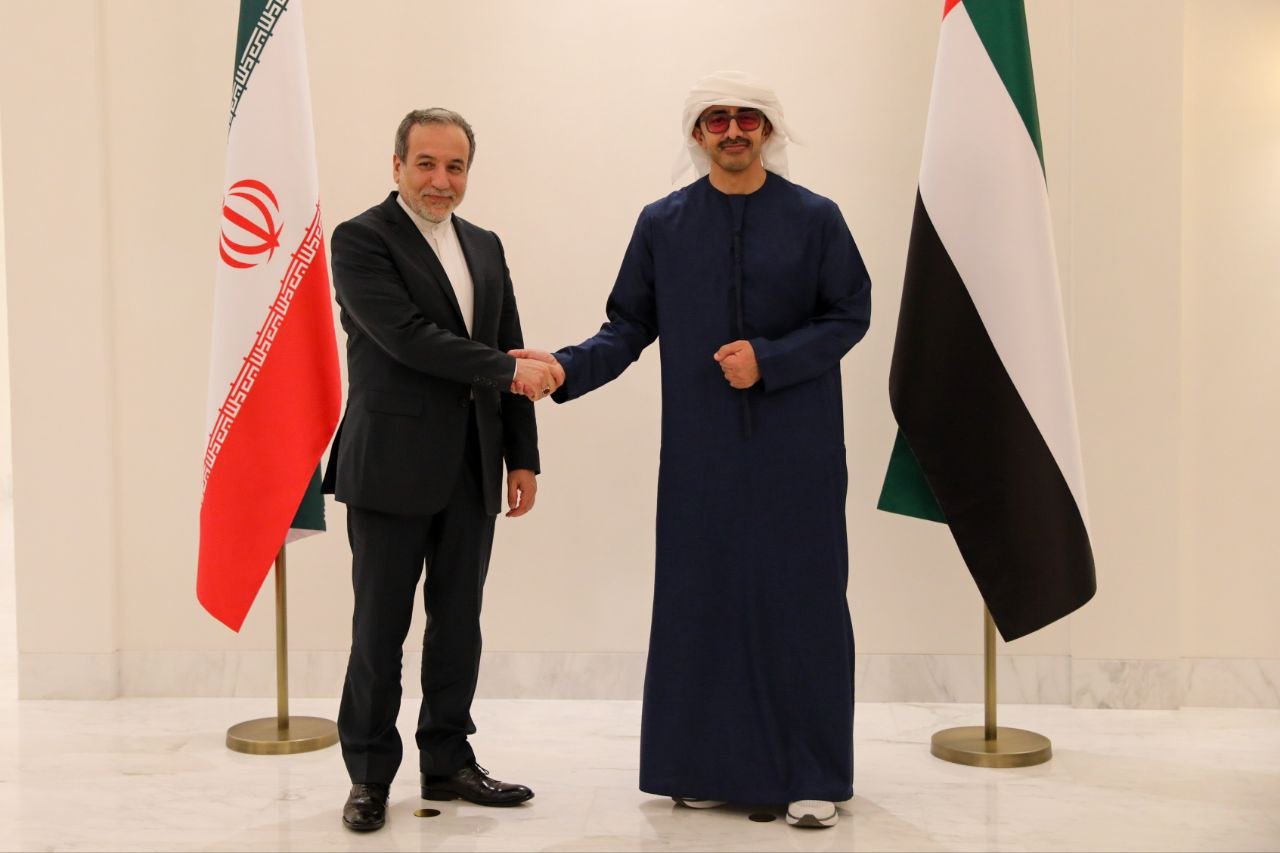
During the recent protests in Iran, most Gulf states quietly but actively pushed back against calls in Washington for military strikes. Their judgment was simple: Escalation would almost certainly destabilize the region without producing meaningful political change inside Iran, while leaving Gulf cities, infrastructure, and populations directly exposed to retaliation. At the core of Gulf reluctance lies a fear of chaos rather than a preference for regime continuity. Policymakers worry about uncontrolled Iranian collapse, including state fragmentation, militia spillover, refugee movements, nuclear or radiation leaks, and severe disruptions to energy markets that would affect Gulf states.
This position reflects a deeper reality and shifting regional threat perceptions. Gulf states no longer see themselves as distant observers of Iran crises, but as frontline stakeholders. What happens inside Iran now directly shapes their own national security. Yet the protests and uncertain trajectories for Iran have exposed the limits of Gulf hedging strategies. Hedging has helped contain tensions and avoid escalation, but as a strategy it is a reactive approach limited to crisis management rather than shaping outcomes. As uncertainty in Iran becomes structural rather than episodic, relying on risk avoidance turns hedging into a constraint. By focusing primarily on deescalation above all else, Gulf states may succeed in limiting the immediate fallout, but they will also be passive as political and security dynamics in Iran evolve in ways that will define their own security environment.
The recently reconvened Oman-led U.S.–Iran talks showcase the urgency of deescalation and the narrow window to prevent further conflict. For the first time in decades, the Gulf has an opportunity to move beyond crisis avoidance to actively shape outcomes in ways that protect its own interests. Gulf states must then move from hedging and crisis management toward proactively shaping Iran’s trajectory through coordinated diplomatic, economic, and security engagement.
Strategic Autonomy
The Gulf states’ growing interest in strategic autonomy reflects accumulated doubts about the reliability and effectiveness of external security providers. Overreliance on the United States has become increasingly untenable, as Gulf states have grown doubtful that Washington can manage the escalation it initiates, deter retaliation against Gulf partners, or take responsibility for the aftermath of a crisis that unfolds on their doorstep. This skepticism has become more visible as Gulf states have been reluctant to support military action against Iran. The June 2025 12-Day Israel–Iran War notably saw an Iranian strike on Qatar. While it was signaled by Tehran ahead of time, it still reinforced fears that escalation can expand quickly impacting Gulf security. Moreover, since the 2023 Saudi-Iranian détente, the Gulf states have shown a preference for mediation, diplomacy and crisis management.
Israel, too, is increasingly viewed in Gulf capitals not as a stabilizing security partner, but as an actor whose escalation agenda risks pulling the Gulf into conflicts while leaving it to absorb much of the resulting costs. Nor do the various unilateral mechanisms and new security arrangements underway — such as Saudi Arabia–Pakistan or the United Arab Emirates–India — alleviate the Gulf’s immediate security dilemma. Only through building local, joint defense capacities will Gulf security be better served but that project will be decades in the making. Lessons from the occupation of a Gulf state (Kuwait) in 1990-91 were not fully absorbed as Gulf defense capabilities and integration continue to be a work in progress. This can be seen in the reaction and exposure of the Gulf states to the 2025 Iranian and Israeli attacks on Qatar and the measured Joint Defense Council statements that followed in September and November 2025.
These circumstances reinforce the Gulf states’ long-term goal of achieving strategic autonomy. Yet that objective cannot emerge through distancing alone. It requires Gulf capacity to shape outcomes rather than insulate against them. Much of the external policy debate in Washington and Tel Aviv continues to treat Iran through a binary lens of regime survival or collapse, assuming that coercive pressure will eventually produce one of the two outcomes. For Gulf states whose exposure to this instability is real rather than abstract, this binary is detached from reality. Multiple futures are plausible: Iran could become more inward looking and fragmented, experience elite-led transition, or gradually adapt through pragmatic calibration, particularly if Omani-led diplomacy gains traction. The question for the Gulf is not which outcome emerges, but whether the Gulf can play any meaningful role in shaping it.
Gulf Leverage and its Underuse
If hedging and strategic autonomy provide no quick fixes, the central question becomes whether the Gulf possesses meaningful leverage over Iran’s trajectory. Gulf thinking is constrained by the belief that they possess limited leverage over Iran’s trajectory. While such leverage is limited, it can be significant when deployed collectively and effectively. At the same time, Gulf leverage should not be overstated. Sanctions regimes, Iran’s domestic political economy, and the centrality of security institutions in decision-making limit the extent to which external economic or diplomatic engagement can alter Iran’s core strategic posture or internal political balance. Gulf tools are therefore unlikely to shape regime survival, ideological orientation, or major security decisions. Their impact lies instead in shaping incentives at the margins. The value of such leverage is gradual and indirect, but in a context of prolonged uncertainty even marginal influence can accumulate strategic significance. The challenge is less about lacking tools than about reaching an agreement on when and how to use them and how much risk exposure the Gulf states are prepared to accept.
Economic and infrastructural leverage remains significant. Trade, transit access, ports, and airspace all impact Iran’s regional connectivity. Energy interdependence including electricity provision, refining capacity and shipping creates additional channels of leverage. Investment flows provide further engagement opportunity even under sanctions constraints.
Equally important has been the Gulf states’ diplomatic capital. Collectively and individually Gulf states have significant mediation access and influence in Washington that is being more frequently deployed not just for Iran but also for Gaza, Russia–Ukraine, Venezuela and beyond. And regional mechanisms such as security arrangements, crisis communication channels, coordinated refugee and humanitarian planning allows Gulf states to manage spillover.
The United Arab Emirates is Iran’s second trading partner after China at $28.2 billion in 2024 and Qatar is a partner to the South Pars/North Dome field which provides over 70 percent of Iran’s gas. Saudi diplomacy, alongside Qatar and Oman, spared Iran an inevitable showdown with the United States last January. Taken together, the Gulf states have various economic and diplomatic tools at their disposal that can influence Iran and impact its strategic calculus, if channeled collectively and consistently.
While none of these tools can determine Iran’s evolution on their own, they offer incentives to reduce volatility and shape the context around which Iranian actors will operate. Thus far, they remain largely underused because the Gulf states have sought to avoid friction with the United States, limit their exposure to risk, and because of intra-Gulf divergences.
Moving Forward
A more credible Gulf strategy toward Iran therefore requires operationalized scenario planning that moves beyond the binary of regime survival versus collapse and links plausible trajectories to specific diplomatic, economic and security tools. Also knowing that a crisis is on the horizon, the Gulf states can agree on red lines, burden sharing, communication channels, and humanitarian responses before a crisis unfolds.
To arrive at lasting outcomes, a viable strategy has to start with an aligned weltanschauung that translates into an integrated policy toolkit and actions. The Gulf states need to first determine what they stand for and aspire to besides the bare minimum of regime preservation and uninterrupted economic returns. Since those two objectives are predicated on domestic calm that in turn demands a stable neighborhood, sustaining both and adopting other goals necessitates an aligned worldview. This does not currently exist.
Intra-Gulf disputes, whether the ongoing Saudi-Emirati one or the previous conflict with Qatar, reinforce the Gulf states’ differing routes to arriving at regime survival and comfortable financial returns. The bets on political Islam, nonstate actors, or the current state system have not — at least to date — yielded game changing returns to any of the Gulf states. Consolidating their approach or even coming to terms with their differences and ways of operation will go a long way in nurturing streamlined Gulf scenario planning for what is to come in Iran. The Gulf is not there yet. Arriving at a common approach toward Iran is a much-needed prerequisite for their leverage to matter and scenario planning to succeed. Though divergences are common, the Gulf states tend to come together at times of crises. An unstable Iran, despite the scenario it finds itself in, qualifies as one such crisis. Without at least minimal convergence on acceptable risk thresholds toward Iran, scenario planning will be an ineffective intellectual exercise. Such functional convergence would not eliminate intra-Gulf competition, but it would allow for operational scenario planning without requiring full strategic alignment.
A prosperous region that is comfortable in its skin and in command of its tools is a third objective that has been increasingly reverberating across the region. Increasing agency and indigeneity are the hallmarks of an aspiring new order in the Gulf. Gulf leaders have increasingly voiced this third objective in the past decade, whether in Gulf Cooperation Council summit declarations, the Gulf’s 2024 Vision for Regional Security, or in the actions of its most ambitious capitals (Abu Dhabi, Doha, and Riyadh). Those leaders have demonstrated more than once a willingness to shape outcomes in various parts of the region (Yemen, Syria, Sudan, Egypt) and across the world, whether through mediation, investments, or enlisting in new partnerships (such as the Brazil–Russia–India-China–South Africa Group) or developing new connectivity roads (as in the India–Middle East–Europe Economic Corridor). This ambition, however, cannot be achieved if Iran’s trajectory continues to be shaped through external confrontation rather than regional incentives and constraints. While elements of growing prosperity and agency are in the works in the Gulf, they have been on display in varying degrees for some time in Iran, Israel and Turkey, the three main non-Arab states in the region.
The lessons of the past few years reinforce this logic. After the attacks on Saudi oil installations in 2019 and Abu Dhabi airport in 2022 garnered a muted reaction from the Trump and Biden administrations, the Gulf states learned the hard way the limits of U.S. security guarantees. That spurred a rapprochement with Iran and Turkey and an accelerated recalibration with other security partners, including the United Arab Emirates’ and Bahrain’s normalization with Israel in 2020. Yet Israel’s increasingly destabilizing behavior in the region, especially post-Oct. 7, 2023, has cast doubts in several Gulf capitals about the durability and benefits of a regional security architecture reset that integrates Israel. Going local better serves the interests of Gulf policymakers: developing a Gulf-centric regional order that eventually expands across the region and attempts to accommodate others in the process. Seeking autonomy aligns with recent Gulf policy debates and thinking in Gulf capitals, but implementing such a policy will be difficult if Arab Gulf states are not proactively influencing their immediate neighbors’ courses of action as they have, for instance, in Syria. This is especially pressing when the other side of the Gulf (Iran) remains weak, unstable, or in flux along paths that fall outside the collapse-survival binary.
The implications of moving beyond hedging become clearer when translated into plausible Iranian trajectories. The following scenarios illustrate how Gulf tools and priorities would differ depending on Iran’s internal evolution.
Scenario 1: Prolonged Internal Unrest, Containment, and State Fragmentation
In this scenario, Iran does not collapse outright, but neither does it stabilize. Protests ebb and flow, the state becomes more inward looking, and governance grows uneven across regions. Power increasingly fragments among formal institutions, security organs, and informal actors, while economic pressure and sanctions deepen social strain. Iran remains intact on paper, but weaker, more unpredictable, and more prone to internal and external spillovers.
The Gulf states cannot afford to be bystanders of another U.S.-led reconfiguration of regional states. Like some did in Syria, the Gulf states should capitalize on a first mover advantage catering to the conditions on the ground while shaping them to serve both the interests of the Gulf and the Iranian people. There is a need to engage with the system on all fronts and lobby for sanctions relief where possible, as Iraq has done the past few years to meet its electricity needs.
The Gulf states need to engage with the fragmented Iranian landscape even if it invites the wrath of the United States and risks exposure to its sanctions. Such an approach would carry significant costs and should not be treated lightly. Exposure to secondary sanctions could affect Gulf financial institutions, complicate relations with Washington, and risk empowering sanctioned entities within Iran’s economy. Any engagement would therefore require careful calibration, prioritizing sectors with humanitarian or infrastructural relevance, maintaining transparency with international partners, and ensuring that engagement does not undermine broader sanctions frameworks. The objective would not be sanctions circumvention, but limited engagement designed to manage spillover risks and preserve channels of influence under constrained conditions.
Iranian state-owned enterprises and other businesses have long lobbied for Gulf capital. It would transform the Gulf in Iranian eyes from a transit, re-export hub (Dubai) and an indolent energy partner (Doha) to a proactive, critical player in internal economic considerations. What makes this a possible option is a shifting U.S. landscape. The Trump administration can be convinced to exempt the Gulf states from U.S. sanctions if they present a credible unified strategy toward Iran. Economic traction translates to power and a pathway for domestic stabilization. Such an approach would limit spillovers across the Gulf and other spaces. Regional engagement amid larger containment and internal unrest gives the Gulf states a better standing in — and understanding of — Iran.
Scenario 2: Elite-led Transition
In this scenario, Iran does not experience mass collapse or revolutionary change, but power shifts take place within the system itself. Leadership transitions occur through elite bargaining, succession of the Supreme Leader, or gradual sidelining of key figures, producing a rebalanced but still recognizable state. The system survives, but with new centers of gravity, altered priorities, and internal competition among political, security, and economic elites. Change is real, but it is managed from within and remains opaque to outsiders.
In such a scenario, misreading internal dynamics or favoring one group over another is possible and can backfire. It would be mitigated by a multifaceted relationship building exercise that shields the Gulf states from unintended consequences and surprises. Falling prey to the default mode of working with one senior channel of government while sidestepping other voices, rising stars, or influential elements across the system can backfire. A modified strategy involves activating and multiplying diplomatic tracks beyond the official line. It would also entail engaging with middle management, universities, think tanks, research centers, seminaries, and cultural houses. Consolidating this know how will empower and complement Gulf policymaking, diversifying its toolkit. Widening the range of contacts and relationships will not fully shield the Gulf from black swans or readily guarantee transparent access and deep know-how, but it will build the necessary expertise and contacts that limit the aftershocks of leadership transfers. This front-facing behavior should be coupled with an accelerated internal state capacity building in Iranian studies — language, culture, politics, and economics. Investing in relationship building and internal resources are the best guarantors for a healthy, reliable relationship.
Scenario 3: Gradual Pragmatic Adaptation
In this scenario, Iran slowly adjusts rather than ruptures. Facing sustained social pressure, economic constraints, and regional realities, the state incrementally recalibrates its governance style and external posture, perhaps also making a deal with the United States to alleviate some sanctions pressure. Repression remains, but is selectively moderated, foreign policy becomes more pragmatic, and the system seeks stability through adaptation rather than confrontation. The regime does not liberalize in a Western sense, but it evolves enough to reduce threat perceptions and buy itself time.
This scenario builds on what the Gulf states have been doing since the Saudi-Iran détente of 2023. This is a long-term process that can unfold in various ways. But investing in statehood and inviting a more moderate, non-threatening attitude from the Iranian regime has been a long-held demand of the Gulf states. It would entail prioritizing the relationship and building the long-sought regional security architecture that meets Iran’s demands for less Western presence and the Gulf’s aim for less Iranian intervention. It means moving beyond symbolic normalization and slow confidence building towards institutionalized cooperation. The first step would be to agree to and activate joint principles in a much faster pace than that underway through the China-brokered Iran–Saudi rapprochement of 2023. It would also involve working on tangible projects such as developing a joint maritime security strategy and reviving a Gulf-wide regional security architecture that goes beyond the Gulf-centric Vision for Regional Security and the 2020 Iran-centric Hormuz Peace Endeavor.
Taken together, these scenarios combined offer the Gulf a framework for a more proactive policy. Such an approach would require greater Gulf coordination and buy-in, if not reciprocity, from Iran. But the absence of Iranian responsiveness should not dissuade the Gulf states from pursuing what is in their control: expanding their channels of engagement and strengthening their capacity to shape the regional environment.
As Iran’s trajectory becomes more uncertain, it is clear that passivity carries costs and that dynamics inside Iran may evolve in ways that directly affect Gulf security without Gulf input or leverage. Preparing for the uncertain scenarios on the horizon requires limited, managed engagement today.
Hedging has helped the Gulf states to manage exposure to escalation, but it does not shape outcomes. Moving from crisis management toward selective coordinated engagement does not guarantee outcomes in Iran, but reduces risk for the Gulf. The central risk for the Gulf states is not that Iran collapses but that it evolves without Gulf influence. At a moment of regional flux, the Gulf has a unique opportunity to depend less on avoiding risk and instead develop the capacity to influence the environment around it.
Bader Al-Saif, Ph.D., is assistant professor of history at Kuwait University and associate fellow at Chatham House. He specializes in the Arabian Peninsula, namely its geopolitics, public policy, culture, reform dynamics, transnational trends, and gender studies.
Sanam Vakil, Ph.D., is the director of the Middle East and North Africa Programme at Chatham House and the James Anderson professorial lecturer at Johns Hopkins SAIS Europe. Her expertise spans Iranian and Gulf politics, regional security dynamics, and U.S. foreign policy, with a particular focus on the evolving strategic landscape of the Middle East and its global connectivity.
Image: Iranian Ministry of Foreign Affairs
