

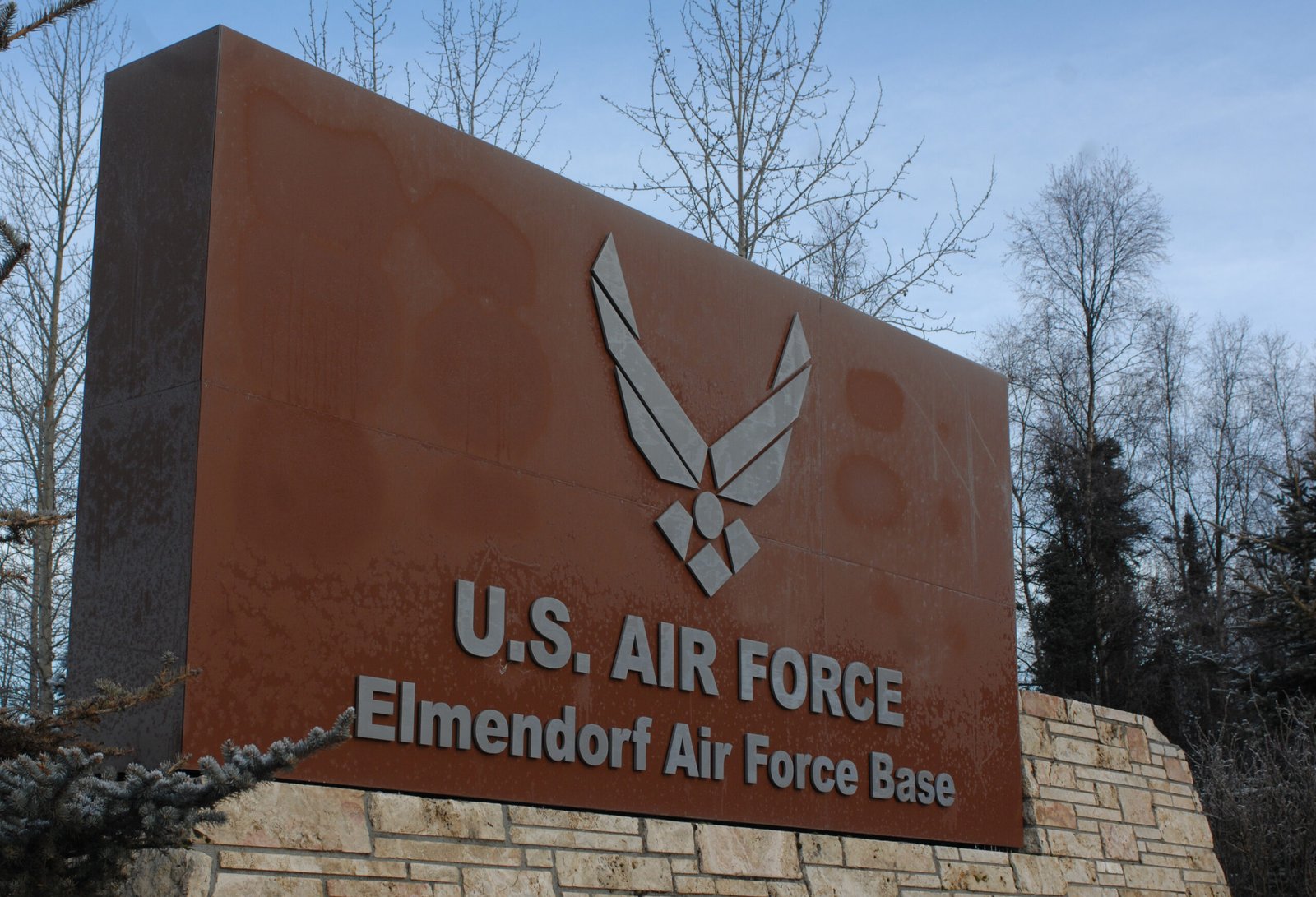
The Department of the Air Force is inviting artificial intelligence companies to submit proposals to build potentially a dozen data centers on 4,700 acres located across Air Force and Space Force installations in Alaska, according to an April 10 announcement. The move is part of a larger White House push to beef up the nation’s infrastructure to support the growing need for AI technology.
Along with releasing an April 10 request for lease proposal, the service will host an April 23 industry day to discuss plans for building data centers across three Alaska installations, according to the announcement:
- Joint Base Elmendorf-Richardson
- Clear Space Force Station
- Eielson Air Force Base
After the event, interested companies may participate in site visits at Elmendorf Richardson on April 28, Clear on April 29, and Eielson on April 30.
Twelve parcels have been identified for potential development, the announcement states, adding that the selected developer “will be responsible for all aspects of the project, including financing, permitting, construction and long-term operation of the facilities,” according to the announcement.
“This is a unique opportunity for a true public-private partnership,” Robert Moriarty, deputy assistant secretary of the Air Force for Installations, said in the announcement. “By making this land available, we are supporting the growing demands of the AI industry while generating value that directly supports our missions and the readiness of our Airmen and Guardians.”
The move follows a similar announcement in March that the Army has selected two companies to enter into exclusive negotiations to build and operate a commercial hyperscaled data center on about 1,384 acres on Fort Bliss, Texas, and another on approximately 1,201 acres at Dugway Proving Ground, Utah.
The Air Force previously announced in October that it is offering space on five other installations for companies to build AI data centers. In an Oct. 15 notice, the service announced it is seeking proposals from industry to lease parcels of land for up to 50 years at:
- Arnold Air Force Base, Tenn.
- Edwards Air Force Base, Calif.
- Joint Base McGuire-Dix-Lakehurst, N.J.
- Davis-Monthan Air Force Base, Ariz.
- Robins Air Force Base, Ga.
In January, a trio of tech firms—OpenAI, Oracle, and SoftBank—joined Trump at the White House to announce they were creating a new company, Stargate, that would invest up to $500 billion in AI infrastructure projects.
AI data centers house the computing hardware and other IT infrastructure needed to process information and deliver AI applications to users. They range in size, but can span hundreds of acres and consume large amounts of electricity and water.
The service has been studying potential locations to host AI data centers since early this year, following an executive order issued by Trump in January that directed the Secretary of Defense to “identify suitable sites on military installations” for the infrastructure.
The April 10 lease opportunity announcement “signals a strategic effort by the service to leverage its real estate portfolio for technological advancement while creating new economic opportunities,” the announcement states.
The announcement added that the “Air Force cannot afford to disregard or discount the value of any asset, and we must optimize the real and potential value of those assets.”
Companies have until May 29 to submit proposals. Deadlines for registration are April 16 for the virtual event and April 20 for the site tours.
AI data centers have been a source of controversy in local communities, where residents have sometimes protested their construction over concerns about water and electricity consumption.
The state of Virginia, which has the highest concentration of data centers globally, funded an independent study, which found that by 2040, residents’ energy bills could increase by $14 to $37 more per month, Task and Purpose reported.
The Air Force has said that it plans to choose proposals that “minimize and mitigate impact and risk to DAF missions, government functions, and the surrounding community” and that offer a plan to ensure utilities at the base and the surrounding community remain accessible and affordable.
