

The joint U.S.-Israeli operation against Iran has entered its second day. The Iranians, as well as their regional proxies, continue to retaliate in kind against multiple countries in the region.
Readers can catch up on the events of the first day of the war with our initial rolling coverage here.
The death of Supreme Leader Ayatollah Ali Khamenei, now confirmed by Iranian authorities, has created a new dimension to the conflict. The regime in Tehran has pledged to avenge Khamenei, and has also announced 40 days of public mourning.
Israel’s Channel 12 has reported that 30 munitions were dropped on the Supreme Leader’s compound.
Speaking with CBS News‘ Robert Costa by phone earlier tonight, President Donald Trump suggested that a new diplomatic resolution to the conflict may now be within reach. It is “much easier now than it was a day ago, obviously, because they [the Iranians] are getting beat up badly,” he said.
“Yes, I think so. There are some good candidates,” Trump added when asked if he had someone he would like to see lead Iran now. He also said he knew who was running Iran following Khamenei’s death, “but I can’t tell you.”
“It’s what we expected. Less than we thought, actually. We thought it’d be double,” the President also said about Iran’s retaliatory attacks so far.
The rest of our new rolling coverage continues below, with the most recent updates at the top.
UPDATE: 6:05PM EST—
A flight of four B-2 Spirit stealth bombers returning to Whiteman Air Force Base in Missouri from bombing Iran had to divert to Dyess Air Force Base in Texas. The aircraft — with the callsigns PETRO41, PETRO42, PETRO43, and PETRO44 — reportedly altered their course due to weather issues at Whiteman. You can read more about this mission in our story here. A video of some of the jets landing can be seen below.
UPDATE: 6:00PM EST—
Imagery has emerged showing what appears to be one of the more exotic participants in the U.S./Israeli campaign being waged against Iran: the secretive RA-01 drone operated by the Israel Defense Forces. A video of the drone operating in daylight purports to show it over Tehran, but that cannot be verified at this point.
The existence of the highly classified stealth drone, used for covert missions, emerged from an unauthorized disclosure of U.S. intelligence documents back in 2024, as we discussed at the time. Israel is presumed to operate at least a pocket fleet of these long-range stealth drones capable of gathering intelligence and possibly also conducting strikes.
UPDATE: 5:45PM EST—
For the second time since the operation started, President Trump has posted a video statement exclusively on his Truth Social platform. In it, he warned that combat operations would continue until all of Washington’s objectives are achieved.
“Combat operations continue at this time in full force, and they will continue until all of our objectives are achieved. We have very strong objectives,” Trump said. He confirmed that three U.S. service members had been killed and said there would likely be more casualties.
“As one nation, we grieve for the true American patriots who have made the ultimate sacrifice for our nation, even as we continue the righteous mission for which they gave their lives,” he said. “And sadly, there will likely be more before it ends.”
In justifying the operation, Trump said: “An Iranian regime armed with long-range missiles and nuclear weapons would be a dire threat to every American… I once again urge the Revolutionary Guard, the Iranian military police, to lay down your arms and receive full immunity or face certain death.”
UPDATE: 5:40PM EST—
Turkish President Recep Tayyip Erdogan has issued a message of condolence following the death of Iran’s supreme leader.
In a post on X, Erdogan wrote: “I extend my condolences to the esteemed Khamenei, praying that the Almighty Allah grants him mercy, and offer my sympathies to the brotherly people of Iran; I convey my condolences on behalf of my country and my nation.”
He added: “Together with the people of Iran, we in Turkey will steadfastly continue our efforts to ensure that all our friends and brothers in the region regain the peace and stability they deserve, that the conflict raging in our region comes to an end, and that we return to diplomacy.”
UPDATE: 4:30PM EST—
The U.K. government has more details of the revised level of support it is willing to provide to the United States in its campaign directed against Iran. The United Kingdom is now offering the U.S. military to use its bases for strikes targeting Iranian missile sites.
In a video shared on social media, British Prime Minister Keir Starmer said: “Our partners in the Gulf have asked us to do more to defend them, and it’s my duty to protect British lives.
“We have British jets in the air as part of coordinated defensive operations which have already successfully intercepted Iranian strikes.
“But the only way to stop the threat is to destroy the missiles at source. In their storage depots or the launchers which are used to fire the missiles. The United States has requested permission to use British bases for that specific and limited defensive purpose.
“We have taken the decision to accept this request — to prevent Iran firing missiles across the region, killing innocent civilians, putting British lives at risk, and hitting countries that have not been involved.”
UPDATE: 4:20PM EST—
President Donald Trump today provided some more details on what the administration hopes the outcome of the strikes will be.
“There are many outcomes that are good. Number one is decapitating them, getting rid of their whole group of killers and thugs,” the president said. “And there are many, many outcomes. We could do the short version or the longer version.”
As for the rationale behind launching the new campaign, Trump contradicted public comments from the Iranian regime, which said it would not develop a nuclear weapon, but that it wanted to reserve the right to develop nuclear technology for non-military purposes:
“They weren’t willing to stop their nuclear research. They weren’t willing to say they will not have a nuclear weapon,” Trump said.
UPDATE: 4:10PM EST—
According to a report from CNN, U.S. and Israeli and intelligence agencies spent months tracking Khamenei, and waiting for the right moment to strike:
They were monitoring for his daily patterns — where he lived, whom he met with, how he communicated and where he might retreat under threat of attack, five people familiar with the matter told CNN. They were keeping tabs, too, on Iran’s senior political and military leaders, who rarely gathered in the same place with the ayatollah, the country’s supreme leader for nearly four decades.
The opportunity came on Saturday morning, when top Iranian officials, including Khamenei, planned to meet at the Tehran compound that was home to the offices of the ayatollah, the Iranian presidency and the national security apparatus.
One Israeli source told CNN that the overly cautious supreme leader felt less vulnerable during daylight hours, exactly when he was targeted.
UPDATE: 4:00PM EST—
Earlier today, U.S. Central Command confirmed the first U.S. casualties of the conflict. We now know that the three personnel that were killed in action were stationed in Kuwait.
Meanwhile, more than 200 people have been killed across Iran and more than 700 injured, according to the Red Crescent on Saturday.
UPDATE: 3:50PM EST—
In its latest announcement of the campaign so far, the U.S. military says it has carried out strikes against over 1,000 Iranian targets since Saturday.
U.S. Central Command lists these targets as follows:
- Command and Control Centers
- IRGC Joint Headquarters
- IRGC Aerospace Forces Headquarters
- Integrated Air Defense Systems
- Ballistic Missile Sites
- Iranian Navy Ships
- Iranian Navy Submarines
- Anti-ship Missile Sites
- Military Communication Capabilities
Donald Trump says the attack on Iran could last for a month.
Speaking to the Daily Mail, he said: “It’s always been a four-week process. We figured it will be four weeks or so. It’s always been about a four-week process so — as strong as it is, it’s a big country, it’ll take four weeks — or less.”
Commenting on the first deaths of U.S. service personnel in the fighting, the president said: “They’re great people. And, you know, we expect that to happen, unfortunately … It could happen again.”
UPDATE: 3:30PM EST—
At least four civilian-flagged vessels, all tankers, have been struck by Iranian drones or missiles in and around the Strait of Hormuz, at the mouth of the Persian Gulf, today.
These vessels have been identified as the Liberian-flagged Ocean Electra, the Marshall Islands-flagged MKD Vyom, the Spanish-flagged Hercules Star, and the Palau-flagged Skylight.
A casualty was reported aboard the MKD Vyon, hit around noon near Oman; a crew member in the engine room was killed.
According to unconfirmed reports, the Skylight, struck five nautical miles off Oman, may have been hit in by U.S. forces. There are claims that this ship may have been monitoring movements on the Hormuz Strait on behalf of the Iranian Revolutionary Guards Corps. There are reports of four injured crew on this vessel.
Container shipper Maersk has announced that, for security reasons, it has suspended travel of its ships through the Hormuz Strait.
The International Maritime Organization (IMO) advises ships to avoid the affected area.
UPDATE: 3:20PM EST—
U.S. President Donald Trump told Fox News today that 48 Iranian leaders have been killed for far by U.S. and Israeli strikes.
“It’s moving along. It’s moving along rapidly,” Trump said. “Nobody can believe the success we’re having, 48 leaders are gone in one shot. And it’s moving along rapidly.”
Mahmoud Ahmadinejad, the former Iranian president, appears to have been among those killed in Saturday’s strikes, according to local media.
UPDATE: 3:15PM EST—
Some fairly extraordinary footage has emerged, purportedly showing an Iranian ballistic missile equipped with a cluster warhead, used in a strike somewhere in Israel. While we cannot be entirely sure what kind of weapon the video shows, it appears to be consistent with a submunitions payload, and Iran has used these kinds of missiles against Israeli targets in the past.
A series of blasts was heard over Jerusalem this evening, with Iranian missiles detected. Air raid sirens and explosions were heard over the city.
In a statement the Israel Defense Forces said: “A short while ago the [Israeli military] identified missiles launched from Iran toward the territory of the State of Israel. Defensive systems are operating to intercept the threat.”
UPDATE: 3PM EST—
Iranian officials are now saying they didn’t mean to target Oman, which has served as an intermediary between the U.S. and Iran. They are blaming it on the isolated command and control arrangement in place. We have no idea if they meant to target Oman or not, but the idea that units are operating more independently fits with our previous analysis that they were doing just that as major disruptions in command and control were expected. This likely came from experience from the 12 Day War and manifests itself in the much less coordinated, more sporadic missile attacks, specifically on Israel.
Reports state that the Gulf Arab allies are sticking with the U.S. and seeing this through even though they are taking major hits from Iranian weapons. At the same time, they have a lot to benefit from a region without the past Iranian regime, although there is no guarantee that what will take its place won’t be worse.
RAF Typhoons are now shooting down drones over the Persian Gulf:
Out of the numerous videos and still we have seen from the USS Abraham Lincoln, which is operating in the Arabian Sea, the main munition being carrier by the Super Hornets is the AGM-154 JSOW. This is a glide bomb with precision capabilities via an imaging infrared seeker. It gives a degree of standoff range and is relatively stealthy. You can read more about JSOW here.
UPDATE: 2:12 PM EST—
You can read our writeup on the B-2’s entering the air war here.
In a follow-up to our article about the damaged Iranian frigate that was burning in port, since then the U.S. has sunk all of the three Alvand class frigates docked there and pummeled the naval base. These were among Iran’s largest and most capable warships.

Trump also says the U.S. has sunk nine Iranian ships so far and largely destroyed the Iranian’s Navy headquarters.
We are seeing increasing messaging from some Arab gulf states that they have just about had it with the constant drone and missile attacks, especially on their population centers, and could get involved militarily.
It appears that Iran has struck a munitions storage area at a U.S. base in Erbil, Iraq.
The scenes in the Iraqi Geen Zone continue to be troublesome:
The Royal Air Force is now flying combat patrols over the Persian Gulf to help defend against drone strikes.
Israel now says all of Iran’s core leadership is dead:
The IDF has declared aerial superiority over the Iranian Capital. The exact rubric that had to be satisfied to make this announcement is unclear and the airspace over parts of the rest of the country remains at least semi-contested.
Iranian fighter aircraft are dying on the ground in increasing numbers as direct attacks on targets deeper into Iran speed up:
The interdiction campaign against Iran’s ballistic missile threat also continues:
Netanyahu says operations over Tehran will intensify over the coming days:
There are reports that France is sending its only carrier, the Charles de Gaulle, to the Eastern Medeteranian in response to the crisis:
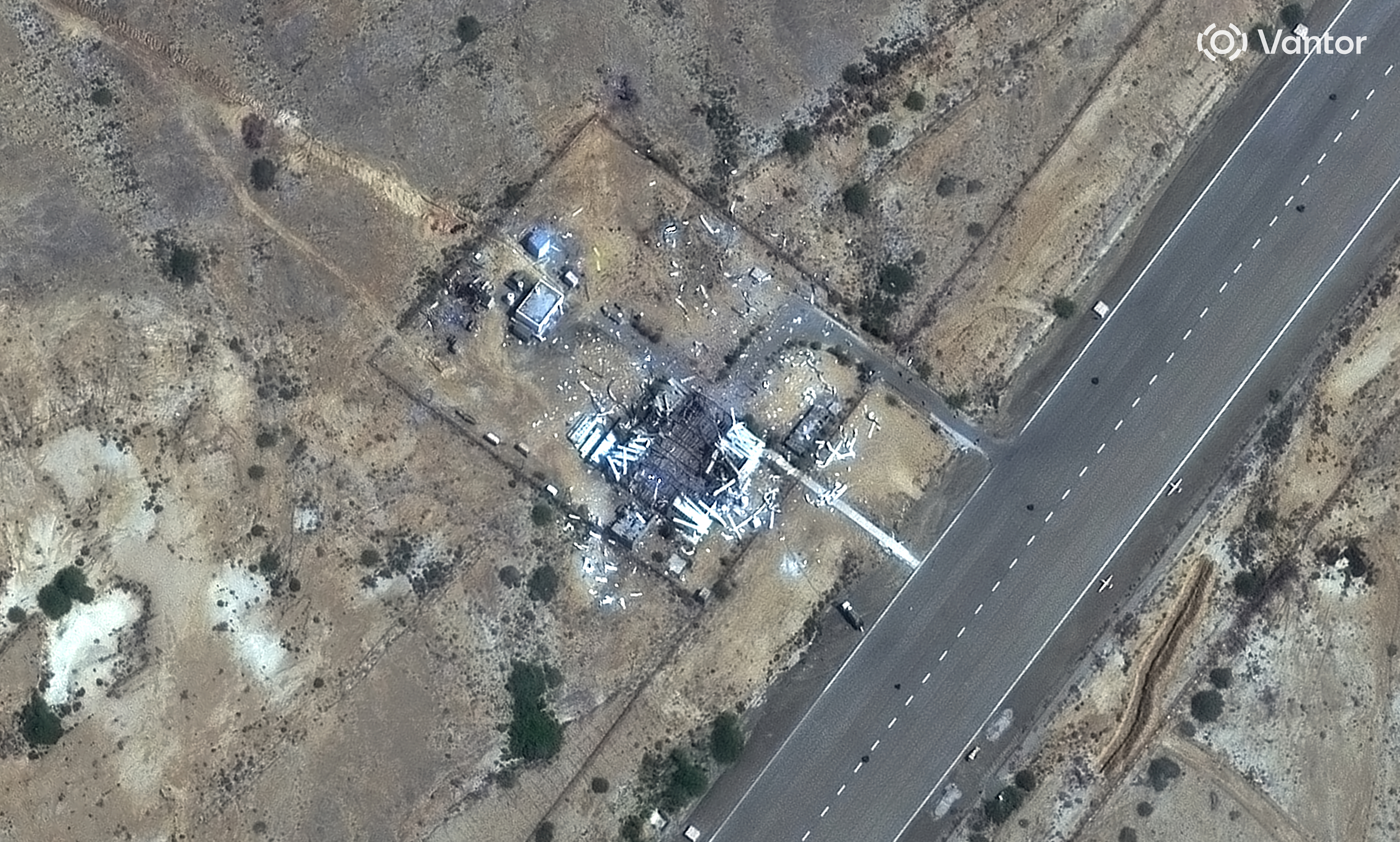
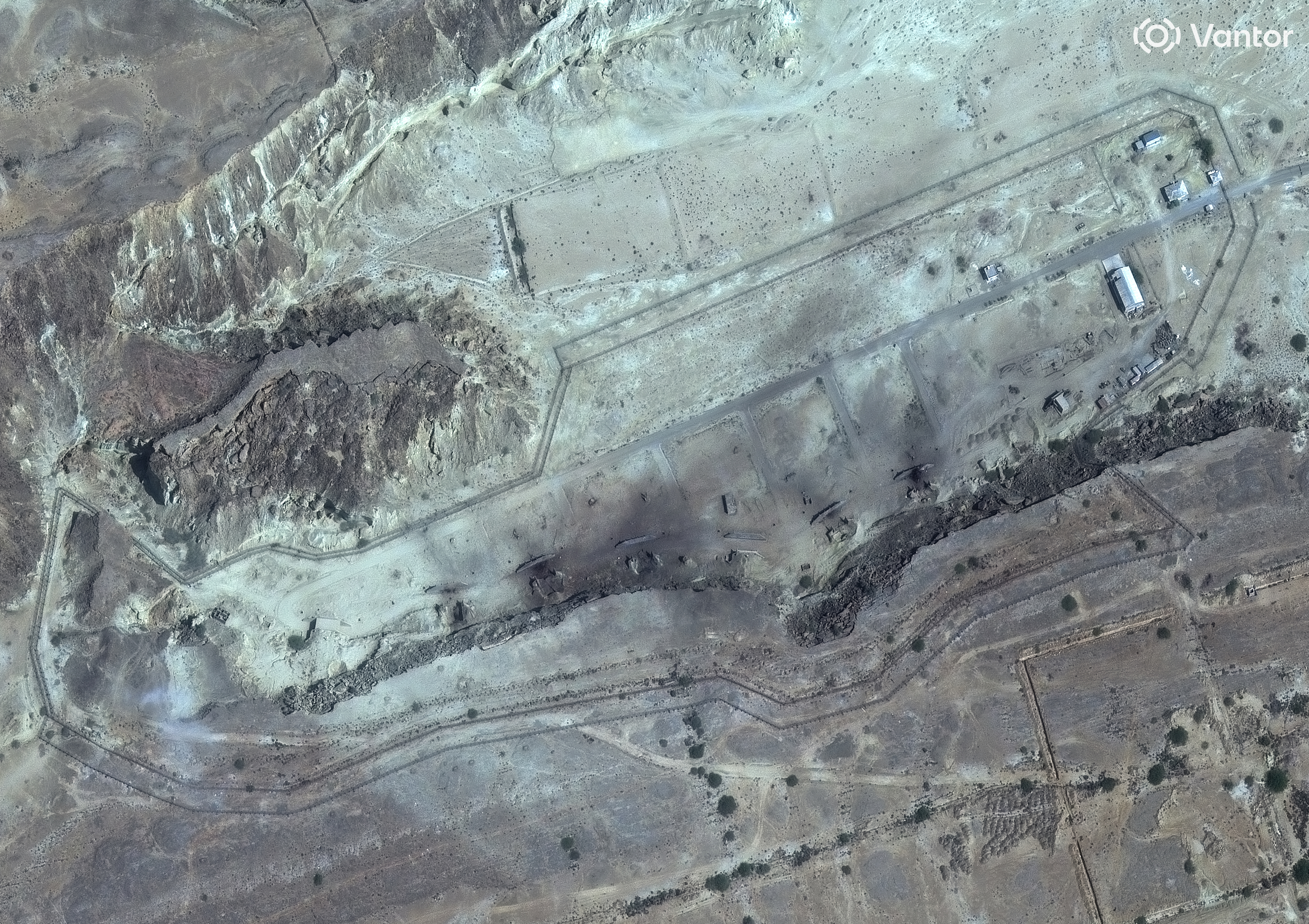
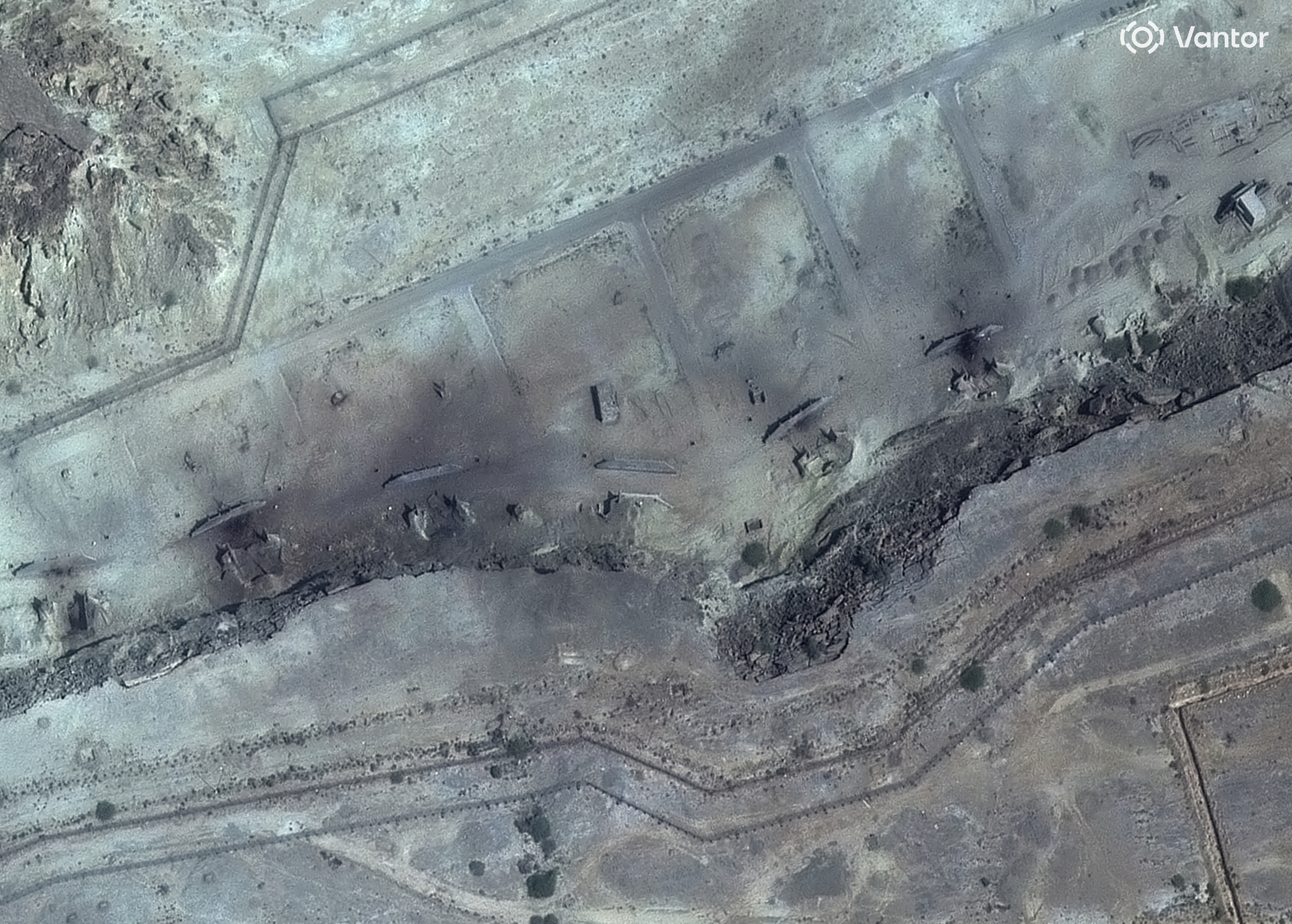
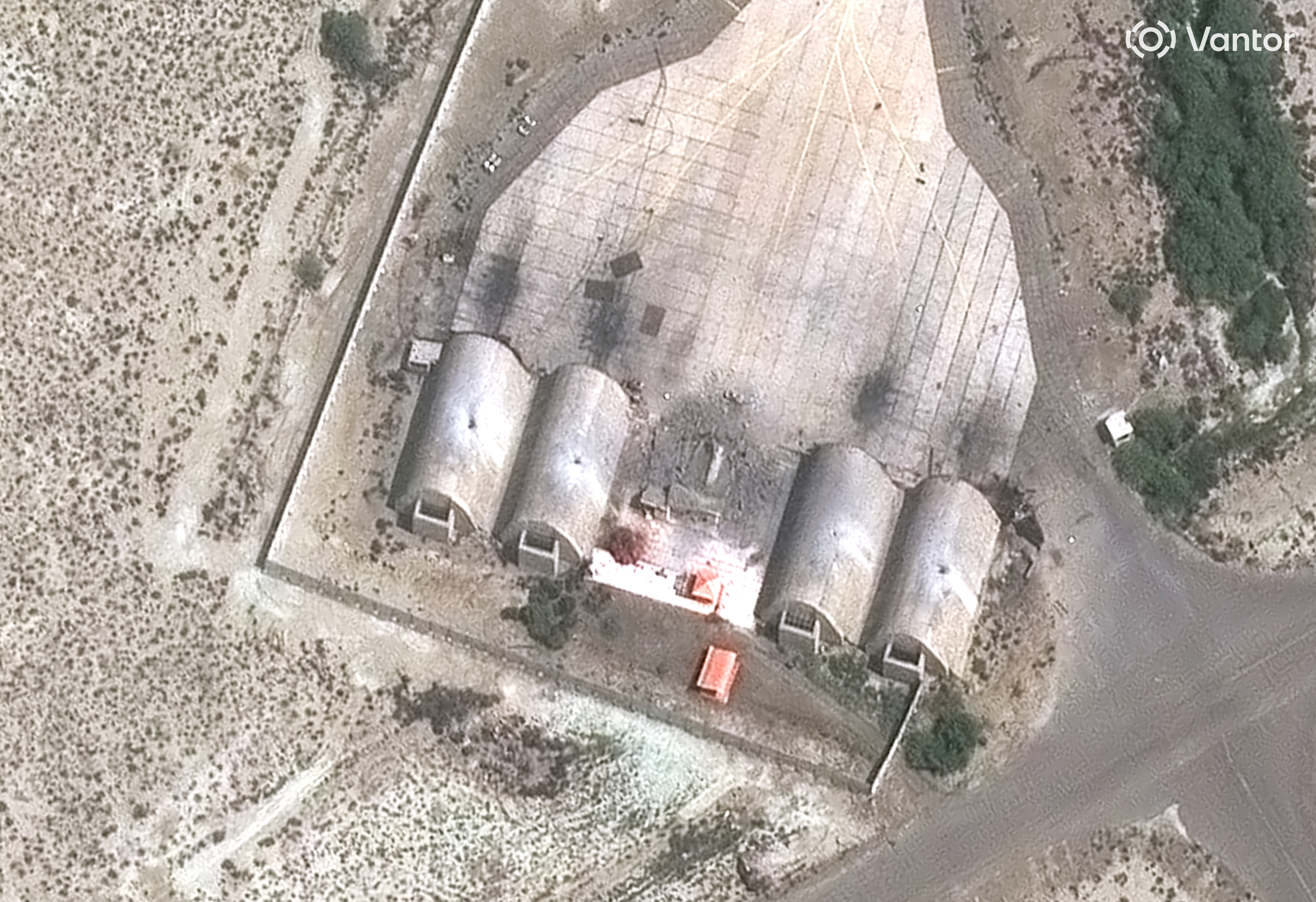
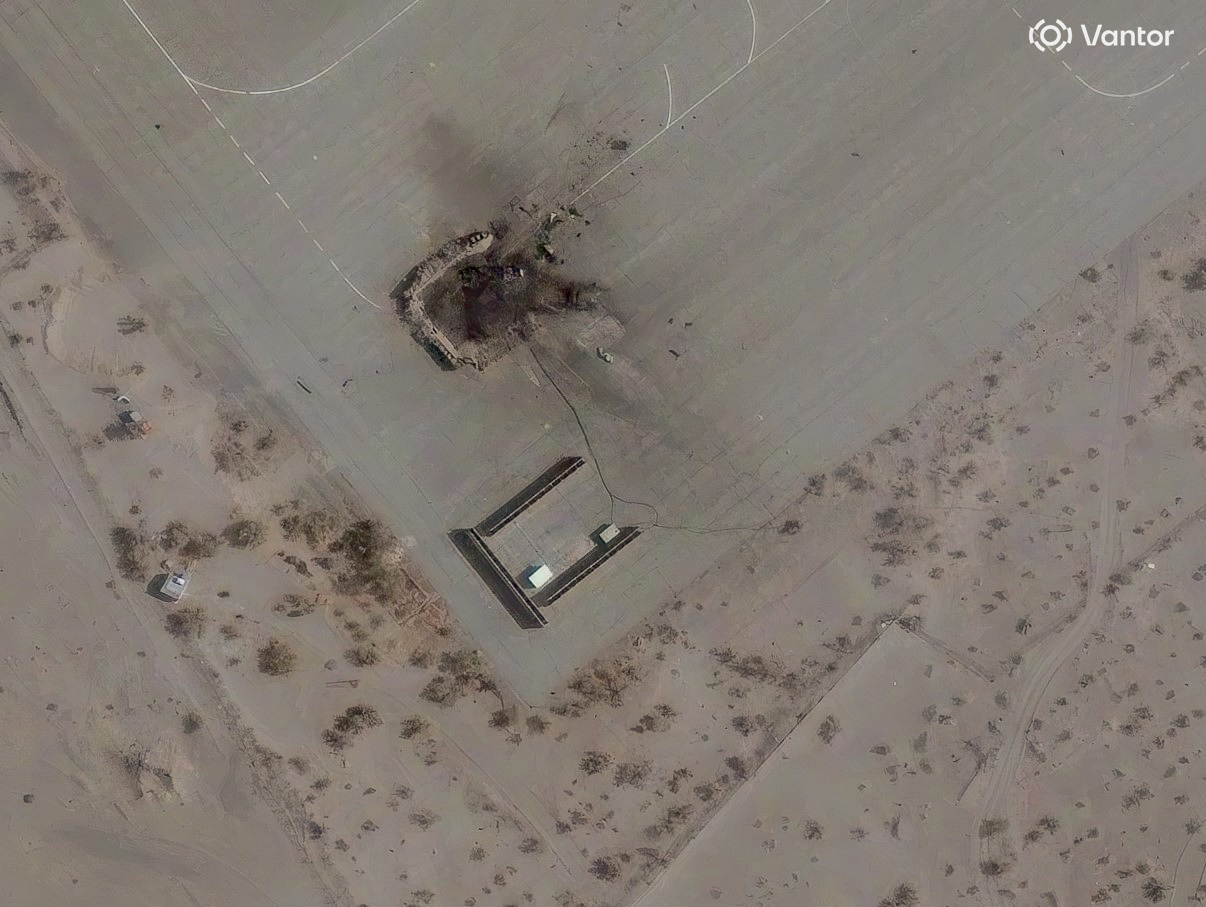
Here are some additional images of sites struck, mainly around Konarak, near where the ships were sunk, courtesy of Vantor:
UPDATE: 11:06 AM EST—
U.S. Central Command (CENTCOM) has confirmed the first U.S. casualties of the conflict.
“Three U.S. service members have been killed in action and five are seriously wounded as part of Operation Epic Fury,” according to an official statement. “Several others sustained minor shrapnel injuries and concussions — and are in the process of being returned to duty. Major combat operations continue and our response effort is ongoing.”
The statement does not say where these casualties occurred.
CENTCOM has also confirmed that Iran targeted the U.S. Navy’s supercarrier USS Abraham Lincoln, but says that the missiles “didn’t even come close” to the ship.
Reports are now emerging about U.S. Air Force B-2s having struck targets in Iran sometime overnight. Flight trackers and others had already been pointing to growing signs that a flight of the bombers had flown sorties in support of Operation Epic Fury.
Fox News is also reporting that the bombers dropped 2,000 bombs rather than the 30,000-pound Massive Ordnance Penetrator (MOP bunker busters employed during Operation Midnight Hammer strikes on Iran last year. TWZ has previously noted that B-2s were likely to make an appearance in Operation Epic Fury last night, but also highlighted that the bombers could bring immense conventional firepower to bear even without carrying MOPs.
NPR has obtained satellite imagery from Planet Labs that looks to show no damage to an AN/FPS-132 early warning radar in Qatar that Iran reportedly targeted yesterday.
The IDF is now saying that it destroyed the General Staff headquarters of Iran’s Internal Security Forces, as well as the command center responsible for coordinating the defense of Tehran.
“We have eliminated the tyrant Khamenei and dozens of senior figures from the oppressive regime, and our forces are now hitting the heart of Tehran with growing intensity, a campaign that will only ramp up in the coming days,” Israeli Prime Minister Benjamin Netanyahu has said in a new video statement.
U.S. President Donald Trump has told CBNC that operations against Iran are currently proceeding “ahead of schedule.”
An image is circulating online that is said to show an Iranian attack on an oil platform off the coast of the United Arab Emirates.
Multiple outlets have also now reported that the U.S. Central Intelligence Agency provided key intelligence that enabled Israel’s strike on Supreme Leader Khamenei’s compound.
UPDATE: 9:50 AM EST—
U.S. Central Command has now issued a formal statement regarding the targeting of what it calls an Iranian “Jamaran class corvette.” This is how the U.S. military refers to Iran’s Moudge class warships, which are also often described as frigates. Satellite imagery provider Vantor had initially assessed the ship that was struck to be an Alvand class warship, from which the Moudge class is derived. You can read more about this in TWZ‘s previous reporting here.
Imagery circulating points to Iranian attacks in the vicinity of France’s naval base in Abu Dhabi in the United Arab Emirates.
There are reports that another ship has been struck, this time off the United Arab Emirates on the Persian Gulf side of the Strait of Hormuz. The crew of the vessel was reportedly able to extinguish the resulting fire and are continuing their voyage.
Iranian Foreign Minister Araghchi has told Al Jazeera that the country’s Assembly of Experts could elect a new Supreme Leader to succeed Ayatollah Ali Khamenei in the next few days. A U.S. official has also told that outlet that it is still unclear how Khamenei may impact Iran’s actions going forward.
“My message to the remaining officials of this republic of terror is this: surrender to the Iranian nation. Declare your loyalty to my plan and our transition framework, and hand over power without further bloodshed,” Reza Pahlavi, the eldest son of Mohammad Reza Pahlavi, the last Shah of Iran, and now an opposition figure to the regime in Tehran living in exile, has written in a post on X. “Any attempt by the remnants of the regime to appoint a successor to Khamenei is doomed to failure in advance. Whoever they place in his position will not only lack legitimacy, but will also be a partner in the crimes of this regime.”
“To the military, law enforcement, and security forces, I say: your weapons must be used to defend the great nation of Iran, not the republic of crime, thuggery, and its anti-Iranian criminals. Join the people of Iran and the Lion and Sun Revolution,” he added. “Use your arms to protect Iranians against the mercenaries of the Islamic Republic so that this 47-year nightmare may end more swiftly.”
Pakistani authorities have confirmed the violent clashes around the U.S. Consulate in Karachi, sparked by the war on Iran, have left several dead and dozens wounded.
The ongoing conflict continues to cause major disruptions in general air traffic through the region, with the airspace over multiple countries restricted or closed entirely.
UPDATE: 8:44 AM EST—
U.S. Central Command (CENTCOM) has released additional imagery of ongoing activities as part of Operation Epic Fury.
The IDF has released a video showing Iranian F-4 and F-5 combat jets being targeted on the ground in Tarbiz.
“For the first time in Operation Roaring Lion, air force aircraft are operating in ‘stand-in’ over the skies of Tehran in a powerful strike against regime and repression targets.” Defense Minister Israel Katz has said. There will be “continuous powerful strikes” on targets in the Iranian capital, he added. The IDF has also released a new video outlining the phases of its operation that it says has now given it total air superiority over Tehran
The IDF says its strikes have killed the Chief of Staff of Iran’s armed forces, Abdolrahim Mousavi, as well as dozens of other senior officials.
The IDF is also continuing to target Iranian ballistic missiles, as well as air defenses and drone capabilities. Israeli authorities assess that Iran still has approximately 2,500 ballistic missiles of all types, which “constitutes an existential threat,” according to The Times of Israel.
IDF jets have already dropped more than 1,200 munitions on targets in Iran. Israeli Defense Minister Katz has also said strikes on Iran “will continue for as long as necessary” and until “the objectives are achieved.”
Iranian missiles have struck Beit Shemesh in Israel, causing casualties.
Skylight, a small Palau-flagged oil tanker, has reportedly been struck in the Gulf of Oman, resulting in injuries to members of its 20-person crew (said to include 15 Indian and 5 Iranian nationals). This tanker has been under U.S. sanctions for links to Iran’s Ministry of Defense since December. There are no indications that it was attempting to sail through the Strait of Hormuz, but the exact circumstances surrounding the attack are unclear.
At least three people were killed and dozens wounded in another round of Iranian attacks on the United Arab Emirates (UAE), according to that country’s Ministry of Defense. UAE authorities have previously said that some injuries sustained as a result of Iranian attacks have come from falling debris as a result of interceptions of incoming threats.
“The Ministry of Defence has announced that the UAE air force and air defence forces have so far dealt with 165 ballistic missiles, two cruise missiles and 541 Iranian drones since the start of the Iranian attack,” according to an official statement. “The ministry said that on the morning of the second day of the attack, UAE air force and air defence forces destroyed 20 ballistic missiles, while eight missiles fell into the sea. They also destroyed two cruise missiles and 311 drones. However, 21 drones struck civilian targets. The ministry affirmed the capability of the UAE air force and air defence to address various threats.”
Kuwaiti authorities now say intercepted 97 and 283 drones launched from Iran.
British authorities say that missiles that Iran has fired missiles in the direction of Cyprus in the Eastern Mediterranean. U.K. Defense Minister John Healey says he does not believe the launches were directly aimed at British forces on the island, but that “it shows how indiscriminate” Iran’s retaliatory attacks have been. Authorities in Cyprus have pushed back on this, saying there are no indications the country was ever under threat.
UPDATE: 3:44AM EST—
Israel is pounding a number of targets in Tehran with heavy munitions. The strikes appear to be focused on regime targets. The IDF also says the strikes are aimed on securing air superiority and creating a clear route to Tehran. This is likely in reference to manned fighter getting the ability to make direct attacks en masse with minimal risk. This would open up the skies to larger scale bombardment of the capital by relying less on standoff munitions.
Iran has hit Oman for the first time in the conflict, striking the port of Duqm on the Arabian Sea, facing the Indian Ocean. Apparently, long-range kamikaze drones were used. This is something of a surprise as Oman has provided diplomatic facilitation between the U.S. and Iran.
40 buildings have been damaged by Iranian strikes in Tel Aviv.
At least six people were killed in the violent protest at the U.S. consulate in Pakistan that we previously mentioned.
Iran’s internet outage continues, which has limited visibility into the country to some degree during the crisis.
UPDATE: 2AM EST—
An Iranian National Security Council member says a temporary leadership council will be established today. Another official said there were plans in place for exactly this scenario.
The power vacuum that exists in the country is clearly one of the key pressure points the U.S. and Israel would hope to exploit, although what comes next could end up with a negative outcome. Trump has stated that he has an idea who will take over in Iran that will be a positive for the U.S., but he did not elaborate.
UPDATE: 1:20AM EST —
President Trump has just posted that the threat from the IRGC that it will be executing an unprecedented reprisal operation will be met with an even larger amount of force.
It is clear that Iran’s playbook is to target civilian areas as well as U.S.-related military areas in Arab gulf states. Doing so puts pressure on the governments that the U.S. is clearly trying to assuage. At the same time, some of these areas are less defended than those near U.S. installations, which makes scoring hits more probable. How long defenses in these areas can hold out is an increasingly important question.
After a night of many celebrating the death of the Supreme Leader, there are now demonstrations in Iran vowing revenge.
We are also beginning to activity emerge at U.S. embassies and consulates, such as in Pakistan:
UPDATE: 1AM EST—
The IDF says it has struck more than 30 new targets in Iran as part of continuing operations, “including aerial defense systems, missile launchers, regime targets and military command centers.”
A video U.S. Central Command (CENTCOM) released earlier today looks to show a strike targeting some of Iran’s Russian-made MiG-29 fighters. The full video shows U.S. forces striking drones, air defense sites, shore defense radar installations, and more.
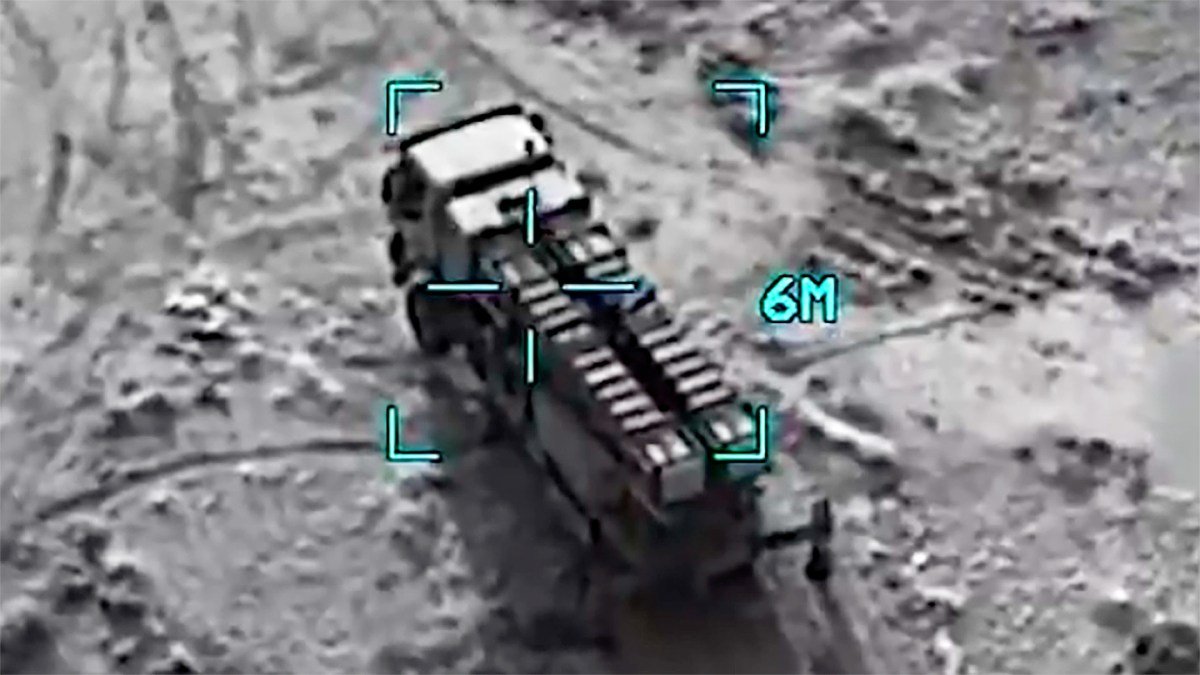
CENTCOM has also now released a video indicating the employment of ground-launched Army Tactical Missile System (ATACM) short-range ballistic missiles as part of ongoing strikes on Iran.
CENTCOM has also denied various claims that had been circulating earlier in the day, including about U.S. casualties, an attack on a U.S. naval vessel, and the severity of damage to U.S. facilities in the region.
The IDF says that there have been at least 20 waves of Iranian missiles in the past 24 hours. The IDF has also assessed that Iran has launched at least 150 ballistic missiles at Israel since the start of the new conflict, according to The Times of Israel. This would be just slightly less than the number of missiles the Iranians fired at Israeli targets on the first night of the 12 Day War. Experts have also highlighted a notable difference in the size and coordination of individual Iranian barrages in the current conflict. While clearly, Iran’s command and control is disrupted, this could also be attributed, at least partially, to different tactics and decentralizing the command and control process in preparation for major disruptions that this conflict would bring.
Imagery has emerged showing the U.S. Fifth Fleet headquarters in Bahrain being subjected to additional Iranian attacks. Civilian sites in Bahrain also continue to be hit. Authorities in Bahrain say they have intercepted at least 45 missiles and nine drones launched from Iran.
Satellite imagery circulating online, attributed to Chinese firm MizarVision, shows plumes of black smoke rising from at least two separate locations at Ali Al Salem Air Base in Kuwait. At least one of these areas appears to be a fuel storage facility. TWZ has not yet been able to independently confirm any damage to the base.
The video below is said to show Patriot surface-to-air missiles being fired at Iranian missiles targeting Qatar’s Al Udeid Air Base.
The port of Jebel Ali in the United Arab Emirates (UAE) was the target of another Iranian strike.
Iranian-backed militants in Iraq have claimed responsibility for an attack on the airport in Erbil, the capital of that country’s northern autonomous Kurdish region. Pro-Iran protesters have also reportedly been trying to force their way to the U.S. Embassy inside Green Zone in Baghdad.
“The [UAE’s] Ministry of Defense announced that the Air Force and Air Defense forces of the United Arab Emirates have succeeded, since the start of the Iranian attack, in intercepting and destroying 137 ballistic missiles and 209 drones launched toward the country’s territories, confirming the high readiness of air defense systems and their capability to handle various threats,” according to a machine translation of official statement. “The Ministry clarified that since the start of the attack, 137 Iranian ballistic missiles were detected and launched toward the country, with 132 of them destroyed, while 5 fell into the sea. Additionally, 209 Iranian drones were detected, 195 of which were intercepted, while 14 fell within the country’s territories and waters, causing some collateral damage.”
Joe Kent, the Director of the National Counterterrorism Center, has put out a statement about monitoring for potential threats to the homeland. The Department of Homeland Security is reportedly concerned about the potential for cyberattacks from “Iranian-aligned” actors, according to CBS News.
Questions remain about the real state of progress in Omani-mediated talks between the United States and Iran over the latter’s nuclear program in the weeks leading up to the conflict.
Contact the author: joe@twz.com
