

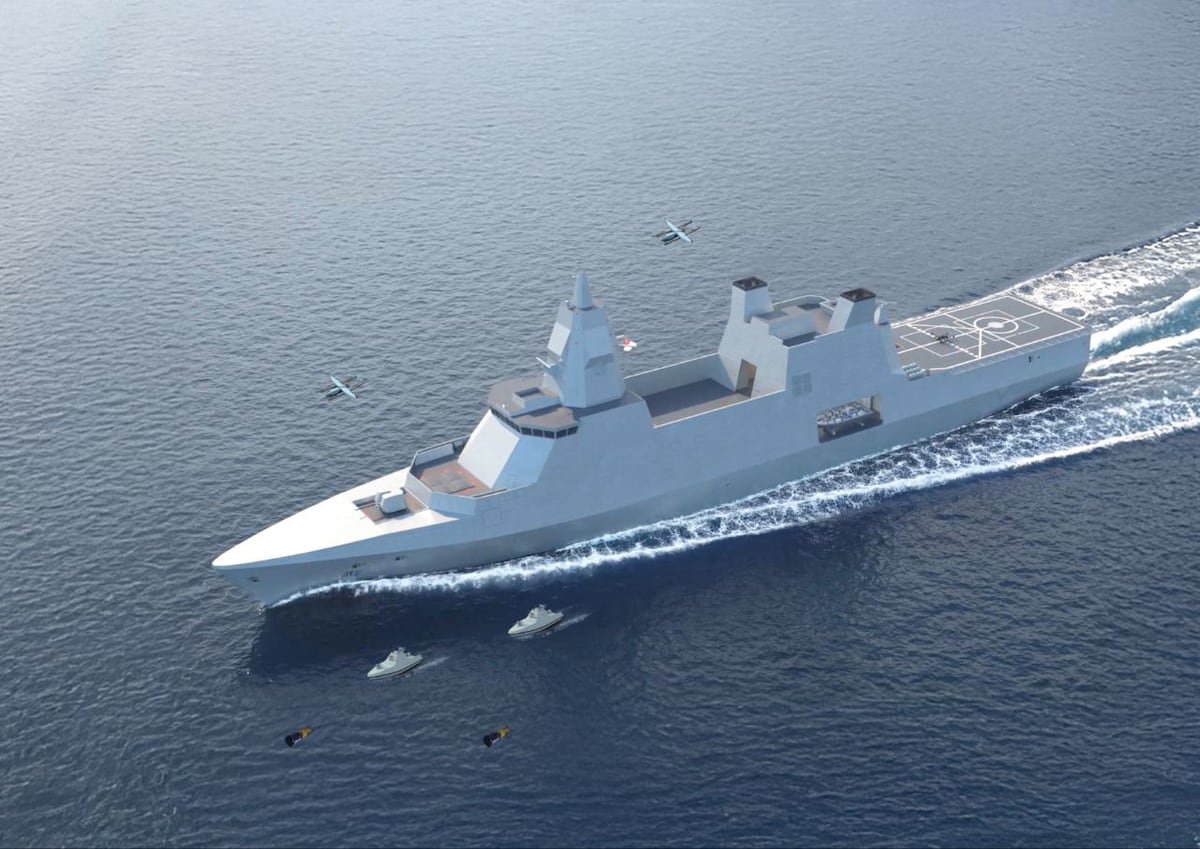
Overview of the MRCV
During a recent inauguration ceremony in Christchurch, New Zealand, Singapore’s Defense Minister, Chan Chun Sing, introduced a groundbreaking class of warship for the Republic of Singapore Navy (RSN). He drew a compelling analogy between the new vessel and the fictional spaceship Battlestar Galactica, emphasizing its advanced integration of artificial intelligence.
Key Features of the MRCV
- Vessel Specifications: The Victory, measuring 492 feet (150 meters) and weighing 8,000 tons, stands as Singapore’s largest surface combatant to date.
- Integration of Technology: This warship, classified as a Multi-Role Combat Vessel (MRCV), marries the functions of traditional frigates with those of a “mothership” for various unmanned systems, whether they operate above or below water.
- Operational Versatility: Chan highlighted that the MRCV is designed to adapt to evolving mission requirements, allowing it to function with an array of drones and unmanned surface vessels.
Launch and Development Timeline
Launched on October 21 at ST Engineering’s Benoi shipyard, the Victory will now proceed to the Gul yard for outfitting and trial operations. Contracted in March 2023, the MRCV program encompasses six ships that will ultimately replace the aging 595-ton Victory-class missile corvettes, which have served the RSN since the 1990s. Notably, the MRCVs will retain the same names as the vessels they are superseding. Delivery of the first ship is slated for 2028.
Technical Innovation and Design Features
The MRCV is characterized by innovative design features aimed at comprehensive operational capability:
- Extensive Range: With a cruising range of 7,000 nautical miles, the MRCVs are equipped for varied mission profiles.
- Mission Capability Transition: The onboard mission bay facilitates the rapid deployment of up to eight 20-foot containers, allowing seamless transitions between combat operations and humanitarian assistance efforts.
- Advanced Recovery Systems: Equipped with a specialized load and recovery system, the vessel can manage smaller boats and unmanned vehicles efficiently.
- Multi-Role Flight Deck: The large flight deck at the stern is tailored for accommodating drones and medium-sized helicopters, enhancing aerial operational capabilities.
Armament and Defense Systems
The Victory is outfitted with a sophisticated array of weaponry:
- Primary Firepower: A Leonardo Strales 76mm naval gun.
- Remote-Controlled Weapon Stations: Two Rafael Typhoon MK 30-c systems for heightened flexibility.
- Missile Systems: While the specific anti-ship missiles have not been disclosed, MICA and Aster missiles provide air defense, with speculation favoring the inclusion of Proteus’s Blue Spear missiles for anti-ship capabilities.
Reduced Crew and Enhanced Efficiency
Technological innovation significantly reduces manpower requirements, with fewer than 100 crew members necessary for effective operation. In critical situations, the bridge can be efficiently managed by just two personnel.
- Power Distribution: A high-voltage electrical system not only supports the integrated full electric propulsion but also powers advanced sensors and weapon systems.
- Construction Materials: The vessel’s composite superstructure, developed in collaboration with Sweden’s Saab, utilizes carbon fiber, which is lighter than steel, corrosion-resistant, and provides enhanced stealth and insulation.
Saab aims to replicate this cooperative model in other international ventures, with ongoing promotion of Singapore’s 1,200-ton littoral mission vessel to Estonia.
Strategic Implications for Singapore
As Singapore strives to enhance its naval capabilities, the new MRCVs reflect a strategic shift from traditional coastal defense to broader operational flexibilities. Chan reiterated the importance of modern naval assets in securing Singapore’s maritime interests, specifically in the bustling Singapore Strait—a critical maritime corridor with over 100,000 vessels navigating annually.
- Expanded Operational Reach: Singapore’s navy is transitioning into a force capable of securing vast sea lines of communication, essential for national security in a rapidly evolving geopolitical landscape.
- Future of Naval Warfare: The MRCV epitomizes the progressive trajectory of naval warfare, necessitating adaptive strategies and cutting-edge technologies to mitigate emerging security threats.
In conclusion, the introduction of the MRCV signifies not only a technological leap but also a strategic realignment to meet evolving maritime security challenges, illustrating Singapore’s commitment to remaining at the forefront of naval modernization.
