

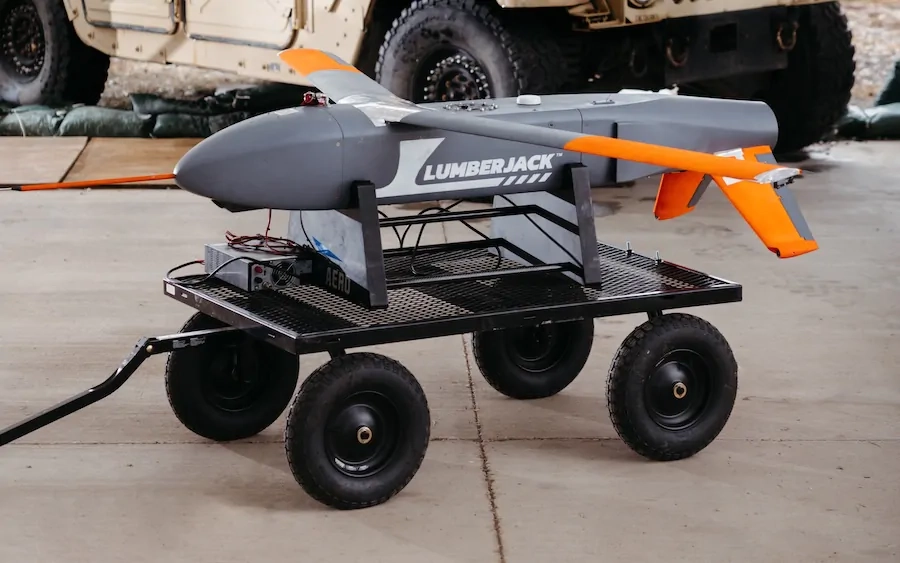
Defense Feeds – Northrop Grumman turned heads on March 31 with a stunning display of its Lumberjack Group 3 uncrewed aircraft system during the US Army’s 101st Airborne Division Operation Lethal Eagle exercise.
This low-cost attritable drone showcased full autonomous mission control linked to the Army’s Maven Smart System. Army troops got hands-on proof of how the platform runs with minimal human tweaks under oversight.
The demo even mimicked launching Northrop’s Hatchet mini precision strike munition a lightweight six-pound weapon packing the punch of bigger guided bombs.
Michael Bastin director of distributed systems at Northrop Grumman shared his excitement in a statement. “We went from idea to flying in less than 14 months” he said. “Lumberjack proved it can switch gears for all sorts of jobs and gear right there in the Army’s big drill.” Bastin stressed its game-changing edge. “This cheap-to-lose one-way attack drone shifts not just operations but total battlefield control.”
The event highlighted real-world potential for autonomous UAS in modern fights. As conflicts evolve toward drone swarms and quick strikes think Ukraine or Red Sea ops these systems cut risks to pilots while multiplying firepower.
Lumberjack’s speed to market under 14 months from sketch to sky sets a new bar for defense innovation beating typical multi-year timelines.
Autonomous Tech Shines with AI Targeting Edge
A standout moment came from Lumberjack’s adaptive targeting powered by AI tools in Palantir’s Agentic Effects Agent. The drone used auto-detection to spot and shift targets fast amid shifting battle chaos all with humans in the loop. This setup lets troops focus on big-picture calls not every pixel.
Northrop highlighted beyond-line-of-sight links via satellite datalink too. That meant live updates on missions and battle damage checks from afar no matter the terrain or distance. For maneuver units this opens doors to safer standoff ops where drones scout strike and report without exposing ground forces.
Maj. Jonathon Bless public affairs lead for the 101st Airborne put it in perspective. “Operation Lethal Eagle zeroed in on combat readiness” he noted. “But it doubled as a testbed for fresh tech from defense makers everywhere.” Bless pointed to Lumberjack as a prime example. “It showed how teaming soldiers with industry sparks real breakthroughs in uncrewed systems.”
From my view as a military analyst these integrations echo broader shifts. The Army Maven Smart System already crunches vast data for smarter decisions.
Pairing it with Lumberjack’s autonomy could flood battlefields with cheap eyes and effectors overwhelming foes through sheer volume. Early tests like this pave the way for scaling to swarm tactics where dozens of attritable drones overwhelm air defenses.

Modular Design Boosts Multi-Role Battlefield Power
What makes Lumberjack a tactical powerhouse is its flexible core. The modular center bay lets operators swap payloads on the fly from kinetic booms to surveillance kits or non-lethal tools. One run through the exercise it nailed fake precision strikes then flipped to intel-gathering mode snapping battlefield pics.
This versatility shines operationally. The same airframe handles strike runs spy flights or recon sweeps based on the day’s needs. Launch options seal the deal too air-dropped or ground-fired giving frontline troops more ways to deploy from safe ranges.
Northrop built it with partners Empirical Systems Aerospace and Palantir hitting first flight in record time. As an attritable platform it’s meant to be spent in combat keeping costs low per hit. Think of it like disposable missiles but smarter with reusability in training and eyes-on capability before the boom.
In analysis this modularity counters peer threats like advanced Chinese or Russian air defenses. Fixed-role drones get predictable and countered.
Lumberjack’s swaps keep enemies guessing while its low price tag enables mass use. During Lethal Eagle it transitioned seamlessly post-strike to surveillance proving multi-role flexibility in live-like stress.
Why Lumberjack Signals Drone Warfare Revolution
Lumberjack isn’t just another UAS it’s a blueprint for affordable dominance.
In exercises like this it proves uncrewed aircraft systems can blend autonomy AI and modularity to reshape fights. The 101st Airborne’s thumbs-up underscores Army buy-in for these tools amid rising drone reliance worldwide.
Bastin nailed it: Lumberjack changes how platforms operate and dominate. With Hatchet’s precision strike munition and Maven ties it delivers big effects from small cheap packages. As defense budgets tighten and threats multiply expect more such attritable drones flooding inventories.
This demo at Operation Lethal Eagle marks a milestone. It blends industry speed with military needs driving innovation. For troops it means safer more lethal options. Watch for Lumberjack evolutions in upcoming Army trials.
