

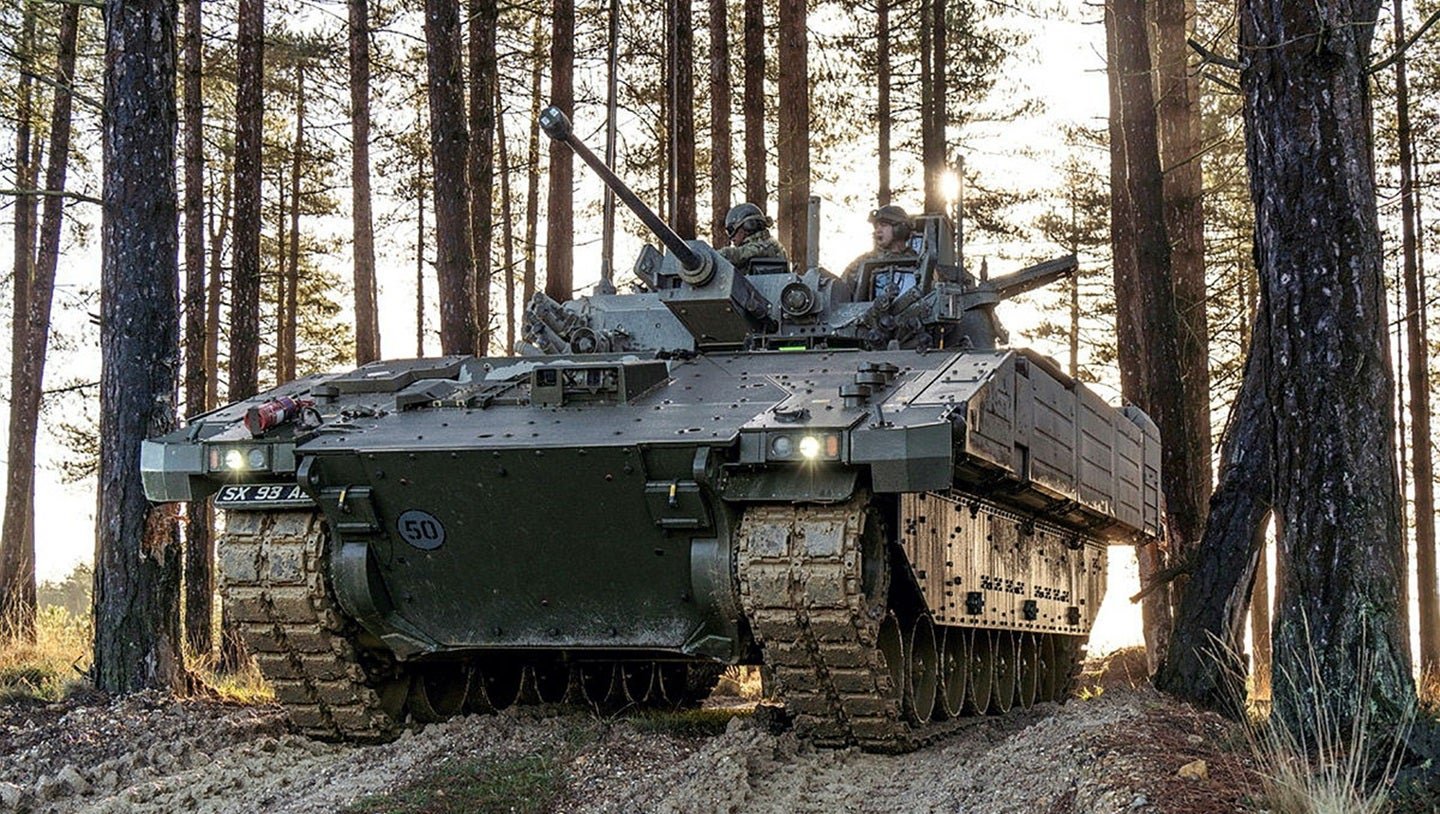
- Production of Ajax will continue unchanged despite defects reported by training crews in November 2025
- General Dynamics Land Systems UK will continue to meet its contractual requirements with the British Army as they wait on the findings of ongoing investigations launched on 22 January 2026
- There are currently three separate investigations into the UK’s troublesome medium weight armoured fighting vehicle, none of which have concluded at the time of writing
There will be no pause in the production of Ajax armoured fighting vehicles despite excessive noise and vibration issues afflicting training crews.
A spokesperson for General Dynamics Land Systems UK (GDLS UK) – the primary contractor since 2010 – told Army Technology that the company continues to produce Ajax vehicles at its facility in Merthyr Tyfil, about 23 miles north of Cardiff, while “we await the findings of the independent investigations”.

Discover B2B Marketing That Performs
Combine business intelligence and editorial excellence to reach engaged professionals across 36 leading media platforms.
Find out more
So far, the contractor has delivered 185 vehicles of 589 ordered by the UK government. It takes approximately 16 weeks to build just one vehicle.
Ajax units currently in production have not deviated from design specifications established prior to the problems reported on 22 November 2025 during a routine training exercise, which effected 30 soldiers operating the vehicles (25 of whom have returned to duty).
Currently, three separate safety investigations are ongoing exploring the UK’s troublesome medium weight armoured fighting vehicle, none of which have concluded at the time of writing.
The Defence Accident Investigation Branch and the Army safety investigation will determine technical findings while a ministerial led review assesses how the Ministry of Defence (MoD) has implemented the actions of previous reviews.
Not the first time
The Ajax programme has faced the same noise and vibration issues in the past, which prompted the contracting authority and GDLS UK to rectify the problems back in 2020-21.
At the time, the manufacturer is said to have put “effective mitigations” in place according to Defence Minister Luke Pollard, recounting the development in a parliamentary written statement on 9 January 2026.
Several actions were taken to reduce exposure, including:
- Improving overall Ajax build quality
- Review and amendment of build tolerances for key crew interfaces such as seats and control handles
- Changes to seat structures to provide greater vibration attenuation.
- Improvements to track tensioning procedures to ensure correct track tension which reduces vibration
Although Ajax production continues unchanged, there are always planned enhancements to new vehicles and the manufacturer does not consider this case any different. It does not diminish the company’s faith in the platform, the spokesperson assured:
“We have confidence in the performance and the protection the Ajax provides our soldiers. This is the most tested combat vehicle we have ever produced and the world’s most advanced, fully digitised, armoured fighting vehicle.”
Since 2019, GDLS UK have worked with the Army and MoD to conduct extensive testing and trials and will continue to do so.
“Soldier safety remains our highest priority,” they continued. Nevertheless, the company are forced to wait on tenterhooks to make the necessary modifications for the enduring issues which do not appear to originate from seat structures and track tensioning alone.
The Blame game
But the enduring problem is rooted in the government’s handling of the programme.
Pollard stated that “inaccurate information” informed his decision to declare initial operating capability of Ajax only a fortnight before the reports were logged; a decision he was forced to reverse last month.
While the defence minister did not directly specify the source of the inaccurate outlook on the programme, he did urge the “wider Department” to “challenge unnecessary process and bureaucracy”.
It is worth noting that the government have repeatedly said that such failings within the outdated procurement process have already been addressed through major institutional reforms. These reforms include the creation of a newly empowered National Armaments Directorate and the faster, segmented approach to acquisition. Still, old problems endure.
But there is also a lack of transparency from the top. A House of Commons research briefing on the programme reiterated the government’s position that the findings of the investigations will be “closely aligned” to decisions in the long-awaited Defence Investment Plan (DIP), which will set out the MoD’s equipment and investment priorities for the next ten years.
The government have repeatedly delayed the release of the DIP, which has been met with intense scrutiny among Parliamentarians and industry alike. Tying Ajax investigations to the DIP will only push IOC ever further away, while leaving an insurmountable capability gap with no end in sight.

