

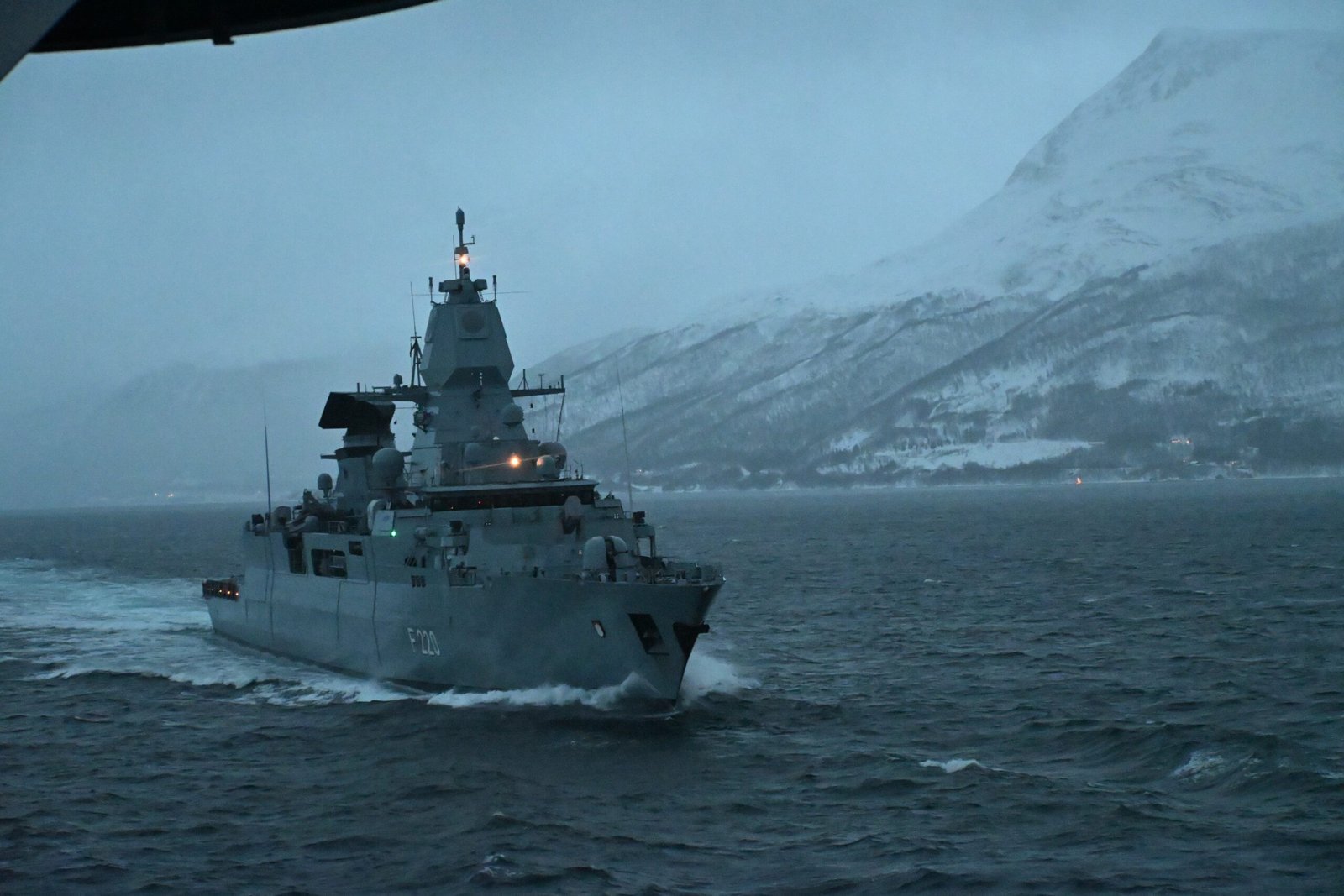

NATO has launched its ‘Arctic Sentry’ activity as it seeks to strengthen its presence across the Arctic and High North region.
The activity is a multi-domain effort designed to further strengthen the alliance’s Arctic and High North posture and to build a persistent NATO presence in the region.
‘Arctic Sentry’ is being established under NATO’s Allied Command Operations (ACO), which is responsible for the planning and execution of all alliance exercises, activities, and operations. ACO is based at the Supreme Headquarters Allied Powers Europe (SHAPE) facility in Mons, Belgium. In operational terms, ‘Arctic Sentry’ will be led by Joint Force Command (JFC) Norfolk, headquartered in Norfolk, Virginia, and whose area of responsibility (AOR) includes the entire Arctic region. To deliver ‘Arctic Sentry’, ACO and JFC Norfolk will collaborate with Allied Command Transformation (ACT) and coordinate activities with the US and Canada’s North American Regional Aerospace Defense Command (NORAD) and with US Northern and European commands.
“‘Arctic Sentry’ underscores the alliance’s commitment to safeguard its members and maintain stability in one of the world’s most strategically significant and environmentally challenging regions,” General Alexus Grynkewich, a US Air Force officer serving as Supreme Allied Commander Europe (SACEUR), said in a SHAPE statement on 11 February. “It will leverage NATO’s strength to protect our territory and ensure the Arctic and High North remain secure.”
“In terms of NATO’s JFCs, Norfolk is the bridge between North America and Europe, defending the strategic approaches between the two continents and much more,” said Gen Grynkewich.
A primary aim of ‘Arctic Sentry’ is to integrate pre-existing allied countries’ operations, exercises, and other activities in the region into a single, overarching approach to increase output and enhance presence. Two such exercises are Denmark’s ‘Arctic Endurance’ and Norway’s ‘Cold Response’.
‘Arctic Endurance’ is a sustained event established in January 2026 and taking place throughout the year. According to the Danish defence ministry, it brings together joint and combined forces to practise a range of military disciplines in the Arctic’s unique climate. Exercise activities may include critical infrastructure protection, military aid to civilian authorities, the deployment of allied ground troops and aircraft, and naval operations.
‘Cold Response’ is a biennial event, set to get underway this year in March. According to Norway’s armed forces, the exercise is designed to contribute to deterrence, strengthen Norwegian and allied defence capabilities, build regional reassurance, and demonstrate Norway’s and NATO’s ability to defend the alliance’s northern flank.
The prospective establishment of ‘Arctic Sentry’ was first mooted in late January 2026, as allies discussed options to strengthen NATO’s deterrence presence in key Arctic regions. ‘Arctic Sentry’ will provide an integrated focus across alliance efforts, alongside the exercises noted, including the regular deployment of Standing NATO Maritime Group 1 (SNMG1) to the region. In 2025, SNMG1 deployed to the region twice, with the second deployment concluding in December.
SNMG1 is NATO Allied Maritime Command’s standing naval force, comprising destroyers and frigates, focused on the North Atlantic.
Denmark’s ‘Arctic Endurance’ exercise is an example of how various NATO members can come together in a multinational, non-alliance context to build presence in an area of operational interest, effectively establishing a ‘spoke’ around the NATO ‘hub’.
by Dr. Lee Willett
