

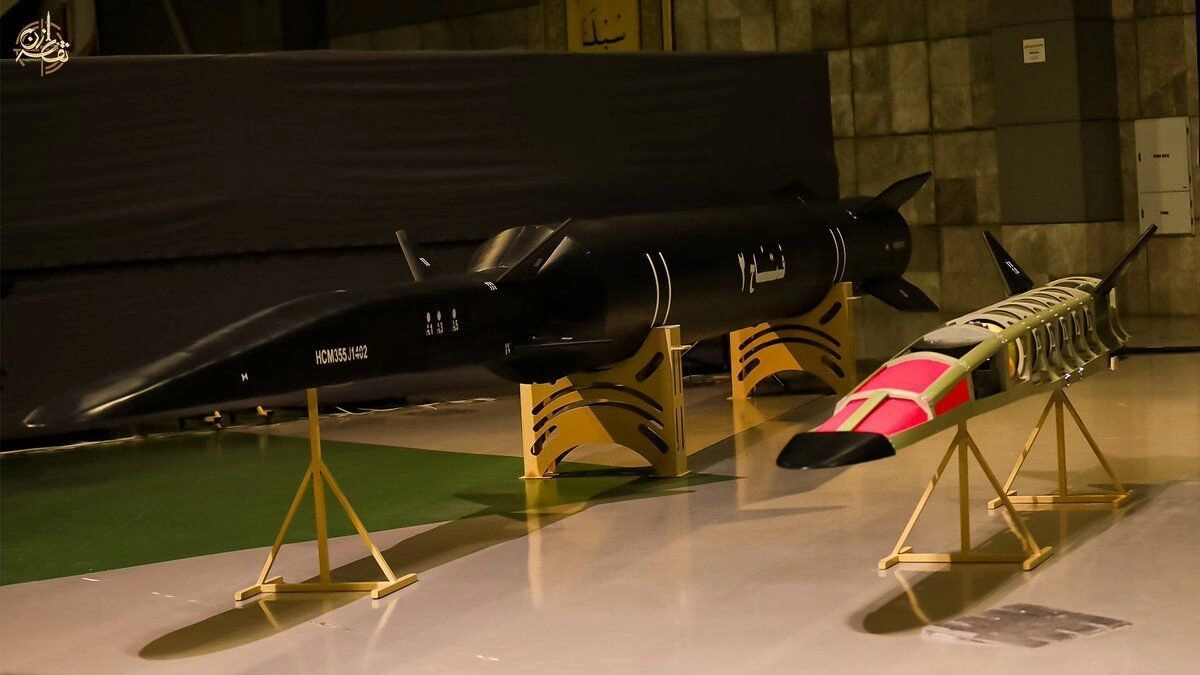
Blink, and it’s already gone. That’s the unsettling idea behind the Fattah-2, a hypersonic missile that Iran claims can streak through the atmosphere at speeds faster than 15 times the speed of sound.
At those velocities, a weapon launched from one country could reach a distant target in minutes, not hours. Radar systems scramble, interceptors struggle to keep up, and defense planners start losing sleep.
But here’s the thing: the Fattah-2 hypersonic missile isn’t just another entry in the long list of ballistic weapons. It represents a shift in how modern missiles behave once they leave the launch pad.
Instead of following a predictable arc like a traditional ballistic missile, the Fattah-2 reportedly deploys a hypersonic glide vehicle (HGV), a maneuverable payload that can weave through the atmosphere at extreme speeds. Imagine throwing a stone… only for it to suddenly change direction mid-flight.
Iran unveiled the missile in November 2023, presenting it as the next evolution after the earlier Fattah-1 system.
According to Iranian officials, the weapon can travel roughly 1,400 kilometers, placing large portions of the Middle East within striking distance.
Whether every claim holds up under independent scrutiny is still debated among military analysts, but the strategic signal is unmistakable: Tehran wants the world to know it is entering the hypersonic weapons race.
To understand why the Fattah-2 is attracting so much attention, from defense experts to geopolitical observers, we need to unpack what it is, how it works, and why hypersonic technology is suddenly dominating conversations about the future of warfare.
What Is the Fattah-2 Hypersonic Missile?
So what exactly is the Fattah-2?
Strip away the headlines and military jargon, and you’ll find something pretty fascinating, technically speaking. The Fattah-2 hypersonic missile is believed to be a missile equipped with a hypersonic glide vehicle (HGV), a type of payload designed to travel at Mach 5 or faster while maneuvering unpredictably through the atmosphere.
To put that into perspective, Mach 5 equals roughly 6,100 km/h (3,800 mph). Iranian officials claim the Fattah-2 can reach Mach 13–15, which would push its velocity closer to 15,000–18,000 km/h under ideal conditions. At that speed, a missile launched from western Iran could theoretically reach targets across much of the Middle East in under 10 minutes. That’s not much time for detection, decision-making, and interception.
Here’s where things get interesting. Traditional ballistic missiles follow a three-phase path: launch, space-arc, and descent. Their trajectories can be predicted with fairly good accuracy once detected.
The Fattah-2, however, is designed to behave differently after launch. Instead of simply falling toward its target, the glide vehicle can adjust course during flight, making interception dramatically harder.
In essence, the Fattah-2 sits somewhere between a ballistic missile and a cruise missile, fast like the first, maneuverable like the second. That hybrid nature is exactly why hypersonic weapons have become one of the most talked-about military technologies of the last decade.
Key Specifications of the Fattah-2 Missile
Let’s talk numbers, because with weapons like the Fattah-2, the details matter. Speed, range, payload, guidance… these aren’t just technical specs on a fact sheet. They determine how threatening the system actually is in real-world scenarios.

Iran hasn’t published a full engineering dossier (no surprise there), but analysts studying public presentations and satellite imagery have pieced together a fairly consistent picture of the Fattah-2 hypersonic missile.
First, the headline figure everyone notices: speed. Iranian officials claim the missile can reach Mach 15. That’s roughly 18,500 km/h (11,500 mph). At that velocity, a weapon could cross the entire 1,400 km range in under six minutes if flying directly toward a target.
Range is the next big factor. Estimates place the Fattah-2’s operational range somewhere between 1,400 and 1,500 kilometers. That’s significant because it places a large portion of the Middle East within reach.
Here’s a simplified snapshot of the commonly cited specifications:
| Specification | Estimated Value |
| Maximum Speed | Up to Mach 15 |
| Operational Range | 1,400–1,500 km |
| Missile Length | ~12 meters |
| Launch Weight | ~3,500–4,000 kg |
| Warhead Payload | 200–500 kg |
| Guidance System | Inertial + satellite navigation |
The payload capacity, believed to be between 200 and 500 kilograms, allows the missile to carry conventional high-explosive warheads, and potentially other payload types depending on mission requirements.
But perhaps the most important spec isn’t speed or range. It’s maneuverability. The glide vehicle reportedly uses aerodynamic control surfaces and onboard guidance to adjust its trajectory mid-flight. In practical terms, that means it can zig, dip, or shift course during its descent.
And for missile defense systems designed to predict where something will land? That unpredictability changes the game.
How the Fattah-2 Hypersonic Missile Works
Understanding the Fattah-2 requires picturing the launch in stages, almost like a relay race in the sky. One system gets the missile moving at blistering speed, then another takes over to guide it toward its target. The trick is what happens after that first push.
The Fattah-2 hypersonic missile is widely believed to use a two-stage propulsion system. The first stage is a solid-fuel booster. Think of it as the muscle: it blasts the missile upward and accelerates it to hypersonic speed within seconds. Solid fuel is common in modern missile design because it’s stable, quick to launch, and requires little preparation time.

Once the booster burns out, usually after a few minutes, it separates. That’s when the second act begins.
Instead of continuing along a simple ballistic arc, the hypersonic glide vehicle detaches and begins gliding through the upper atmosphere. And glide might sound gentle, but at Mach 10 or faster, it’s anything but. At those speeds, the air around the vehicle compresses into superheated plasma. Temperatures can climb above 2,000°C, which means the vehicle needs specialized heat-resistant materials to survive the journey.
The maneuverability is the key innovation. Unlike traditional ballistic warheads that simply fall toward Earth, the Fattah-2’s glide vehicle can shift direction during flight, changing altitude, banking slightly, or adjusting course.
For missile defense radars trying to calculate where the weapon will land? It’s like trying to predict the path of a paper airplane in a gusty wind.
Not impossible. But suddenly… much harder.
Operational Use and Military Context
A missile like the Fattah-2 doesn’t exist in a vacuum. Its real meaning, strategically speaking, only becomes clear when you place it inside the broader military landscape of the Middle East. And that landscape is… complicated.
Iran already maintains one of the largest missile arsenals in the region, with hundreds of short- and medium-range ballistic missiles capable of reaching targets across the Gulf, the Levant, and parts of Europe.
The arrival of the Fattah-2 hypersonic missile signals something slightly different, though: a push toward weapons designed specifically to evade modern missile defenses.
Regional defense systems have grown more sophisticated over the past decade. Israel operates multi-layered protection networks, including systems designed to intercept rockets, cruise missiles, and ballistic threats. Gulf countries have invested heavily in radar networks and interceptor missiles as well. In other words, the defensive net has been tightening.
That’s where hypersonic weapons enter the conversation.
Because the Fattah-2 is designed to maneuver at extreme speeds, it theoretically complicates interception attempts. Even a small course correction at Mach 10+ can shift the impact point by kilometers, forcing defense systems to constantly recalculate trajectories.
Some analysts view the missile primarily as a deterrence tool. In other words, its existence alone might influence military planning in the region, even if it’s rarely used.
Whether the Fattah-2 has been operationally deployed in large numbers remains unclear. Military programs often keep such details deliberately vague. But the message Iran seems to be sending is straightforward: if missile defenses improve, offensive systems will evolve to match them.
Strategic Impact on Global Security
Hypersonic weapons aren’t just another upgrade in military hardware; they’re reshaping how countries think about deterrence, defense, and reaction time. The emergence of the Fattah-2 hypersonic missile adds another layer to an already tense geopolitical chessboard.
One of the biggest strategic effects comes down to speed and uncertainty. Traditional missile threats typically allow 15–30 minutes of warning, depending on range and trajectory. Hypersonic weapons compress that timeline dramatically.

A missile like the Fattah-2, with an estimated 1,400 km range, could theoretically strike its target in under ten minutes. That’s barely enough time for detection systems to confirm the launch, let alone mount a coordinated response.
For military planners, this creates a tricky problem: decision windows shrink while the consequences stay enormous.
Another factor is deterrence signaling. Nations often reveal new weapons not just for battlefield use, but to influence how rivals calculate risks.
The introduction of the Fattah-2 suggests Iran wants to demonstrate it can bypass advanced missile defense networks. Whether that capability is fully proven or not, the perception alone can alter strategic planning.
There’s also the broader arms race dimension. Russia, China, the United States, and now regional powers like Iran are all pursuing hypersonic technologies in different forms.
In other words, the Fattah-2 isn’t just a missile, it’s part of a global shift toward faster, harder-to-stop weapons systems that may redefine military balance in the decades ahead.
Criticism and Skepticism Surrounding the Fattah-2
Not everyone is convinced the Fattah-2 hypersonic missile is exactly what Iran says it is. In fact, among defense analysts, skepticism is almost automatic. That’s not unusual in the world of military technology, especially when a system is unveiled with dramatic claims but limited independent verification.
One major point of debate is whether the Fattah-2 truly qualifies as a hypersonic glide vehicle in the same category as those developed by global powers. Hypersonic speed alone isn’t the defining feature. Many ballistic missiles briefly exceed Mach 5 during reentry.
What makes a weapon truly hypersonic in the modern sense is its ability to maneuver extensively while maintaining those speeds.
Some experts argue that Iran’s design may instead be a maneuverable reentry vehicle (MaRV) rather than a full HGV. The difference might sound technical, but it matters. A MaRV can adjust its path slightly during descent, while a true hypersonic glide vehicle can sustain long-distance atmospheric maneuvering.
Another source of skepticism is the lack of publicly documented flight tests. Advanced missile programs typically require numerous trials before reaching operational reliability. Without clear evidence of repeated successful tests, outside observers remain cautious about accepting the highest performance claims.
Here are the main criticisms often raised by analysts:
| Concern | Explanation |
| Limited test data | Few confirmed public flight demonstrations |
| Unverified speed claims | Mach 15 estimates come primarily from official statements |
| Glide capability debate | Some believe it may be a MaRV instead of an HGV |
| Operational readiness | Unknown production numbers or deployment status |
That doesn’t mean the Fattah-2 is insignificant. Even a partially maneuverable missile traveling at high speeds can complicate defense planning.
But in the world of military technology, claims are only half the story. Proof usually arrives later, often quietly, sometimes unexpectedly.
