

For decades, U.S. allies operated within an international system built and maintained by the United States. Washington was committed to keeping global trade flowing, to the benefit of countries around the world. The multilateral institutions formed in the wake of World War II did not prevent war altogether, but they reinforced a norm against outright conquest. And the United States’ vested interest in its allies’ security offered assurance to Japan and other countries that they would be protected if conflict came to their shores.
National security leaders around the world knew that this system was not guaranteed to last forever. Already, in the past several years, the outbreak of deadly wars in Europe and the Middle East, escalating Chinese military activities around Taiwan and the South China Sea, the reemergence of trade wars and breakdown of global governance, and the dizzying pace of change in modern warfare—especially when it comes to drones and artificial intelligence—all required countries to adjust their expectations. The world was becoming a more dangerous, more unpredictable place. Yet Japan and its partners believed that the rules-based international order, upheld at the initiative of the United States, was still the best remedy to these problems.
But now, seismic changes in U.S. foreign policy are forcing Japan and other U.S. allies to undertake a more fundamental reassessment. “America first” policies introduced under the first Trump administration have become entrenched in the second, and Japan and other close partners have been startled by Washington’s tariff-based trade policy, demands that allies assume a greater share of security burdens, military operations in the Middle East and Venezuela, claims of ownership over Greenland, and withdrawal from UN agencies. They have been shocked, in other words, to see the United States undermining the very system it built. They relied on that system and on the United States to help them tackle shared challenges, be they military threats or obstacles to free trade. It is becoming clear, however, that they cannot shore up multilateral institutions or their relationships with Washington themselves as they could before.
Responding to the transformations underway in the United States and around the world requires more than just reaching agreements with the Trump administration about tariffs and defense spending. For Japan, as for other allies, the foundation of a decades-old national security strategy has become fragile—and the task now is to develop a new strategy to take its place.
HARD TRUTHS
Since the end of the Cold War, Japan has enjoyed a relatively stable international environment. North Korea’s nuclear and missile programs and China’s rising military spending have been sources of concern, but both seemed manageable, if only just. U.S. extended deterrence and efforts by Japan and other U.S. allies to enhance their own defense capabilities seemed to ensure that the region could remain free of actual military conflict.
But in recent years, the Japanese public and the country’s policymakers have had to confront inconvenient realities. The first is the Chinese Communist Party’s pursuit of the “the great rejuvenation of the Chinese nation,” which Chinese leader Xi Jinping describes as the “China Dream.” Some of the policies that fall under this umbrella pose challenges to China’s neighbors. Beijing’s aim to reunify with Taiwan without excluding the possibility of doing so by force, for example, is worrying. So are China’s efforts to control chokepoints in global supply chains for critical materials, including rare earths, and its substantial lead in artificial intelligence, space, and quantum technologies, which enables Beijing to deepen other countries’ dependence on Chinese systems, reinforcing its dominance and giving it power to set international standards.
As China becomes more coercive, escalating the activities of its naval and coast guard vessels and imposing economic penalties such as import bans and export controls, Japan’s geographic proximity leaves it particularly exposed. The challenge has been to accurately assess how China is operating, and to push back on any efforts by Beijing to change the regional status quo by force. China debates and formulates policies within a particular domestic context and a specific political language. Policymakers in Tokyo and in other capitals cannot assume that Beijing’s decision-making follows the same logic as their own. To prevent misunderstandings, it has become necessary to keep direct lines of communication open at the leadership level and to avoid any appearance of a power vacuum in the region. Japan has needed to present its case clearly and deliberately, although sometimes strategic ambiguity can be useful to ease a standoff. More and more, Tokyo has also needed to back up its statements with displays of force, such as joint defense operations with the United States, Australia, India, and European partners.
The international system was not guaranteed to last forever.
The spillover of the war in Ukraine into the Indo-Pacific has added to Japan’s security concerns. Russia’s invasion of Ukraine in February 2022 was a blatant violation of the UN Charter and international law, and it lowered the threshold for the use of force everywhere. It also reshaped the geostrategic landscape in Japan’s backyard. More than 10,000 North Korean troops have reportedly been deployed to Ukraine to fight on Russia’s behalf, and military cooperation between Pyongyang and Moscow is deepening. So, too, is the triangular relationship between China, North Korea, and Russia. This group is not monolithic, and each member has different and sometimes conflicting interests. Yet North Korea’s and China’s support for Russia’s war offer a glimpse of how the three countries might cooperate in the event of a crisis on the Korean Peninsula or in the Taiwan Strait.
The conflict in Ukraine, furthermore, has ushered in a new era of warfare, compelling all countries to adapt their own military planning and procurement or risk being unable to respond effectively to a potential conflict. In February 2022, Russian forces advanced toward Kyiv with tanks, but that tactic has now become obsolete. Drones dominate the frontlines and all battle domains—in the air, underwater, and on land. Sensors, precision munitions, and other technologies are advancing at extraordinary speed, driven by immediate battlefield needs. Brave1, a platform operated by the Ukrainian government, functions as a rapid procurement hub, matching startups’ newest technologies with frontline units. New systems are tested almost immediately after development and incorporate real-time feedback from the field. Japan, lacking such wartime urgency, does not yet possess comparable mechanisms. Companies cannot easily obtain operational feedback, testing fields are physically limited, and strict regulations constrain experimentation.
As Japan’s and other peacetime countries’ military technology lags, dangers are mounting. North Korean forces in Ukraine may have gained operational experience using and countering drones in battle. If North Korea, with Russian assistance, were also to master and apply drone technology, both Japan and South Korea could find themselves at a military disadvantage. The protraction of the war in Ukraine offers another warning. Moscow expected a lightning-fast victory. But the fighting has continued for four years, as both sides introduce a series of new weapons—particularly drones—that make the battlefield highly visible, reducing the likelihood of surprise breakthroughs. These technological advances increase the risk that other conflicts, too, will devolve into prolonged wars of attrition. Military planners everywhere are tasked with contingency planning to ensure that, if their country were attacked, it could sustain its defense and repel the attacker. But they usually aim for a swift resolution so as not to exhaust the resources they have at hand. Factoring in the increased likelihood of a long war requires more stockpiling of strategically important materials, protection of critical infrastructure, strengthening of cybersecurity, and expansion of ammunition production capacity than planners previously assumed. The purpose of these efforts is not to fight a war—it is to prevent one by deterring an attack.
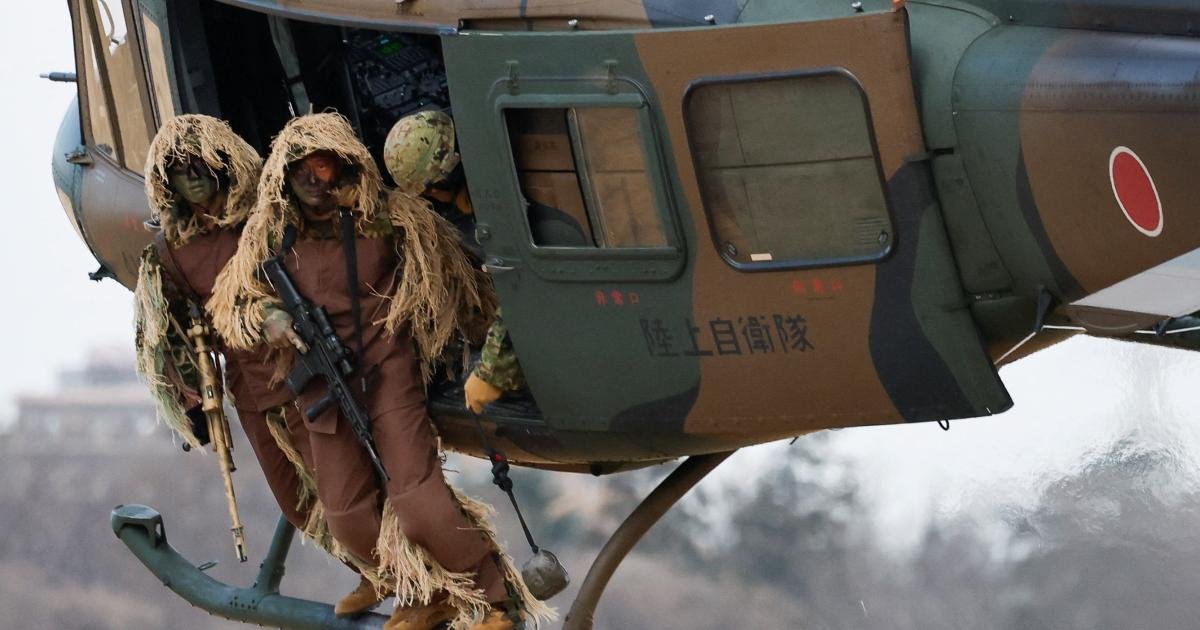
Japan has taken the shifts of the past few years seriously.
It is not just in the military sphere that rising competition has necessitated more deliberate government action. The multilateral trading system no longer works as it should, given the growing prevalence of nonmarket policies and practices. China has been producing goods in numbers that far exceed global demand, government policies and investment by massive corporations are driving technological innovation, and major countries are tightening their control over supply chains for strategic materials. All of this challenges the basic functioning of free trade, and until full confidence in the World Trade Organization is restored through the recovery of its dispute-settlement mechanism, countries have no effective recourse for harmful practices.
For a country such as Japan to protect its economic autonomy and vibrancy, it must reduce dependencies that other countries can exploit while securing its position in global supply chains. The state must ensure access to strategic materials, including rare earths; protect critical electricity, water, and telecommunications infrastructure; support research and development; invest in critical and emerging technologies such as artificial intelligence, biotechnology, and space; and control exports of advanced technologies including leading-edge semiconductors. Japan has begun to take such steps with its 2022 Economic Security Promotion Act and related legislation. In the years ahead, government intervention and close coordination with friendly countries will remain indispensable.
The breakdown of the global trading system is part of a broader erosion of a shared sense of responsibility for global governance. Part of the problem is that international institutions have not always represented the interests of all their members—and as countries belonging to the so-called global South gain economic heft and political influence, many are making their dissatisfaction with the existing order known. Adjusting to this shift in the global balance of power requires embracing the aspirations of these countries, as Japan has started to do. At the 50th anniversary of its partnership with the Association of Southeast Asian Nations in 2023, Tokyo committed to working closely with ASEAN partners to create a prosperous and sustainable economy in the Indo-Pacific. It has also hosted regular conferences with African leaders; at the most recent conference, held in Yokohama in August 2025, then Prime Minister Shigeru Ishiba held 34 bilateral meetings with participating leaders. Through continued collaboration with countries in Africa, Southeast Asia, and the rest of the global South, which starts by listening carefully to their concerns and expectations, Japan can contribute to the restoration of global governance.
“AMERICA FIRST”
Japan, like many other countries, has taken the shifts of the past few years seriously. During that time, it was able to assume that its allies shared its diplomatic commitments to joint deterrence and staunch support of a free and open international order, based on multilateralism and the rule of law.
Now, however, Japan must contend with the more complete realization of U.S. President Donald Trump’s “America first” policy, which may turn out to be the most consequential shift in international politics in recent history. As the U.S. National Security Strategy released last November made clear, the United States, the world’s largest market and foremost provider of military power, is now prioritizing its own interests above its stewardship of the international system. In its drive to remain the “most successful country,” as the strategy document puts it, the United States has stopped sacrificing its domestic interests for the sake of the global economy, and it has stepped back from its role as the world’s policeman. Washington has changed—perhaps irreversibly.
The effects are already visible in the Indo-Pacific. Early in the second Trump administration, the president’s warning that the United States would not defend a NATO ally that failed to direct two percent of its GDP to defense spending called into question the extent to which the United States would fulfill its defense commitments in a national security emergency anywhere—that is, how much it would do if a crisis were to occur in Asia. The U.S. National Security Strategy calmed some of this fear with its stated intention to “build a military capable of denying aggression anywhere in the First Island Chain,” referring to a string of major islands in the Pacific that includes Japan and Taiwan, but worries remain that Washington will follow through on its warning that it will not defend countries that do not invest sufficiently in their own security. In response, Japan has committed to substantially enhancing its defense capabilities. In Europe, where Trump’s animosity toward NATO partners and his threats to acquire Greenland have more thoroughly undermined allies’ assumption that the United States would come to their defense, many countries are making similar commitments.
The United States’ aggressive trade policies have presented an additional challenge, especially as they arrive amid a weakening of the multilateral trade system. In July 2025, Japan and the United States agreed to a 15 percent tariff rate on U.S. imports from Japan—a reduction from Trump’s original proposal of 25 percent—in exchange for Tokyo’s commitment to invest in the United States and purchase U.S. defense equipment. But this arrangement did not take the traditional form of an international agreement with a dispute-settlement mechanism. In the absence of such legal assurance, either party may be tempted to depart from the deal if it judges that the other party has not implemented its terms to a satisfactory degree. With such arrangements, Tokyo and many other capitals are forced to navigate an increasingly delicate balance of interests, relying on subjective judgments rather than predictable rules.
A NEW MISSION
Since the end of World War II, U.S. foreign policy has been generous to U.S. allies, but those allies now know that American generosity can no longer be taken for granted. Intensive debates are still underway across allied capitals about how best to handle relations with this new United States, but all agree that a new, sober-minded approach is necessary.
The impulses behind “America first” predate the first Trump administration, and the new orientation will likely persist. But this does not necessarily imply isolationism. The American public still aspires to global leadership, and to retain such a position, the United States should see the value of allies with strong economies and militaries. The challenge for those allies, including Japan, is to present concrete proposals for defense and economic cooperation in such a way that serves both their own interests and newly defined American priorities—and to nudge the United States toward the realization that its aspirations of maintaining leadership in today’s fiercely competitive world will require steady, trust-based cooperation with its allies.
The security environment in East Asia is of particular concern. Japan faces two nuclear-armed powers, China and Russia, that are intensifying their cooperation, while North Korea continues to advance its nuclear and missile capabilities. Confronting this peril has required that Japan strengthen its defense posture, including by introducing counterstrike capabilities to deter invasion. It is true that the United States’ overwhelming nuclear and conventional capabilities remain the ultimate guarantor of stability in East Asia. The Trump administration recognizes how powerful China has become, and it has placed deterrence against China in the Indo-Pacific among its core defense priorities. Washington’s interests go beyond defense, too—maintaining stability ensures that the United States can benefit from the economic dynamism of the region. Yet because security problems in the region may develop unexpectedly, Japan must be agile and always ready to respond—in other words, it needs to take strategic autonomy more seriously.
American generosity can no longer be taken for granted.
There is still significant overlap between U.S. strategic interests and the interests of U.S. allies, which means there are opportunities for allied leaders to highlight areas ripe for cooperation. But adjusting to the world of “America first” also requires Japan and other countries to look beyond the United States to address shared concerns. Responding to China’s ambitious domestic and regional agenda, strengthening defenses in a new era of warfare, and securing critical supply chains all require multilateral efforts. These efforts still need the support of the United States, but Japan will also need to deepen its collaboration with partners such as South Korea, ASEAN members, Australia, India, Canada, and European countries.
Even with capable partners, confronting today’s national security challenges will not be easy. Many governments struggle with severe fiscal deficits and shortages of public-sector personnel, and Japan is no exception. An effective strategy requires prioritization, allocating limited resources to the most critical objectives rather than promising to do everything and then falling short. This means making difficult political decisions to adjust the level of defense spending, reallocate budgets from traditional military platforms to unmanned and AI-enabled systems, and invest in cutting-edge industries. And as people today both follow foreign policy more closely than in the past and tend to consume information that aligns with their existing views, national security practitioners must take greater care to explain and defend their decisions to the public than their predecessors did. Without a shared popular understanding of the realities of current threats, Japan will find it difficult to mount an effective response. It is a good thing, then, that Prime Minister Sanae Takaichi’s government has decided to spend one year revising Japan’s National Security Strategy, leaving time for the Japanese public to grapple with the new realities that make the strategy necessary.
The tensions in the world today are unsustainably high. Having served in Japan’s foreign service for nearly four decades, I am certain that even as countries take necessary steps to protect themselves, this is the time to emphasize diplomatic engagement. Direct communication between rivals can help reduce frictions, and refusing dialogue seldom yields its intended outcome. Japan’s outreach to like-minded partners, including many in the global South, can also help consolidate support for international law and reinforce the principle that any attempt to occupy the land of a foreign country or otherwise disrupt the status quo by force will not be tolerated. Adjusting to a world of complex security threats and to a new relationship with the United States calls for strong defense, intelligence, and economic capabilities. But working toward a less tense, less fragmented future calls for diplomacy.
Loading…
