

As Iran confronts the aftermath of mass state violence and braces for the possibility of U.S. strikes, debate over the country’s future has intensified. What distinguishes this moment is not simply the scale of repression, but the convergence of internal exhaustion and external pressure that has narrowed the regime’s margin for political error. It has accelerated a question that could once be deferred: how political authority will be reorganized after the supreme leader, and through what means. That question has now been raised explicitly by President Donald Trump. The answer will shape not only Iran’s internal trajectory, but the stability of the region around it.
Iran is not a democracy. But neither is it a closed military junta or a personalist dictatorship devoid of institutional life. The country retains functioning elected institutions, regular elections, and a narrow but real spectrum of political competition. Presidents, parliaments, and municipal councils are chosen at the ballot box. Factions compete, and political participation persists even under conditions of fear and constraint. What has prevented these institutions from translating participation into popular sovereignty is not their absence, but the structure of power that sits above them.
Unelected bodies aligned with the supreme leader — most critically the security and judicial apparatus — restrict political competition, circumscribe the authority of elected officials, and subordinate representative institutions to a single office. Elected institutions are permitted to govern in some domains, but remain ultimately subordinate on matters treated as core by the supreme leader and the security state. The result is a system that tolerates participation while neutralizing accountability: elections without sovereignty, governance without final authority.
Iran’s political system has not lacked serious attempts at internal change. Beginning in the late 1990s under President Mohammad Khatami, reform-minded leaders sought to expand freedom of expression, strengthen civil society, and rebalance authority toward representative institutions. These efforts tested whether gradual change and constitutional evolution were possible from within the system.
The response to those efforts revealed the system’s limits. The Green Movement — widely regarded as the largest mass mobilization in Iran’s post-revolutionary history — was triggered by the perceived theft of electoral choice and the growing belief that the ballot box itself was being deliberately neutralized. When this challenge appeared to threaten unelected authority, the response was repression rather than accommodation.
In the years that followed, candidates were screened more carefully, outcomes were generally allowed to stand, and meaningful policy authority was increasingly centralized. Participation was tolerated — and at times encouraged — so long as it did not translate into challenges to ultimate decision-making power. Over time, this arrangement reshaped public engagement with electoral politics. Periods of disillusionment and withdrawal gave way to renewed participation, not because faith in the system had been restored, but because many Iranians concluded that disengagement only deepened their exclusion.
Voting became a pragmatic act — an effort to mitigate harm and preserve limited space rather than a belief that elections could deliver full popular sovereignty. The result is the paradox Iran faces today: a society with real political participation and expectations of representation, governed by a system designed to contain popular sovereignty rather than express it.
For more than two decades, Iran’s political order has been shaped by a single supreme leader who consolidated authority, sidelined rivals, and bound his power to an expanding security apparatus. That concentration of authority proved durable, but durability should not be mistaken for permanence. Over time, this model of rule has generated profound hostility — not only among the public, but across significant segments of the political and security establishment itself. That hostility does not necessarily take the form of open dissent or organized opposition, even as controlled debate and factional disagreement persist within permitted bounds. It is visible instead in the absence of public consolidation around succession — even under conditions of acute pressure — through reluctance to openly assume responsibility for outcomes, efforts to preserve flexibility across factions, and a preference for managed ambiguity over locking in arrangements that could themselves prove destabilizing. Within this context, reproducing the supreme leadership as a singular, unquestioned source of authority would likely prove increasingly costly. The office itself no longer clearly commands the authority needed to reproduce itself. This does not mean the institution is powerless. It means that its ability to regenerate uncontested authority through succession rather than coercion has been fundamentally compromised.
Even when the system has shown moments of pragmatism, those adjustments have come late and only after repeated cycles of repression. Ending unelected rule would constitute fundamental political change. The question is whether that change is channeled through institutions capable of governing, or driven by force in ways that risk instability and repression under new banners.
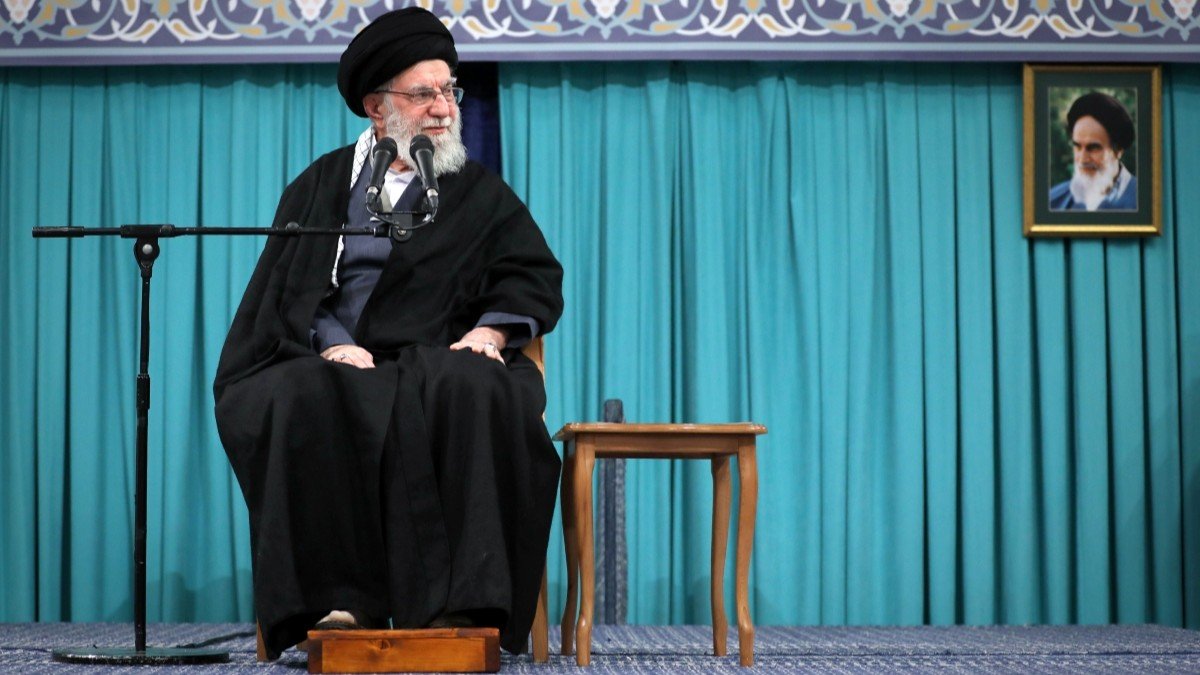
Supreme Leader Ali Khamenei is 86 years old, and the political order built around his authority is approaching an unavoidable transition through death, internal fracture, or escalating external pressure. This crisis has compressed the timeline for political reorganization inside Iran. Attempts to preserve continuity through another unelected supreme leader or a security-dominated succession would likely reproduce the same legitimacy crisis under even more brittle conditions. The alternative is not a clean or predetermined transition, but a de facto shift in where authority is exercised during a period of crisis. Iran’s constitutional order already contains mechanisms for succession, including interim arrangements and the formal role of the Assembly of Experts. But history suggests that moments of rupture are not resolved solely by written procedure. They are resolved by how power is actually exercised, and by which institutions are able to govern when legitimacy is contested and pressure is acute. In such a scenario, the crisis would not stem solely from public rejection, but from the absence of elite consensus that a new supreme leader could stabilize authority rather than intensify contestation.
In such a moment, authority could shift not through the formal abolition of supreme leadership, but through an elite accommodation that allows elected institutions to become the primary locus of governance in practice. For many within the system, the supreme leader’s office itself has become politically radioactive — too concentrated, too exposed, and too costly to reproduce without intensifying legitimacy deficits. A reorientation could take several forms: a collective decision among senior clerics and political elites to defer consolidation of unelected authority; an interim arrangement in which executive and parliamentary bodies take on expanded responsibility; or the selection of a successor who permits a rebalancing of power toward representative institutions as a survival strategy.
Proposals for collective leadership (such as a multi-member council rather than a single supreme leader) have circulated as early as 2015, reflecting efforts to dilute personalized authority and, in practice, shift governing capacity toward elected, executive institutions without formally rewriting the constitutional order. Iran has at times in its post-revolutionary history operated with a looser and more executive-centered balance. In the immediate postwar period under President Akbar Hashemi Rafsanjani, elected institutions exercised greater practical authority than they do today, before power was progressively centralized under the current supreme leader and the security apparatus. A post-Khamenei government could be pushed even farther in that direction out of necessity.
Such an outcome would not depend on the emergence of a single figure, but the convergence of incentives among political and security elites who face a shared risk: that continuity through coercion would deepen public hostility, fracture governing authority, and invite further external escalation. While hardline actors could seek to neutralize or capture any accommodation, Iran’s coercive apparatus is not monolithic. Its behavior in a succession crisis would be shaped less by ideology than by calculations of survival and state integrity, exposure, and institutional preservation. A shift toward elected governance would therefore reflect pragmatic elite adaptation under pressure, driven by actors who already exercise practical authority within the system, particularly those operating through elected and governing executive institutions.
Presidents, parliamentarians, ministers, and senior executives derive political weight not only from proximity to power, but from electoral mandates, public accountability, and responsibility for governing in practice. They implement policy within the system’s constraints while bearing the consequences of failure. Those who carry the daily burden of governing are therefore best positioned to shape any elite accommodation that emerges in a succession crisis — not because they are newly persuaded of the virtues of representative government, but precisely because the structural failures of unelected authority have long been evident to them.
Over the last several weeks, governments across the Middle East have worked to prevent a wider war with Iran, not out of ideological sympathy for Tehran, but fear of regional fallout including state collapse, refugee flows, economic disruption, and wider instability. For regional actors, the central concern is less Iran’s ideology than whether authority is exercised through institutions capable of managing internal dissent, economic stress, and external confrontation without repeated escalation. That concern makes this moment consequential. Risk avoidance alone will not produce stability if succession is resolved through coercion rather than consent.
What is unfolding now more closely resembles coercive diplomacy in real time than a settled military campaign. U.S. military signaling, economic pressure, and rhetorical escalation are aimed at shaping Iranian calculations around security concessions. In that context, treating Iran’s internal political crisis as secondary to military signaling or short-term coercive leverage misses the moment.
Iran’s experience with representative institutions long predates the Islamic Republic, and the memory of externally interrupted democratic experiments continues to shape elite and public resistance to imposed political outcomes. What this moment requires is not premature escalation, but deliberate restraint, avoiding actions that would foreclose internal accommodation in favor of coercive consolidation. This also means avoiding premature recognition of alternative authorities, exile-backed leadership projects, or rhetorical commitments that foreclose internal elite accommodation before it can emerge.
Direct military action would likely consolidate command-and-control within the security apparatus, narrow elite debate, and foreclose the very accommodations that succession uncertainty might otherwise force. The Islamic Republic’s own history offers a cautionary precedent: external war has strengthened internal consolidation rather than weakened it on more than one occasion.
This is not a call for instant democratization, nor does it absolve those officials responsible for ongoing atrocities. It is a recognition of political reality and — compared to militarization, fragmentation, or renewed repression — the only path that plausibly aligns Iran’s internal dynamics with the interests of its society and the region alike.
Dokhi Fassihian is a democracy and human rights expert focused on Iran and the Middle East. She serves on the Iran Advisory Board at the Middle East Institute.
Image: Ali Khamenei via Wikimedia Commons
