

Asian Military Review spoke to Andrew Pearcey, CEO of the World Defense Show, shortly before the event kicked off near Riyadh, Saudi Arabia.
World Defense Show is still a relatively new entrant on the global defence exhibition calendar. What was the original vision behind launching WDS, and what gap was it designed to fill?
World Defense Show was established to address a clear gap in the global defence exhibition landscape. While many established events focus on individual domains or specific technologies, WDS was conceived as a fully integrated defence platform reflecting how modern defence operations are actually planned, executed and sustained.
The founding vision was straightforward: create a purpose-built exhibition that brings together air, land, sea, space, security and emerging technologies within a single operational environment – not adapted from civilian exhibition infrastructure, but designed specifically for defence from the ground up.
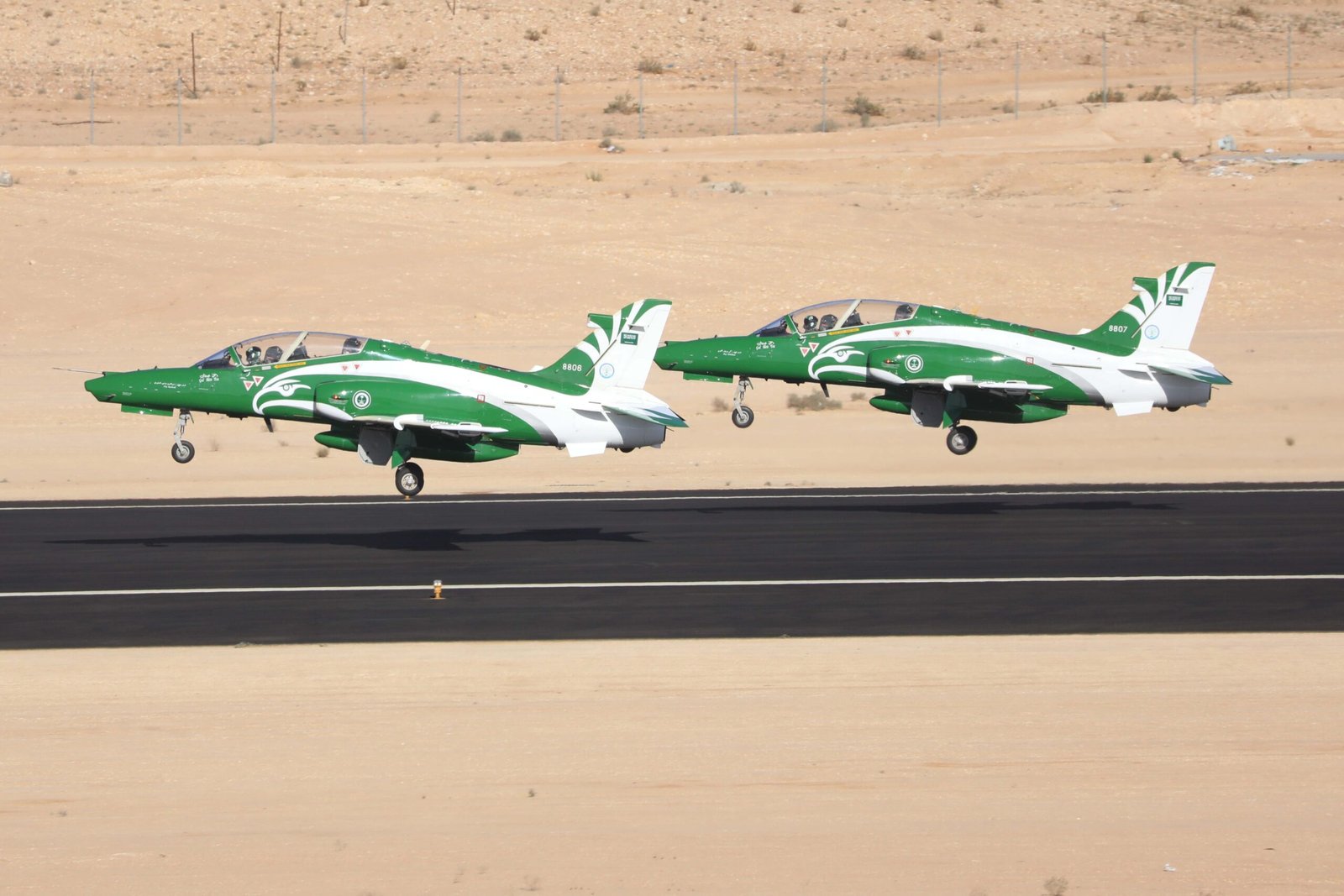
This required more than exhibition space. It demanded a venue capable of supporting live air operations, land demonstrations, unmanned systems and high-security engagement simultaneously. The result is a platform that mirrors the realities of contemporary multi-domain operations, demonstrating how systems connect, integrate and operate together, rather than presenting capability in isolation. Since the first edition, that founding vision has remained consistent, while the scale, depth and maturity of the platform have evolved significantly with each edition.
In practical terms, how does that integrated, multi-domain model work for visitors and participants on the ground?
World Defense Show is the only defence exhibition globally to bring together air, land, sea, space, security and emerging technologies under one roof, supported by live operational demonstrations within the same purpose-built venue.
This creates a fundamentally different participant experience. Visitors can move seamlessly between static displays and live air demonstrations, then transition directly to unmanned system trials or innovation zones – all within one coherent environment and on the same day.
For military delegations and procurement officials, this means observing how systems integrate in practice, not just in theory. For industry, it enables capability to be demonstrated as part of a broader system rather than as isolated products.
Live air displays operate alongside land and unmanned demonstrations; innovation zones connect directly to operational use cases; and content programming aligns with real-world capability challenges faced by armed forces today. The result is not simply an exhibition of equipment, but a platform that demonstrates defence capability as a system – an approach that increasingly resonates with governments, military leaders and industry partners worldwide.

Riyadh has quickly become a key meeting point for the global defence industry. What does the level of international participation at WDS say about Saudi Arabia’s role as a convenor for global defence engagement?
The scale and quality of international participation at World Defense Show reflects growing global confidence in Saudi Arabia’s ability to convene complex, high-security defence engagement at international standards.
Across successive editions, WDS has attracted senior military leadership, government delegations and leading defence companies from around the world. Participation has continued to expand both geographically and institutionally, with strong return attendance – an important indicator of credibility within the defence sector.
For international industry, WDS offers a neutral, professionally governed platform where dialogue, partnership exploration and operational discussion can take place in a structured environment. For governments and armed forces, it provides access to a broad spectrum of capability, innovation and expertise in one location. This convening role is increasingly important as defence challenges become more interconnected and require collaboration across regions, domains and industries.
How does World Defense Show balance its role as an international exhibition while also supporting the development of local industry and supply chains?
These objectives are not in tension – they are strategically aligned. World Defense Show operates as a fully international defence exhibition, and that global framework is precisely what creates meaningful opportunities for local industry development.
Under Saudi Vision 2030, the kingdom has set a clear goal: localising 50% of defence expenditure by 2030. Achieving that target requires more than policy – it requires sustained engagement between local companies and international partners, technology transfer frameworks and supply chain integration at scale.
WDS was designed to support that ecosystem. Saudi companies, including national champions and small-to-medium enterprises, participate alongside international primes within integrated exhibition zones rather than segregated spaces. This design encourages direct interaction, partnership dialogue and supply-chain visibility.
Dedicated features such as the Saudi Supply Chain Zone, innovation platforms, and structured engagement programmes allow local companies to present capabilities, explore collaboration opportunities and connect with decision-makers from across the defence ecosystem. By embedding localisation within a credible international platform, rather than isolating it, WDS creates the conditions for long-term industrial partnerships that serve both national objectives and global industry requirements.
Collaboration is a recurring theme at WDS. How does the show create meaningful engagement between governments, armed forces and industry beyond traditional exhibition interactions?
Meaningful engagement does not occur by chance. At WDS, it is designed into the structure of the platform. The show delivers structured delegation programmes, secure government-to-industry engagement environments, and curated meeting formats that support focused dialogue. Over the course of the event, thousands of structured bilateral meetings take place in dedicated secure facilities, complemented by content programmes, closed-door briefings and industry-led discussions aligned with operational and industrial themes.
These are not incidental interactions – they are scheduled, secured and supported by professional engagement teams working across government relations, military liaison and industry coordination.
This framework allows conversations to move beyond transactional exchanges toward longer-term collaboration, whether that involves industrial partnerships, technology exploration or capability alignment. By combining formal engagement structures with open exhibition interaction, WDS enables both strategic and practical dialogue to occur within the same environment.
From an organiser’s perspective, what defines success for World Defense Show – is it scale, participation, partnerships or longer-term outcomes?
Success for World Defense Show is measured across multiple dimensions. Scale and participation provide an important baseline – exhibitor numbers, international representation and attendance – but they are not the sole indicators. Equally important is the quality of engagement taking place across the platform. This includes the depth of international participation, the strength of repeat attendance, the level of collaboration initiated and the credibility of the show as a serious defence environment.
Longer-term outcomes also matter. Many of the most meaningful partnerships and industrial engagements initiated at WDS continue well beyond the event itself, reinforcing the show’s role as a catalyst rather than a standalone moment in time.
Looking ahead, how do you see World Defense Show evolving as a global platform over the next decade, as defence technologies and operational concepts continue to change?
Over the next decade, World Defense Show will continue evolving from a major international exhibition into a sustained convening platform for the global defence community. As defence ecosystems increasingly emphasise integration, autonomy and data-driven systems, the value of platforms that enable cross-domain dialogue will only increase. WDS is structured to adapt alongside these changes.
Future editions will continue to deepen engagement across innovation, knowledge exchange, talent development and international collaboration, while maintaining the operational realism that defines the show. The objective is not simply growth in size, but growth in relevance – ensuring that World Defense Show remains aligned with how defence capability is developed, integrated and delivered in an increasingly complex global environment.

