

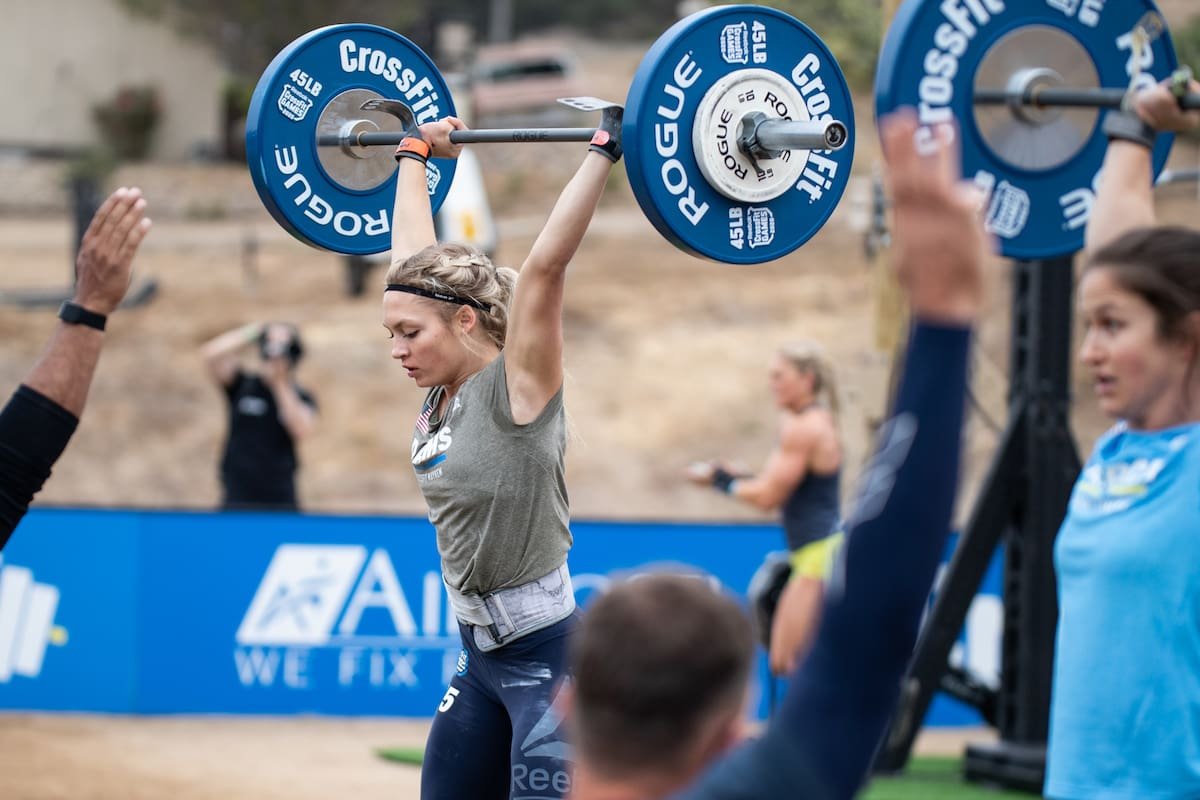
Thrusters are simple on paper: a front squat flowing straight into an overhead press. In reality, they are one of the most metabolically demanding movements in functional fitness. They challenge the legs, core, shoulders, and lungs all at once.
If you have ever found yourself gasping midway through a set of thrusters, you already know the truth: breathing can make or break your performance.
Breathing during thrusters is not just about comfort. It directly influences force production, spinal stability, oxygen delivery, fatigue resistance, and even movement efficiency. The way you inhale and exhale can determine whether you keep cycling reps smoothly or hit a wall.

This article explains how to breathe more effectively during thrusters using established respiratory physiology, biomechanics, and exercise science. Every recommendation is grounded in research, and everything is presented in clear, practical language you can use in your next workout.
Why Breathing Matters So Much During Thrusters
Thrusters combine a front squat (a large, lower-body compound movement) with an overhead press (an upper-body compound movement). That means:
- High muscular demand
- High oxygen demand
- Significant core stabilization
- Rapid accumulation of metabolic byproducts
The Oxygen Cost of Thrusters
Large compound exercises increase oxygen consumption dramatically. Oxygen uptake (VO2) rises in proportion to muscle mass involved and intensity (Astrand et al., 2003). Because thrusters recruit the quadriceps, glutes, hamstrings, spinal erectors, deltoids, triceps, and core musculature, they place a high aerobic and anaerobic demand on the body.
As intensity rises, the body relies more heavily on anaerobic glycolysis, leading to increased lactate and hydrogen ion accumulation (Brooks, 1986). This contributes to the burning sensation and rapid breathing you experience during high-rep thrusters.
Your breathing strategy directly affects how efficiently oxygen is delivered and carbon dioxide is cleared. Inadequate ventilation can accelerate fatigue.
Breathing and Core Stability
Breathing is also mechanical. The diaphragm is not just a respiratory muscle. It is a key stabilizer of the spine. Research shows that the diaphragm contributes to trunk stability by increasing intra-abdominal pressure (Hodges et al., 2001).
During loaded movements like front squats and presses, intra-abdominal pressure helps stiffen the spine and reduce shear forces (McGill, 2010). That means how and when you breathe influences spinal safety and force transfer.
In thrusters, poor breathing patterns can:
- Reduce core stability
- Decrease force output
- Increase fatigue
- Compromise technique
The Physiology of Breathing Under Load
To breathe effectively during thrusters, you need to understand two core principles:
- Ventilation must meet metabolic demand.
- The trunk must remain stable under load.
These two goals often compete with each other.
Intra-Abdominal Pressure and the Valsalva Maneuver
The Valsalva maneuver involves taking a deep breath and holding it while contracting the abdominal muscles. This increases intra-abdominal pressure, improving spinal stiffness and force production (Hackett and Chow, 2013; McGill, 2010).

Studies show that breath-holding during heavy lifts increases trunk rigidity and enhances stability (McGill, 2010). It is commonly used during maximal or near-maximal efforts.
However, prolonged breath-holding:
- Increases blood pressure significantly (MacDougall et al., 1992)
- Reduces venous return temporarily
- Is not sustainable during high-rep conditioning work
Thrusters, especially in workouts with moderate loads and high reps, require a hybrid approach: bracing for stability while still maintaining effective ventilation.
Diaphragmatic Breathing
Diaphragmatic breathing (also called belly breathing) improves ventilatory efficiency and reduces accessory muscle overuse (Hodges et al., 2001; Kolar et al., 2012). When the diaphragm contracts effectively:
- The abdomen expands
- Intra-abdominal pressure increases
- Oxygen exchange improves
Shallow chest breathing, in contrast, reduces ventilatory efficiency and increases fatigue in accessory muscles.
For thrusters, diaphragmatic breathing allows you to:
- Maintain core stiffness
- Avoid excessive tension in the neck and shoulders
- Improve endurance during repeated reps
The Ideal Breathing Pattern for Thrusters
There is no single breathing strategy for every situation. The correct pattern depends on load, rep range, and fatigue level. But there are evidence-based principles that apply broadly.
Let’s break it down phase by phase.
Breathing During the Front Squat Phase
Inhale Before the Descent
Before initiating the squat, take a controlled diaphragmatic breath.
Why?
Pre-loading the trunk with air increases intra-abdominal pressure and enhances spinal stiffness (McGill, 2010). This protects the lumbar spine and improves force transfer from the legs to the bar.
For moderate to heavy thrusters:
- Inhale deeply before descending.
- Brace the core.
- Maintain that pressure as you move down.
Hold or Controlled Exhale?
For heavier sets (e.g., low reps, high load), a brief breath hold during the descent and ascent of the squat is appropriate and supported by research on trunk stabilization (Hackett and Chow, 2013).
For lighter, high-rep sets, you may:
- Inhale at the top.
- Maintain pressure during descent.
- Begin a controlled exhale as you pass through the sticking point on the way up.
Exhaling during the concentric phase can reduce excessive blood pressure spikes compared to prolonged breath-holding (MacDougall et al., 1992), while still allowing sufficient trunk stability.
Breathing During the Press Phase
The press is where many athletes lose rhythm.
Exhale as You Drive Overhead
Exhaling during the press phase can help:
- Reduce thoracic stiffness
- Improve bar path control
- Prevent unnecessary neck tension
Research shows that exhalation during exertion can assist in coordinating muscular contraction and reducing excessive blood pressure elevations (MacDougall et al., 1992).

For most athletes, the most sustainable pattern during moderate-load thrusters is:
- Inhale and brace before squat.
- Maintain pressure through ascent.
- Exhale as you press overhead.
- Inhale again once the bar returns to the shoulders.
This creates a rhythmic breathing cycle that supports both stability and ventilation.
Matching Breathing to Rep Range
Low Reps, Heavy Weight (1–5 Reps)
Primary goal: Maximum force production and spinal stability.
Recommended strategy:
- Deep inhale before each rep.
- Brief Valsalva through squat and drive.
- Exhale after lockout.
This approach is consistent with strength training research supporting increased trunk stiffness during heavy lifts (McGill, 2010).
Moderate Reps (6–15 Reps)
Primary goal: Balance strength and conditioning.
Recommended strategy:
- Inhale at top.
- Brace through squat.
- Begin exhale as you drive overhead.
- Re-inhale quickly before next descent.
This reduces cardiovascular strain while preserving stability.
High Reps (15+ Reps)
Primary goal: Oxygen efficiency and fatigue resistance.
In high-rep settings, continuous breath-holding is unsustainable. Ventilation must increase to meet metabolic demand (Astrand et al., 2003).
Recommended strategy:
- One breath per rep.
- Controlled inhale before descent.
- Continuous exhale through drive and press.
- Avoid full breath-holds unless briefly resetting.
This pattern supports carbon dioxide clearance and reduces the sensation of air hunger.
How Poor Breathing Increases Fatigue
Fatigue during thrusters is not just muscular. It is respiratory and metabolic.
Carbon Dioxide Accumulation
During intense exercise, carbon dioxide production rises sharply. If ventilation does not keep up, blood CO2 levels increase, contributing to dyspnea (the sensation of breathlessness) (Astrand et al., 2003).
Improper breathing patterns, such as shallow or irregular breathing, impair gas exchange and accelerate perceived exertion.
Respiratory Muscle Fatigue
The diaphragm and accessory breathing muscles can fatigue during intense exercise. Respiratory muscle fatigue has been shown to reduce performance and increase limb muscle fatigue through a reflex mechanism that redistributes blood flow (Romer et al., 2006).
Efficient breathing reduces unnecessary respiratory muscle strain, helping preserve performance deeper into a workout.
Common Breathing Mistakes During Thrusters
1. Shallow Chest Breathing
This reduces diaphragmatic engagement and trunk stability (Kolar et al., 2012).
Fix: Practice diaphragmatic breathing in warm-ups.
2. Excessive Breath-Holding
Holding your breath for multiple reps can spike blood pressure dramatically (MacDougall et al., 1992).
Fix: Use breath-holds strategically, not continuously.
3. Random Breathing
Irregular breathing disrupts rhythm and increases anxiety perception during high-intensity exercise.
Fix: Establish a consistent breath-per-rep pattern.

Training Your Breathing for Better Thrusters
Breathing is trainable.
Diaphragm Strengthening
Inspiratory muscle training has been shown to improve exercise performance and reduce respiratory muscle fatigue (Romer et al., 2006).
Simple methods:
- Controlled nasal breathing drills
- Crocodile breathing (prone diaphragmatic breathing)
- Inspiratory resistance devices (where appropriate)
Tempo Thrusters
Perform thrusters at controlled tempos while focusing on:
- Inhale before descent
- Controlled exhale during drive
- Immediate reset breath
This builds automatic breathing coordination.
Nasal vs. Mouth Breathing
At high intensities, mouth breathing becomes necessary to meet ventilation demands (Astrand et al., 2003). However, nasal breathing during warm-ups can promote diaphragmatic activation and better breathing mechanics.
Safety Considerations
The Valsalva maneuver significantly increases systolic and diastolic blood pressure during lifting (MacDougall et al., 1992). Individuals with cardiovascular disease or hypertension should avoid prolonged breath-holding and consult a healthcare professional before heavy lifting.
For most healthy athletes, short, controlled breath-holds during heavy efforts are considered safe when used appropriately.
Putting It All Together: A Practical Framework
Here is a simple system you can apply immediately:
- Before each rep: Diaphragmatic inhale.
- Descend with core braced.
- Maintain pressure through the drive.
- Exhale as the bar moves overhead.
- Re-inhale quickly at the top before next rep.
Adjust the length of breath-hold depending on load and fatigue.
The goal is not to eliminate breath-holding. The goal is to use it strategically.
Final Thoughts
Thrusters test more than your legs and shoulders. They test your breathing efficiency, trunk stability, and metabolic resilience.
Scientific evidence shows:
- Intra-abdominal pressure improves spinal stability.
- Controlled breath-holding enhances force production.
- Excessive breath-holding increases cardiovascular strain.
- Efficient ventilation delays fatigue.
- Diaphragmatic breathing improves trunk control.
When you coordinate breathing with movement, you:
- Lift more efficiently
- Fatigue more slowly
- Maintain better posture
- Recover faster between reps
The difference between collapsing at rep 12 and pushing through to rep 20 often comes down to how well you manage your breath.
Master your breathing, and thrusters become far more manageable.
Key Takeaways
| Principle | Why It Matters | What To Do |
|---|---|---|
| Diaphragmatic breathing improves stability | Increases intra-abdominal pressure and trunk stiffness | Inhale deeply into abdomen before each rep |
| Brief breath-holding enhances force | Improves spinal rigidity during heavy lifts | Use short Valsalva for heavy reps only |
| Exhaling during exertion reduces strain | Limits extreme blood pressure spikes | Exhale as you press overhead |
| High reps require continuous ventilation | Prevents CO2 buildup and respiratory fatigue | One breath per rep at high volume |
| Breathing rhythm improves efficiency | Reduces anxiety and wasted energy | Match inhale to descent, exhale to press |
References
- Astrand, P.O., Rodahl, K., Dahl, H.A. and Stromme, S.B. (2003) Textbook of Work Physiology: Physiological Bases of Exercise. 4th edn. Champaign: Human Kinetics.
- Brooks, G.A. (1986) ‘The lactate shuttle during exercise and recovery’, Medicine and Science in Sports and Exercise, 18(3), pp. 360–368.
- Hackett, D.A. and Chow, C.M. (2013) ‘The Valsalva maneuver: its effect on intra-abdominal pressure and safety issues during resistance exercise’, Journal of Strength and Conditioning Research, 27(8), pp. 2338–2345.
- Hodges, P.W., Gandevia, S.C. and Richardson, C.A. (2001) ‘Contractions of the human diaphragm during rapid postural adjustments’, Journal of Physiology, 537(3), pp. 999–1008.
- Kolar, P., Sulc, J., Kyncl, M., Sanda, J., Cakrt, O., Andel, R., Kumagai, K., Kobesova, A. (2012) ‘Postural function of the diaphragm in persons with and without chronic low back pain’, Journal of Orthopaedic and Sports Physical Therapy, 42(4), pp. 352–362.
- MacDougall, J.D., Tuxen, D., Sale, D.G., Moroz, J.R. and Sutton, J.R. (1992) ‘Arterial blood pressure response to heavy resistance exercise’, Journal of Applied Physiology, 58(3), pp. 785–790.
