

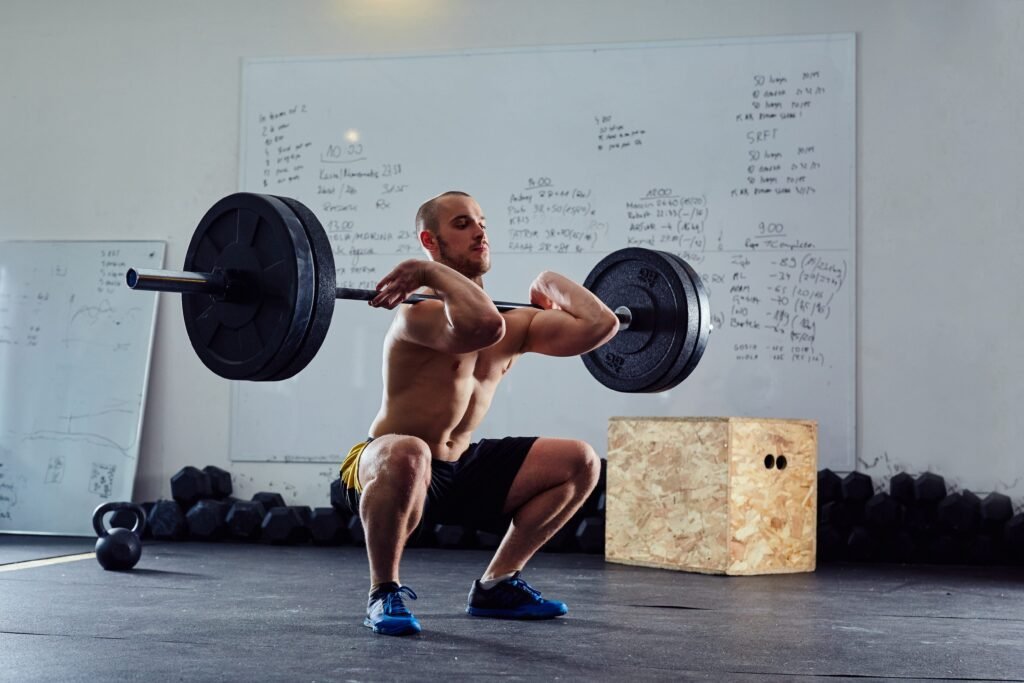
Technique can make or break your lifting, and as a beginner, you need to know what to do to avoid injury. There’s no point in hauling 20kg kettlebells above your head or deadlifting massive weights if the movements don’t support your goals, technique, or long-term joint health.
By learning proper techniques from the start, you can set yourself up for success and smash your goals far faster than if you went in guessing, rushing, or relying on bad habits.
Focus on Movement Quality Before Adding Weight
One of the quickest ways to slow down your lifting progress as a beginner is by adding too much weight too soon. When the load jumps up too quickly, your body will look for shortcuts and take them. Your positions will slip, stronger muscles will take over, and small faults can creep in without you realising it.

Starting with a lighter load gives you the chance to learn the basics of the movements properly. You can feel where your weight is, stay balanced, and repeat the same positions correctly from rep to rep. That repetition is what builds the kind of technique you can rely on as the weight increases.
A sensible starting point for most beginners is a load you can lift for 8-12 reps while keeping the same positions throughout. If the final parts of your set start to look or feel different from the first, the weight is too heavy.
A simple guideline is to use a load you can lift for 12 to 15 repetitions, keeping the same positions from start to finish. For most, this means roughly 2 to 5 kg dumbbells for upper-body exercises, 5 to 10 kg for lower-body work, or an empty barbell, which usually weighs between 15 and 20 kg.
Once you can complete several sets with consistently good form, you can begin to increase the load.
Learn the Main Lifting Patterns First
Most strength exercises fall into a few basic patterns: squatting, hinging, pushing, pulling, and bracing. Spend time learning these patterns before you start worrying about variations.
Squatting
Squatting trains your ability to bend at the hips and knees together while keeping your balance over your feet. A good squat spreads load through your hips and legs, and this reduces stress on your knees and lower back.
Hinging
With lighter weights, the hinge stays fairly upright, with your torso at around 30° to 45°, which makes balance easier while you learn the movement. As loads increase, you’ll tip forward a bit more, closer to 45°-60°.
Pushing your hips back keeps weight over the midfoot and shifts work to the glutes and hamstrings.
Pushing
Pushing movements teach you to move weight away from your body using your pectorals, front deltoids, and triceps, with your torso providing a stable base. When your shoulders and elbows stay lined up, your chest and shoulders drive the press while your triceps finish it, spreading effort evenly and reducing stress on your joints.

Pulling
Pulling movements teach you how to bring weight toward your body using your upper back, lats, and arms. They help balance out pressing work and keep your shoulders feeling good.
Learning solid pulling positions early supports posture and makes it easier to handle more training without your upper body tightening up as sessions get heavier.
Bracing
Bracing ties all your lifts together by setting your torso before you move. Tightening your midsection helps prevent your spine from shifting and keeps your posture consistent from start to finish. That way, your hips, legs, and arms work as a unit instead of each doing its own thing under weight.
Common Beginner Mistakes That Slow Progress
Mistakes are normal when learning to lift. The trick is identifying them early and correcting them every time they happen:
Rounding the Back
Rounding usually creeps in when you rush the setup or lose tension before the lift starts. Slow down by placing your feet properly first, hinging at the hips to roughly 30° to 45°, and bracing your core like you’re about to get nudged in the ribs. Before you move, pull your shoulder blades slightly back and down to set your upper back, then keep that position as you lift.
Knees Losing Alignment
Your knees drifting inward during squats or lunges can throw off your balance and make your lifts feel shaky. This usually happens when your hips and glutes aren’t working hard enough. Fix it by slowing your descent, keeping your knees in line with your toes, and building your hip strength so your legs stay steady through the movement.
Using Momentum
When you swing or jerk the weight, you’re letting momentum take over and pulling work away from the muscles you’re trying to train. This usually means your load is too heavy. Fix it by lowering the weight and slowing each rep down so it’s your muscles that do the lifting, not the swing.
Losing Depth
Heavy weight or limited mobility can cause you to shorten your movements, and this cuts into the benefit of each rep. Fix this issue by lowering the load, working within a range you can repeat with the same positions, and gradually improving mobility so that fuller movement becomes easier.
Skipping Core Engagement
Not bracing before your lift will make it feel loose before it even starts. The weight will pull you out of position, causing your posture to shift, and everything will feel harder than it should. Fix it by always bracing before you move, tightening your abs, lower back, and hips together so your torso feels solid and ready to lift.
Ignoring Pain or Skipping Recovery
While mild muscle soreness is normal when starting to lift, sharp pain, joint discomfort, or soreness that worsens from session to session are signs that something needs to change.
Don’t assume you need to “tough it out,” because lifting through pain can reinforce poor movement patterns and turn small issues into long-term setbacks. Taking an extra rest day, lowering the load, or reducing load can give your body time to recover and reset. If the issue persists, it’s a good idea to see a licensed physiotherapist who can identify any underlying problems and guide you on safe adjustments to prevent further injury.
Lock In Your Technique Over the Long Run
Learning proper lifting technique takes time, and that time will eventually pay off in a big way.
Early on, each rep helps your body get more comfortable with the movement and build better coordination. Giving yourself the space to learn will have you looking forward to training and being more productive from the start.
