

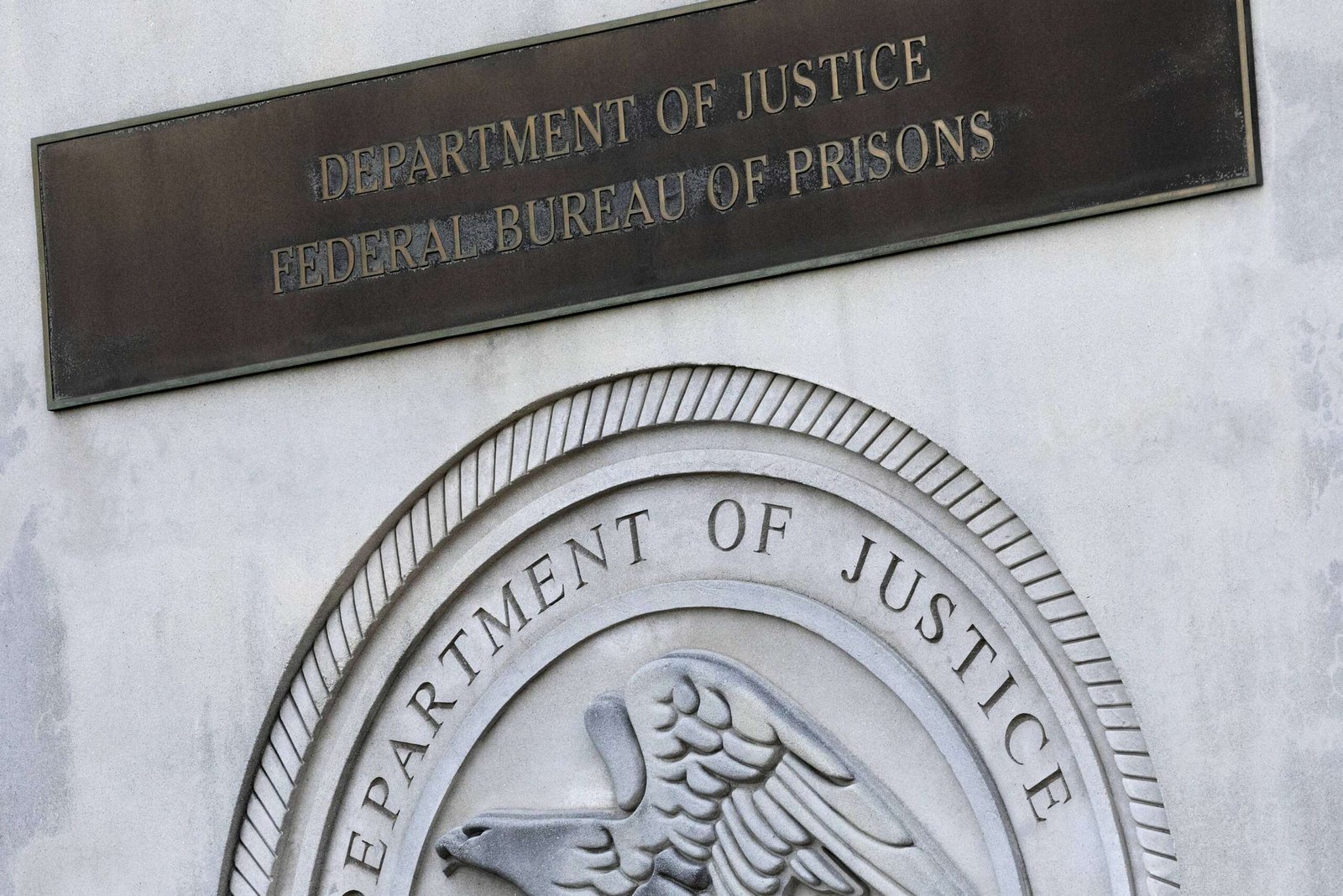
House Democrats are pressing leaders at the Federal Bureau of Prisons for details on their plans to address major and long-time staffing shortages across the frontline BOP workforce.
A letter sent Friday to BOP Director William K. Marshall III from top Democrats on the House Judiciary Committee warned that workforce issues have reached a “crisis point,” leading to operational challenges and unsafe conditions in the federal prison system.
“By far, the most significant challenge to BOP’s ability to fulfill its public safety mission is its pervasive shortage of critical staff — particularly of correctional officers, healthcare professionals and mental health specialists,” the letter, obtained by Federal News Network, reads.
Committee Ranking Member Jamie Raskin (D-Md.), Subcommittee Ranking Members Lucy McBath (D-Ga.) and Jasmine Crockett (D-Texas), and Rep. Joe Neguse (D-Colo.) — the signatories of Friday’s letter — are requesting more information from the agency on its plans to support the workforce. That includes details related to safety concerns at BOP; current recruitment efforts after a partial agency hiring freeze; the high use of overtime hours and staff “augmentation;” as well as fallouts from the recent loss of BOP employees to higher-paying positions elsewhere. The lawmakers set a 30-day deadline for the agency to respond.
“We believe these deeply troubling issues require concrete answers,” they wrote.
A BOP spokesperson told Federal News Network that the agency has a policy of responding directly to members of Congress regarding any requests or inquiries, and does not share that correspondence with media. The spokesperson instead pointed to a January message Marshall sent to agency staff, announcing new pay retention incentives for certain hard-to-fill positions.
“We must do more. We must take care of the people who are here carrying the mission forward,” Marshall wrote in the all-staff message. “These retention incentives are about keeping the experience in our institutions while we throw everything we have to deliver reinforcements and bring relief to an exhausted workforce. This is about taking care of our people now without losing sight of where we are headed.”
For years, BOP has faced significant workforce challenges, a factor that led the Government Accountability Office to once again include “management of the federal prison system” on its 2025 high-risk list. BOP has also recently been ranked as one of the worst places to work in the federal government, according to findings from the Partnership for Public Service’s Best Places to Work series.
The lawmakers’ letter on Friday called out wide-ranging impacts from the agency’s workforce strains, including financial difficulties and low morale for employees, as well as frequent lockdowns, high tensions and limited access to medical care for inmates.
“We are deeply concerned that these developments compromise the safety and security of both inmates and staff,” the lawmakers wrote.
The Democrats also raised concerns about repercussions from the agency’s cancellation last September of its collective bargaining agreement with the American Federation of Government Employees, impacting more than 30,000 BOP employees.
“Critics suggest that your cancellation of the collective bargaining agreement … appears retaliatory to staff complaints about workplace safety,” the lawmakers wrote.
AFGE Council of Prison Locals 33 is suing BOP over the contract termination, alleging that the agency’s decision violated First Amendment rights and the Administrative Procedure Act.
In their letter, the lawmakers additionally questioned the agency’s strategies for handling staffing shortages, including staff “augmentation” and heavy reliance on overtime. BOP often has agency nurses, teachers and other non-officer employees fill in as correctional officers to guard inmates, leading to safety issues, according to lawmakers.
Over time, the use of augmentation has continually grown. The lawmakers pointed to one BOP facility in particular where augmentation hours during fewer than four months of 2025 amounted to the same number of hours as the previous two years combined.
BOP employees also regularly take on significant overtime to mitigate personnel shortfalls, in many cases leading to burnout. The agency has seen a 43% increase in overtime hours among frontline employees over the last five years.
“We are just at the lowest we’ve ever been,” an AFGE official, speaking anonymously for fear of retaliation, said in an interview.
BOP employees have seen other recent workforce changes from agency leadership as well. In March 2025, BOP had previously reduced and, in some cases, eliminated retention pay incentives due to budget shortfalls, resulting in up to a 25% pay cut for some employees. Union officials reported that some employees began leaving their jobs for higher-paying opportunities elsewhere.
The letter specifically pointed to reporting showing that BOP has lost over 1,400 employees to recent openings at Immigration and Customs Enforcement (ICE), which has been heavily recruiting “for positions that come with generous salaries and signing bonuses,” the lawmakers wrote.
In January, BOP began offering new retention incentives for some frontline employees. The added pay incentives are expected to take effect this month, giving some agency employees a temporary pay boost between 5% and 25%.
An AFGE official, however, raised concerns that the pay retention bonuses, although helpful, are only a temporary fix and are susceptible to being revoked.
“You get an individual used to a certain amount of pay, and then you take it from them,” the official said. “That’s just frustrating in and of itself.”
The union is instead calling for the passage of recently introduced legislation that would provide a permanent 35% pay increase for frontline BOP employees.
“I think that’s honestly the only way to fix it,” the AFGE official said. “I would hope that the director would see where the morale is, and that the things that they’re attempting to do currently aren’t addressing the root cause. I would hope that he would change focus a little bit.”
If you would like to contact this reporter about recent changes in the federal government, please email drew.friedman@federalnewsnetwork.com or reach out on Signal at drewfriedman.11
Copyright
© 2026 Federal News Network. All rights reserved. This website is not intended for users located within the European Economic Area.
