

Honeywell is involved in many defence projects and platforms in the Asia-Pacific region, and the company is positive about the future too. That was the message presented at the recent Singapore Airshow 2026, held 3-8 February, as it sees increased interest in products such as navigation systems and engines for unmanned aircraft.
For example, Honeywell signed a memorandum of understanding (MoU) with LIG Nex1 at the show on 4 February, where the two partners are to explore opportunities for collaboration on unmanned aerial vehicles (UAV) and collaborative combat aircraft (CCA).
On the same day, Honeywell also signed an MoU with ST Engineering of Singapore. This agreement covers exploration of collaboration supporting defence aviation operators across the Asia-Pacific region. They will evaluate opportunities for modification, upgrade and sustainment of military aircraft.
Sathesh Ramiah, Honeywell Aerospace’s Vice President, Asia Pacific, Aerospace Technologies, Defence & Space, told Asian Military Review, “I’m really excited about the defence growth here in Asia-Pacific. APAC represents almost a third of our international business, and our international business exceeds US$2 billion. And if you think about all the defence budgets in this region, they’re significantly in the upward trend to support mission readiness and supply chain resiliency.”
Asked about main customers in the region, Ramiah said “Japan is definitely a big region for us. There’s significant growth in Japan, South Korea and ASEAN.”
Supply chain resiliency was a common thread in the interview with Ramiah too. “We’re definitely excited about the growth here. At the same time, our longstanding footprint is here to support defence forces,” with a particularly strong presence in Japan and South Korea.
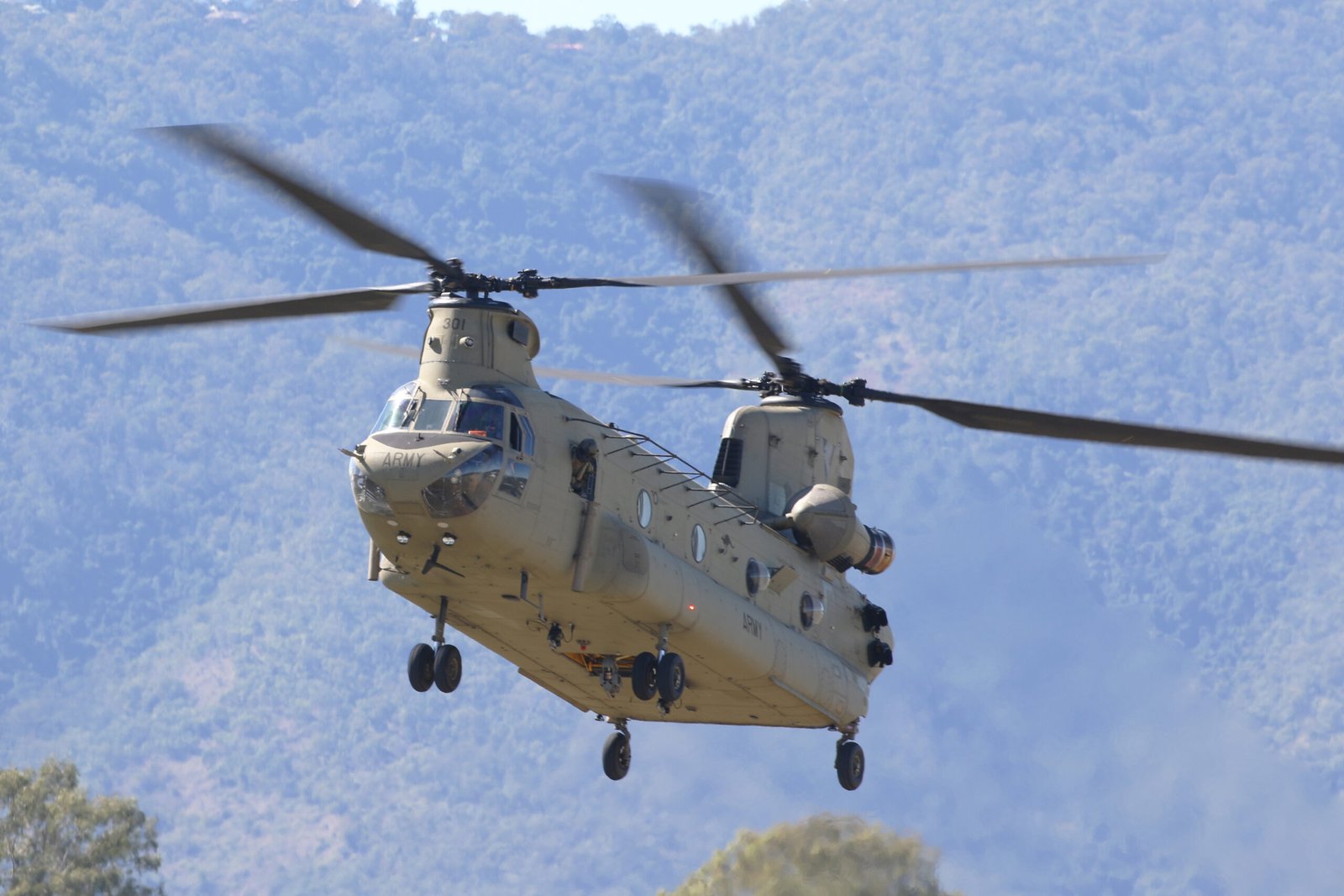
He said weather radars, avionics and auxiliary power units are popular upgrades for aircraft and helicopters like the UH-60 and CH-47 within the region. Through local partners, Honeywell also has depot capability for overhauling T55 engines for Chinook helicopters in Japan, Singapore and South Korea.
Honeywell’s executive continued, “Honeywell offers alternative navigation systems that support GPS-denied environments. So this is very critical for defence forces in this part of the world. Second is resilient communications. We have multi-orbit satellite solutions, mainly our Jetwave X solution, which really caters to mission needs of defence forces.”
He outlined growing regional interest in JetWave, as militaries seek resilient communications when operating in contested areas. This satellite communications (SATCOM) system is ideal for maritime surveillance platforms, for example, when real-time information is vital.

Ramiah said Honeywell offers marine technology as well. SATCOM, communications, power management systems and navigation systems are commonly installed on aircraft, but these apply equally to naval vessels as well. “So there’s a lot of crossover, depending on the mission needs of naval forces,” he pointed out.
In the land domain, the company is promoting its Honeywell 360 Display, a head-mounted system that gives a vehicle driver all-round vision and maximum situation awareness. “The big thing is, Honeywell has solved the latency issue, which is what tends to give people motion sickness – what your eyes see, what your ears feel, aren’t synching. Honeywell has come up with a solution for that.”
He also mentioned SAMURAI, which stands for Stationary and Mobile UAS Reveal and Intercept system. Honeywell announced last September that it had demonstrated this counter-drone solution to the US military. SAMURAI is a turnkey counter-UAV solution able to integrate third-party sensors and effectors, with particular usefulness against drone swarms. Ramiah said there is interest in SAMURAI in Asia-Pacific, and it is ready to go to market depending on what architecture a customer requires.
Another area Honeywell is involved in is engines for CCAs. “Honeywell offers a broad variety of technologies, from navigation to power systems to engines. So on CCAs we have smaller-scale and large-scale engines.” This includes the SkyShot 1600, also known as the HON1600, which provides 800-1,600 pounds of thrust.
Interestingly, this SkyShot 1600 engine is based on an auxiliary power unit employed on commercial aircraft, but it is ideally sized for CCAs. This is an example of how Honeywell leverages existing technologies from the commercial sector for defence needs. “How do we leverage that and move faster into defence platforms? I think that’s the need, how we can move faster with low development costs, and how we can move faster in supporting the entire supply chain.”
Honeywell’s larger F124 low-bypass turbofan engine offers 6,300 pounds of thrust, and it powers the Leonardo M-346 jet trainer, for example. Honeywell is promoting it to Japan for the country’s prospective T-4 jet trainer replacement. It is also ideal for larger, high-performance CCAs.
Honeywell has more than 100 subsystems or components on the Lockheed Martin F-35 fighter, including avionics, inertial navigation systems, engine fuel controls, wheels, brakes and power and thermal management system.
Honeywell announced in March 2025 that it had partnered with RFD Australia to provide sustainment support for the Royal Australian Air Force and wider Asia-Pacific F-35 fleet. Upon activation of a new depot, Honeywell will license RFD Australia to provide maintenance, repair and overhaul activities on the F-35’s back-up oxygen system. The ability to do this in Australia means these systems do not need to go all the way to Yeovil in the UK for repair.
by Gordon Arthur
