

JUST IN
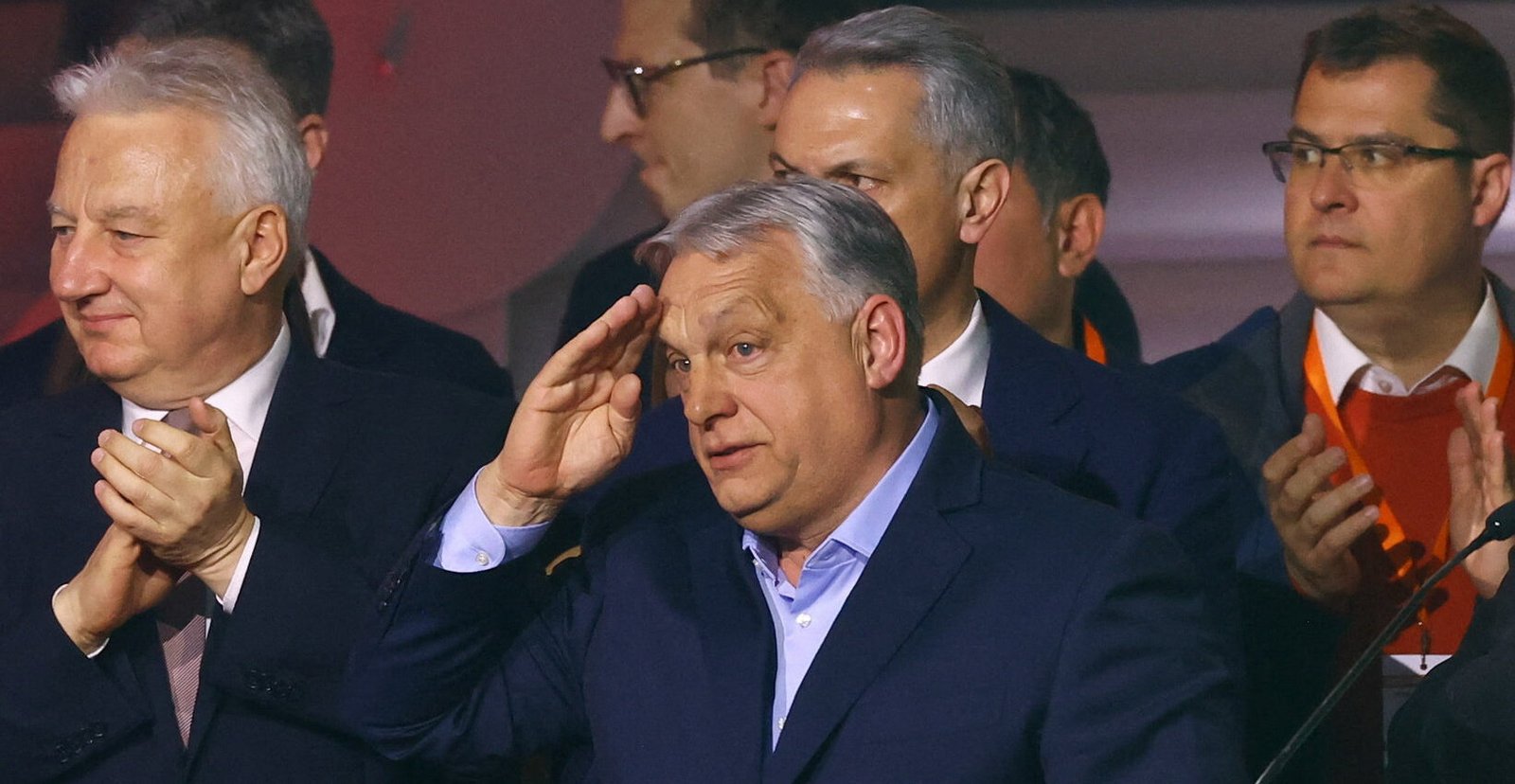
Viktor was not the victor. In elections on Sunday, Hungarian Prime Minister Viktor Orbán and his Fidesz party lost to Péter Magyar and his Tisza party in a landslide, with Tisza securing a two-thirds supermajority in parliament.
This evening, tens of thousands of Hungarians gathered on the banks of the Danube awaiting Magyar’s victory speech, Atlantic Council fellow András Simonyi reports from Budapest. They chanted “Russians, go home!”—the slogan of the country’s 1956 revolution. Simonyi, a former Hungarian ambassador to the United States and NATO, believes revelations shortly before the election about the close relationship between the Kremlin and Orbán’s government helped tilt the vote in Magyar’s favor. We turned to more Atlantic Council experts to assess what’s next for Hungary, Europe, and the transatlantic alliance.
TODAY’S EXPERT REACTION BROUGHT TO YOU BY
- Daniel Fried (@AmbDanFried): Weiser Family distinguished fellow and former US assistant secretary of state for Europe
- Emerson Brooking (@etbrooking): Director of strategy at the Atlantic Council’s Digital Forensic Research Lab and former US Defense Department cyber policy advisor
- Jörn Fleck (@JornFleck): Senior director of the Atlantic Council’s Europe Center and former European Parliament staffer
- Emma Nix: Assistant director with the Europe Center
The losers
- It’s now official, Dan tells us: “Hungarian society has repudiated Orbánism,” with the European Union’s longest-serving leader felled by “voters’ objections to Hungary’s weak economy and blatant corruption.”
- The result is all the more remarkable, he adds, because it came “despite Orbán’s authoritarianism, including control of major media outlets [and] his intimidation of the judiciary and state institutions.”
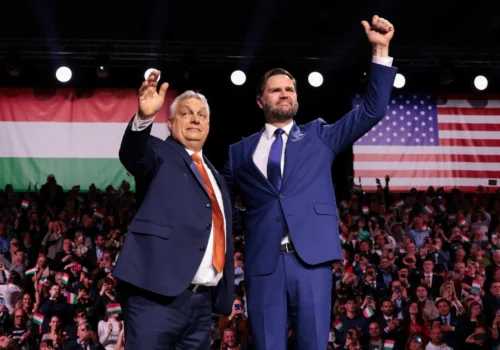
- Other losers, in Dan’s assessment, include the Kremlin, “whose overt and covert support for Orbán—rightly regarded as Putin’s best friend in Europe—has failed,” just as similar Kremlin efforts have failed recently in Moldova and Romania. The “Trump administration and MAGA movement” lost as well, having backed Orbán in the form of visits with the Hungarian leader in Budapest by US Vice President JD Vance and Secretary of State Marco Rubio during the election campaign, plus a call from President Donald Trump during a campaign event.
- “Russian intelligence interfered extensively on behalf of Orbán,” Emerson reports, including “the tried-and-true tactics of astroturfing and social media manipulation with even less subtlety than usual.”
Sign up to receive rapid insight in your inbox from Atlantic Council experts on global events as they unfold.
The winners
- Magyar, a “social conservative” who broke with Orbán’s Fidesz party in 2024, won by assembling “a broad coalition including Hungarian liberals,” Dan explains. “Hungary, once seen as a herald of authoritarian nationalism, seems now a tale of how to overcome it.”
- Another winner, Dan adds, is Ukraine, since Orbán had blocked “a major EU loan intended to compensate for US termination of most assistance” to the country.
The aftermath
- Expect a Magyar-led government not just to remove the Hungarian veto on the European Union’s ninety-billion-euro support package for Ukraine but also to ditch Hungary’s “outcast role at the EU table,” Jörn forecasts—by, for example, taking a more “constructive” position on EU enlargement, even as it remains “a conservative voice on issues from migration to competitiveness.”
- Jörn warns, however, that “too swift and lenient a release of eighteen billion euros in frozen EU funds” to Hungary “without meaningful reforms could fuel a conservative backlash across the bloc,” and that both Brussels and the new Magyar government shouldn’t “underestimate the resistance of the Orbán system and its entrenched members across government institutions.”
- Emma adds that “rebuilding damaged relationships abroad—especially in Brussels and Kyiv—may not be top of mind for the incoming prime minister,” as he focuses on the economic and political concerns that brought him to office.
- A two-thirds majority in parliament will equip Tisza with “the power to amend the constitution, providing it the ability to unravel Orbán’s empire step by step,” Emma tells us.
- But “a sixteen-year-old regime will take time to dislodge,” Emerson observes. While the decisiveness of Magyar’s victory helped avert a political crisis, “the forces that gathered to throw Hungary into chaos are very likely to try again.”
Further reading
Tue, Apr 7, 2026
Hungarian election could have implications for EU, US, Russia, and Ukraine
UkraineAlert
By
The Hungarian parliamentary elections on April 12 are being billed as the most important in the country’s modern history. With Hungary a key focus in the escalating confrontation between Russia and the West, this weekend’s vote could also have geopolitical implications that will be felt in Kyiv, Moscow, Brussels, and Washington. Current Hungarian Prime Minister […]

Mon, Apr 6, 2026
Your primer on the Hungarian National Assembly elections
Eye on Europe’s elections
By
An electoral defeat for Prime Minister Viktor Orbán could reshape Hungary’s domestic political trajectory and the country’s relations with the rest of Europe.
Image: Hungarian Prime Minister Viktor Orban salutes after the announcement of the partial results of parliamentary election in Budapest, Hungary, April 12, 2026. REUTERS/Bernadett Szabo
