


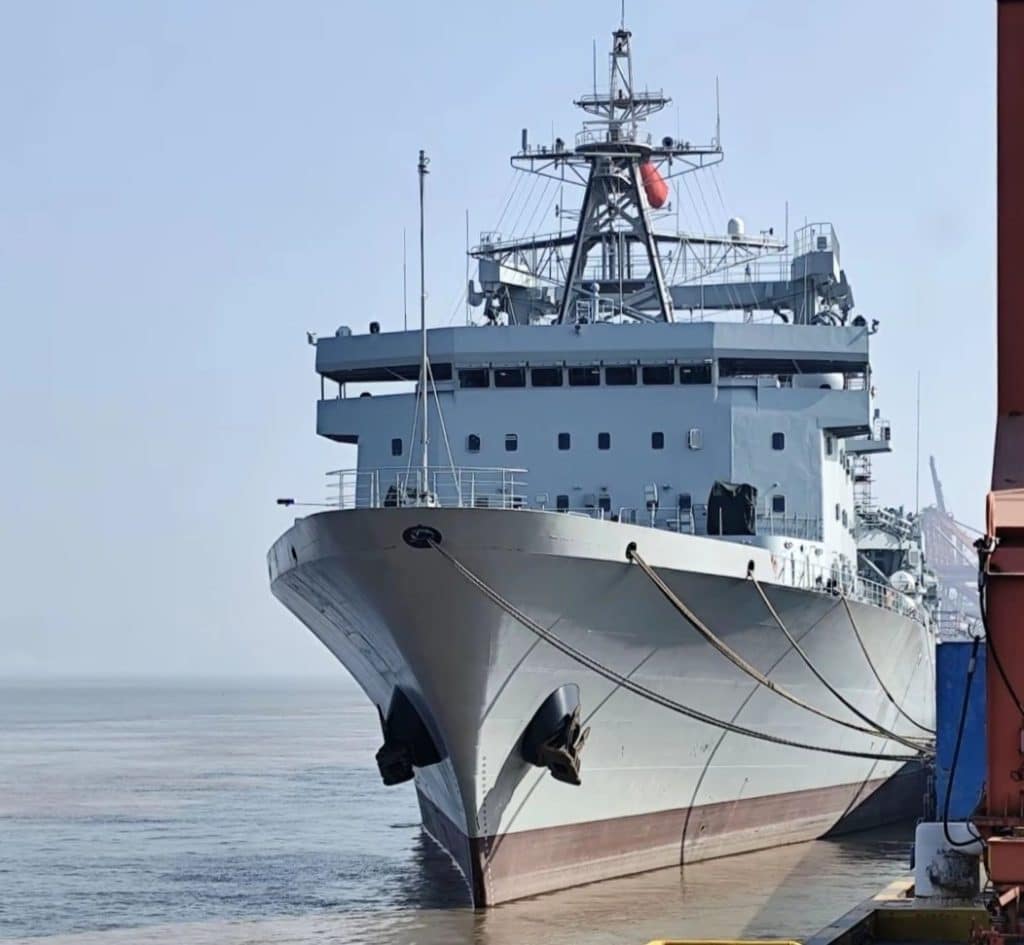
The Chinese Navy has taken into service two additional Type 903-series fleet replenishment oilers. Imagery circulating on social media service “X”, former Twitter, two weeks ago shows the two auxiliaries, also denoted as AOR, wearing their hull numbers, docked at a PLAN naval base. The Chinese Navy assigned pennant numbers 892 and 893 to the new oilers.
The images locate both auxiliary ships at piers of the Zhanjiang naval base, north of Hainan. Zhanjiang is one of the largest naval installations of the Souther Theatre Command (STC) and home to the bulk of STC-assigned auxiliaries and amphibious vessels of PLAN.
As Naval News has documented since 2024, the Chinese Navy has recently begun to build additional fleet replenishment ships of the Type 903-variety. According to public imagery and information two yards have so far produced at least five more vessels of this 20,000 ton-auxiliary design. The yards in question are COMEC, former GSI, in Guangzhou and Wuhu Shipbuilding in the eponymous city on the Yangtze River. The initial public evidence of said construction appeared in November and December 2024.


The new oilers feature mild improvements over preceding vessels. Most recognizable in this regard are the redesigned bridge-wings with flush roof extensions from the enclosed bridge. Previously produced Type 903-oilers lacked roofed bridge wings. At least some vessels later added a light, removable cover to increase comfort of assigned personnel in challenging weather conditions. Other improvements are likely, although an exact assessment has to await more detailed imagery.
Production and operational history for replenishment oilers with PLAN
The Chinese Navy has originally received two batches of these oilers, designated Type 903 and Type 903A. GSI and Hudong split production of the two vessels of the first batch, which entered service between 2004 and 2005. A second, larger batch then included seven additional Type 903A, with the bulk of production occurring at GSI in Guangzhou. It is therefore notable that production of this new batch has now shifted again, with Wuhu assuming a major workshare. Once already observed vessels all enter service, the Chinese Navy will operate at least 14 replenishment ships of this type.
Additionally PLAN has two much larger Type 901 fast combat support ships in service. The Type 901, at an estimated 45,000 tons, primarily supports PLAN aircraft carrier deployments. However, PLAN has also used the design to supply amphibious and surface action groups underway.
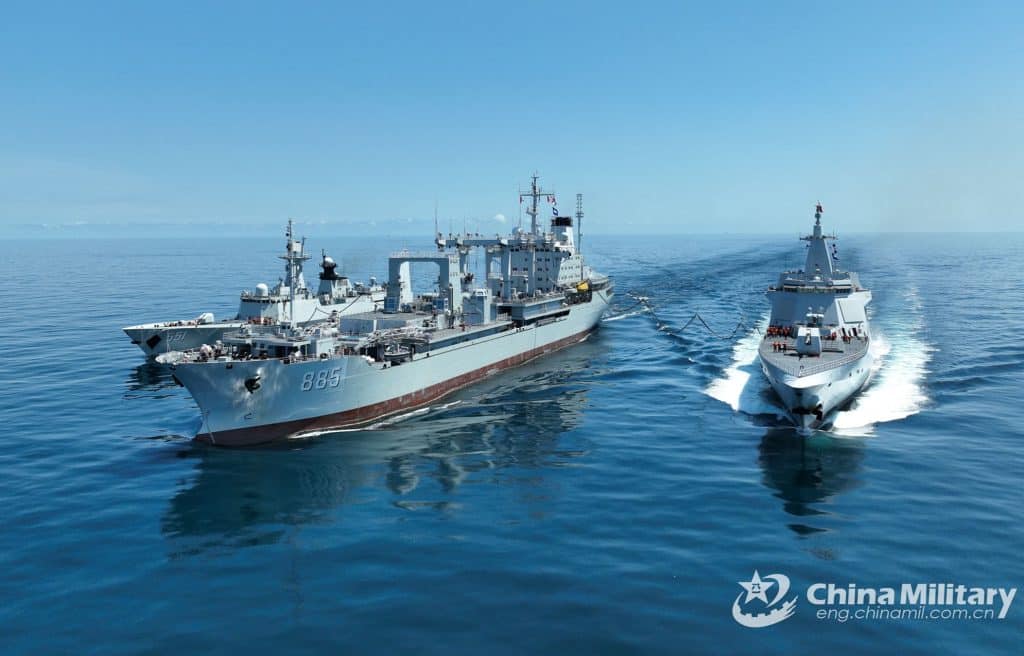
Finally, the Chinese Navy still operates a single Type 908 replenishment ship, the Qinghaihu, or Qinghai Lake. The Type 908, sometimes also referred to as Type 905, is a 37,000 ton-design originally developed for the Soviet Union. After the breakup of the USSR Ukraine sold an unfinished hull under construction at Kherson to China around 1993. India acquired a second hull of this design constructed by the Russian Admiralty Shipyard in St Petersburg, and both vessels remain in service.
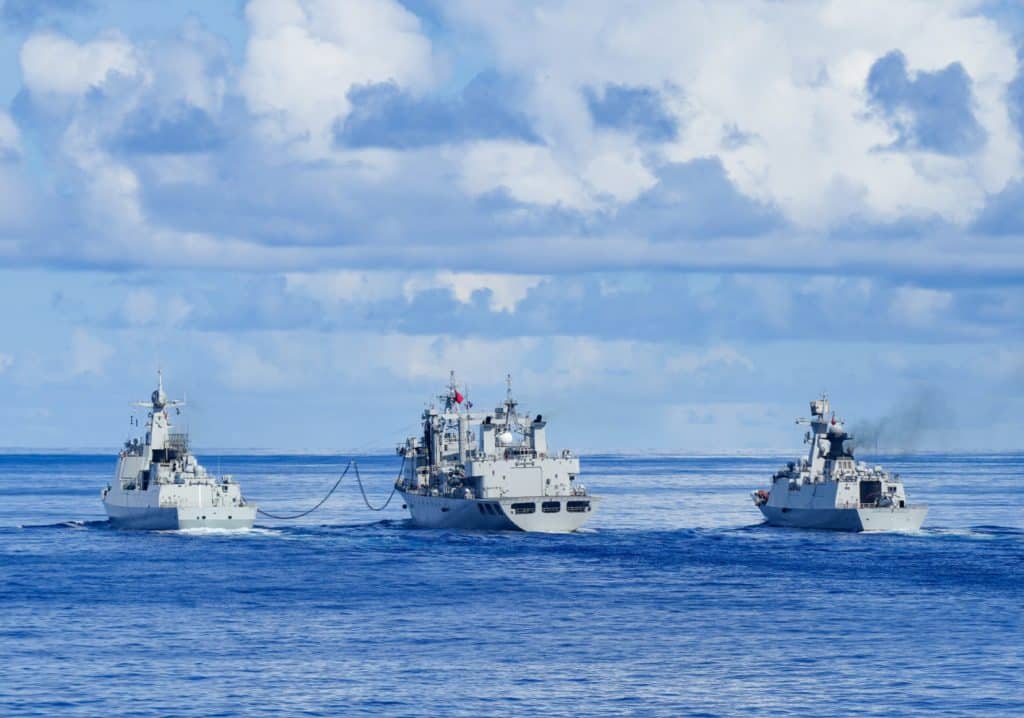
Growing operational demand for PLAN likely motivating further construction
The Chinese Navy in recent years has of course both grown considerably in overall fleet size. PLAN has also significantly expanded presence operations in the Chinese near abroad and conducted an increasing number of overseas visits and other deployments into more distant areas. Of note in this regard is increased Chinese attention to Oceania. The Chinese Navy now frequently visits various island nations in the South Pacific, notably Fiji and Vanuatu.
Additionally, PLAN has conducted a circumnavigation of Australia between late 2024 and early 2025. The event caused a considerable media stir over the Chinese combatants of this task group conducting live fire drills in the Tasman Sea. A second task group set sail for the South Pacific in late 2025. On this occasion however, the vessels then adjusted their course, returning to waters near Taiwan in order to participate in the large scale PLA exercise there in December 2025. In any case, both task groups were supported by a Type 903/A-replenishment vessel. These oilers also see persistent use in the ongoing anti-piracy patrols the Chinese Navy conducts off Somalia, and rotates approximately every four to six months.
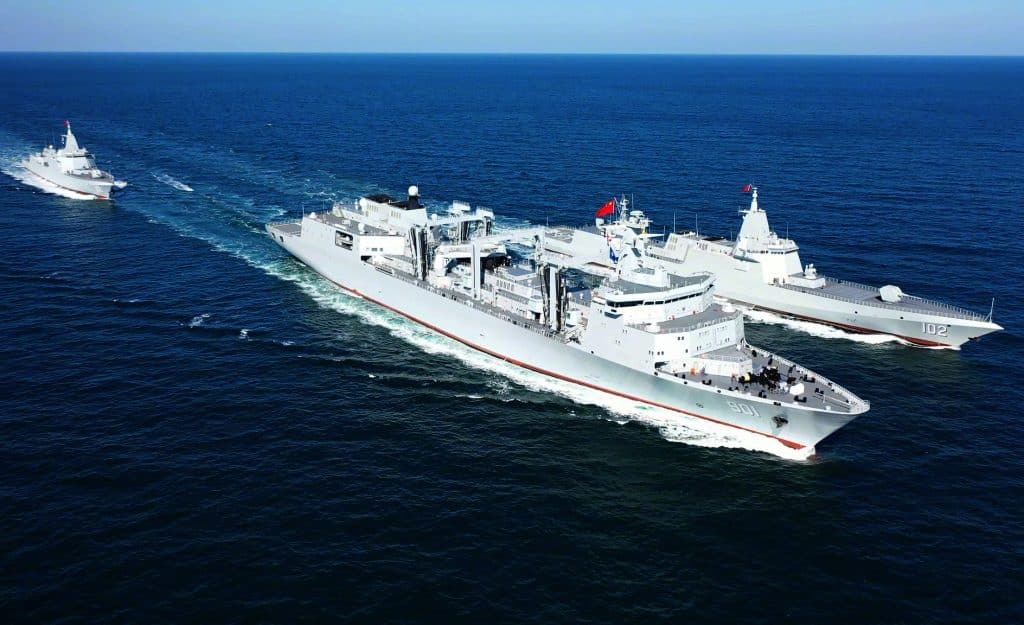
All these examples illustrate heavy reliance on fleet replenishment capacity, underscoring the ongoing requirement for PLAN to expand relevant capabilities. Whether further Type 903-series hulls are to follow remains to be seen. Additionally, with the growth in PLAN aircraft carrier and amphibious carrier-numbers, the demand for larger and more capable designs such as Type 901 also appears to increase. Despite several years of speculation however, no additional Type 901 AOEs appear to be under construction quite yet.
