

This story mentions thoughts of suicide. Call or text 988 to reach the Suicide and Crisis Lifeline. Veterans can reach the Veterans Crisis Line by dialing 988 and then pressing “1.”
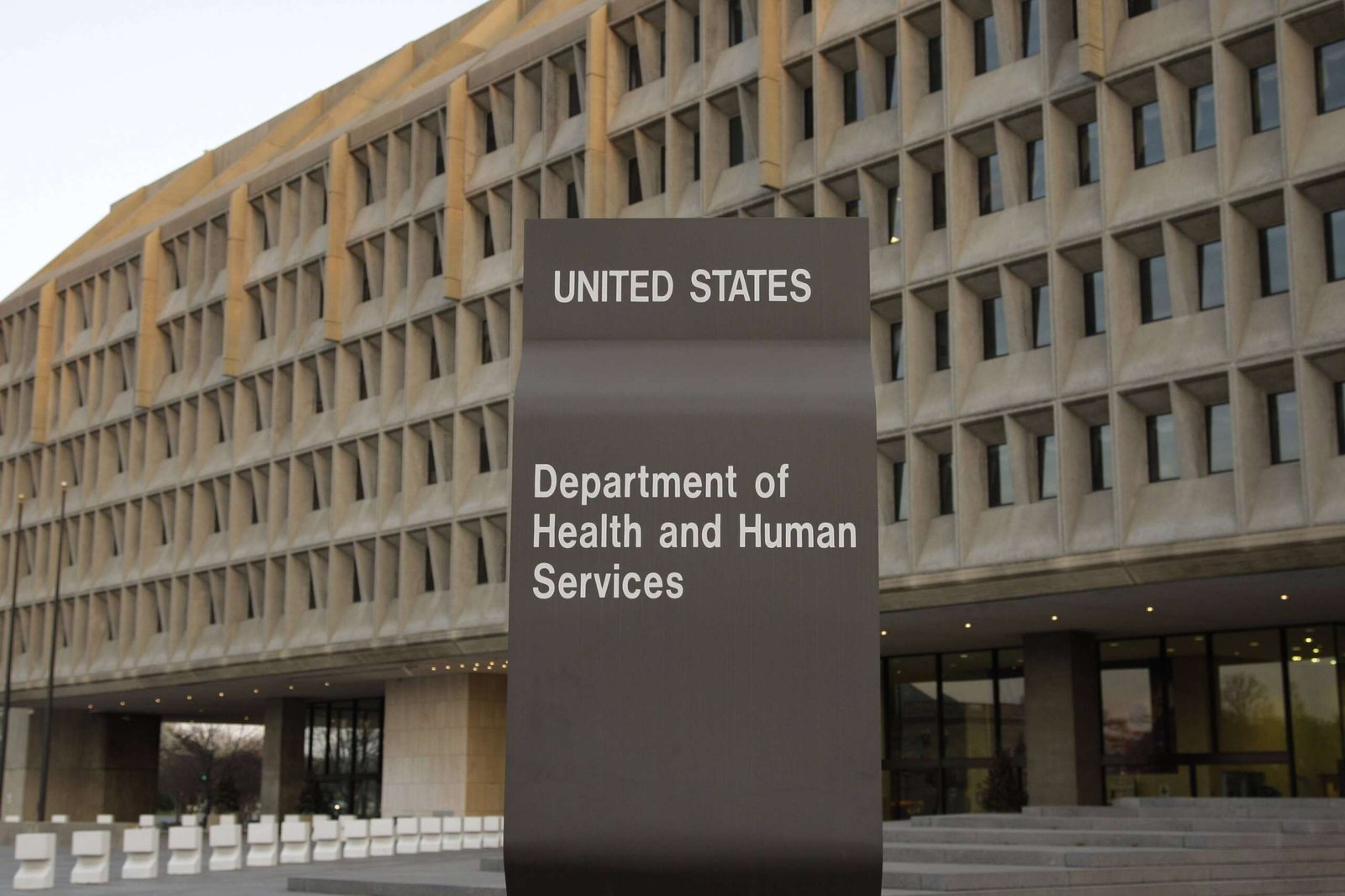
Stricter rules limiting telework as a reasonable accommodation at the Department of Health and Human Services are leading to a spike in disability discrimination complaints and putting a toll on its workforce.
The new policy, as Federal News Network reported last December, restricts employees from using telework as an “interim accommodation,” while the agency processes their reasonable accommodation request. The department has a backlog of more than 3,000 reasonable accommodation requests that it expects will take six to eight months to process.
The HHS policy states all requests for telework, remote work or reassignment must be reviewed and approved by an assistant secretary or a higher-level official — a decision that has further slowed the approval process. The new policy prohibits an employee’s immediate supervisor from approving interim telework requests, even in cases where telework has already been identified “as the only effective accommodation.”
The new policy has had the greatest impact on employees at the Centers for Disease Control and Prevention. Yolanda Jacobs, president of AFGE Local 2883, which represents CDC employees at its Atlanta headquarters, wrote in a recent letter to agency leadership that the CDC “had the option to honor existing accommodations and continue approving interim relief for employees with pending requests.”
The National Institutes of Health kept their existing accommodations in place, but Jacobs wrote that “CDC did not.” The Office of Personnel Management recently advised agencies not to take a blanket approach to rescinding or denying existing telework accommodations.
A CDC employee waiting for a reasonable accommodation request, who requested anonymity for fear of retaliation, said a division director said that if staff were found to be working from home “improperly,” they would be marked as absent without leave.
“There have been people roaming the halls, double-checking that folks are in their physical space,” the CDC employee said.
HHS recently required employees to swipe their ID badges when entering and leaving the office. An HHS spokesperson said these changes are meant to enhance security “by providing real-time visibility into building occupancy.”
Several agencies, including the General Services Administration, the Environmental Protection Agency and the Treasury Department, have used this badge-swipe data to scrutinize whether employees are adhering to the Trump administration’s return-to-office mandate.
In a letter to CDC’s acting director Jay Bhattacharya, who also serves as NIH’s director, Jacobs wrote that several employees “have experienced acute medical events directly triggered by the sudden loss of accommodation.”
“Veterans with service-connected disabilities have been hospitalized and forced onto leave because the agency failed to honor legally required protections. Furthermore, some employees have been classified as AWOL due to disabilities that made it impossible for them to report to campus. This is not how any employer should treat its workforce, and it is especially not how a federal public health agency should treat those who have sacrificed the most in service of this country,” she wrote.
HHS employees are also facing longer than usual wait times to have their reasonable accommodation requests processed because of deep cuts to human resources personnel across the department. Jacobs wrote that the CDC has accumulated hundreds of equal employment opportunity (EEO) complaints alleging disability discrimination and failure to accommodate. Jacobs estimates it will cost the CDC $200 million to address this surge in complaints.
“This represents precisely the kind of wasteful government spending that the administration has pledged to eliminate,” she wrote.
HHS Press Secretary Emily Hilliard said in a statement that the department’s updated reasonable accommodation policy “establishes department-wide procedures to ensure consistency with federal law.”
“Interim accommodations, like telework, may be provided while cases move through the reasonable-accommodation process toward a final determination. The department remains committed to processing these requests as quickly as possible,” Hilliard said.
The CDC did not respond to a request for comment.
‘You don’t have a choice. They’re making the choice for you.’
A second CDC worker, who is a service-disabled veteran diagnosed with post-traumatic stress disorder, said the agency recently rescinded his ability to telework as part of an interim reasonable accommodation.
The CDC worker said medical documentation from his psychiatrist at the Department of Veterans Affairs recommends his employer grant full-time telework, because his PTSD is triggered by dense groups of people and excessive noise.
The employee said he was permitted to telework full-time in recent years, but Shana Weir, HHS’ assistant secretary for administration, wrote that his reasonable accommodation would “negatively impact the mission of the organization,” and that his medical documentation “does not support an inability to commute via public transportation.”
The agency’s response came as a surprise to his VA psychiatrist, who provided his medical documentation on official VA letterhead.
“They’re telling you that you could take public transportation, when that’s the definition of dense groups of people,” the CDC worker recalled his psychiatrist saying.
HHS previously granted employees 80 hours of ad hoc telework each year. But more recently, department employees told Federal News Network that they’ve been granted 240 hours of ad hoc telework to use this year, if they requested telework as part of a reasonable accommodation.
The CDC worker said he exhausted his original few hours of telework. He then returned to work in person, in an effort to comply with the agency’s return-to-office requirements. But the workspace provided to him was noisy, crowded with hundreds of people, and far from an exit to remove himself from the environment if his PTSD symptoms got worse.
“I ended up having a panic attack,” he said. Since reporting back to the office, he said he has contacted the Veterans Crisis Line about twice a week on average and has been seeing his VA psychiatrist more often. He said he has had to increase his medication, in part to manage his worsening insomnia.
“It’s just more hospital visits, more calls to the crisis line — spending two hours on the phone with them, trying to talk me down because I feel like I’m going to have a heart attack,” the CDC worker said. “This is why suicide is so highly prevalent in veterans, because they do things like this — where they make it hard for them, and sometimes you feel like you don’t have a choice. They’re making the choice for you.”
The CDC worker said he is back to using his remaining hours of telework. He said he’s not sure what his options are once his remaining telework and accrued annual leave run out.
“I’m able to work for the next month, but I don’t know what’s going to happen at the end of this,” he said.
Once employees have exhausted their 240 hours of annual telework, HHS has advised that they can use their annual leave, or go on unpaid leave as permitted under the Family and Medical Leave Act.
‘We know there is ongoing confusion’
Earlier this month, a CDC supervisor acknowledged that staff still have questions and concerns about the new reasonable accommodation policy. The supervisor said, “further clarification would need to come directly from HHS,” and that a date to meet with department human resources staff had not yet been finalized.
“We know there is ongoing confusion and concern regarding the policy — including questions about telework as a reasonable accommodation, the legal framework guiding the current approach, and what employees should do while awaiting HHS adjudication. We take these concerns seriously and want to ensure that your questions and perspectives are represented in that discussion,” the supervisor wrote.
An employee at the Health Resources and Services Administration, who is also a disabled veteran, said HHS is no longer following the medical advice of VA clinicians.
“These veterans have well-documented and rated disabilities and letters directly from Veterans Health Administration doctors specifying what reasonable accommodations are necessary. Doctor’s recommendations and currently successful accommodations are being disregarded,” the HRSA employee said.
If you would like to contact this reporter about recent changes in the federal government, please email jheckman@federalnewsnetwork.com, or reach out on Signal at jheckman.29
Copyright
© 2026 Federal News Network. All rights reserved. This website is not intended for users located within the European Economic Area.
