

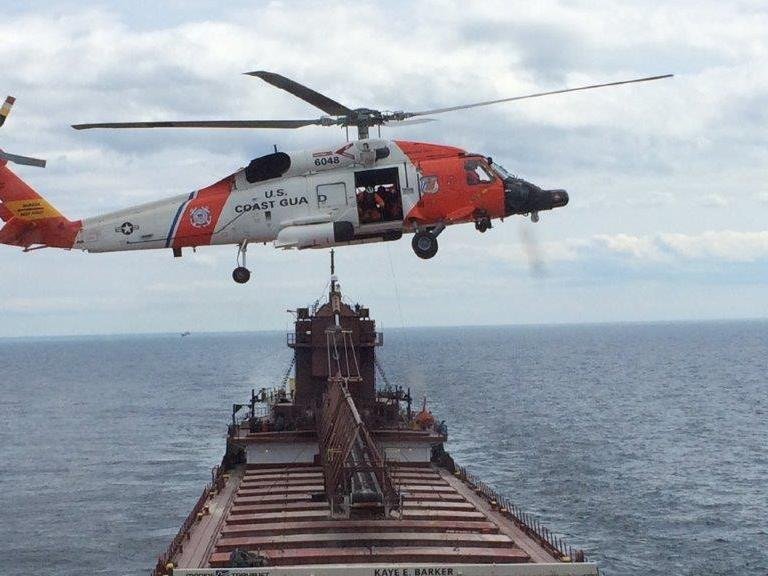
The U.S. Coast Guard (USCG) has a significant role in ensuring the safety, security, stewardship, and efficient functioning of the nation’s waterways and marine transportation system. This role includes providing a national network of aids to navigation (e.g., buoys, structures, electronic aids), establishing vessel traffic management practices, restricting access to areas that create safety concerns, and ensuring the safe transport of oil and hazardous materials.
The USCG has developed several risk assessment tools that are designed to address various aspects of waterways safety. However, there has never been a collective review of the tools to understand their effectiveness in addressing the range of safety risks, to identify overlap and gaps, or to assess their ability to account for waterway modernization and evolving challenges.
To address this need, RAND researchers, drawing from established risk management frameworks, developed a tailored Risk Management Framework (RMF), which can help the USCG ensure comprehensive risk management, enhancing operational effectiveness and strategic resilience to support waterways safety and the marine transportation system. Researchers used the framework to assess existing USCG waterways safety risk assessment tools and suggest improvements that would provide a more holistic understanding of safety risks to U.S. waterways.[1]
A Tailored USCG Risk Management Framework
The dynamic nature of U.S. waterways and the marine transportation system demands a robust and adaptable risk management approach. USCG priorities in ensuring the safety of U.S. waterways and the marine transportation system generally fall into three broad categories: critical infrastructure (e.g., bridges, facilities), the environment (e.g., water and air quality, sensitive areas, natural resources), and waterway users and property (e.g., recreational, commercial, military). Traditional maritime risks, such as navigational safety and environmental protection, are compounded by emerging hazards—including reliance on networked electronic information and operational systems, emerging maritime technology, and changing weather patterns—as well as diversity in waterway usage and activities. A risk management framework for the USCG must also be flexible enough to adapt to future uncertainties.
The proposed USCG RMF draws from established risk management frameworks developed by the International Risk Governance Council and the National Institute of Standards and Technology, as well as existing risk management principles used by the USCG, the U.S. Department of Homeland Security, and the U.S. Department of War.[2] The framework addresses systemic risks across multiple dimensions, fostering inclusive risk management, encouraging dialogue, and integrating scientific knowledge with stakeholder concerns. The primary elements of the RMF are shown in Figure 1 and Table 1.
The first three steps focus on risk understanding and appraisal, and the next three steps focus on risk management and monitoring. The final element, stakeholder engagement, should be integrated into every step in the risk management process.
Figure 1. Primary Elements of a Tailored USCG Risk Management Framework
This circular diagram illustrates the cyclical process of risk management and appraisal, centered around engagement, collaboration, and communication.
The circle is divided into two halves:
- Right half: Represents Risk understanding and appraisal.
- Left half: Represents Risk management and monitoring.
At the center of the diagram is a red circle labeled Engagement, collaboration, and communication, indicating that communication and teamwork are central throughout the risk process.
Right side – Risk understanding and appraisal
- Goal setting – “Risk to what?”
- Risk assessment – “Risk from what?”
- Risk characterization – “How much risk?”
Left side – Risk management and monitoring
- Risk evaluation – “How much risk is acceptable?”
- Risk management – “What to do about risk?”
- Risk monitoring – “Are management responses successful?”
Arrows shaped along the outside of the circle connect each stage clockwise, showing the continuous nature of the process: beginning with understanding and appraisal, progressing to management and monitoring, and looping back to assessment.
RAND researchers used the RMF to assess the six major risk assessment tools used by USCG for waterways safety (Table 2). To understand overlaps and gaps in the USCG’s existing waterway risk assessment tools, the researchers employed a modified version of the U.S. Government Accountability Office’s methodology for evaluating fragmentation, overlap and duplication across governmental activities and programs based on structured interviews with USCG and waterway stakeholders, including tool owners and users, representatives from the commercial shipping industry, and others.
How Well Do Existing USCG Risk Management Tools Align with the RMF?
Researchers used the RMF to assess the six risk assessment tools, both individually and in relation to each other, to identify how well the tools align with the components of the RMF and support the USCG waterways safety priorities.
Each Tool Gathers Useful Information to Support Different Elements of Waterways Safety
The assessment identified the strengths of existing tools. The PAWSA is the most comprehensive tool for addressing waterway risks, offering users the ability to document risks while also demonstrating the effectiveness of existing safety measures. The WAMS tool has proven effective in guiding USCG leadership decisions regarding the placement or removal of aids to navigation in waterways. The PARS tool is unique in that it enables proactive safety planning and regulatory decisionmaking for large, complex waterways. The three different NSRA processes provide a graduated approach to addressing specific infrastructure within a waterway, while the WSA was clearly laid out to address hazards associated with LNG projects. Although the LSS is not a risk assessment model, LSS analyses support decisions internal to the USCG, providing guidance to design an effective constellation of aids to navigation.
The Tools Tend to Be Used Independently and Do Not Cover All RMF Elements Equally
While each tool serves a distinct purpose, the tools are often utilized independently or in isolation, with minimal attention to future conditions. Furthermore, the tools vary in the extent of their coverage of the elements of the framework, as shown in Figure 2, which displays summary results from the analysis.[3] For example, the PARS scores very well on “Goal Setting,” average on “Risk Assessment” and “Risk Evaluation,” and low on the remaining steps. Tools tend to be stronger in addressing hazards and priorities and weaker in characterizing, evaluating, and managing risk. For example, the NSRA has three levels of assessment, which are correlated with increasing levels of risk, but the NSRA documentation does not provide guidance on how to determine risk acceptability and delegates risk management to the permitting agency, without a formal process for follow-up. None of the tools adequately covers risk monitoring, which suggests that important feedback mechanisms for identifying and managing risk are lacking in all the tools.
Figure 2. Tool Coverage of Risk Management Framework Principles

This radar chart compares six frameworks—LSS, NSRA, PARS, PAWSA, WAMS, and WSA—across six criteria: Goal setting, Assessment, Characterization, Evaluation, Management, and Monitoring. Each axis represents one of these criteria, and performance levels are indicated by color shading: green for “Very well,” yellow for “Average,” and brown for “Low.”
- Goal setting: PARS, WAMS, WSA, and PAWSA perform very well. LSS performs low and NSRA performs average.
- Assessment: WSA, PARS, and PAWSA perform very well; WAMS and NSRA perform average and LSS performs low.
- Characterization: Average performance across most frameworks; LSS and WAMS perform low.
- Evaluation: Variable performance, with PARS and PAWSA performing the best. WSA performs average. LSS, WAMS, and NSRA perform low.
- Management: WAMS and WSA have average performance. LSS, NSRA, PARS, and PAWSA have lower performance.
- Monitoring: Low performance for all frameworks.
While all the waterways safety tools provide value, they are not currently used in a coordinated way that would provide a holistic vision of risk.
Tools Often Overlap or Duplicate Functions, While Use of Differing Methodologies Can Create a Fragmented Understanding Of Risk
Researchers identified several examples of overlap and duplication in the tools. All or most of the tools consider some of the same risk drivers, such as surface vessel and traffic volume risks, geography, weather, and critical infrastructure. At the same time, several drivers, including cyber risks and human vulnerabilities, have minimal to no coverage. In addition, the tools routinely enlist stakeholder input from the same pool of candidates. This overlap is useful in that some waterways have consistent input from experts familiar with local operations, but there is also a high potential for reinforcing blind spots or gaps in understanding the hazards, priorities, and stakeholder values for a given waterway.
In addition, because each of the tools serves a different purpose, this can create fragmentation when each focuses on different geographic areas, risk reduction strategies, processes, methodologies, or timelines. The differences in these risk assessment approaches lead to a fragmented understanding of risk levels and limit information sharing across tools.
Recommendation: Redesign the USCG Waterways Safety Risk Assessment Process to Better Leverage the Information and Outputs Generated by Each Tool
While all the waterways safety tools provide value, they are not currently used in a coordinated way that would provide a holistic vision of risk. The researchers’ recommendations are thus designed to better align the suite of USCG waterway risk assessment tools with the RMF, to address the implications of fragmentation and overlap, and to provide a more holistic understanding of safety risks to a given waterway. The main focus of these recommendations is to redesign the USCG waterways safety risk assessment process in a systematic and coordinated way that improves the efficiency, coordination, and integration of existing tools. Figure 3 illustrates how an enterprise approach could be carried out over a multiyear period for both critical and noncritical waterways. The arrows show the proposed sequencing, periodicity, and information flows across tools for critical and other waterways. The USCG can support this redesign by implementing a set of related process improvements briefly described below.
Establish a Standard to Designate Critical Waterways
The standard could be based on impacts to national strategic interests in the event that the waterway is no longer usable. As illustrated in Figure 3, under this approach, critical waterways would receive more frequent risk assessments (nominally every five years) than other waterways (nominally every ten years), unless there was a dramatic change to the activities in the waterway.
Designate a Phased Approach to Conducting a PAWSA
As the most comprehensive tool for addressing waterway risks, the PAWSA would involve both an annual review and a mid-period review (designated by horizontal arrows in Figure 3). The short annual review would determine whether the “Set Goals” and “Risk Assessment” steps remain valid. The mid-period review would include those steps while also analyzing and validating the decisions made during the “Risk Characterization” and “Risk Evaluation” steps.
Incorporate Any New WSAs, NSRAs, and Local Tools into the Annual PAWSA Review
This process (designated by the gold box and vertical arrows in Figure 3) could determine whether the cumulative effects of new structures or activities impacted the waterway to an extent that exceeded the risk tolerance or severity level that would necessitate a new PAWSA. The USCG should also include developing a common risk index number calculation method across the WSA, the NSRA, and other tools to provide an opportunity for transferability and integration of risk characterization across tools.
Figure 3. Potential Future Employment of Waterways Safety Risk Tools

The figure illustrates a framework for systematic and integrated waterway risk awareness and mitigation across three levels of analysis: large area analyses, critical waterways, and other waterways. The chart is organized by type of waterway and timeframe.
Large area analyses
- PARS* and LSS* span continuously along the timeline, representing long-term or ongoing large area analyses.
Critical waterway
- PAWSA (every 5 years*): A major assessment conducted every 5 years or when significant change is anticipated. A WAMS arrow extends from the end of the PAWSA arrow by about a year. This indicates a continuous monitoring process that follows PAWSA cycles.
- Mid-period PAWSA review: The arrow spans about two-thirds of the PAWSA arrow above it.
- Annual review: The arrow spans one year.
A box outlined in gold bridges the critical waterway and other waterway sections. The box is labelled “Time-sensitive risk assessment and mitigation efforts” and includes:
- WSA
- NSRA
- Local tools
- Marine permitting
Other waterway
- PAWSA (every 10 years*): Conducted every decade or when major change occurs. A WAMS arrow extends from the end of the PAWSA arrow. The WAMS arrow ends where the PARS and LSS arrows end. This indicates a continuous monitoring process that follows PAWSA cycles.
- Mid-period PAWSA review: The arrow spans a five-year period.
- Annual review: The arrow spans one year.
*Also conducted when significant waterway change is anticipated.
Conduct a WAMS Following a PAWSA
This sequence would take advantage of the information generated, and decisions made by, stakeholders and reduce repetitive information collection on potential hazards and areas of increased risk.
Create a Consolidated, Accessible Database for Risk Assessments
Data, reports, and decisions made during WSAs and NSRAs should be cataloged and made available for use in future PAWSAs as baseline material. The same database could also capture data and analysis of the number, type, and potential risks associated with assessments conducted during marine permitting or other local tools.
An Integrated Approach to Waterways Safety Risk Assessment
Implementation of this integrated approach, as well as options to address specific challenges for each of the risk assessment tools (described in the full report) can potentially reduce the burden on stakeholders while ensuring that risks are comprehensively and consistently identified and managed.
Notes

Available for Download
Topics
Citation
RAND Style Manual
Cooper, Eric, Susan A. Resetar, Kristin J. Leuschner, Rahim Ali, Jeff Anderson, Karishma R. Mehta, Millard McElwee, Rachel Steratore, Sarah Weilant, Michelle D. Ziegler, Adaeze Ibeanu, and Isabelle Winston, An Integrated Approach to Waterways Safety Risk Assessment for the U.S. Coast Guard, Homeland Security Operational Analysis Center operated by the RAND Corporation, RB-A3612-1, 2026. As of March 23, 2026:
Chicago Manual of Style
Cooper, Eric, Susan A. Resetar, Kristin J. Leuschner, Rahim Ali, Jeff Anderson, Karishma R. Mehta, Millard McElwee, Rachel Steratore, Sarah Weilant, Michelle D. Ziegler, Adaeze Ibeanu, and Isabelle Winston, An Integrated Approach to Waterways Safety Risk Assessment for the U.S. Coast Guard. Homeland Security Operational Analysis Center operated by the RAND Corporation, 2026. .
This publication is part of the RAND research brief series. Research briefs present policy-oriented summaries of individual published, peer-reviewed documents or of a body of published work.
RAND is a nonprofit institution that helps improve policy and decisionmaking through research and analysis. RAND’s publications do not necessarily reflect the opinions of its research clients and sponsors.
