


Armada’s monthly round-up of all the latest electronic warfare news in the product, programme and operational domains.
Testing Legion
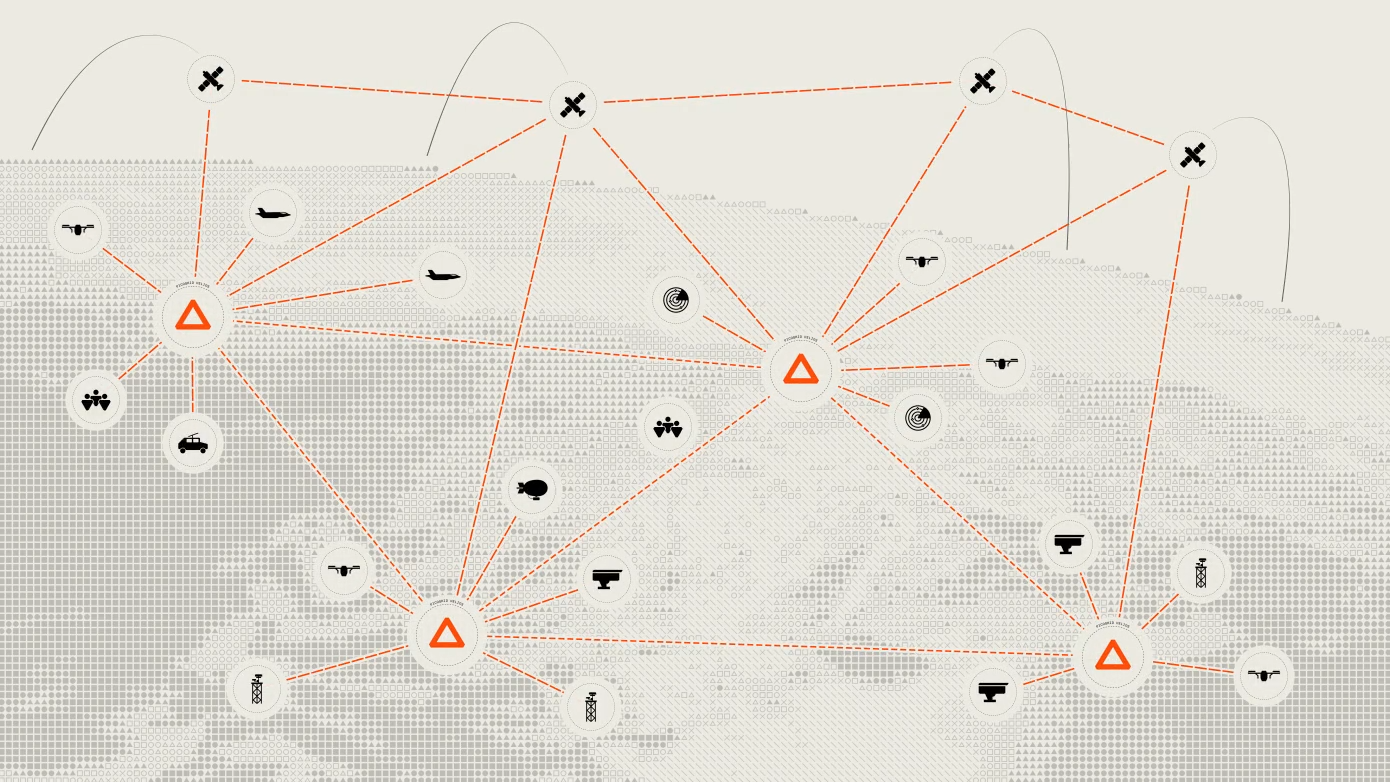
Picogrid announced towards the end of January that the company’s Legion data platform had been employed during testing performed by the United States Army’s 1st Cavalry Division (1CD). The testing took place at the National Training Centre, Fort Irwin, California. According to a press release announcing the news, Picogrid’s Legion software integrates disparate sensor networks. In a written statement provided to Armada, the company said that Legion “provides common command and control services such as data federation, tasking of remote systems, role-based access control, tracks and correlation”. Picogrid observes that it is “faster and more cost-effective for the military to integrate sensors, effects and (uninhabited) systems, resulting in superior, real-time situational awareness, faster decision-making, and autonomous behaviour”. Legion can be used as a cloud-based service. Alternatively, it can be deployed in a containerised fashion, depending on the mission, the company’s written statement continued. Testing initiatives help the army to evaluate technologies and capabilities and thus inform future procurements. The press release said that during this latest testing effort Legion received inputs from passive radio frequency and acoustic sensors alongside radar data. Sensor feeds were fused, correlated and then shared with those parts of the 1CD’s manoeuvre force needing these data. This latest evaluation saw sensor inputs and data outputs supporting the Counter-Uninhabited Aerial Vehicle (CUAV) mission. The press releases stated that Legion “enabled triangulation and track correlation” to provide high fidelity UAV tracks. The higher the track quality provided to manoeuvre force CUAV assets, the higher the probability that hostile UAVs will be successfully intercepted. The press release concluded by saying that the company plans to continue “supporting future exercises and training events” as the army “advances its modernisation efforts” in the future.
Cirra Moves Ahead

In late January Helsing revealed it had completed testing of its Cirra Electronic Support Measure (ESM). According to reports, Cirra was integrated onto a flying testbed for evaluation. The reports continued that the ESM was able to identify radar threats in real time during testing. The ESM uses Artificial Intelligence (AI) enabled software to identify radar threats. During the tests, details of these threats were sent across a satellite communications link and validated against actual operational radar data. The development of Cirra marks a departure from some traditional Electronic Intelligence (ELINT) techniques. Traditionally, ESMs could be pre-programmed with signal parameters taken from a threat library. The parameters of detected signals are then matched against these library parameters to identify an unknown radar and/or its behaviour. By using AI enabled software and deep learning Cirra analyses a signal’s parameters to infer the radar’s intent. The company claims that Cirra is the only sovereign system able to interpret previously unencountered radar signals in real time which is available to European air forces. In November 2025, Helsing announced its selection to provide Cirra software to equip the Luftwaffe (German Air Force’s) forthcoming Eurofighter Typhoon-EK electronic warfare combat aircraft. Cirra will be integrated with the Saab Arexis EW sensor suite equipping these jets.
by Dr. Thomas Withington
