


Recent conflicts and ongoing security challenges have underscored an undeniable truth: uncrewed aerial systems (UAS) are reshaping 21st-century airpower.
And while uncrewed systems are radically changing today’s battlefield, Indo-Pacific nations confronting the 21st century face the most complex set of security challenges since the Cold War. Competition between great powers, rapidly advancing technology, and historic levels of instability around the globe create a labyrinth for militaries and civil authorities who live and operate in the region.
Facing these dual realities means responsible nations must cease viewing UAS as ancillary tools and embrace them as central elements of modern military strategy amid these rapidly changing battlefield and geopolitical dynamics.
General Atomics Aeronautical Systems, Inc. (GA-ASI) began the UAS revolution over 30 years ago and remains at the forefront, pioneering advancements in uncrewed aviation that set the standard for global defence and security forces.
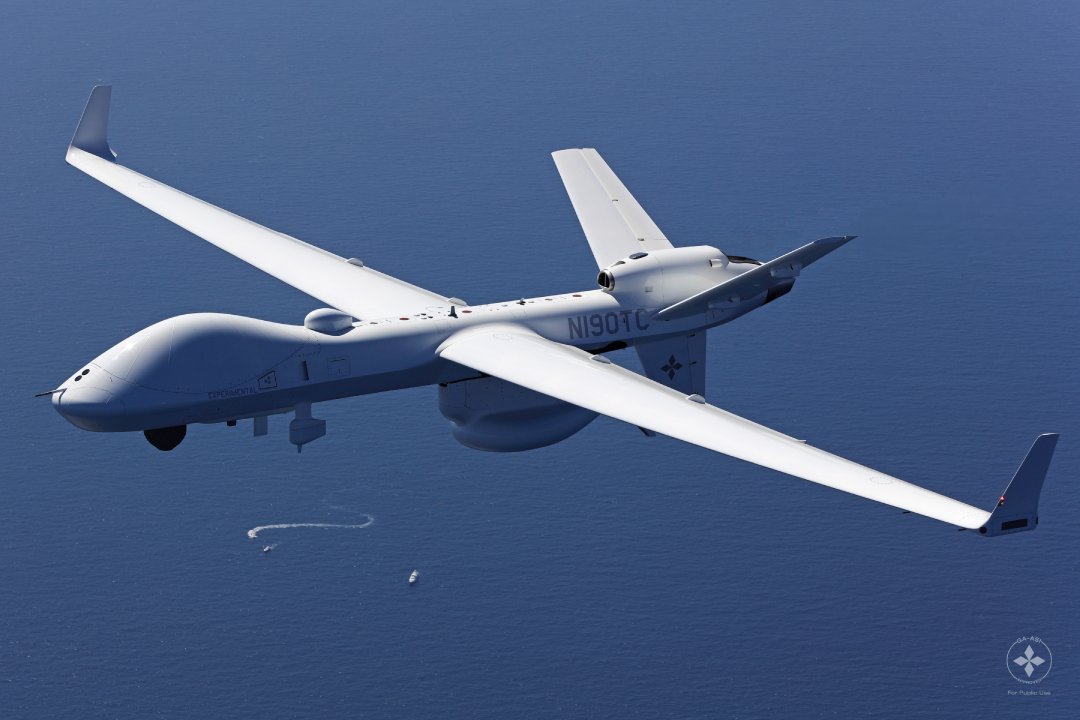
Today, GA-ASI’s MQ-9B SkyGuardian® and SeaGuardian® platforms, the groundbreaking Mojave Short Takeoff and Landing (STOL) aircraft, and the next-generation Gambit Series of modular semi-autonomous aircraft are poised to forge a new era of airpower in the Indo-Pacific.
Though built differently for distinct missions, these systems represent a paradigm shift. Combined, they deliver proven intelligence, surveillance, and reconnaissance (ISR) capabilities, rugged versatility, and advanced autonomous technologies designed to excel in contested environments.
A Global Solution With Multi-Mission Versatility
The MQ-9B SkyGuardian and its maritime variant, SeaGuardian, are redefining ISR operations worldwide. With unmatched endurance and adaptability, these platforms are being adopted by nations such as Japan, Canada, Poland, and India. Both Qatar and Germany recently announced plans to each acquire eight MQ-9Bs, signaling the platform’s growing appeal in the Middle East and Germany’s need for maritime surveillance and Anti-Submarine Warfare (ASW) capability.
The platform’s ability to operate for more than 30 hours allows it to deliver critical intelligence across land and sea domains, even in high-stakes scenarios.
Key Features of the MQ-9B:
- Endurance and Adaptability: Extended operational durations and flexible payload configurations equip the MQ-9B to handle diverse missions, from ISR to precision strikes.
- Advanced Sensors: Multi-intelligence capabilities, including a maritime radar, an Automatic Identification System (AIS), electro-optical/infrared cameras, and electronic warfare systems provide comprehensive situational awareness.
- Payload Capacity: Nine external hardpoints and an internal payload capacity of 363 kilograms enable integration of advanced sensors, survivability enhancements, and kinetic payloads, including long-range strike missiles.
- Specialized Maritime Capabilities: SeaGuardian configurations offer a 360-degree maritime radar, AIS, SIGINT (ELINT & COMINT options), as well as sonobuoy dispensing and processing systems for ASW and enhanced maritime domain awareness.
- Airspace Certification: The MQ-9B is designed to operate in national airspace without special accommodations and holds a Military Type Certificate from the U.K. Military Aviation Authority, underscoring its suitability for both military and civilian applications.
The MQ-9B’s versatility and open architecture design ensure it can adapt to evolving threats, integrating sovereign payloads and mission systems tailored to specific operational needs.
Airborne Early Warning
The proliferation of stealthy cruise missiles, advanced fighter aircraft, and large-scale drone attacks seen in conflicts like the Israel-Iran war and Ukraine has created an urgent need for Airborne Early Warning (AEW) capabilities.
Traditionally the domain of nations with expansive military budgets, AEW is now a necessity for countries of all sizes.
GA-ASI’s MQ-9B will soon have an Airborne Early Warning & Control (AEW&C) mission package. Developed in collaboration with Saab, the AEW&C mission package enables operators to detect, track, and respond to threats ranging from high-altitude aircraft to low-flying drones.
Advantages of the MQ-9B AEW&C Mission Package:
- Cost-Effective Solution: Unlike traditional AEW platforms relying on large multi-engine aircraft, the MQ-9B integrates proven technologies into a ready platform, reducing costs and deployment time.
- Interoperability: Fully compatible with U.S. and coalition systems, the MQ-9B AEW&C suite enhances regional defence capabilities by extending the reach of crewed AEW assets and operating in high-risk areas.
- Scalable Design: The AEW&C mission package, set to debut on the MQ-9B in 2026, provides an affordable alternative to traditional AEW platforms, ensuring accessibility for nations with smaller defence budgets.
By bridging the gap between traditional AEW systems and emerging requirements, the MQ-9B with AEW&C capabilities is poised to transform airborne early warning.
Operate Anywhere
Mojave STOL, GA-ASI’s Short Takeoff and Landing (STOL) platform, offers unique advantages for operations in the Indo-Pacific Theater.
Designed for flexibility and adaptability, it addresses the region’s operational challenges, including vast maritime domains, dispersed island chains, and contested environments.

Key Advantages of Mojave STOL:
- Runway Independence: Mojave STOL can operate from unimproved surfaces such as roads, beaches, and parking lots, as well as flight deck-equipped ships, eliminating the need for traditional runways or specialized launch systems.
- Maritime Versatility: Mojave STOL’s ability to take off and land from smaller warships, such as South Korea’s Dokdo-class amphibious assault ship, expands naval operational capabilities without requiring costly modifications to existing vessels.
- Payload Capacity: Mojave STOL features significant payload capabilities, enabling it to carry advanced sensors, weapons, and multi-mission packages tailored to ISR, precision targeting, contested logistics, and other combat roles.
- Cost Efficiency: Leveraging common avionics components from the modern MQ-1C Gray Eagle®, Mojave STOL reduces production costs and technical risks compared to clean-sheet designs.
These capabilities make Mojave STOL a critical tool for Indo-Pacific defence strategies, allowing allied forces to respond effectively to evolving threats across land and sea domains.
Autonomous Innovation for Collaborative Combat

GA-ASI’s Gambit Series represents the future of tactical airpower, pairing autonomous aircraft with human-crewed fighters. Built around a modular design, Gambit aircraft share about 70 percent common components, streamlining production, and reducing costs.
The Gambit Series includes multiple variants tailored to specific missions, from ISR and air-to-air combat to stealth reconnaissance and naval operations.
Gambit Variants:
- Gambit 1: Optimized for long-endurance ISR missions, featuring fuel-efficient engines and high-aspect wings for extended patrols in contested airspace
- Gambit 2: Equipped with air-to-air weapons for engaging hostile aircraft, prioritizing combat capability over endurance
- Gambit 3: Designed for adversary air roles in training scenarios, reducing operational costs for warfighter preparation
- Gambit 4: A stealth combat reconnaissance model with a tail-less design, ideal for high-risk missions in contested environments
- Gambit 5: Developed for carrier-based operations, featuring enhanced durability and a compact design for maritime missions
- Gambit 6: Focused on air-to-ground roles such as electronic warfare, suppression of enemy air defences, and deep precision strikes
The Gambit Series exemplifies GA-ASI’s commitment to delivering cost-effective, mission-tailored solutions that enhance survivability and operational efficiency.
The New Era of Airpower
While distinct in design and purpose, the MQ-9B, Mojave STOL, and Gambit Series are engineered to work together, creating a cohesive force capable of addressing a wide range of missions.
Together, these platforms exemplify GA-ASI’s vision for 21st-century airpower – defined by innovation, adaptability, and collaboration – paving the way for a new era of airpower that balances mission effectiveness with cost efficiency.
