

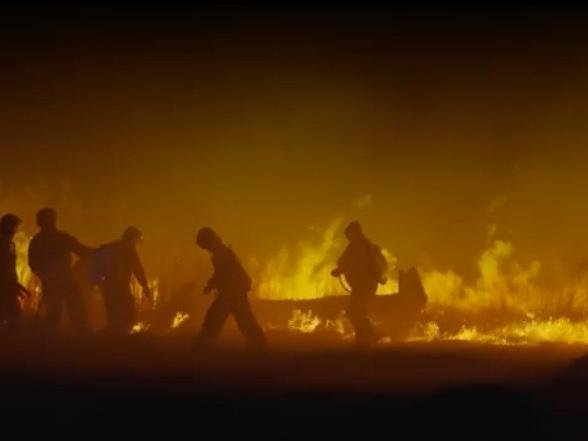
Fire chiefs and private-sector leaders discuss how wildfire technology innovations can move from idea to field use and identify gaps in the innovation process. The video highlights how technology can improve wildfire management and resilience.
Transcript
Anale Burlew
Wildfire has become not just a national issue, not just state problem, but now an international problem.
Brian Fennessy
We’re seeing fires burn faster. We’re seeing them consume more acres.
Michael Wara
The problem that we have today is that we have poorly managed natural systems that are causing unacceptable societal impacts.
Peter Ambler
The wildfire threat once a fact of life only for people living in certain states in the American West is now a problem coast to coast.
Michael Wara
Wildfire in California and the West is a natural phenomenon. It’s as natural as rain. Before settlement by Europeans, Native Americans in California used to burn four million acres a year, and that was a part of a natural process that kept the land in a state where fire could occur without unacceptable societal impacts. The problem we have today is we have 40 million people living in California, and we have not managed the fire system very well over the last hundred years, and too many people are being killed by wildfires, and too many houses are burning down. Those two things are the main reason that fire has become such a critical public policy issue.
Anale Burlew
The wildfire challenge has changed so much over the years, and it affects so much more than just our forests and our landscapes. It affects our economy, it affects our health, it affects where people can live, it affects how people are able to engage in recreation across our landscapes.
Brian Fennessy
I think the challenge of wildfire today is that we have so many other factors affecting the spread of wildfire. We’ve built communities now into areas that perhaps 20, 30, certainly 50 years ago, we didn’t have homes or businesses. And nature has burned these areas for years on their own long before people were here. So, we’ve gone and we’ve built in these areas, geographic areas, that are conducive to fire spread.
Peter Ambler
The wildfire threat is growing exponentially here in the U.S. and around the world. There’s no more wildfire season anymore. We can’t depend that when it starts raining and when we get into the winter months that we’re not going to see smoke in the air, that we’re not going have the threat of wildfire present.
The introduction of advanced technology and innovation is critical to the fight against catastrophic wildfire. As we see advanced technology, artificial intelligence, computer vision, and other tools employed across other sectors, it’s critical given the severity of the threat that we meet the need with the most advanced tools possible.
We have a rapid detection and situational awareness tool, Pano360, where we deploy ultra-high-resolution cameras on mountaintops, on cell towers, anything with a high vantage point. These cameras look miles into the distance to visually or with heat signature detect the very first signs of wildfire. These cameras stitch together a 360-degree panoramic feed that is responding to the threat of wildfire in minutes.
Anale Burlew
Innovation in technology has been a game changer for us at CAL FIRE in our ability to not only suppress fires, but also in fire intelligence, as well as our ability to do early detection, to actually watch fire progress over the landscape like we’ve never been able to before. Our ability to do fire modeling so that we can better predict where that fire is going to move across the landscape, where evacuation areas may need to be, where we might need to move resources in more quickly, put containment lines has changed. Our ability to see real time resources working on the landscape and the coordination of those resources on a fire incident has been a drastic change.
Brian Fennessy
We’re finding that the industry is coming to us first and asking about our needs before developing something and then coming to us and saying, “Hey, I developed this thing. Can you use it?” I believe that technology, you know, has outpaced the fire service. There’s technology out there now that we talked about 20, 30 years ago. Wouldn’t it be cool if? And it’s here. But now that it’s here, everybody’s like, “Whoa, whoa, whoa, wait a minute. This is happening a little bit too fast for us. We really need to consider this.” And so, in many ways, I think we’re slowing tech down. It’s gotten better.
My biggest concern was at some point, technology, you know, these innovators, these companies, are going to go away. They’ll go, “Look, the fire service keeps talking about their needs and all these things and we’re providing, you know, different technologies and they’re not adopting.” That’s probably one of my biggest concerns. And so, we need to be, we the fire service in this country, need to be more nimble and we need to be more open. But I do believe it’s a responsibility, you know, of the fire chiefs and the fire departments of metro organizations and certainly local government to look at what is going on within the industry.
Michael Wara
The wildfire space has been one where technological innovation has been relatively slow. There are really good reasons for that. When firefighters do their work, they need to be very confident about the tools that they’re using, that they’re going to work as intended, that there aren’t going to be surprises, that they’re not trying out something that’s a beta version where their lives and their team’s lives can be put at stake if it doesn’t work as it intended. So, there’s a lot of caution, understandable caution, in terms of innovation.
The thing is that the urgency of the fire problem has really changed in the last decade. And so, governments are really moving as quickly as they can to adopt new technologies. And you see early movers, like, for example, the firefighting agencies in Southern California, adopting new technologies, really trying to pilot them. And then from there, those technologies can spread out to the broader fire service. And so, we see these kind of early actors, people that are facing the most intense challenges, more willing to experiment with new approaches and new ideas than was necessary in the past when the problem just wasn’t as bad. One challenge is just that governments have to buy a lot of the technologies.
Anale Burlew
So, funding for technology is always tricky, right? Especially for innovation is super tricky. Something has to be proven that it works before we’re gonna use public dollars to fund it. And so much in this technology and innovation space, a lot of it is still evolving. And so that is a challenge.
Michael Wara
Government procurement is very hard for startups to navigate because they don’t have the runway to survive a new government contracting process. And so, a lot of the innovation at least occurs initially, that’s, you know, trying to find ways to avoid that. And then of course, some of the firefighters are cautious about purchasing or adopting new technologies. There’s also a lot of standardization in firefighting, where interoperability of firefighters is very important because of mutual aid systems. And so, everybody needs to have the same kind of hose. Everybody needs to know that if they order a truck of a certain kind, it’s gonna show up and be able to do a certain kind of job. And that can slow down innovation because it means that you can’t just try out new things.
Brian Fennessy
Both funding and policy can you know, inhibit the growth or the, you know, evolution or the engagement with the fire service. Some of these technologies are very expensive, and absent grant funds or being very well resourced, many times those get pushed to the state. Financially, it makes it very challenging.
Peter Ambler
I think it’s really important to recognize that this is a young industry. Five years ago, you had only a handful of fledgling companies and emerging technologies. Today, we have dozens of mature technologies. We have hundreds more companies that are innovating and trying to do even more to respond to the wildfire threat. You know, the private sector was oftentimes the first to fund, the first to adopt. And the shift that we’re seeing right now is that the public sector is starting to adopt, and that’s a trend that needs to accelerate and I think is.
Michael Wara
Innovation at scale is a partnership between government and private industry. That’s true wherever you look. If you look in the oil and gas industry and the enormous innovation that’s occurred there, it’s a partnership. The real innovations that happen, like at DARPA, for example, are an intensive collaboration between government and industry. And I think fire is no different. We’re going to get where we need to go if the government can align behind a set of technology and innovation objectives and then find partners in the private sector and in academic institutions like Stanford to develop and bring those technologies to market at scale. That takes both sides.
Peter Ambler
I think the technology roadmap that the administration is currently putting together that will ostensibly inform adoption and application decisions by federal wildland firefighting agencies going forward is vital. It needs to include voices from industry, voices from academia, and of course, voices from those in the wildland firefighting space that have been on the front lines of technology adoption and partnership.
Brian Fennessy
I think we’re going to see more potentially out of the federal government, you know, should they approve this consolidation of the five land management agencies, the U.S. Forest Service, the Bureau of Land Management, the National Park Service, Fish and Wildlife Service, and the Bureau of Indian Affairs, all of those agencies have firefighters, wildland firefighters. The policies are all different, and the structure of those agencies, they weren’t developed to be fire departments. And so, this idea of consolidating them all and basically becoming a large federal fire department makes a lot of sense to, you know, the firefighters that are currently federal firefighters, you know, the states, you know, and to us here in local government.
Quite frankly, you know, the federal government, the Wildland Fire Service, has been challenging to work with over the last several years. You know, they’re certainly hit with attrition and recruitment issues. We’re seeing, here in California, around 200 fire engines from all over the United States here to fill vacant U.S. Forest Service fire stations. So, it’s an issue. And in the president’s recent executive order, where he’s directing those agencies to come together and prepare for consolidation, there is a section in there that speaks to technology. You know, the federal wildland agencies are just not a big player in the tech industry. And they should be.
Anale Burlew
I think there would be value in an organization that is able to bring everyone to the table that can vet out the value of different technology, different innovation, but also, have an opportunity to fund this innovation and this technology so that researchers that are doing this work and people that are in this space are able to continue to do this great work and this great research. I think that anything that we do in the fire innovation and technology space needs to have all of the players at the table, be that the federal agencies that are in the wildfire space, the Department of Interior agencies, the U.S. Forest Service, the state agencies that are the — responsible for wildfire in those states, as well as as other researchers, academia, philanthropy, so that we’re all working together. Moving forward in the same direction is gonna be huge.
In recent years, the Office of Wildfire Technology Research and Development was formed here in California, which brings together researchers, academia, firefighters, innovators, all into the same room, around the same table, to really discuss new technology, new innovation, and evaluate its applications in wildfire. And so, we are seeing a lot of success in that model in this state.
Michael Wara
I want to look back in 2035, when I’m getting close to retirement and see a fire service that’s really modernized where they’re using the latest technology to effectively control and contain wildfire when they occur. And also, a new kind of community and a renovation really of communities that already exist so that when things do escape our control, catastrophe doesn’t occur.
You know, I’ve spent too much time with people whose lives have been devastated by fire, and we need to do better at preventing that. I think we can. And the key is going to be creating a context where innovation occurs and also can be adopted at scale. And I think we can do it. There’s enormous urgency to achieving that outcome. And I see an acceleration of technological innovation that if we can support it and nurture it will get us where we need to go.
Peter Ambler
Hope can be a scarce resource in the fight against wildland fire. We see these catastrophic blazes each and every day, But, one thing we’re hoping to do at Pano AI is you know, supply a sense of hope that we’re bringing high-tech tools like rapid detection, putting them in the hands of firefighters and helping them do their jobs more safely and effectively, thereby protecting communities and lives.
Anale Burlew
I am so excited for where we are now, but also what the possibilities are in the future. And it’s inconceivable to know how far we can advance because I’ve seen how quickly over my career we have advanced and how quickly innovation and technology is moving forward. And to think where we’re going to be 50, 100 years from now is so exciting in not only fire suppression, but also, and more importantly, forest health and fire prevention, because the idea is let’s not have to rely on fire suppression. Let’s get a handle of this so that the fires that are happening on the ground are beneficial. These are the fires that are good for the ecology, that are good for our landscapes, that are good for our forests, and those are the fires that we should be having and the fires that our planet needs to be healthy.
