

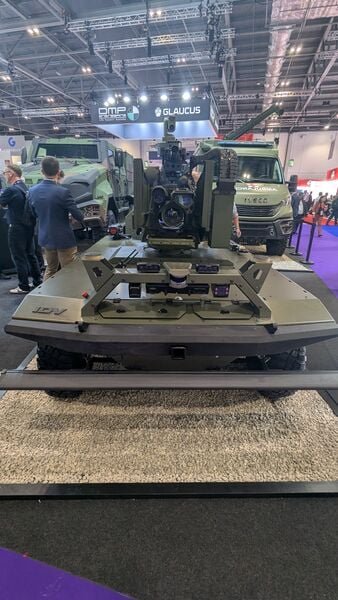
The Future Armoured Vehicles Survivability (FAVS) 2025 conference, organized by SAE Media Group and held in London, convened military officials, government representatives, and defense industry stakeholders. The focus was on exploring contemporary and prospective strategies aimed at bolstering the survivability of military platforms and personnel in combat scenarios. From November 17 to 19, the discussions emphasized the necessity for an integrated, modular, and multilayered response to modern threats, highlighting the discrepancies present in current military capabilities and the integration of unmanned systems as key components in attritional warfare.
The Imperative for Integrated Solutions
The conference identified three fundamental criteria vital for enhancing operational survivability through equipment design:
Platform-Agnostic Capabilities: Solutions that are not limited to specific platforms ensure broader applicability across varied military arsenals.
Modular Architecture: Designs that allow for scalability and customization facilitate adaptations to emerging threats without necessitating complete system overhauls.
Scalability: Systems must be able to evolve and expand based on operational requirements and technological advancements.
The Trophy active protection system (APS), developed by EuroTrophy, exemplifies these core principles. This system demonstrates a proactive approach to mitigating threats, tightly aligned with the specifications outlined at the conference.
Future Innovations: Modular Integrated Protection System (MIPS)
A significant focus was on ongoing initiatives such as the Modular Integrated Protection System (MIPS). This project aims to fuse situational awareness, combat effectiveness, and platform defense into a cohesive unit. While the particulars regarding the systems and platforms slated to execute MIPS—anticipated to undergo trials in the UK by 2026—were not disclosed, the implications for future operational strategies are considerable.
Interestingly, while counter-unmanned aircraft system (C-UAS) capabilities were referenced, detailed discussions surrounding their integration into MIPS or their evolution from the Trophy APS were notably absent. The absence of this dialogue suggests a potential oversight, given the growing significance of unmanned threats on contemporary battlefields.
Conclusion
The insights garnered from the FAVS 2025 conference underscore the urgency for the defense community to adapt and innovate in response to the evolving landscape of warfare. Embracing integrated and modular solutions will be critical for enhancing the survivability of military platforms and personnel. As wars become increasingly asymmetric and technology-driven, the defense sector must prioritize advancements in unmanned systems and protective measures to stay ahead of emerging threats.
For those interested in deepening their understanding of validated military capabilities and equipment, direct access to market insights is recommended. Engaging with interconnected entities can provide a more comprehensive view of the evolving battlefield landscape.
