

In this guest article, James Cartlidge MP, Shadow Secretary of State for Defence, outlines a proposal to use radar-equipped RAF Protector drones alongside E-7 Wedgetail aircraft to provide round-the-clock airborne early warning (AEW). Drawing on the Royal Navy’s ‘LookOut!’ experiment, the proposal forms part of the Conservative Party’s £10Bn Britannia Shield plan to strengthen Britain’s defences against drone and missile attacks.
When we talk about ‘seeing the threat’, we need only turn on the news: the United States Air Force evacuating its planes from bases in Oxfordshire and Suffolk; a senior US Army officer being arrested in Gloucestershire on suspicion of spying for Russia; and Putin continuing to subject Ukraine to a relentless drone and missile onslaught.
But ‘seeing the threat’ has particular resonance for our military. They must be able to see clearly the varied risks that may present themselves to our nation, our Overseas Territories and our deployed forces. With the geopolitical environment more dangerous than at any time since the fall of the Berlin Wall, and the threats themselves evolving, that starts with ensuring we can see what is heading towards the homeland.
Thankfully, the risk of the British mainland being subjected to the kind of aerial bombardment Putin is so mercilessly inflicting on Ukraine is still low, but it has clearly risen. Air defence is what all our allies are crying out for, and our own sovereign territory has already been attacked: Iran’s proxies hit RAF Akrotiri with a drone.
My view is straightforward: as the threat rises, our defences should be strengthened. That’s why I announced Britannia Shield at our party conference last month – our plan to defend the UK from drone and missile attack. And having the clearest sight of the threat is absolutely key to the proposal.
To explain, Britannia Shield is essentially our policy to invest £10bn strengthening the air defence of the UK and its overseas territories in three key areas: Sense. Decide. Effect.
‘Sense’ means seeing the threat, and in my speech I said we would boost our ability to do this by procuring new movable ground-based radars, giving us far greater coverage and resilience. On ‘decide’, working out how to respond, I explained that we would upgrade our command and control systems to ensure all the data and effectors in our airspace were fully integrated. Finally, on ‘effect’, i.e. intercepting the threat, I committed that by far the largest part of the funding would go on deepening our stockpiles of surface-to-air missiles and counter-drone weapons.
I also said last month that I would reveal greater technical detail about Britannia Shield in the coming weeks. As such, there is another angle on how we would strengthen visibility of the threat picture, which I believe is critical to our homeland defence, and owes its inspiration to a little-known Royal Navy experiment. Suitably, given the name of this publication, the experiment was called ‘LookOut’, and it informs our plan for ‘Radar Drones’.
In essence, we would aim to achieve 24/7 AEW coverage by using radar-carrying drones to augment our three E-7 Wedgetail aircraft: highly sophisticated crewed Intelligence, Surveillance, and Reconnaissance (ISR) platforms. Having ‘eyes in the sky’ around the clock would be a massive step forward for keeping Britain safe.
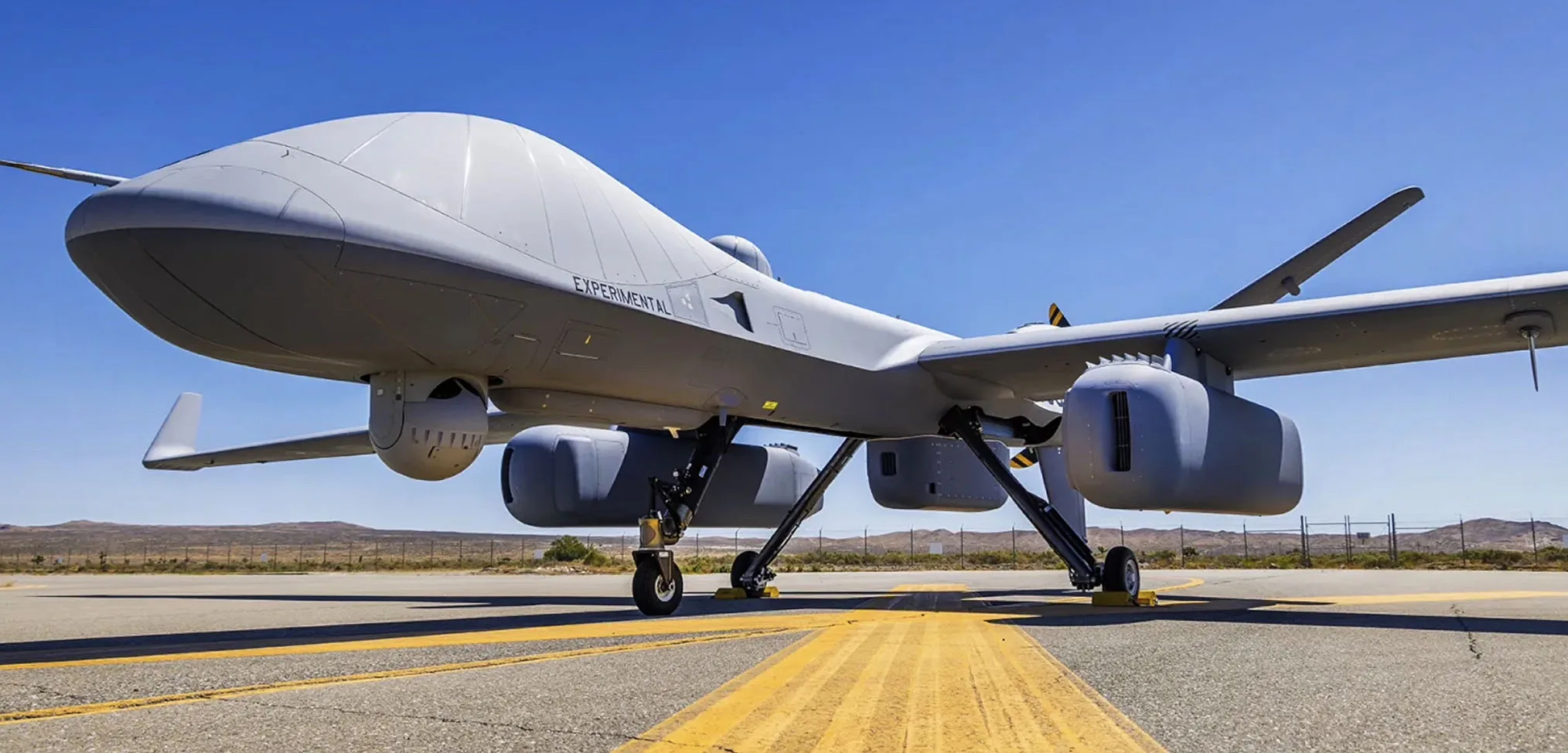
The drone in question would be the Protector RG Mk1 Remotely-Piloted Air System (RPAS), originally acquired by the RAF for visual/infra-red surveillance and ground strike. In 2022, it was the subject of a joint Royal Navy/Defence and Security Accelerator (DASA) innovation programme, known as the ‘LookOut!’ Challenge. This involved the Navy working alongside Saab to fit the airframe with a small form-factor AEW radar.
The culmination of this programme took place in May 2026 with the first test flight of a Protector MQ-9B in California, fitted with ‘LoyalEye’ radar pods, clearly demonstrating the potential for Protector to be augmented with AEW radars to deliver enduring ‘aloft sensing’ – against threats such as drones and guided missiles.
Our idea is to assign six of the RAF’s Protector drones to homeland defence. When combined with the three crewed E-7 Wedgetails that are coming into service, these drones would provide a fleet of nine aircraft for AEW, potentially capable of delivering continuous high-altitude surveillance at times of heightened threat.
Protector is already fully cleared with the relevant regulators to fly in UK airspace, and as far as we understand, most of the 16 are in service, with the rest entering shortly. Of course, some will say that the answer is to procure more E-7s. Whether three is the right number or not can be debated till the cows come home. Whilst additional E-7s would generate significant capability beyond current plans, such an approach would also be many times more expensive. This would mean using cash that then couldn’t be spent on missile stocks. We also shouldn’t forget that the existing E-7s have taken years to come into service, when the threat is here and now.
Instead, I hope that our ‘Radar Drone’ plan – augmenting the E-7s; working as part of the AEW pack – offers greater output with more readily available and affordable input. Indeed, it underlines my priority as a former Defence Procurement Minister to learn from the past and focus on deliverability, rather than waiting years for ‘exquisite’ programmes that come into service late and over budget.
When I announced Britannia Shield, there was criticism from those who argued that the budget needed to be many times higher. I am not aware of anyone who took this position who also set out where they would find the additional tens of billions implied. It must be stressed as a matter of fact that our £10bn is 12 times more than Labour allocated for Integrated Air and Missile Defence in their ten-year Defence Investment Plan.
The key is that we do have a way to pay for Britannia Shield, because in September Kemi Badenoch and I set out a fully funded plan to get to 3% by 2030. Not everyone will agree with the expenditure choices involved – £billions would come from welfare – but we have been completely transparent about our plan, and at conference I started setting out how we would prioritise that funding boost for Defence.
Whatever the percentage of GDP we spend on defence, choices have to be made about where the money comes from and where the cash is allocated. At every step, this involves prioritisation. That in turn requires careful work and clarity when we go public.
A senior military figure, no longer in the regulars, has helped with the detail of Britannia Shield – but ultimately, it is for us politicians to front up and set out what we would do, and above all, how we would pay for those plans. Of course, we are the Opposition and have no ability to put this policy into practice at present. But, at the very least, I hope Britannia Shield has kicked off a much-needed debate on homeland defence. That is why I will continue not just ‘opposing’ the Government, but supporting them when it is in the national interest. This includes setting out our own positive ideas, such as our Radar Drones plan so we can see the threat round the clock – with a little help from the Royal Navy.
