

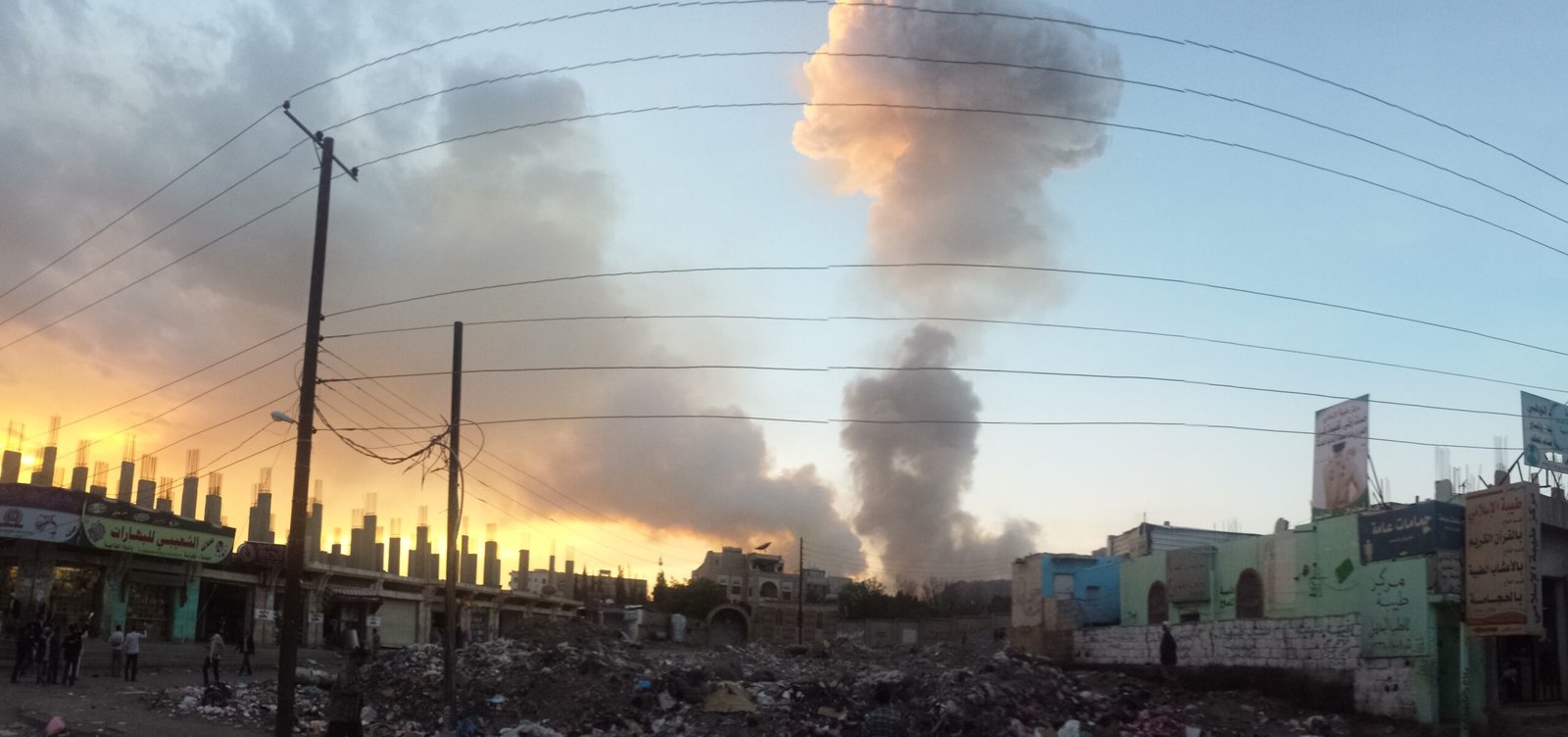
Saudi Arabia and its allies began airstrikes in Yemen in March 2015. They had much stronger air forces than the Houthis. Yet, the Houthis continued to control much of northern Yemen. One major reason was the disagreement within the coalition. Saudi Arabia supported the internationally recognized Yemeni government, while the United Arab Emirates (UAE) worked closely with southern armed groups, including forces linked to the Southern Transitional Council. Some Saudi-backed and UAE-backed forces even fought each other in Aden. This division made it harder to coordinate military operations and agree on who should govern Yemen. The Houthis, meanwhile, had a more centralized command and improved their missiles and drones with outside support. Airstrikes could damage Houthi positions, but they could not bring divided local forces together. The Yemen war shows that superior airpower is not enough when coalition partners cannot agree on their political goals.
Can airpower win without political unity? In Yemen, the answer was no. Saudi Arabia and the United Arab Emirates (UAE) entered Yemen’s civil war in March 2015 with modern combat aircraft, precision weapons, deep financial resources and international military support. The Houthis had no comparable air force. Yet the coalition’s material advantage did not produce the political result it sought. The Houthis remained entrenched in the north, while the anti-Houthi camp remained divided.
The mismatch between resources and results is the central lesson of the campaign. Airpower gave the coalition reach and destructive capacity, but it could not compensate for rival political projects, fragmented local partners, and the absence of a shared end-state. A 2017 Center for Strategic and International Studies (CSIS) assessment captured the military imbalance clearly: the Saudi- and UAE-backed side held a decisive edge in the air but lacked the ground strength to drive Houthi-Saleh forces from the territory they controlled.
One Coalition, Different Political Projects
The coalition was united against the Houthis, but not around a single idea of post-war Yemen. Saudi Arabia broadly backed the internationally recognized government. The UAE built close relationships with southern forces, including actors aligned with the Southern Transitional Council, and pursued interests centered on the south and the coast. Carnegie analysis documented how Saudi and Emirati strategies diverged from the beginning of the intervention and how each state cultivated different Yemeni partners.
Those differences were not merely diplomatic. Saudi-backed and UAE-backed Yemeni forces sometimes fought each other, including over control of Aden and other southern positions. Abu Dhabi also viewed Islah and its Muslim Brotherhood links far more negatively than Riyadh, while Saudi policy remained more willing to work with political and military actors connected to Islah when that served the fight against the Houthis. The coalition therefore contained rival chains of command and rival visions of political authority.
This mattered on the ground. Air strikes could support a local force, but they could not decide which local force should govern after the fighting. When partners disagreed over territory, legitimacy and the future of the south, battlefield pressure did not translate cleanly into a common political outcome.
What Airpower Could Not Do
The coalition’s advantage was most visible in the air. Saudi and Emirati aircraft could strike across Yemen while the Houthis had no equivalent capability. But the gap in airpower concealed a different imbalance: the Houthis held territory through a relatively centralized political and military structure, whereas their opponents were dispersed among the internationally recognized government, southern separatists, tribal formations, Islamists, Salafists, former Saleh loyalists and other armed groups.
That fragmentation limited what airpower could achieve. The coalition could damage positions and support offensives, but durable control required forces on the ground that accepted a common chain of command and a common political destination. CSIS noted the same problem early in the war: air superiority existed, but the anti-Houthi side did not have the ground strength needed to dislodge its opponent from the areas it held.
The Houthis also adapted. Their missile and drone capabilities became more sophisticated, allowing them to impose costs beyond Yemen against Saudi Arabia and later the UAE. By late 2023, they were also using missiles, drones and other systems against shipping in the Red Sea. The 2024 United Nations Panel of Experts reported that the Houthis had received technical assistance, training, weapons and financial support from Iran and other members of the so-called axis of resistance, and assessed that they could not develop most of the advanced systems they displayed without external assistance.
Iran’s Cheaper Leverage
Iran did not have to match Saudi spending to gain strategic leverage. Supporting the Houthis gave Tehran a partner on Saudi Arabia’s southern flank at a much lower cost than sustaining the coalition’s campaign. External support helped the Houthis improve missiles, uncrewed systems, anti-ship weapons and surveillance capabilities.
But external assistance should not be stretched into a claim that the Houthis were simply controlled from Tehran. The movement had its own leadership, local base, and political agenda. That distinction is important because it helps explain why Iran could benefit from Houthi resilience without carrying the full political and military burden of the war. The coalition, by contrast, was spending heavily while also managing disagreements among states and local partners.
Cohesion Mattered More Than Spending
The comparison is not a simple story about ideology defeating money. Houthi mobilization combined political commitment, local loyalties, material incentives, and coercion. The anti-Houthi side also contained fighters with strong local and political motivations. The more important difference was organizational: one side was able to concentrate authority in the territory it controlled, while the other remained divided among governments, separatists, parties, tribes and armed formations with different patrons.
Saudi Arabia and its allies could finance a much larger military campaign. What they could not purchase was a single political approach to Yemen. The UAE’s 2019 drawdown illustrated the problem rather than ending it: Abu Dhabi reduced its direct military presence while retaining influence through local forces it had trained, armed and funded. The coalition remained powerful, but power was being applied through partners who did not all want the same political end-state.
The Lesson for Coalition Warfare
Yemen does not show that airpower is ineffective. It shows that airpower has political limits. A coalition can dominate the air and still fail to convert that advantage into strategic success when its members disagree over who should hold territory, who should govern, and what the political order after the war should look like.
For coalition planners, those questions cannot be postponed until after the strikes: Which local authority is the campaign strengthening? Which partner will hold the ground? And do the coalition members agree on the political arrangement they are trying to produce? In Yemen, those questions never had one answer.
The Saudi-led coalition had money, aircraft, and weapons in abundance. What it lacked was strategic unity. That gap helps explain why superior military resources shaped the battlefield without deciding the war.
