

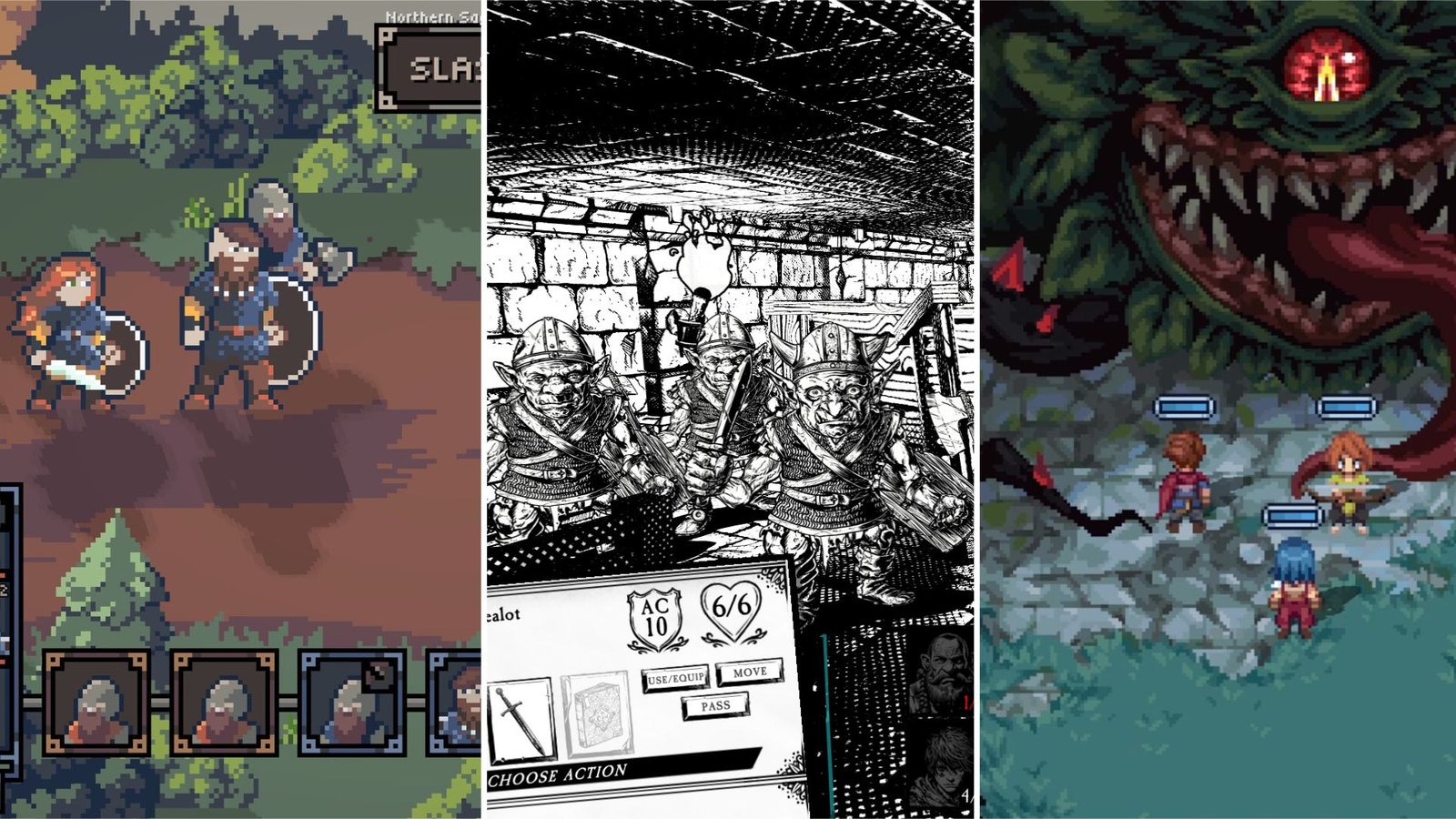
From first-person dungeon crawlers to PlayStation-inspired JRPGs, these twelve titles explore different corners of role-playing history, each of these in a great way.
Here on TBL I’m all about the turn-based RPGs, to the extent that I can be quite obsessive about them. If there’s one thing I’m particularly obsessed with, it’s old-school, retro-inspired projects (whichever term you prefer), and in particular those with absolutely gorgeous pixel art.
Fortunately, I’m very much not the only one who is obsessed with these games. Every time I go and do a piece on one of them, or give it a bit of extra attention, I’m reminded of just how much love the community has for these projects. That’s a good thing. It’s actually more than good if you ask me.
That’s precisely why today I’m looking at 12 of the RPGs that are currently in development that are very much embracing their old-school roots. Don’t let the ‘old school’ label fool you though. These are not just games trying to re-create the past. They’re bringing a whole host of modern ideas, new mechanics, and originality to the table whilst retaining that very distinct retro feel which we all (apparently) love so much.
Some are clearly looking back to the early days of computer RPGs and tabletop adventures. Others are looking to the original PlayStation JRPGs or the squad management of the older strategy RPGs. There are hand-crafted worlds, there are procedural frontiers, and more. Here are twelve projects to keep an eye on, each with a very different take on what is worth resurrecting.
Lair of the Leviathan
A Handcrafted Frontier for a Party of Your Own
- Developer: Nostalgic Realms and Whiskeybarrel Studios
- Release: TBA
- Platforms: PC
- Steam page: Lair of the Leviathan

I normally just go with one screenshot per game in my lists, but in the case of Lair of the Leviathan, you should watch more of them to literally fall in love with it, and here you can find out more.
The quest for the mythical creature is the launching point for Lair of the Leviathan, but the very thing that makes it so appealing is the freedom to stray from that quest. You’re in a hand-crafted world of Ormande with all its attendant complications: rival lords, isolated settlements, hidden passages and dungeons which may well be beyond the capabilities of your party.
Based on Ultima, Pool of Radiance and early Baldur’s Gate the RPG allows you to create your entire adventuring party. Turn-Based combat system, equipment visible on the character sprites, townsfolk with their own schedules, and weather changes are just some of the features of this little gem in the making.
There are hidden doors under trees and in the side of ordinary buildings which give the exploration a tangible reward. You’ve created your party and they get to go out and see what they find out. In case I haven’t made it obvious enough, this is easily one of my most anticipated games, and I absolutely can’t wait to get my hands on it.
Mystic Land: The Search for Maphaldo
A Dungeon Crawler With Roots in the DOS Era
I could probably introduce every single game on this list with “This is a game I absolutely love” as that’s absolutely true. I won’t say it though as I don’t want to be repetitive. Just assume I’m thinking it every time for each single of these projects.
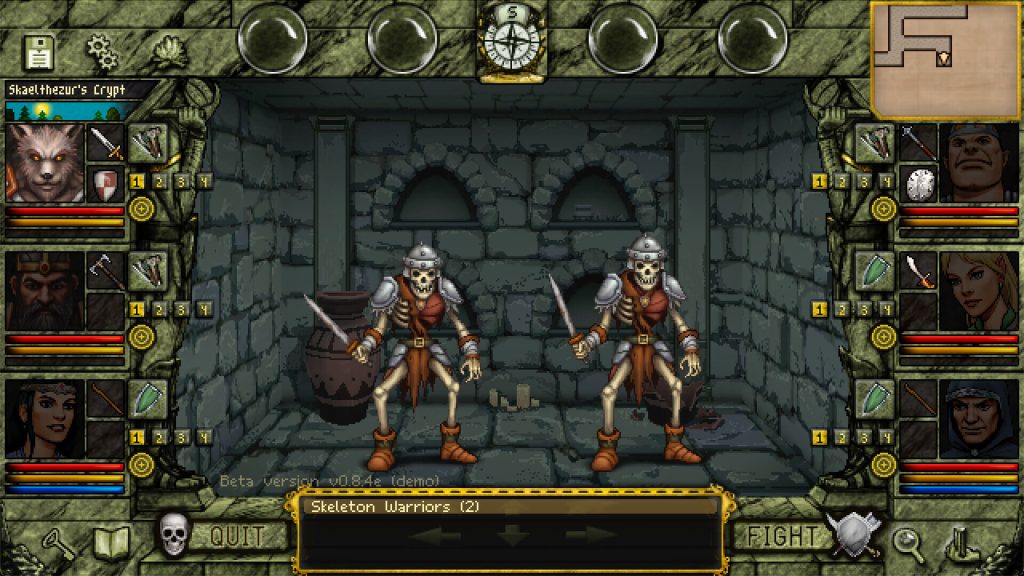
Mystic Land‘s link to the older RPGs is quite direct, actually. It started in the early 90s, was put on hold, and then came back many years later with the original builds, maps, and design material all recovered. It’s very much an adventure game in the vein of Wizardry, Might and Magic, and Eye of the Beholder, with first-person exploration, turn-based combat, and a lot of puzzles that you have to actually pay attention to.
A party of six goes out to investigate the disappearance of the scholar Maphaldo as the land is gradually overtaken by the undead and all sorts of other disturbances. The party is defined by its classes, attributes, and skills, with the presentation able to toggle between classic 2D and true 3D.
Controller support and some refinements to the inventory system are part of the same older design philosophy. Building a competent party and tackling the various difficult puzzles remains at the heart of the experience, with the interface getting a few well-earned updates along the way. A beta demo is already out there for you to check it out.
Knights of Frontier Valley
An Adventuring Career With Survival Attached
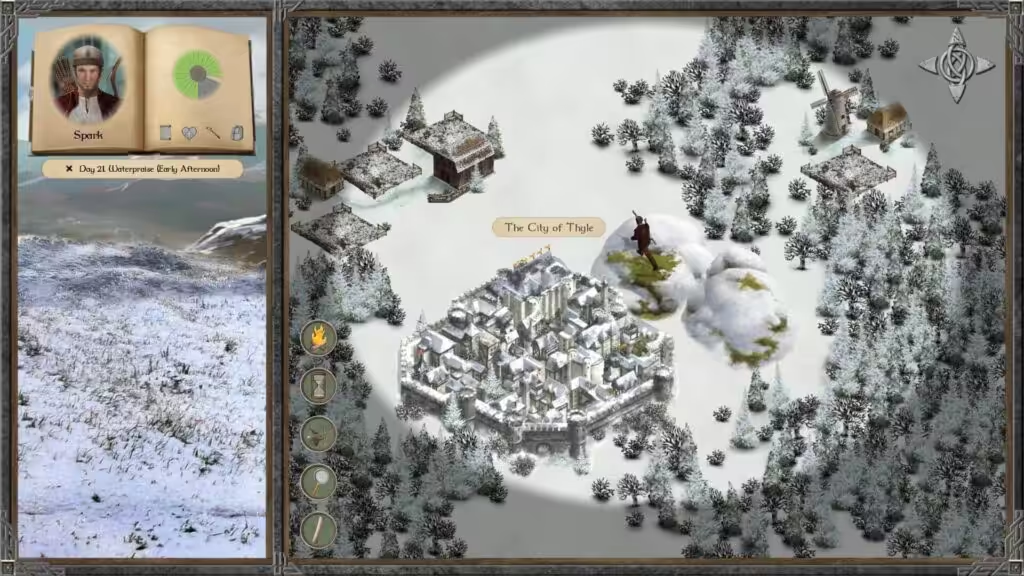
Before you can become the respected adventurer that you are in Knights of Frontier Valley, you’re going to have to manage hunger, thirst, fatigue, and the weather. Wounds take time to heal and getting the wrong clothing for the season has repercussions. Apparently the road to glory isn’t just about being brave either, you’ve got to be sensible about what you pack.
Adamant Studios are building a procedural fantasy RPG where you play a character through their lifetime. Your career is defined by your classes, your professions, your faction allegiance and your permanent skill choices (in general). The world itself is all different in each playthrough in terms of maps, inhabitants, items and political relationships.
Combat is turn-based and gridless, with the option to auto-resolve battles. Outside of combat the townsfolk go about their daily business and the seasons go on. There are no quest markers so the information you come across is all part of your navigation of the valley. A new character means you’re essentially learning a brand new world so there’s a lot more that will have changed from one run to the next than there is in your inventory.
Soverain: An Eternal Legend
Family Politics on a Tactical Battlefield
- Developer: Tentacule Mauve (Jonathan Brassaud)
- Release: Q4 2027 (planned)
- Platforms: PC, Nintendo Switch
- Steam page: Soverain: An Eternal Legend

Refusing a throne is rarely the end of a succession issue. In Soverain: An Eternal Legend Conor Lenastie simply walks away in search of his missing elder brother following their father’s death, which in effect puts a family issue into a wider conflict between kingdoms. It’s a tactical RPG which draws on the mechanics of Final Fantasy Tactics and Fire Emblem, with hand-drawn pixel animation, character classes, and an army whose relationships will affect morale.
Positioning has a very real impact in battle in that you can prevent a counterattack by striking from behind. Between missions, you have a developing base camp which you can use for recruitment, crafting, training, and character interaction. There are combat events that can have an effect on the dialogue and relationships and large boss battles.
Zodiac Legion
Knightly Formations Meet an X-COM-Inspired Campaign
- Developer: Studio Draconis
- Release: Q1 2027 (Early Access)
- Platforms: PC
- Steam page: Zodiac Legion – demo available
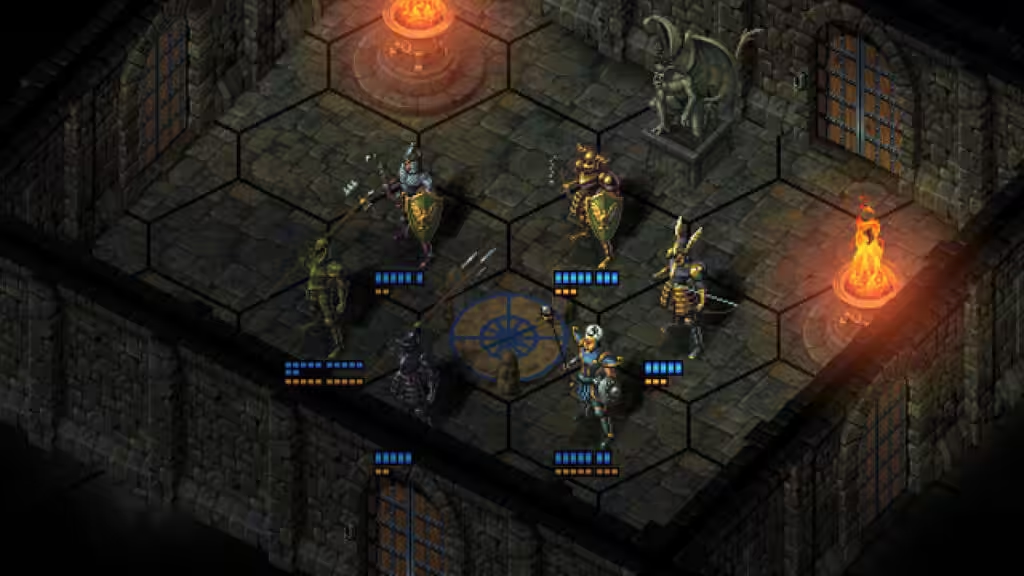
I’ve been watching this one for ages actually, it was one of the very first games I came across when I first started TBL and it’s still one of the most interesting ones, largely down to the tactical combat and a strategy layer I’m very much keen to get my head around.
Studio Draconis is very much an X-COM hybrid, combining tactical missions with a strategic campaign. You’re in charge of rebuilding an order of arcane knights. In between missions, you’re building a Citadel, doing research, and upgrading your gear. In the dungeons, you’ve got destructible environments and magic to play with (you can break a new path through the environment; you can freeze up an approach, etc.).
Enemy defenders can reinforce as the mission goes on, which adds a real degree of pressure to your decisions about where to go and when to go. Your warriors can also become Zodiac Champions with powers linked to their signs. One to try and follow for sure.
The Secret of Weepstone
Tabletop Dungeon Crawling in Black and White
- Developer: Talesworth Game Studio
- Release: 2027
- Platforms: PC
- Steam page: The Secret of Weepstone – demo available

Six ordinary villagers are sent into an abandoned keep to investigate the rather odd affliction afflicting their lord. That’s the situation at the start of The Secret of Weepstone and it doesn’t in the slightest suggest a proper recruitment process. The hand-drawn black-and-white art is very much in the style of the illustrations you’d find in the older D&D rulebooks, and the adventure is very much in the spirit of 1980s D&D.
Combat and skill checks are determined by dice, puzzles block the way through the dungeons and the gear you recover helps the party deal with the increasingly dangerous encounters that come their way. You can bring in new recruits to make the party size up to eight (including some more experienced folk). Death is also a mechanical thing in the game in that a character who dies gives you a Mortal Favours. The effect of that is that the loss has consequences beyond simply having a blank space in the party.
The whole thing has a very distinct feel to it really, with the common folk being so vulnerable, the reliance on dice and the monochrome dungeon art all contributing to that. It’s a very old-school RPG experience delivered via the tabletop session, with the result that you end up with a party of people who were probably quite a lot better off just staying in the village.
Full Circle
PlayStation-Era JRPG Influences With Timed Attacks
- Developer: 2nd Player Games
- Release: TBA
- Platforms: PC and consoles (specific console systems TBA)
- Steam page: Full Circle

In Full Circle, humanity has taken to living in floating cities, leaving the surface to be inhabited by the mutated. Young explorers come down to support their supposed last refuge, only to find survivors and rival societies in place of the ‘civilization’ they were taught about. It’s a setting that provides the basis for a JRPG that draws on The Legend of Dragoon and Breath of Fire III & IV, with pixel art characters moving through 3D environments.
Those influences carry over into the battles themselves. Turn-based commands involve timed inputs, and the order in which the party acts will determine how attacks chain into combos. Four active characters can be swapped from four reserves, allowing the party to shift around during a battle. Individual abilities include hacking machines, deploying turrets, and taming creatures, as well as a number of skills which are also used during exploration. That naturally puts the onus on both what you do and how you do it.
Shardpunk 2
An Outpost to Build in a City Still Full of Rats
- Developer: Clockwork Pile
- Release: TBA
- Platforms: PC and consoles (specific console systems TBA)
- Steam page: Shardpunk 2 – open playtest available

Commanding a human outpost is the fundamental job in Shardpunk 2. The squads go out into the ruins of the Capitol to scavenge; the base needs to be expanded and resupplied, and there’s a constant need for equipment. The rats are still a problem, new creatures are turning up and the Motherland has its own demands. Surviving the apocalypse has apparently got you a management job.
I loved the first game, even if it was a little too linear for my taste. This time around, though, things look quite different, especially with the addition of a base to manage. Turn-based tactical missions feed into that ongoing outpost concept, with the decisions you make on the battlefield having a direct impact on your resource allocation and your long-term development.
Your soldiers have classes, equipment, skills and relationships that all develop over time. The newly discovered amber tech adds further options (alongside the shard-powered gear). The dev also talks about a wider array of weapons and the ability to switch weapons in combat. If you love strategy RPGs with guerrilla-style missions, you should follow Shardpunk 2.
Northern Saga
An Ogre Battle-Inspired Campaign of Clans and Formations
- Developer: Bluetome
- Release: TBA
- Platforms: PC
- Steam page: Northern Saga – demo available

Northern Saga is the Ogre Battle offshoot of the strategy RPG genre. Your troops move around the battlefield in real time (pausable), and the actual combat is resolved automatically. Much of your work therefore takes place prior to the battle, in the form of deciding who goes into which squad and where they are positioned.
Units are in a 3×3 formation, with the positioning of units having a direct effect on their abilities, bonuses, and combinations. The class system starts with Soldier, Archer, and Pilgrim as the base archetypes and allows for a number of more specialized groups to be formed. Equipment and skills will go some way to defining the role of each unit.
The campaign follows Una through the unrest of the northern clans and is presented with pixel art and illustrated story scenes. There are two scales of command really: the first is the arrangement of the units in your formation, the second is where on the map you decide that formation is to be deployed. Once the squads meet up, their preparation is then put to work in the automatic skirmish. I tried the demo and absolutely loved it.
Forge of the Fae
Celtic Folklore Meets Industry and Party Combat
- Developer: Datadyne LLC
- Release: March 2027
- Platforms: PC, PS4, PS5, Xbox One, Xbox Series X|S, Nintendo Switch, Nintendo Switch 2
- Steam page: Forge of the Fae – demo available

Datadyne game could very well be the next Sea of Stars. This JRPG-Inspired game puts us in the shoes of Fiora, a young inventor, looking at a world inspired by 19th-century Ireland, where industrialization is very much in play alongside Celtic folklore and the dangerous Fae. That’s the world that Forge of the Fae is set in, and it gives the pixel art JRPG a real mixture of social unrest and supernatural mystery.
Party battles revolve around coordinating skills and spells through the ARC Crystal System. Certain pairings produce additional effects, while Adrenaline Surges provide special abilities without consuming a turn. That creates room to plan combinations and work extra actions into a battle.
Fiora’s mechanical faerie and crystal abilities also contribute to exploration, helping reveal secrets and open routes. Environmental puzzles and optional discoveries give those abilities a use between fights, while decisions are intended to influence how the story develops. Alongside its familiar JRPG structure, the connection between industry and folklore gives the adventure a specific setting to explore. Go try the demo and let me know what you think.
Robot Rhapsody
Recruit the Machines You Used to Hunt
- Developer: Rapturous Studio
- Release: 2027
- Platforms: PC
- Steam page: Robot Rhapsody – playtest sign-ups available

I think Robots and JRPGs have always had a strong bond and appeal, and that’s the case of Robot Rhapsody where enemy robots can be made into party members. Some characters are capable of hacking machines into the party and then upgrading them with salvaged parts. Once those enemy robots have been knocked out they’re lost for good. Machine-specific effects such as short circuits and viruses provide further options in the turn-based battles.
The game comes from the same studio as Beloved Rapture and follows Selva (a former robot-hunting merc) and his companions (including Jiro, a boy who was raised in an AI-run underground). A lot of the world is open from the outset, even as the main narrative is a fairly linear one.
The residents of Zoxxo City have a dynamic schedule and the bounty system will alter how aggressively the machines will pursue you depending on your actions. The pixel art JRPG presentation is a fairly standard approach to a world that’s all about technological control, human resistance, and the general mess of recruiting your enemies.
Archrebel Tactics
Squad Tactics From the Rebelstar School
- Developer: Ularis Badler
- Release: TBA
- Platforms: PC
- Steam page: Archrebel Tactics – demo available

Published by MicroProse and developed by Ularis Badler, Archrebel Tactics looks back to Rebelstar (1986), Laser Squad and UFO: Enemy Unknown and that’s enough to be excited for this one. It’s grid-based with a classic action point system, and you have to factor in morale, stamina, and inventory weight as well as the normal squad management. There’s an optional permadeath mode which makes a particularly bad advance a lot more than just a temporary embarrassment.
The campaign dispatches an untested squad to the colony world of Kaprical where a distress call leads to conflict with the occupying force. The campaign offers a variety of objectives, including rescue ops, recon, and attacks on enemy bases, all of which come with their own rewards.
The troops can be developed through skill and class, with any resources recovered going into research and equipment. You can also build or capture droids to augment your force. The RPG elements are always present in that permanent roster whose survival and development continues throughout the campaign.
Now I’m really interested to hear what you think! Are you a fan of the old school RPGs? Do you know of any other projects that you’d be interested in for a future list? Let me know via my socials, the Reddit community or just email me. I’m always looking out for more hidden gems and I’d love to hear your suggestions. Until next time, happy gaming! Ciao
