

Veterans who send dozens of applications without a response usually conclude the problem is their resume. Oftentimes the real problem is the sheer volume of applications.
They search where everyone else does, while many employers who actively seek military talent will often recruit through channels built specifically to reach them.
Knowing the right channels can turn a scattered search into a directed one.
Start In the Right Place
Hundreds of large employers have military hiring programs and dedicated careers pages.
Amazon lists roles and fellowship opportunities for transitioning service members.
Walmart has a military and veteran careers page, and employers in logistics, manufacturing, utilities, and defense offer similar resources.
Veteran hiring initiatives signal that a company is invested in military applicants and could signal a good culture fit.
Recruiters, Portals and Talent Networks Work Differently
When a job interests you, find out how the employer is filling it. There are several ways in which you may engage with an opening, employer, or network:
- Applying through a company’s careers portal puts you in the official pipeline for a specific opening, with tracking and timestamps.
- An internal recruiter works for that one company and fills its roles.
- A third-party recruiter represents many employers at once, which can widen your options but means their attention follows the client paying the fee.
- Specialized military recruiting services fall into that third-party category, with a veteran focus.
- Talent communities are the channel most often misunderstood. Joining a company’s talent network signs you up for recruiting emails and event invitations.
Follow the application instructions for the position you want. And use networking as a way to make a connection, not as a substitute for applying.
Choose Hiring Events That Fit Your Goals
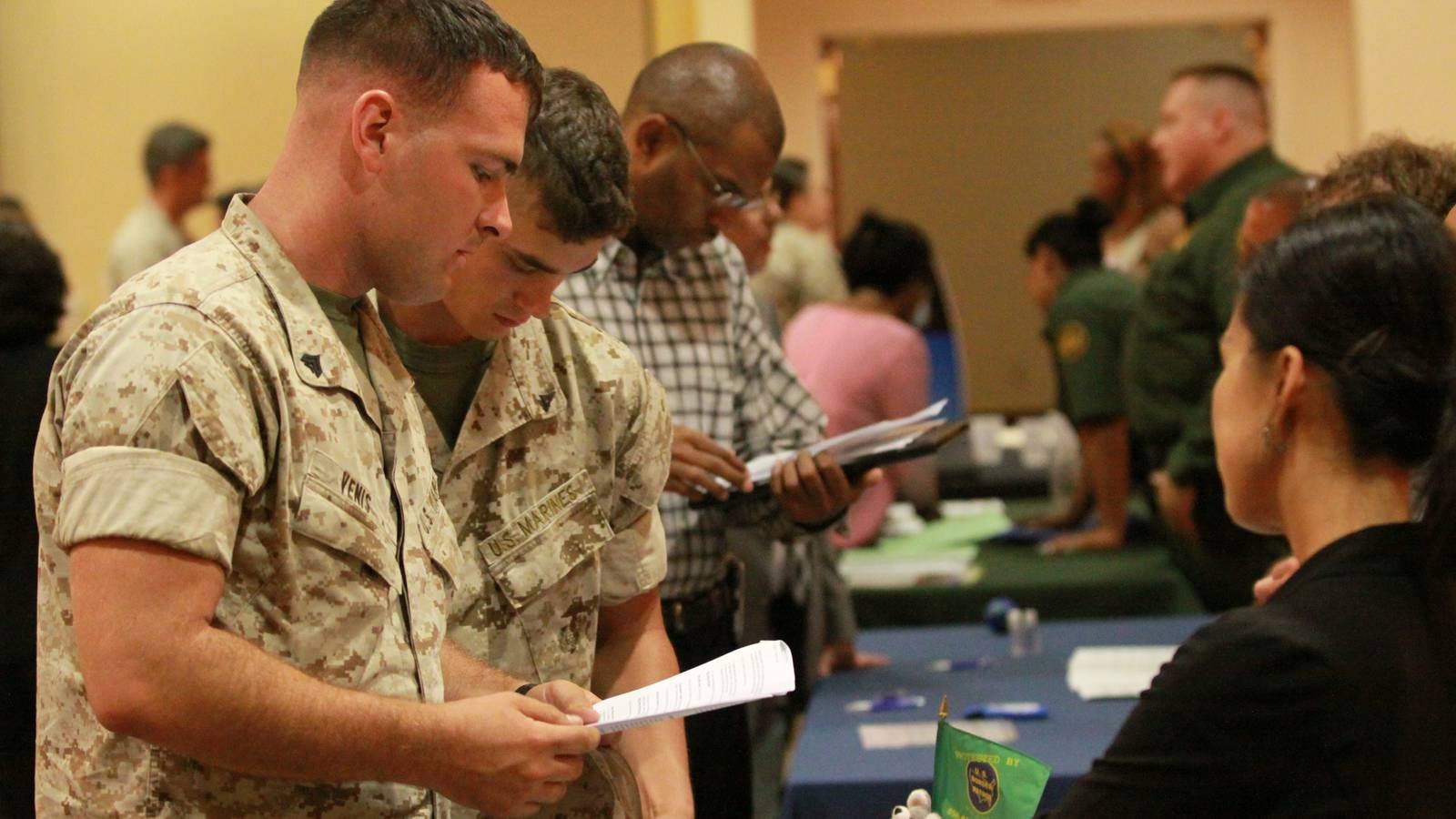
Hiring Our Heroes, a U.S. Chamber of Commerce Foundation program, along with RecruitMilitary, both publish event directories listing job fair dates, formats, and registration requirements.
Registration pages usually list employers weeks ahead, giving you time to research the ones that matter and arrive knowing what they are hiring for.
Virtual events follow the same rule, and their listings deserve the same screening.
Evaluate Career Services Carefully
Veterans looking for jobs are targets for employment fraud, and the Federal Trade Commission’s guidance prepares them for potential issues.
“Don’t pay for the promise of a job,” the agency warns; honest placement firms typically don’t charge candidates a fee.
Be wary if a supposed employer sends you a check and asks you to use it to buy equipment or send part of the money elsewhere, an arrangement the FTC identifies as a fake-check scam. Giving banking details to an unverified employer for “payroll” can lead to identity theft.
Verification is simple and free. Find the company’s recruiting contacts through its official website, independently of whatever number or email the recruiter supplied.
Confirm both that the person exists and that the job is posted. Searching the company or recruiter’s name alongside the word scam costs nothing, though the FTC notes that a clean search doesn’t prove honesty.
Attempts can be reported to the agency at ReportFraud.ftc.gov.
An Introduction Beats a Hundred Applications
Durrell W. enlisted in the Army out of high school in Memphis, serving as a communications and technology operator.
He then spent years in the civilian job market before he was referred to NextOp, a Houston-based nonprofit that works one-on-one to connect transitioning military and veterans with rewarding careers. Durrell worked 1:1 with coordinators who walked him through career options and navigated next steps.
Durrell is now building his career at Flex and urges transitioning veterans to look for help early.
“Most times, veterans are unaware of their available rights and opportunities,” Durrell said. “NextOp helps with this ambiguity.”
Spend Your Time on the Right Opportunities
Before putting serious effort into an opening, check that the job is current, you meet its requirements, and the location and pay work for you.
A well-known company with a position 1,100 miles away and a certification you do not have may be less useful today than a nearby employer looking for skills you already bring.
Find one employer hiring military talent, identify a job that is actually open, and confirm how to apply. Then take the next step.
