


The foundation of a successful Combined Joint All-Domain Command and Control (CJADC2) approach is the seamless sharing of information to connect warfighters, technologies, and communications/command-and-control (C2) across services, allied nations, and operational domains. For Persistent Systems, that starts with resilient connectivity that puts mission-critical information where it is needed.
Today, connecting personnel, platforms, and sensors is critical to countering increasingly sophisticated weapon systems and peer adversaries. The Department of Defense’s Joint All-Domain Command and Control (JADC2) strategy was developed to help U.S. forces sense, make sense, and act faster by improving how information is shared and used across the joint force.
CJADC2 emphasizes the essential role of allies and partners in that vision. By extending information sharing and interoperability across multinational forces, it supports coordinated operations across land, air, sea, space, and cyberspace.
As threats evolve, delivering this capability has become an operational priority. Defense companies must accelerate development, incorporate warfighter feedback, and demonstrate that their technologies can support the demands of joint and coalition operations.
Throughout the past year, Persistent Systems (“Persistent”) has been heavily involved with the U.S. Army’s Next Generation Command and Control (NGC2) prototype, which reached a major milestone in July 2026 at Project Convergence-Capstone 6 (PC-C6), an Army-hosted experiment involving joint and multinational forces. Providing a critical component of NGC2’s transport layer, the company has been working closely with soldiers from the 4th Infantry Division, to ensure its Wave Relay® network meets evolving operational demands.
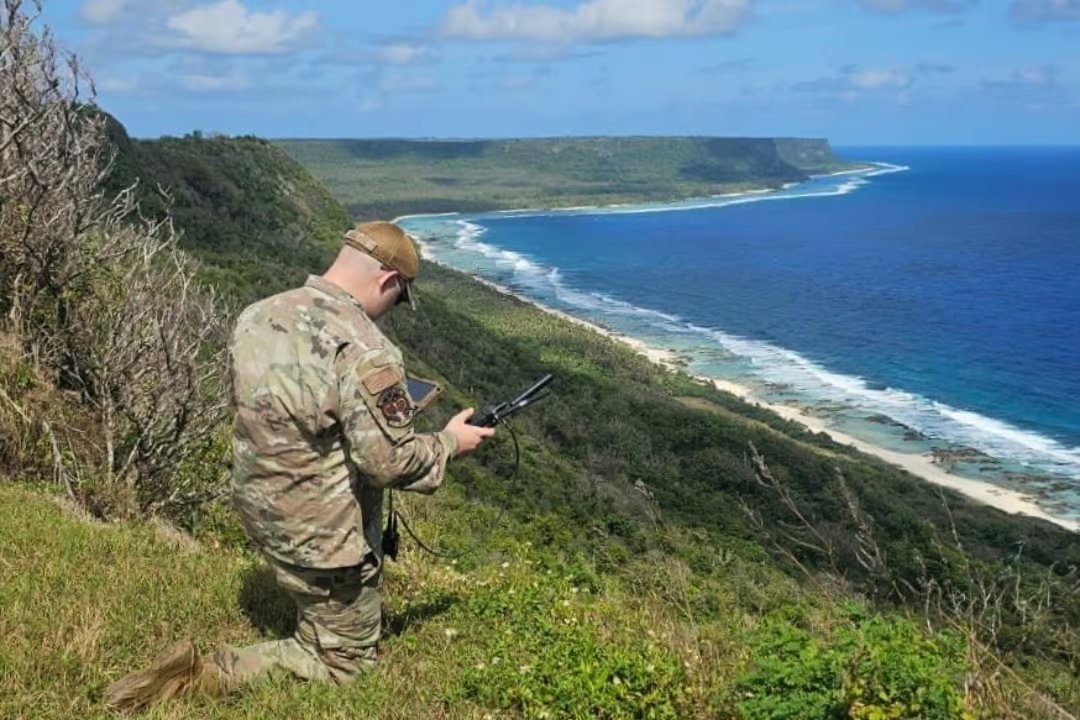
Soldiers on the ground and vehicles were connected through Persistent’s Wave Relay® mobile ad hoc network (MANET), providing mobile, scalable connectivity to support the exchange of mission-critical data.
During the Ivy Sting risk-reduction events, Persistent engineers worked alongside soldiers, stress-testing the Wave Relay network, deploying software updates, and scaling the network in response to operational requirements and user feedback.
Months of iterative testing helped set the stage for PC-C6, where U.S. forces operated alongside allies from the United Kingdom, Australia, Canada, and New Zealand. The event provided an opportunity to evaluate interoperability and assess emerging capabilities under realistic operational conditions.
At the conclusion of PC-C6, the U.S. Army announced that NGC2 was ready to scale across the force following division-level experimentation. The demonstration brought together transport, integration, data, and applications to support a shared operational picture and faster decision-making.
Achieving the CJADC2 vision requires resilient, interoperable connectivity that allows information to flow across systems and organizational boundaries. At PC-C6, Persistent supported that objective by connecting warfighters, vehicles, and systems through Wave Relay, enabling them to exchange and access operational data. This common networking foundation helps deliver relevant information to authorized users when and where they need it.
Persistent’s approach centers on giving users access to the information and capabilities needed for their missions. Whether supporting rapid deployments, cross-regional operations, disaster response, or the integration of multiple sensors, the company provides mobile, scalable networking technology designed to adapt to changing operational requirements.
Wave Relay connects dismounted warfighters, command centers, ground vehicles, uncrewed platforms, and sensors to support coordinated operations. Persistent’s vision for CJADC2 is to help U.S. forces and their allies maintain the connectivity needed to stay informed, make rapid decisions, and respond to emerging threats.
Building on the lessons of PC-C6, Persistent Systems is advancing the connectivity that helps turn CJADC2 from a strategic vision into an operational capability, connecting warfighters, systems, and coalition partners to act together with greater speed and coordination.
Learn more at: https://persistentsystems.com/
