

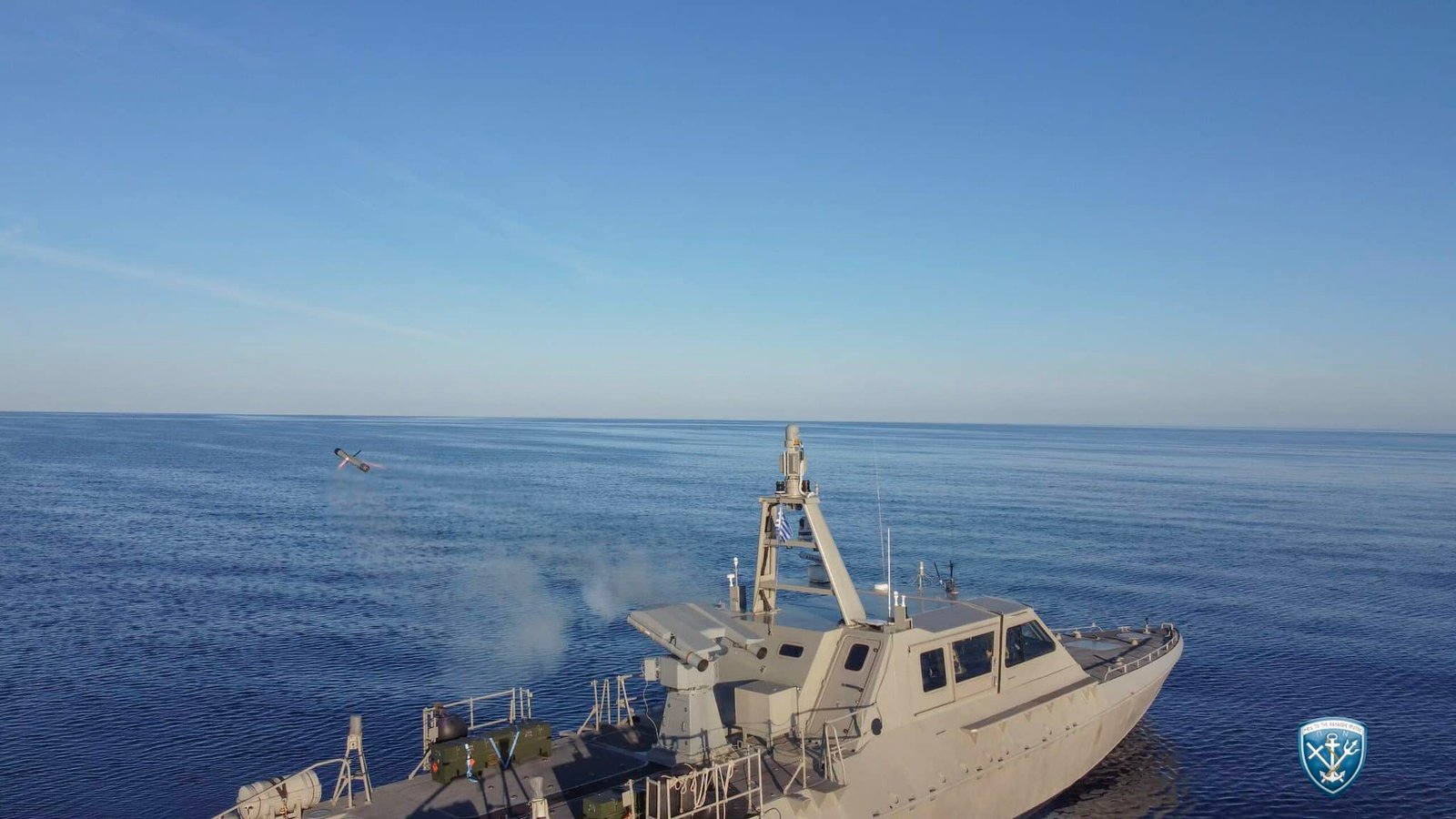
Greek surface and special operations craft validated their new Rafael-made missile systems, while a coordinated submarine torpedo strike sent the decommissioned frigate Bouboulina to the bottom of the Cretan Sea.
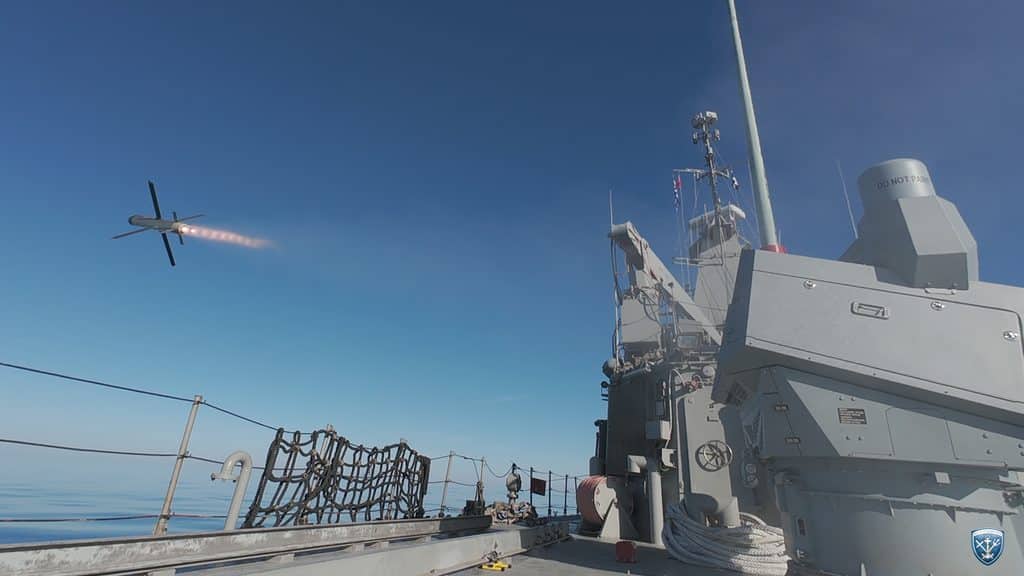
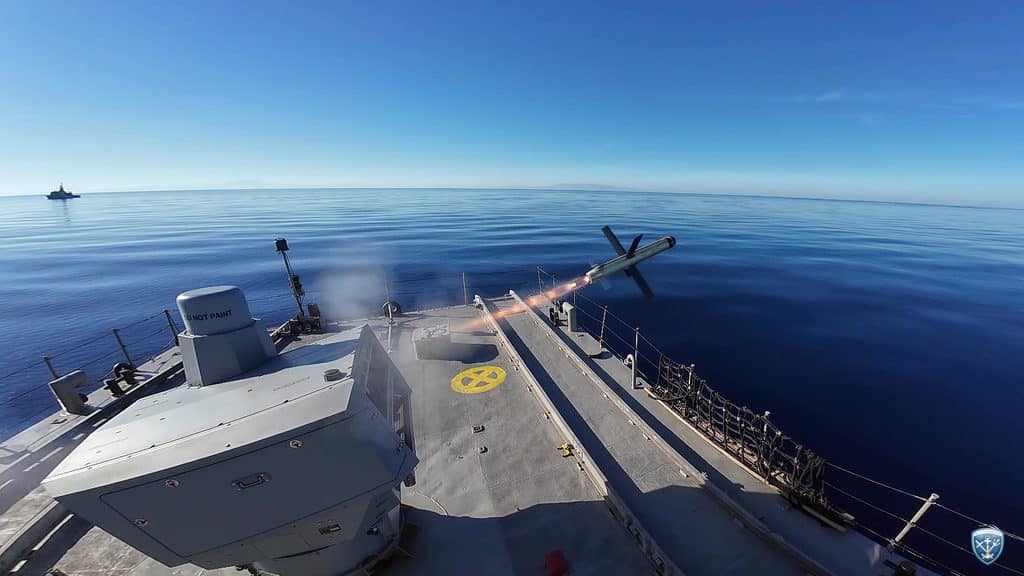
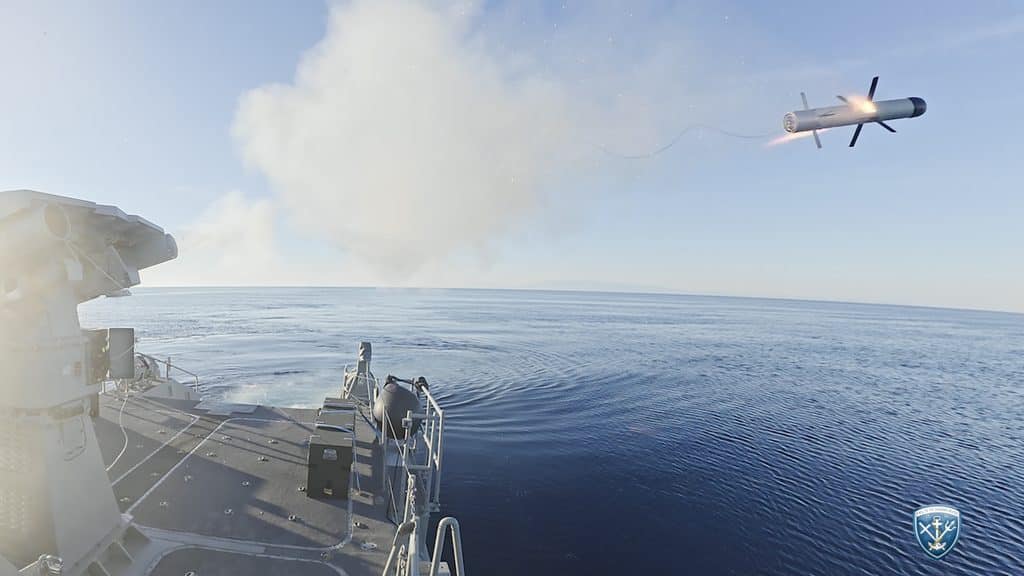
On Wednesday, October 21, 2026, acceptance firings of SPIKE NLOS and SPIKE ER guided missiles were conducted in the wider northern Cretan Sea area. The firings were attended by Hellenic National Defence General Staff Chief General Dimitrios Choupis, Israeli Navy Commander Vice Admiral Eyal Harel, Hellenic Navy Chief Vice Admiral Dimitrios-Eleftherios Kataras, and Hellenic Fleet Commander Vice Admiral Christos Sasiakos.
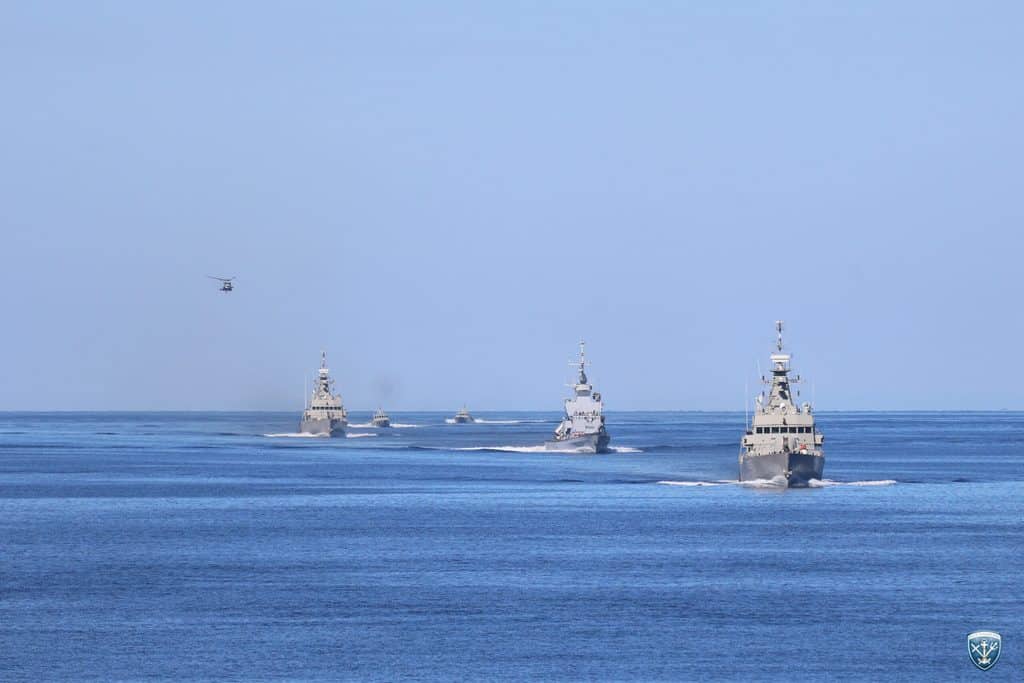
The exercise involved ships from the Hellenic Navy’s Frigate Command, Submarine Command, Fast Attack Craft Command, Surveillance Ship Command, and Underwater Demolition Command, as well as helicopters from the Hellenic Naval Aviation Command and Hellenic Air Force assets. They were joined by two fast attack missile craft from the Israeli Navy, which also conducted undisclosed missile firings during the drills, further enhancing operational interoperability between the two forces.
Rafael SPIKE NLOS and SPIKE ER2 missiles were successfully fired from a Machitis-class patrol vessel and a Mark V Special Operations Craft (SOC), respectively. The firings clearly demonstrated the effectiveness and operational value of the newly installed weapon systems.
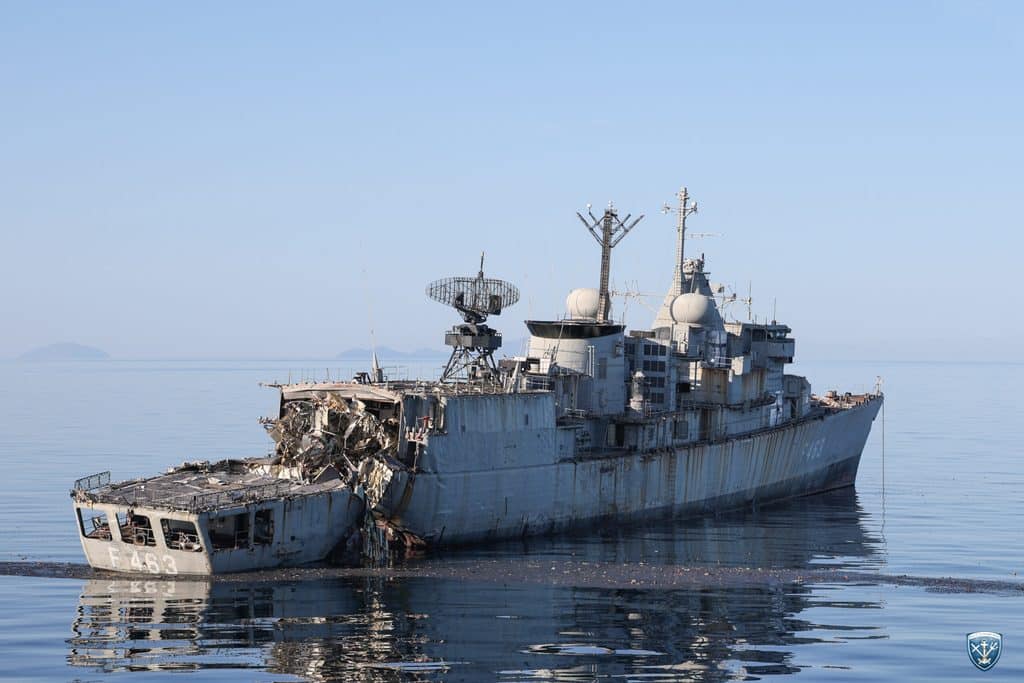
The decommissioned Hellenic Navy Elli-class (Kortenaer/S-type) frigate Bouboulina (F463) served as the target ship. Following the missile strikes, she was subsequently sunk by an SUT torpedo fired from a Hellenic Navy Papanikolis-class (Type 214HN) submarine. Before her Hellenic Navy service (2001-2013), Bouboulina served with the Royal Netherlands Navy as HNLMS Pieter Florisz (F826). Commissioned in 1983, she was the final Kortenaer-class frigate to be built.
As part of the exercise, the Hellenic Navy Chief and the Israeli Navy Commander held a bilateral meeting aboard the Hellenic Navy Hydra-class (MEKO 200HN) frigate Psara. They exchanged views on matters of mutual interest, focusing on contemporary maritime security challenges, freedom of navigation, and developments across the wider Eastern Mediterranean.
Both navies emphasized the need to further strengthen their cooperation to promote regional stability and security, reaffirming their commitment to expanding partnerships in naval operations, innovation, and new technologies.
The exercise took place amid renewed tensions in the Eastern Mediterranean, following the decision by Libya’s eastern-based parliament on October 20 to ratify the controversial 2019 maritime memorandum with Turkey. This development comes amid growing Turkish-Israeli tensions and closer Greek-Israeli defense cooperation, adding to the region’s increasingly complex security environment.
SPIKE Missiles in Hellenic Navy Inventory
Greece has equipped eight vessels of two different types with Rafael’s SPIKE fire-and-forget missile systems, significantly enhancing their operational capabilities.
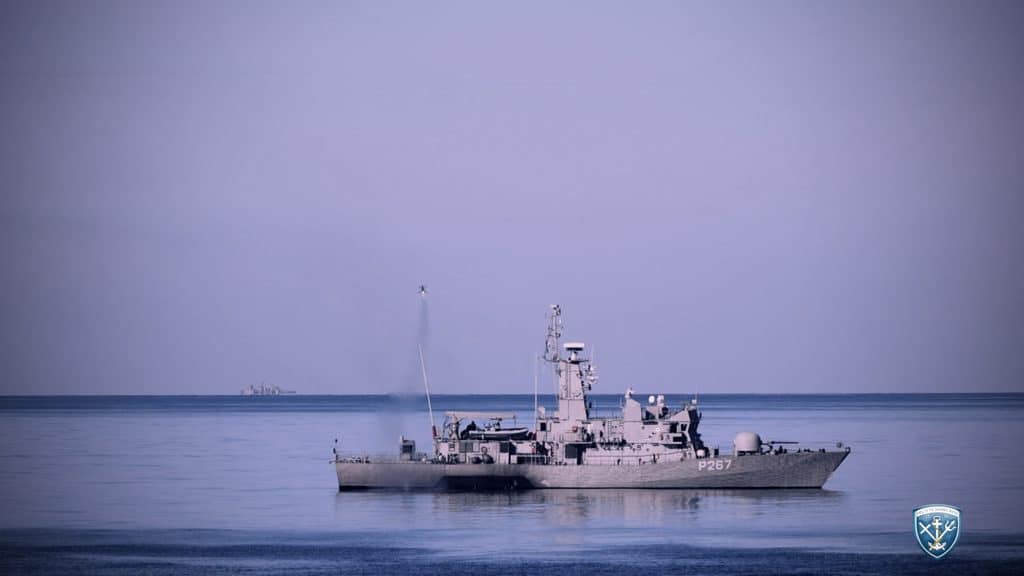
Four Machitis-class patrol vessels are fitted with the Typhoon MLS-NLOS system. Each system is capable of carrying eight SPIKE Non-Line-of-Sight (NLOS) missiles with a range of 32 km. The sixth-generation electro-optical/infrared (EO/IR) multipurpose missile system enables both sea-to-shore fire support and sea-to-sea engagements. The upgrade included the installation of the Typhoon MLS-NLOS launcher, replacing the aft-mounted 40 mm L/70 Breda-Bofors gun fitted on a Type 520R naval mount.
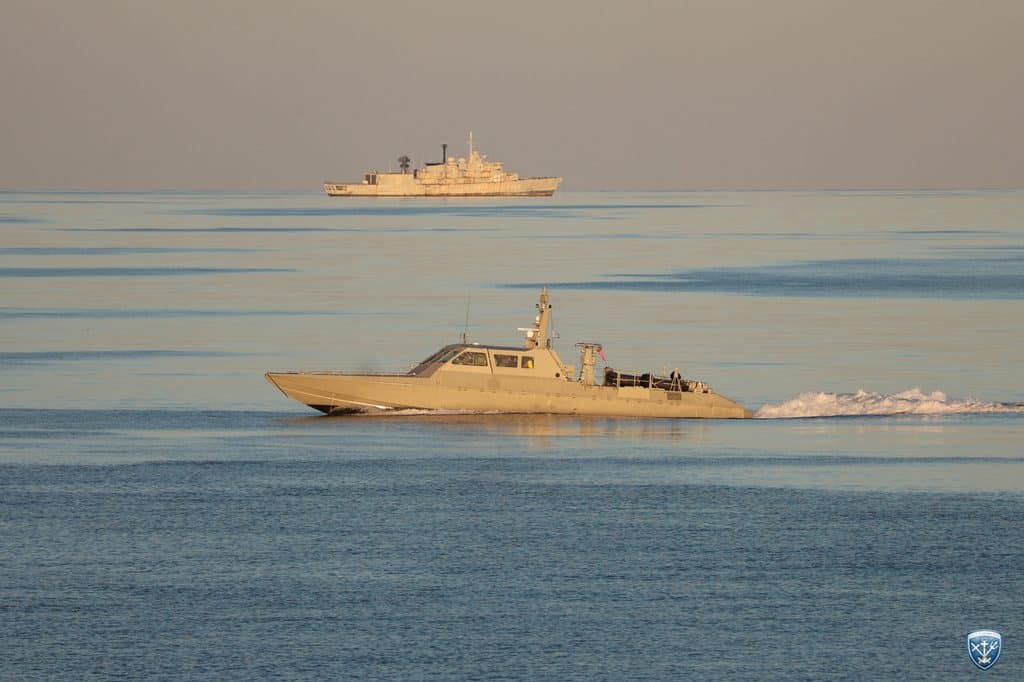
The other four vessels are Mk V Special Operations Craft (SOC), fitted with the Typhoon MLS-ER system on their stern decks. Integration required significant modifications to the main cabin, mast, and aft deck area. Each craft carries four SPIKE Extended Range (ER) 2 missiles, with a range of 10 km.
