

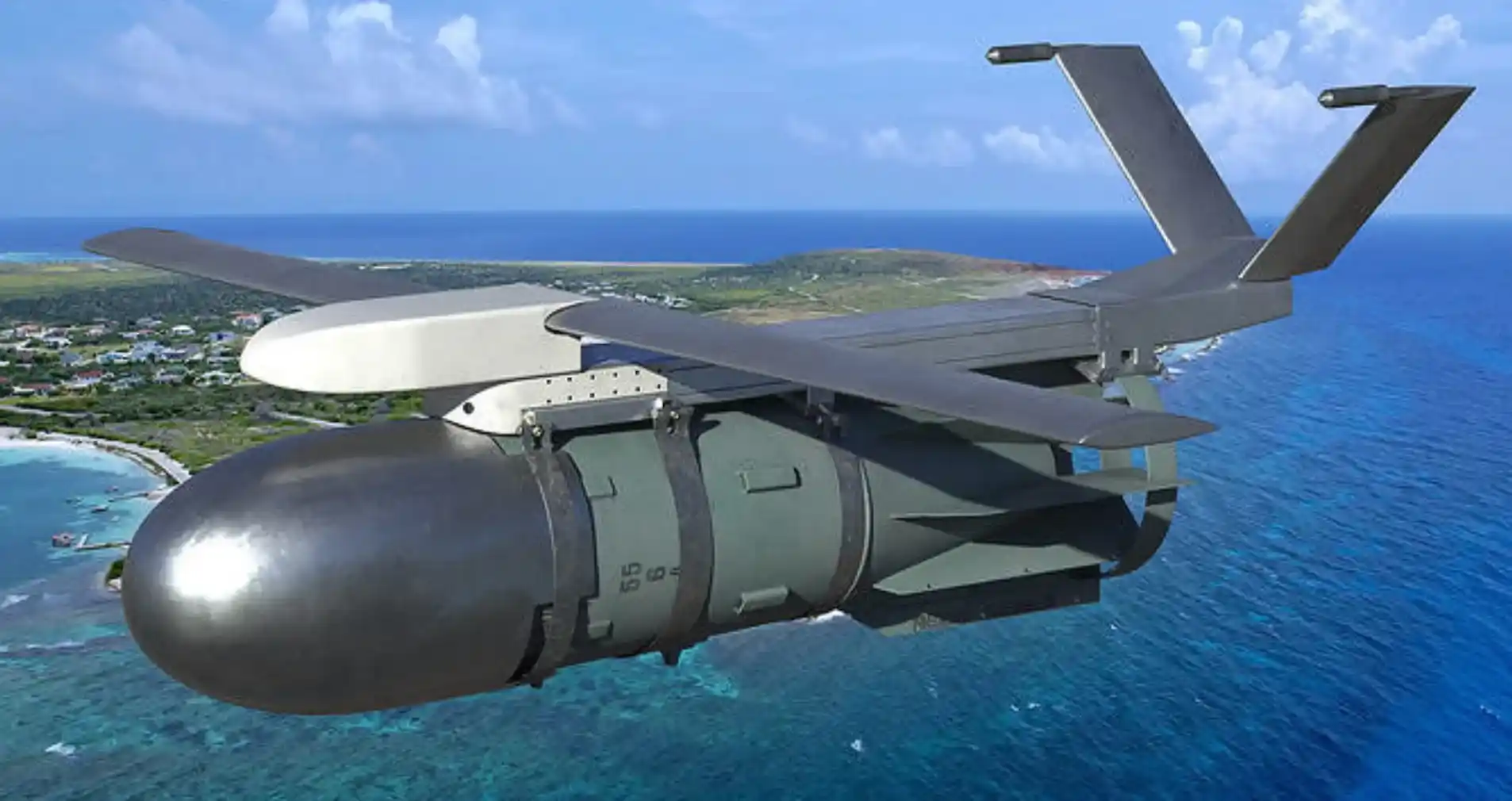
A single FAB-3000 bomb weighs about as much as a large car, yet its real danger lies in what happens when that mass hits the ground. Russia’s three-ton aerial bomb can carry well over a tonne of explosives, giving it the power to wreck buildings, crush defensive positions, and send deadly blast waves through nearby structures.
But raw power tells only part of the story.
Russia revived production of the FAB-3000 in 2024 as its forces stepped up attacks on Ukrainian positions with heavy aerial bombs. The weapon gained fresh attention when Russian aircraft began using modified bombs fitted with glide kits. These kits let aircraft release their weapons from farther away, reducing the need to fly directly over heavily defended targets.
That change matters more than the bomb’s size alone. A huge bomb is of limited use if the aircraft cannot deliver it safely or hit the intended target. Add a guidance system, though, and an old weapon becomes far more useful on a modern battlefield.
So, how powerful is the FAB-3000 bomb? Its explosive load makes it a serious threat to buildings and fortified positions, but its actual effects depend on where it lands, how it detonates, and what stands nearby. Its size also creates real limits, from the aircraft needed to carry it to the risks of operating within range of enemy air defenses.
Understanding those trade-offs reveals why Russia has brought this heavy bomb back into service, and why its battlefield value goes beyond the size of the explosion.
What Is the Russian FAB-3000 Bomb?
The FAB-3000 is a Soviet-designed heavy bomb that Russia has brought back into production to increase the damage its aircraft can inflict on Ukrainian positions. Its name gives away its main feature. “FAB” stands for fugasnaya aviatsionnaya bomba, or high-explosive aerial bomb, while “3000” refers to its weight class in kilograms.

The weapon isn’t a new design created for the war in Ukraine. The FAB-3000 belongs to an older family of Soviet bombs built to strike large structures, industrial sites, and fortified positions. Its basic design relies on a heavy metal casing filled with explosives. Once the bomb detonates, the blast and fragments can cause severe damage around the impact point.
Russia renewed production of the FAB-3000 in 2024, drawing attention to a weapon that had largely remained outside public discussion. The move fit a wider shift in Russian air warfare. Instead of relying only on costly precision missiles, Russian forces began making greater use of large, relatively cheap bombs fitted with guidance kits.
The key distinction is between the bomb itself and the system used to deliver it. An unguided FAB-3000 follows a ballistic path after release, making accuracy depend heavily on release conditions and the aircraft’s aim. A bomb fitted with a glide and correction kit can steer toward a target, though its accuracy still depends on navigation, flight conditions, and interference.
That turns an old-fashioned bomb into a more flexible weapon without replacing its basic explosive design.
The FAB-3000 also shouldn’t be confused with every Russian bomb described as a glide bomb. The FAB-1500 belongs to a smaller weight class, while the FAB-500 is much lighter. Each presents different demands for the aircraft carrying it.
FAB-3000 Specifications: Weight, Payload, and Size
The FAB-3000’s most striking feature isn’t just its three-ton weight. It’s how much of that weight consists of explosive material.
The M-54 version measures roughly 3.3 meters long, with a body diameter of about 820 millimeters. Its total mass is around 3,067 kilograms before the addition of a guidance kit. That’s a substantial load for a tactical strike aircraft, especially when the bomb must also carry the hardware needed to glide toward its target.
Here are the key reported specifications.
| Specification | FAB-3000 M-54 |
| Weight | Approximately 3,067 kg |
| Length | Approximately 3.3 m |
| Body diameter | Approximately 820 mm |
| Explosive fill | Reported at around 1,387 to 1,400 kg |
| Weapon type | High-explosive aerial bomb |
| Original design | Soviet-era M-54 |
| Guided configuration | UMPK glide and correction kit |
Figures vary by source and configuration. The bomb’s weight excludes the added guidance kit.
The explosive fill deserves a closer look. At roughly 1.4 tonnes, it accounts for a large share of the bomb’s total mass. The rest includes the heavy steel casing, tail assembly, and other components. That casing isn’t dead weight, either. It helps the bomb withstand handling and contributes fragments when the weapon detonates.
One common mistake is to treat the FAB-3000’s name as its explosive payload. It doesn’t carry three tonnes of explosives. The designation refers to the bomb’s weight class, while the actual explosive load is much lower.
The guidance kit also changes the weapon’s total mass and shape. Folding wings and control hardware allow it to glide, but they add weight and drag. That creates a trade-off: Russia gains the ability to attack from farther away, but the weapon’s size makes efficient flight harder than it is for smaller glide bombs.
Those numbers explain the FAB-3000’s appeal. They don’t, by themselves, tell us how much damage it will cause.
How Powerful Is the FAB-3000 and How Much Damage Can It Cause?
The FAB-3000 bomb can cause devastating damage because its explosive charge releases a huge amount of energy in a very short time. Against a building, the result can be a collapsed roof, shattered walls, and debris thrown across nearby areas. Against a fortified position, the blast can damage structures and make parts of a defensive site unusable.
But there is no single blast radius that tells the whole story.
The effect depends on where the bomb detonates, how deeply it penetrates, the type of structure nearby, and whether the blast is confined by walls or other barriers. A detonation inside a building can produce a different pattern of damage from one that occurs in open ground. Reinforced concrete may resist some effects that would destroy a lighter structure, though it can still suffer severe damage.

The bomb’s steel casing adds another threat. When the explosive charge detonates, the casing can break into fragments that travel outward at high speed. Those fragments pose a danger beyond the area where the strongest blast pressure causes structural damage. The exact distances vary with the detonation conditions, so claims of a fixed lethal radius should be treated with caution.
The FAB-3000’s size also makes it a major threat to bunkers and field defenses, but it isn’t a magic key that opens every fortified position. The outcome depends on the bomb’s accuracy, the strength of the target, and the angle and location of impact.

Consider a strike on a large industrial building. A direct hit could cause major structural failure, while a near miss might damage the roof, windows, and surrounding walls without bringing the whole structure down. The same bomb can produce very different results against two targets that look similar from the air.
That distinction matters when assessing battlefield footage. A huge explosion looks dramatic, but the fireball alone doesn’t prove that a target was destroyed or that its occupants were killed. Independent evidence of the damage is needed to judge the result.
How Does the FAB-3000 Glide Bomb Work?
The glide kit changes the FAB-3000 from a basic falling bomb into a weapon that can travel toward a target after release. That matters because Russian aircraft can attack from farther away instead of flying directly above Ukrainian defenses.
The system is known as the Universal Planning and Correction Module, or UMPK. It adds folding wings and control surfaces to a conventional bomb, along with navigation and guidance equipment. Once released, the bomb uses its wings to glide while its control system adjusts its flight path toward the target.

Think of it as a way to give an old bomb a limited ability to steer. It doesn’t turn the weapon into a cruise missile, and it doesn’t give it unlimited range. The bomb still depends on the aircraft’s release conditions, its available glide time, and the quality of its guidance system.
Range estimates need careful handling. Russia’s smaller guided bombs have been reported to reach targets tens of kilometers from their release points, with performance varying by altitude, speed, and kit design.
The FAB-3000’s greater weight and size create different aerodynamic demands, so figures reported for the FAB-500 or FAB-1500 shouldn’t automatically be applied to it. RUSI’s analysis of Russian glide bombs provides useful context on the broader UMPK family.
Accuracy is another limitation. Satellite navigation and inertial guidance can help the bomb reach its intended target, but electronic warfare may disrupt satellite signals. A guidance kit also can’t guarantee a direct hit under every flight condition.

The main advantage is clear: the aircraft can release a heavy weapon without approaching the target as closely as it would with an unguided bomb. The trade-off is that the FAB-3000 remains a large, relatively blunt weapon whose accuracy and range depend on the delivery system.
That combination of mass and stand-off delivery explains why Russia has invested in adapting older bombs rather than relying only on more expensive missiles.
Which Russian Aircraft Can Carry the FAB-3000?
The FAB-3000’s weight makes aircraft compatibility a serious engineering problem, not a simple question of whether a bomber can lift three tonnes. The aircraft must carry the bomb safely, release it without hitting the airframe, and remain stable during the attack.
Russia’s Su-34 Fullback has drawn the most attention in reports about the guided FAB-3000. The Su-34 is a twin-engine strike aircraft designed to attack ground targets while carrying substantial weapon loads. Its ability to use heavy guided bombs fits Russia’s wider effort to strike Ukrainian positions without sending aircraft directly over them.
But a large payload rating doesn’t mean every weapon can be mounted on every aircraft. Bomb dimensions, suspension points, release equipment, and flight characteristics all matter. Adding a glide kit changes the weapon’s shape and aerodynamic behavior, which can affect how it separates from the aircraft.

The FAB-3000’s size also limits the number of weapons an aircraft can carry on a mission. A plane loaded with a few very heavy bombs has less flexibility than one carrying several smaller weapons. That can make sense when attacking a large or strongly defended target, but it isn’t the best arrangement for every mission.
There is another concern: survival. Russian aircraft generally seek to release guided bombs from a distance because Ukrainian air defenses can threaten aircraft that approach too closely. A glide kit helps reduce that exposure, but it doesn’t make the aircraft invisible or guarantee that the weapon will reach its target.
Reports about the FAB-3000’s use should also be separated from claims about routine deployment. A confirmed test or combat strike proves that a configuration can be used under certain conditions. It doesn’t establish how often Russia can deploy it, how many compatible aircraft are available, or whether the weapon performs reliably across different missions.
The practical lesson is simple. The FAB-3000’s destructive power matters only if Russia can deliver it where needed. Aircraft compatibility, safe release, and exposure to enemy defenses all shape its real battlefield value.
FAB-3000 vs. FAB-1500 and FAB-500: What’s the Difference?
The FAB-3000 carries a much larger explosive load than the FAB-1500 or FAB-500, but that doesn’t make it the best choice for every target. Russia’s bomb arsenal works as a range of options, with each weight class offering a different balance of damage, cost, and delivery demands.
| Bomb | Weight class | Main advantage | Main limitation |
| FAB-500 | 500 kg | Smaller and easier to integrate across more missions | Less explosive mass |
| FAB-1500 | 1,500 kg | Heavy payload with fewer carrying demands than the FAB-3000 | Less total explosive mass than the FAB-3000 |
| FAB-3000 | 3,000 kg | Very large payload suited to major structures and fortified positions | Greater size and more demanding aircraft integration |
These are weight classes, not exact measures of explosive content. Each bomb’s explosive fill is lower than its total mass, and the amount varies by model.
The FAB-500 offers greater flexibility when a target doesn’t need a huge blast. A smaller weapon can be more practical against a limited structure or position because aircraft can carry different loads and avoid spending a large bomb on a modest target.

The FAB-1500 sits between the two extremes. It offers a substantial payload without the same mass and size demands as the FAB-3000. When fitted with a guidance kit, it can also serve as a heavy glide bomb while placing fewer demands on the aircraft.
The FAB-3000 is most appealing when the target justifies its size. A major fortified position or large structure may warrant a heavier weapon, but the benefit depends on the bomb hitting the right place. A larger explosion doesn’t automatically produce a better military result if a smaller bomb could achieve the same objective.
Comparisons with Western bombs require similar care. Weapons such as the US-made GBU-31 JDAM use guidance kits to turn conventional bombs into precision weapons, but their design, payload, and intended use differ. Comparing total weight alone misses those differences.
Russia’s advantage isn’t simply having the biggest bomb. It’s having several bomb sizes and guidance options, allowing commanders to match a weapon to the target. The FAB-3000 is the heaviest option in this group, but its extra power comes with real costs in flexibility and delivery.
How Effective Is the FAB-3000 in the War in Ukraine?
The FAB-3000’s battlefield value comes from the damage it can deliver without requiring Russia to build an entirely new class of weapon. By adapting an older bomb with a glide kit, Russian forces can use a large explosive payload against Ukrainian defensive positions while keeping the launch aircraft farther from the target.
That approach fits a wider pattern in the war. Russia has made extensive use of guided glide bombs against frontline positions, where heavy strikes can damage fortifications and force Ukrainian troops to change how they defend an area. The FAB-3000 offers a particularly heavy option for targets that justify its size.
Yet its effectiveness shouldn’t be judged by explosion size alone.
A bomb must reach the right target to produce a useful military result. If it misses a fortified position, damages an empty building, or strikes an area after defenders have moved, its enormous payload may achieve little beyond destruction. Guidance improves the chances of a hit, but it doesn’t remove errors caused by navigation problems, electronic warfare, or changing battlefield conditions.
The weapon also creates a trade-off for Russia. Its size limits aircraft compatibility and reduces the number of bombs that can be carried in some configurations. Smaller guided bombs may be a better fit for many routine strikes, while the FAB-3000 is better suited to targets that need a much heavier blow.
For Ukraine, the answer isn’t simply to build stronger walls. Dispersing forces, using covered positions, moving command posts, and maintaining air defenses can all reduce the value of heavy aerial attacks. None offers complete protection, especially against a direct hit, but each can make it harder for Russia to turn destructive power into lasting military gains.
The FAB-3000 is a serious weapon, but it isn’t a shortcut to victory. Its impact depends on the target, the accuracy of the strike, and what Russian forces can achieve after the explosion.
