

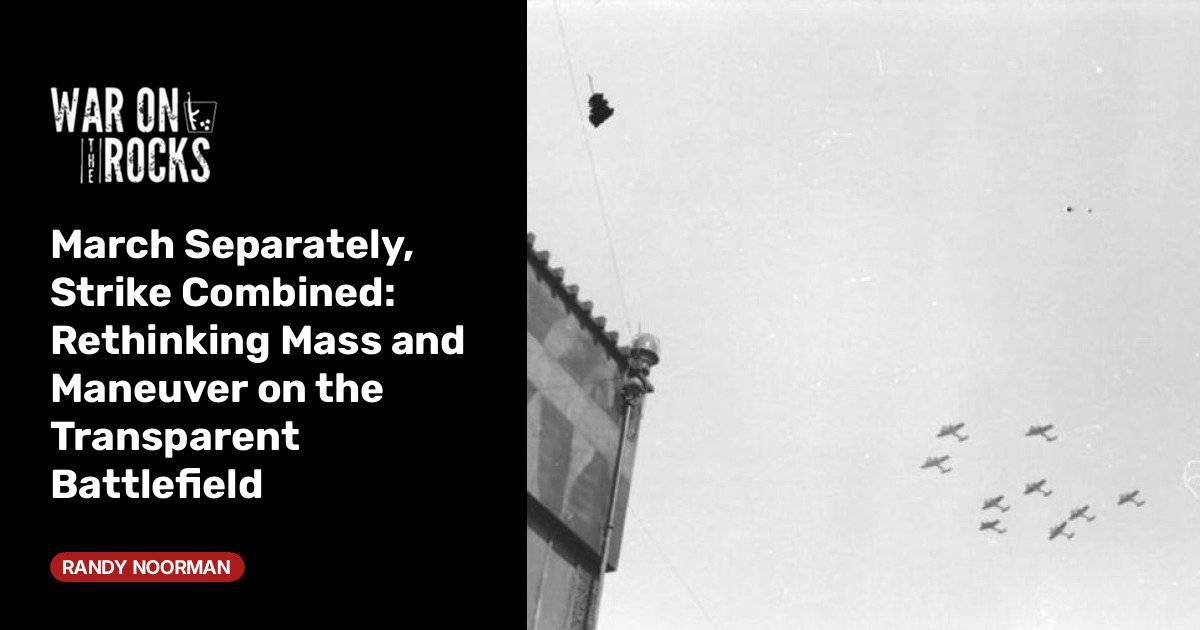
Between May 10 and 13, 1940, German Panzer Group Kleist advanced through the densely wooded Ardennes Forest, which the French considered impenetrable to large, mechanized formations. Numbering five armored and three motorized infantry divisions, totaling around 41,000 vehicles, the entire panzer group moved along just four Rollbahnen, or axes of advance, creating the largest traffic jam in military history.
When the leading XIX Armored Corps, commanded by Gen. Heinz Guderian, converged on the French city of Sedan, it epitomized the concept of Schwerpunkt, or point of main effort. Following his maxim “Klotzen, nicht kleckern” (hit with the fist, don’t feel with the fingers), Guderian concentrated his three armored divisions on a front just 10 kilometers wide, further narrowing the front to three kilometers for the initial crossing of the Meuse River. With the artillery stuck on the clogged roads, the Luftwaffe compensated with over 1,200 sorties — its most concentrated bombing attack of the war — against a sector just four kilometers wide.
After German infantry established a bridgehead, on May 14, engineers constructed a pontoon bridge, the first of three, enabling the crossing of some 600 tanks. For a brief but crucial phase, this bridge served as the sole lifeline for the German advance. True to his maxim, Guderian massed over 300 anti-aircraft guns for its protection. With their fighter protection heavily outnumbered and only around 150 bombers available, the Allies lost a total of 167 fighters and bombers in the counterstrike, without scoring a single hit. This enabled the crossing and continued advance of XIX Armored Corps’ 60,000 men and 22,000 vehicles, with the operation serving as the benchmark for maneuver warfare to this day.
Military history has long been a valuable source of learning, yet amid the rapidly changing character of warfare, its relevance lies increasingly in the contrasts it reveals. Just how much warfare has changed since World War II was demonstrated by a similar Russian bridgehead at Kherson, Ukraine, in the spring and summer of 2022. Like the XIX Armored Corps at Sedan, Russian forces were dependent on three bridges for the logistical support of 20–30 battalion tactical groups operating on the western bank of the Dnipro River.
Unlike Sedan, however, Russian ground lines of communication proved far more vulnerable to disruptions, especially after the arrival of U.S. High Mobility Artillery Rocket Systems. Between July 19 and 28, 2022, Ukrainian forces conducted multiple successful rocket strikes, rendering all three bridges useless for vehicular traffic. Although Russian troops resorted to pontoon bridges, these too were quickly rendered inoperable.
While Russian forces feverishly tried to repair the damaged crossings, Ukrainian forces continued strikes throughout the summer. On Nov. 9, after months of sustained interdiction, Russian Defense Minister Sergei Shoigu finally ordered a withdrawal toward the eastern bank of the river, which was completed two days later.
This is one of many cases from the Russo-Ukrainian War that exemplify how much warfare has changed since the blitzkrieg years of 1940 to 1941. The ability to generate mass enabled success at the point of contact at Sedan but proved fatal during the failed Russian river crossing of the Siverskyi Donets in May 2022. Beyond that, it provided the logistical sustainment for the continued advance across northern France, but its erosion slowly strangled the Russian bridgehead at Kherson.
In recent years, increased battlefield transparency has enabled a shift from direct to indirect fire as a means of projecting combat power, with close combat gradually giving way to standoff engagements. Long-range precision strike systems are now widely available at the lowest tactical echelons, not only expanding capabilities within the deep area (beyond direct contact) but also radically transforming fighting in the close area (in immediate contact with the enemy), as defined within the geographical framework. Although battlefield transparency is conditional rather than absolute, subject to weather and countermeasures, it is the product of multiple, mutually reinforcing systems, which makes it possible to degrade but difficult to deny.
Consequently, the survivability of concentrated formations has diminished considerably, while the front itself has significantly expanded in depth, forcing dispersion throughout the battlespace. Because mechanized formations are heavily dependent on logistics that are usually centralized for efficiency, they are disproportionately exposed to interdiction. The relevance of mass at the point of contact is therefore declining and increasingly difficult to sustain, as both sides deliberately seek to isolate the combat area.
As history shows, technological developments that radically alter battlefield conditions are, over time, usually accompanied by corresponding conceptual and, ultimately, organizational adjustments. German armored divisions, for example, were well-balanced, combined-arms formations that bore little resemblance to the massed French and British tank formations of World War I. Despite the obvious shift toward standoff engagements, medium and especially heavy NATO brigades are still largely organized, trained, and equipped for what Allied Joint Publication 3.2 describes as the ability to “close with the adversary forces while under fire and engage the adversary with direct fire,” relying on mass and a concentration of forces as prerequisites for maneuver.
Unsurprisingly, experienced Ukrainian drone operators have repeatedly participated as opposing forces in NATO exercises with devastating consequences. As British military theorist B. H. Liddell Hart once wrote, “the only thing harder than getting a new idea into the military mind is to get an old one out.”
While the German breakthrough at Sedan exemplifies combat power predicated on a level of mass and concentration that is no longer attainable, some of its underlying principles remain instructive. The operation therefore offers a contrasting benchmark for examining how principles such as concentration, dispersion, and security inform the application of combat power amid the changing character of contemporary warfare.
A Recurring Problem, a New Constraint
A river crossing like the one at Sedan may not be the most common tactical maneuver, but it does capture the essence of the contemporary tactical problem, since offensive action inevitably requires concentration. While dispersion increases survivability, it also complicates command and control, impedes the massing of combat power originating from direct fire, and constrains logistics. These are well-known historical phenomena, as is the emergence of a continuous, positional front, what Soviet military theorist Georgii Isserson called “frontalism.”
In Ukraine, near-total sensor coverage coupled with long-range, precise, and responsive fires has offset low troop density, leaving no open flanks to exploit operationally, forcing units into frontal assaults that culminate prematurely. Consequently, maneuver transitions into positional fighting, and the resulting front can only be breached by a deliberate breakthrough operation requiring massive concentration of forces and a huge amount of logistical support. This brings the problem full circle, because the increasing transparency and sensor-to-shooter integration that created a continuous and positional front also prevent amassing the forces necessary to enable a penetration and breakthrough of that front, which is therefore likely to persist.
Dispersion, however, does not in itself lead to lower casualties, as defense analyst Branko Ruzic has argued. Precision weapons are generally not particularly effective against enemy troop concentrations, but they are against individual targets, as opposed to traditional unguided area-effect munitions, which are ideally suited to target dense enemy formations and clusters of vehicles.
During the first phase of the Ukraine war, therefore, artillery was the dominant factor, its effectiveness being enhanced through the use of reconnaissance drones, which enabled the adjustment of fires in real time across much larger distances than before. Consequently, units on both sides, especially Ukrainian units, given Russia’s artillery superiority, were forced to disperse in order to survive. With the ascent of first-person-view drones, however, came the rise of mass precision fires, offering precision strike capabilities at scale against which dispersion offers little to no protection.
Protection should therefore be aimed toward finding the proper balance between concentration and dispersion, with the smallest unit of independent action being determined by the size of the protective canopy that can be established through layered kinetic and non-kinetic, as well as active and passive protection measures. As history indicates, the lowest echelon capable of independent action always requires combined arms capabilities organic to that formation.
Running the Gauntlet
To enable concentration, however, protection by itself is not enough. It is essential to actively disrupt, degrade, and suppress the components that constitute the enemy’s kill chain: command and control, sensors, and fires. What Jack Watling, Senior Research Fellow for Land Warfare at the Royal United Services Institute, describes in his section “The Geometry of Maneuver in Positional Warfare” therefore functions like a protective screen, a modern-day creeping barrage, enabling assault formations to concentrate upon an objective.
Although Bewegungskrieg (maneuver warfare) has traditionally been nearly synonymous with Auftragstaktik (mission command), this could become a point of friction when a tightly orchestrated window of opportunity requires swift concentration. As military analyst Franz-Stefan Gady recently emphasized: “In order for convergence to work, you need to get rid of mission command to a certain degree, because … the foundational element of convergence is synchronization.” Gady added that the lack of synchronization enabled mission command to flourish in the first place.
A key question, however, is whether these new standoff capabilities at lower echelons should be regarded as part of the traditional deep or rather as an extension of the close. Deep operations, according to U.S. Army doctrine, are primarily “directed against uncommitted enemy forces or capabilities before they can engage friendly forces in the close fight.” Meanwhile, multi-domain operations conceptualize convergence mainly at the operational level, not at the lower tactical echelons where first-person-view and bomber drones operate.
Yet these systems, left unaddressed at the division and corps levels, chiefly deny movement and concentration in the close, making it unlikely that multi-domain operations will by themselves enable company- and battalion-level advances. Consequently, suppression should be conducted simultaneously across all echelons, including brigades and below, using sensors and indirect fires to create an overlapping web of coverage spanning the contested close, the traditional deep, and the recently termed “middle battle area,” from which the close can be supported and engaged.
Notably, armies have diminished considerably since the Cold War, while in Ukraine, frontages at all echelons have increased at least threefold, compared to Cold War doctrinal norms. A comparable advance toward Sedan today would thus involve a division at most. This contracting force-to-space ratio reflects a broader shift from mass to the combination of effects, with inevitable organizational consequences. Just as German armored divisions were well-balanced combined-arms formations reflecting the necessities of the day, the composition of modern brigades should likewise be reconsidered.
Most NATO heavy brigades include three to four maneuver battalions, with usually just one artillery battalion in support. By contrast, Chinese and Russian combined arms brigades field considerably more organic fires, air defense, and electronic warfare systems. Additionally, Ukrainian brigades field one to two drone battalions, with organic drone capabilities at all echelons below. Russia intends to follow suit, reflecting a view of drones as a permanent feature of combined arms warfare.
To provide the necessary suppression, reconnaissance-strike elements should therefore account for a proportionally greater share of organic capability within NATO brigades, either by adding sensors and fires, including drones and loitering munitions, thereby increasing brigade size, or by reducing the number of maneuver units. Whereas maneuver units hold frontages, sensors and fires address the increased depth. The answer, then, is a matter of scale. Either way, while brigades should retain three or ideally four maneuver elements, the predominance of standoff engagements justifies at least one additional artillery battalion and a considerable number of drones and loitering munitions.
What History Offers
How the French and Germans approached the dynamics of frontalism at Sedan bears resemblance to, and relevance for, the current dilemmas in several ways, with each side’s prewar thinking leading toward a different outcome. Convinced that technological developments during the interwar period had increased battlefield lethality, the French expected a return to positional warfare. The French methodical battle therefore emphasized defensive firepower over maneuver, deliberately seeking attrition. Because the variety and complexity of modern weapons complicated coordination, with artillery at higher echelons enabling the infantry’s forward movement, command and control was highly centralized to synchronize effects. Avoiding encounter battles, they sought to attrit an attacker from prepared positions before a tightly choreographed counterattack.
As such, it closely resembles NATO’s Eastern Flank Deterrence Initiative — a preconstructed, fires-centric approach designed to deny an attacker’s ability to mass, penetrate, and achieve momentum. Although this approach ultimately failed to withstand the speed and shock of the German breakthrough in 1940, Ukraine’s Delta battlefield management system demonstrates that modern means can achieve synchronization without reproducing that same rigidity. Defensively, therefore, a centralized fires-centric approach is justifiable. Whether the same holds for the tightly choreographed counterattack, however, remains an open question, as complexity increases with scale.
German military planners, by contrast, aimed for a swift decision, using mobility and mass directed against a vulnerable part of the enemy’s defense. This, however, required an overwhelming concentration of firepower and a substantial amount of logistical support. To sustain the advance, the entire Panzer Group Kleist was made partially self-sufficient through the Rucksack-Prinzip, or backpack principle, with every vehicle carrying its own ammunition, rations, and especially fuel. Additionally, Guderian’s XIX Armored Corps was deployed as Panzer Group Kleist’s vanguard, utilizing all four roads simultaneously, harking back to Prussian army chief of staff Helmuth von Moltke the Elder’s dictum that “more is lost in depth than is lost by extending the front.”
Moltke, in his own day, divided his army into several independently operating field armies and subordinate army corps deployed abreast, enabling rapid maneuvers along different axes of advance, thereby easing logistics, increasing mobility, and allowing flexible concentration during battle. Guderian’s advance toward Sedan exemplified that converging on a point of concentration is achieved more rapidly from formations deployed abreast than from those advancing in column. Moltke’s approach eventually became known as “Getrennt marschieren, vereint schlagen,” or “March separately, strike combined.” At present, the value of Moltke’s maxim lies not in restoring the conditions for an operational breakthrough but rather in enabling dispersed forces to converge and temporarily concentrate on the objective.
Finally, to substitute for the massed and vulnerable artillery needed for suppression at the point of main effort, the Germans deployed VIII Air Corps, the Luftwaffe’s primary close air support formation. With German artillery unable to keep pace with the advance, VIII Air Corps supported the crossing itself. Its taskings therefore resembled those of contemporary dedicated drone formations in the Ukrainian and Russian armed forces, albeit on a markedly different scale. What distinguishes Rubicon — Russia’s elite unmanned aerial vehicle center — and comparable Ukrainian drone regiments is not merely their technical sophistication and competence, but their function as a centralized, non-organic capability allocated to close a structural gap that conventional formations cannot close on their own, a role that, in historical terms, mirrors that of VIII Air Corps at Sedan. Rubicon detachments can similarly establish a main effort quickly, without vulnerable massed fires and their logistical footprint, reinforcing critical front-line sectors in support of mechanized ground formations. Throughout 2025, Rubicon played an important role in the Russian army’s priority sectors, including recapturing the Kursk salient. Occasionally, this has created conditions conducive to ground maneuver, although exploitation has thus far proven inconsistent.
Conclusion
Given Ukraine’s recent successes during the ongoing Operation Vivaldi, tactical adaptations appear to have matured into a new combined-arms approach enabling successful offensive action in positional warfare. Nevertheless, these actions more closely resemble the “bite-and-hold” tactics of World War I than the large-scale operational breakthroughs of World War II. Rather than attempting a hazardous but potentially far more decisive breakthrough, the British Expeditionary Force pursued limited, well-defined objectives, using meticulous fire planning and consolidating captured ground to defeat the anticipated counterattack.
Similarly, current assault tactics require a tightly orchestrated convergence of effects, combining manned and unmanned systems, to enable incremental advances and relatively limited territorial gains. Even so, by severing Russian logistics to isolate the combat area, Operation Vivaldi supports a key argument: targeting logistics reduces the mass, and therefore combat power, an army can sustain at the front. Although some will hail this as a return to maneuver warfare, from a historical perspective, we are closer to 1917 than to 1940.
Thus far, only two operations have come close to a breakthrough in the traditional sense: the Kharkiv offensive in 2022 and the Kursk incursion in 2024. In both cases, Russian defenses were thinly manned by poorly trained troops, translating into low sensor density, weak integration, and therefore limited responsiveness of fires. Where defensive networks remain intact, however, maneuver usually stalls and reverts to positional fighting. Although Operation Vivaldi demonstrates that even firmly established defensive networks can be suppressed locally, these can be quickly reestablished, bringing every advance within range of a reconstituted, intact part of the network.
As George Dougherty argues in a recent War on the Rocks article, just as the tank accelerated the pace of battle during the interwar period, restoring maneuver on the contemporary battlefield requires another leap in speed and mobility, allowing the attacker to outpace the defender’s efforts to reconstitute its network. Until such networks can be suppressed at scale and for sustained periods, or outpaced before they can be reconstituted, gains will remain incremental. Force design should therefore, first and foremost, be tailored to providing sufficient suppression. Additionally, while in 1940 the speed of the German advance undermined French decision-making, nowadays it is the speed of turning intelligence into fires that determines whether an army can continue to advance.
The lesson is clear: combat power is no longer derived primarily from maneuver formations engaging in direct contact, but rather from indirect, precision fires and standoff strike capabilities. Although ground troops will remain necessary to seize objectives and physically destroy the enemy at close range, the mass and density employed for this purpose are no longer desirable or necessary. After all, the mass that can be sustained at the point of contact is bounded by the capacity of the logistical pipeline that feeds it. Armies therefore need to reevaluate how they think about massing combat power and reconsider how traditional principles such as concentration, dispersion, and security should inform force design and command and control.
In this sense, Moltke’s dictum to “march separately, strike combined” takes on renewed relevance for a battlefield now defined by dispersion, standoff fires, and the convergence of manned and unmanned effects.
Randy Noorman is an officer in the Royal Netherlands Army. He works as a military historian and doctoral candidate at the Land Warfare Center of the Royal Netherlands Army. He served in the Dutch 11th Air Mobile Brigade for over 15 years as a noncommissioned officer and completed multiple tours in Afghanistan, Iraq, and Bosnia. He holds a bachelor’s degree in history from the University of Groningen and a master’s degree in military history from the University of Amsterdam. He has been published in Dutch and English, including in the Modern War Institute, Military Review, and Small Wars Journal.
Image: Wikimedia Commons
