

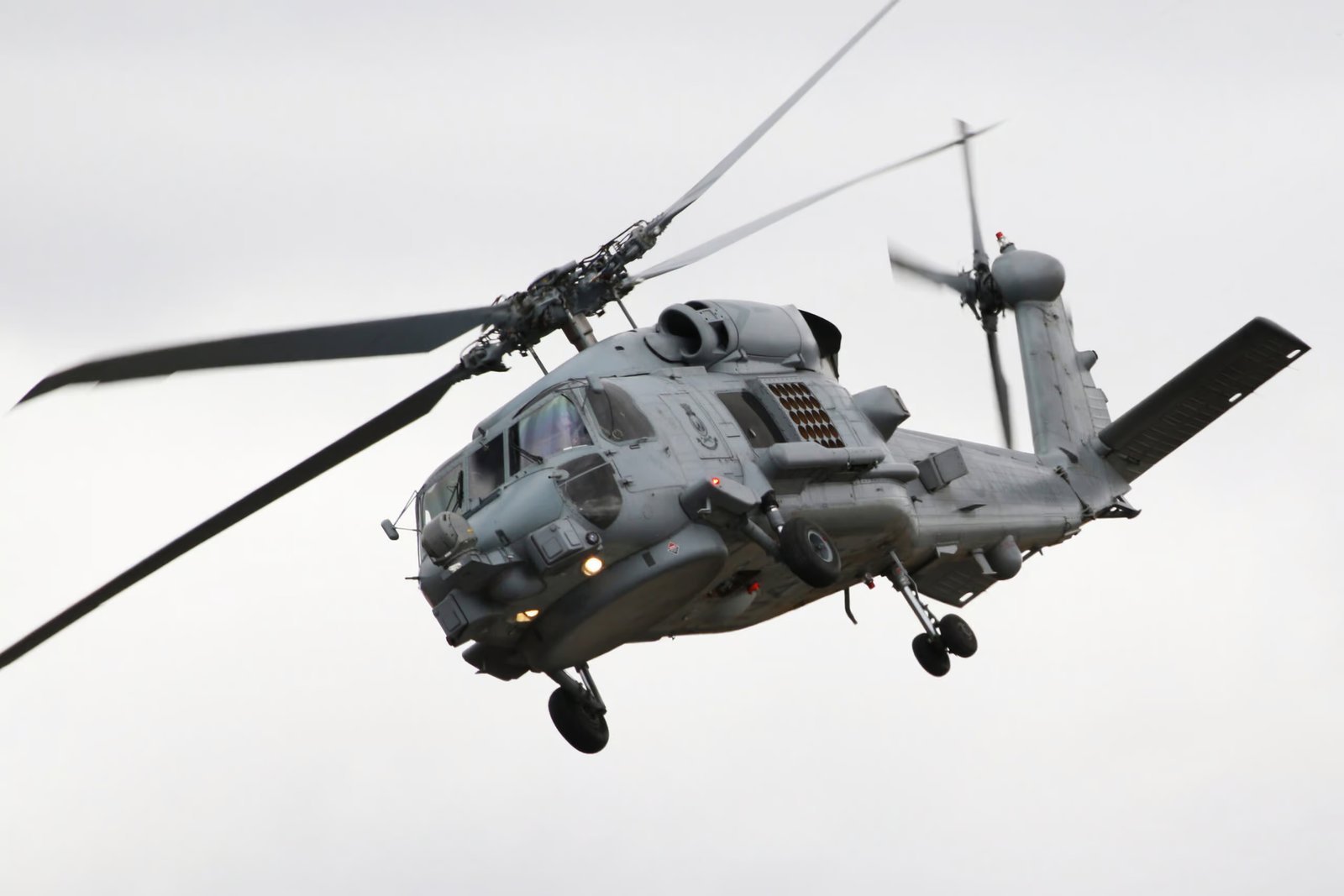
New Zealand has finally signed on the dotted line for the Sikorsky MH-60R naval helicopters that it has been eyeing for some time to replace its fleet of eight Kaman SH-2G(I) Super Seasprites.
The New Zealand Defence Force (NZDF) made the announcement on 16 October 2026, revealing, “An agreement has been signed with the United States government to purchase five MH-60R Seahawk maritime helicopters and associated systems and weapons.”
The quintet of helicopters will start delivery in 2030 under the Foreign Military Sales route, and they will enhance the reach and both the offensive and defensive capabilities of the Royal New Zealand Navy (RNZN). They are particularly important since the navy’s two Anzac-class frigates do not possess integral anti-ship strike weapons.
Weapons for the MH-60Rs include MK 54 Mod 0 lightweight torpedoes, AGM-114R Hellfire missiles, crew-served GAU-21 and M240D 7.62mm machine guns, and APKWS rockets. Sonobuoys are also being acquired.
Because of the small size of its military, RNZN aircrew will fly the MH-60Rs whilst the Royal New Zealand Air Force’s No. 6 Squadron will maintain them. This is the same arrangement used with the Super Seasprites.
The NZDF added that the new aircraft will perform “anti-surface and underwater warfare, search and rescue, transportation of personnel and supplies between ship and shore, and support maritime counterterrorism operations”.
To accompany the procurement, Wellington has set aside funds for future infrastructure design costs and temporary infrastructure to house the aircraft at RNZAF Base Auckland in Whenuapai.
The total project will cost NZ$1.648 billion (US$925 million), plus an annual average of NZ$110 million in operational costs over the coming decade.
The NZDF also noted: “Future investment decisions relating to this programme of work are expected to include infrastructure, training systems and complementary uncrewed aerial systems.”
The US Defense Security Cooperation Agency had announced on 5 June this year that a sale worth up to US$1.5 billion had been okayed, following the New Zealand government’s selection of the type on 21 August 2025.
Interoperability with partners such as Australia, which is New Zealand’s only formal ally, was an important consideration in selecting the Seahawk.

Indeed, the Royal Australian Navy (RAN) has been operating the MH-60R since 2014. It currently has 23 after one was lost in a mishap in the South China Sea in 2021. That attritional loss is being made up, and the fleet expanded, under a contract for 13 additional Romeos that was inked in 2022.
Clifford Kyle, General Manager of Sikorsky Australia, told Asian Military Review that “those aircraft will commence arriving very shortly here at the back end of the year”. He explained they will likely arrive in pairs aboard C-17s and “will be delivered over the course of around the next twelve months”.
The expanded fleet will enable the RAN to embark up to 14 MH-60R flights simultaneously on ships. The navy will end up with three operating squadrons plus a training squadron.
Elsewhere, the Australian Army ordered 40 UH-60M Black Hawks. Nineteen have reached Australia so far, although the next batch is not expected till Q3 of 2027. The remaining Black Hawks purchased under Project Land 4507 Phase 1 are set to be delivered on schedule by 2030, after the first units arrived in July 2023.
By the time Australia and New Zealand have received their full allotment of Sikorsky helicopters, this will amount to a collective Australasian fleet of 81 aircraft.
As Kyle noted, “If you look at it regionally, if you go back to supportability from a Hawk-family perspective, adding another five aircraft to the fleet of 76 Black Hawks and Seahawks that are here provides support. It makes sense from a support perspective, and then from an operations perspective. Commonality – and what they would term interchangeability with the Royal Australian Navy – makes sense to be able to operate together in a contested environment should the need arise.”
by Gordon Arthur
