

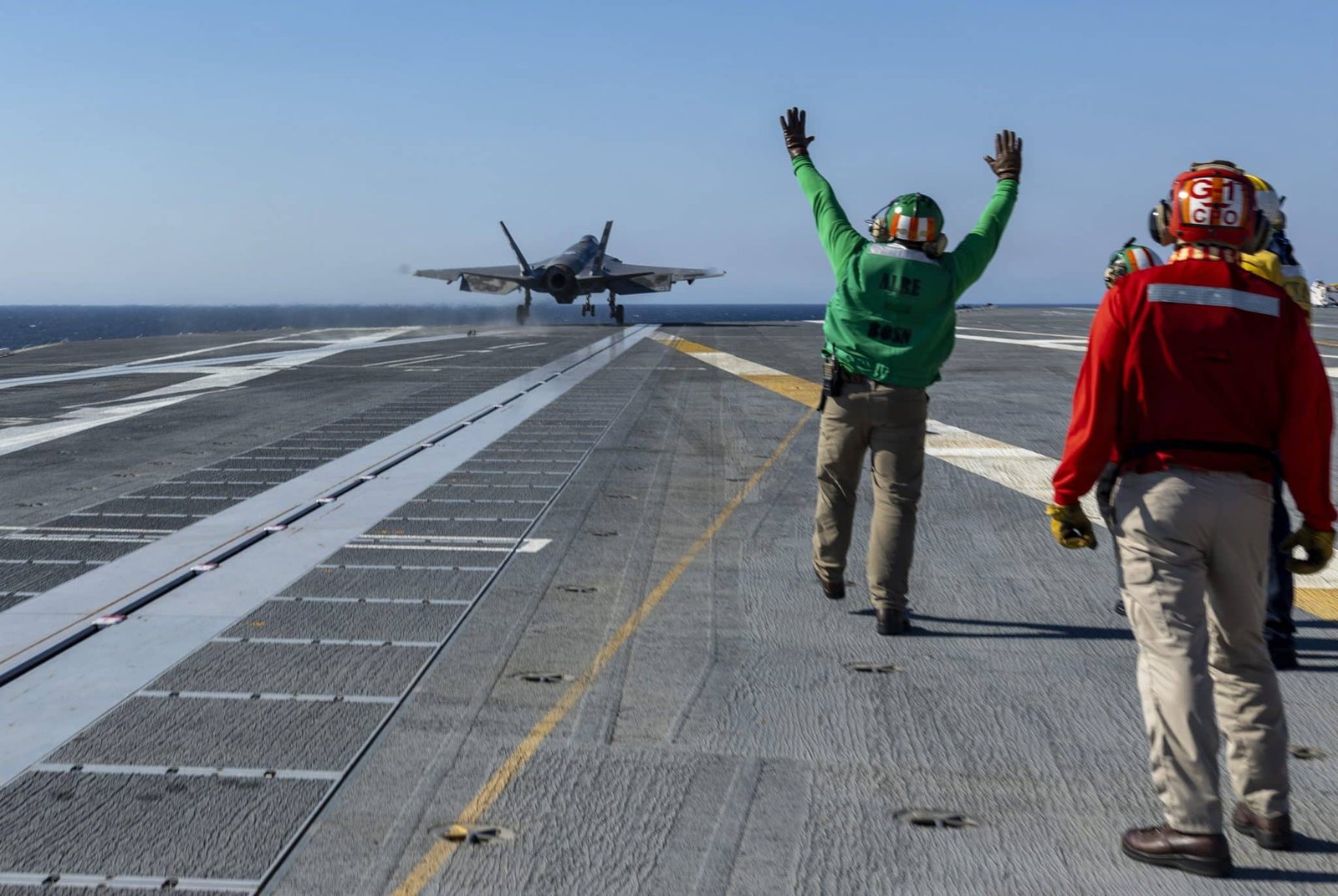
The United States Navy has reached a significant milestone regarding the integration of the F-35C carrier-based variant of the Joint Strike Fighter on the Ford-class nuclear powered aircraft carriers. Beginning on October 13, F-35C “Lightning II” assigned to the “Salty Dogs” Air Test and Evaluation Squadron (VX) 23 based at Naval Air Station Patuxent River, embarked on PCU John F Kennedy (CVN-79) for aircraft launch and recovery operations.
The US Navy released several sets of imagery detailing the arrival and operation of at least two F-35C, tail numbers 401 and 403 on the yet to be commissioned aircraft carrier. The aircraft completed arrested recovery and catapult launches from CVN-79, utilising the carrier’s distinct EMALS and AAG electromagnetic launch and recovery systems. This activity is part of the aircraft compatibility testing (ACT) the new carrier needs to undergo in order to ensure basic functionality with embarked aircraft.
Protracted integration of F-35C with newest US Navy carriers
The first of class USS Gerald R. Ford (CVN-78) entered active service with USN in 2017. However, to date the carrier does not embark F-35C, instead exclusively relying on air wings equipped with F/A-18E/F and G-variants for combat capability. In contrast, US Navy F-35C have been operational on older Nimitz-class carriers for six years. The stealthy naval fighter jet first commenced ACT in November 2014 onboard USS Nimitz (CVN-68). The first Nimitz-class carrier to operationally deploy the fighter jet was USS Carl Vinson in 2020, after initial testing with F-35C commencing on the carrier in 2017.
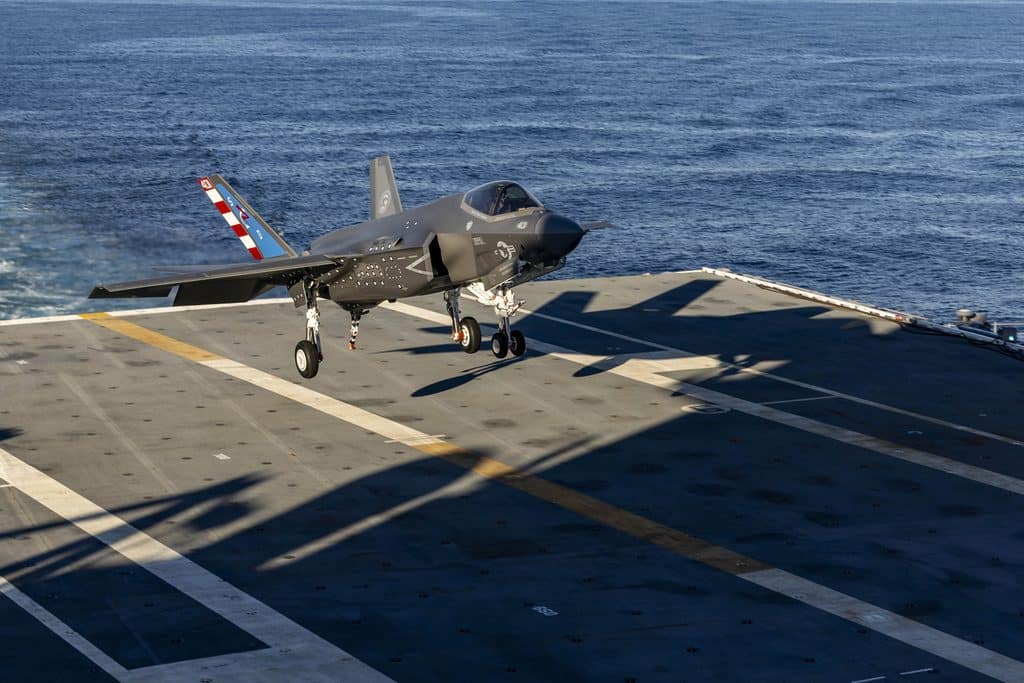
The principal reason for the delayed induction of F-35C with Ford-class carriers is the USN decision to extend various testing and integration measures on the new carrier-design as cost-saving measure, deriving from a Congress-mandated cost cap on the CVN-78-program. Congress intended these measures to compel stricter compliance within mandated budget, preventing cost blow-outs on fielding the new carriers.
The US Navy however deferred various integration benchmarks in order to abide by the mandate, without significantly delaying acceptance of USS Gerald R Ford herself. This dynamic resulted in marginal functionality of various systems on the notionally operational carrier, affecting aspects such as EMALS and the newly designed weapons elevators. In response the House Armed Services seapower and projection forces subcommittee in its FY2020 submission included language mandating that USN must not accept CVN-79 without the ability to embark the F-35C.
Domestic conflict over future Ford-class development
Present activity onboard PCU John F. Kennedy occurs in this context, with the carrier slated to enter service with USN in 2027. The new Ford-class carriers have attracted both domestic and international scrutiny over their delayed induction and reported deficiencies in functionality for several of their subsystems, most prominently the EMALS electromagnetic catapult launch system.
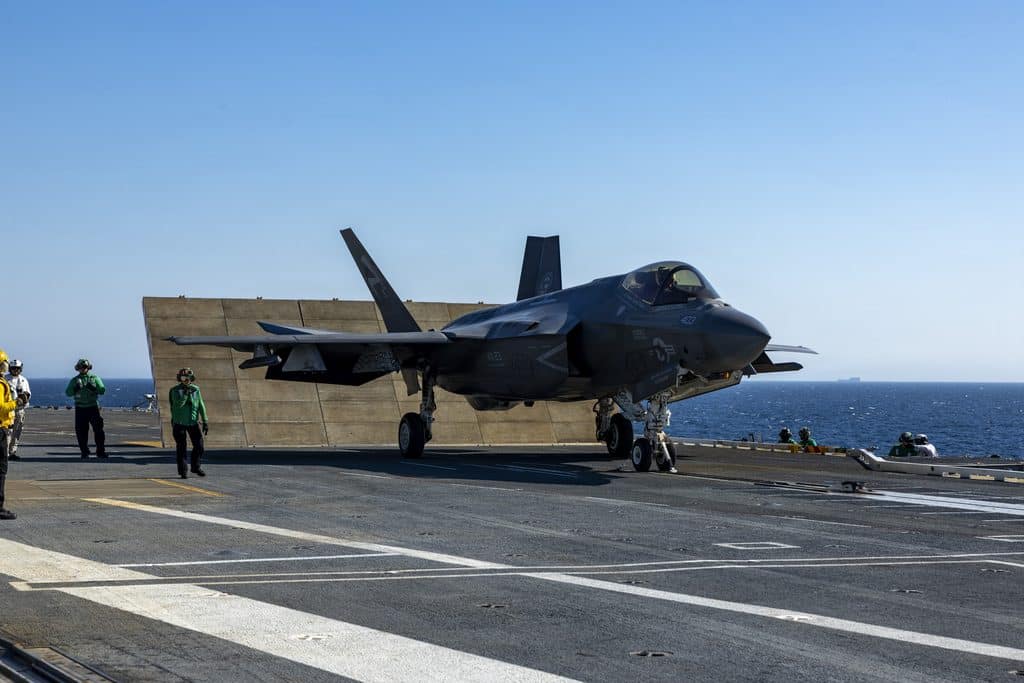
These difficulties most recently prompted President Donald Trump to mandate a 60 day-review back in August this year into whether additional new carriers, commencing with USS Doris Miller (CVN-81) should be modified for integration with the older steam-based catapult and arrestor system in use on Nimitz-class carriers. Despite the top-level initiative however the chances of such a change appear very marginal. Such a drastic design change would likely impose significant cost-increases and delays on further carrier construction. This disruption would occur at a time when the US Navy already struggles with operational availability across the fleet. For now the US Navy continues to order long lead items for support and future integration of EMALS-equipment.
International dynamic of competition with emerging Chinese Navy
Internationally, F-35C integration on the new carriers occurs among the backdrop of the Chinese Navy (PLAN) also engaging in their own expansion of carrier aviation featuring next generation-technologies. The third Chinese aircraft carrier Fujian (18), the first such vessel in Chinese service equipped with catapults, officially commissioned with PLAN in November 2025. The Chinese “supercarrier” conducted flight testing involving recovery and launch of several aircraft including the next generation J-35, an operational analogue to the F-35C, using its own electromagnetic launch gear as early as March 2025.
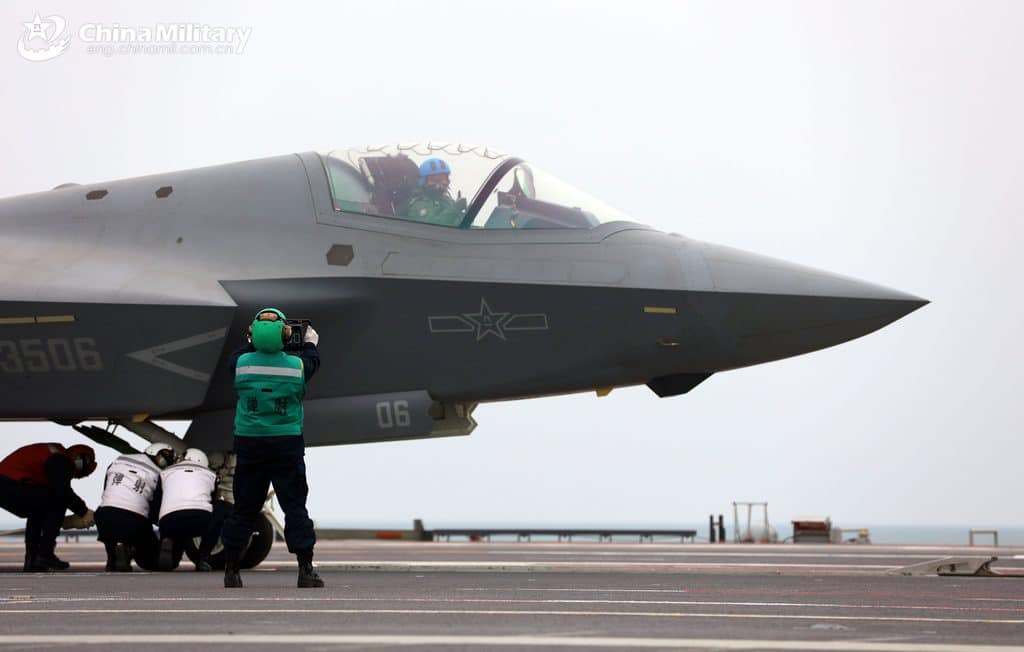
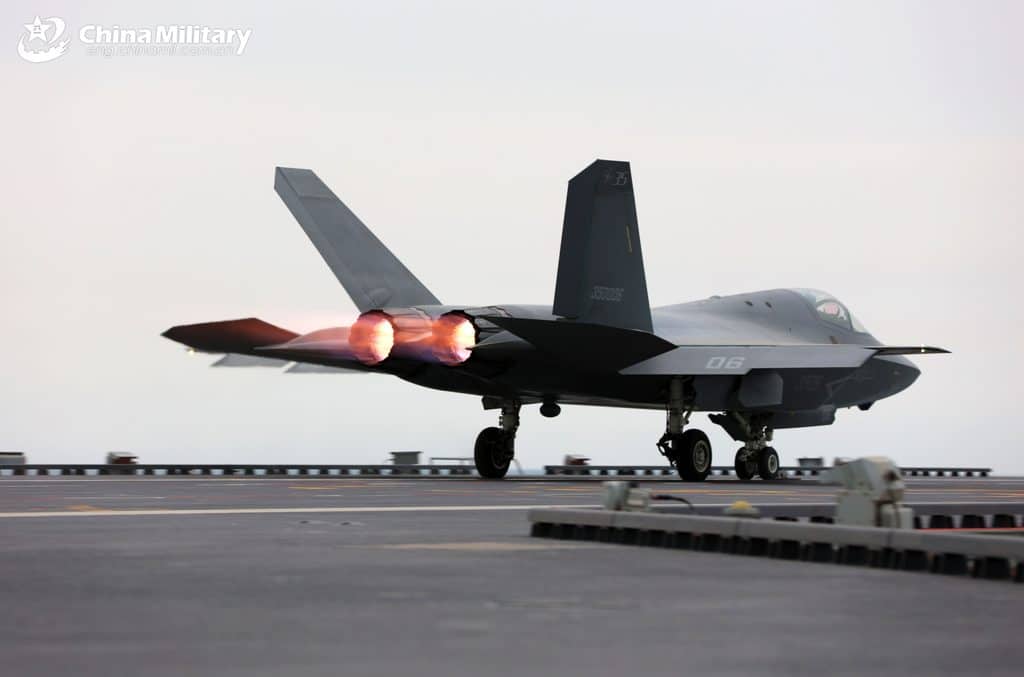
The Fujian’s activities, combined with another presumed nuclear-powered Chinese carrier taking shape at the Dalian shipyard, underscore a new dynamic for the US Navy. After several decades lacking a peer for naval competition, the service now experiences increased scrutiny bringing its newest aircraft carriers and fighter jets into routine operation, facing a notional adversary with similar capability.
