

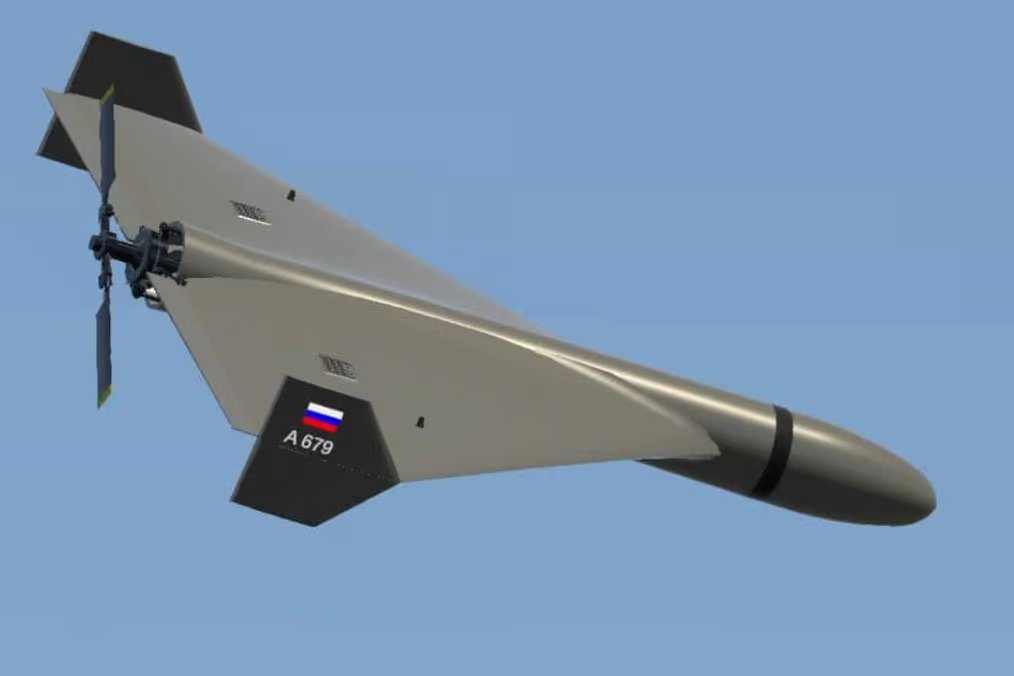

The use of cellular networks to help guide Russan suicide uninhabited aerial vehicles is a worrying development from an electronic warfare perspective.
The Kyiv Independent reported in mid-September that it is possible the Belarusian Fourth Generation Long-Term Evolution (4G LTE) cellular network is being used to guide Russia suicide Uninhabited Aerial Vehicles (UAVs) during attacks on targets in Ukraine. The report quoted Ukrainian Electronic Warfare (EW) expert Serhii ‘Flash’ Beskretnov as providing this assessment following a large-scale Russian attack on 12th September. The attack saw hundreds of suicide UAVs threaten targets in western Ukraine. The aircraft flew in proximity to Ukraine’s northern borders with Belarus before changing course for their targets.
Mr. Beskretnov speculated that the suicide UAVs may fly on the Belarusian side of the border and use 4G LTE towers as waypoints and conduits for navigation information to be shared between the aircraft and their pilots. During 12th September attack, the aircraft were launched in Russia, but then traversed Belarus’ airspace, flying along the Belarusian-Ukrainian border. Belarus has a 4G LTE network covering over 99 percent of the population, according to Belarusian government figures. The country provides three wavebands of 4G LTE coverage; 790 megahertz/MHz to 862MHz, 1.710 gigahertz/GHz to 1.785GHz and 1.805GHz to 1.880GHz, plus 2.5GHz to 2.577GHz and 2.620GHz to 2.690GHz.
CONOPs
The concept-of-operations for using Belarus’ 4G LTE network is likely to see suicide UAVs such as Russia’s Shahed and Geran aircraft outfitted with up to two 4G LTE modems per aircraft, according to Ukrainian reports. The modems can send recorded, or real-time, still or video pictures back to the aircraft’s Ground Control Station (GCS) or third-party consumers of this imagery intelligence via a 4G LTE link. The same link could also be employed to carry navigation commands from the pilot and the GCS to the aircraft.
The modems are probably fitted with Belarusian SIM (Subscriber Identity Module) cards. The SIM card lets the modem connect with the Belarusian 4G LTE network in a similar way to a smartphone or any other cellular device. Every LTE base station has a unique Cell Global Identity (CGI) code which it transmits to the cellular device when the latter connects with it. The CGI code can be matched against an on-board database detailing the coordinates of each base station and corresponding CGI number. By matching the incoming CGI with the database details, the UAV establishes its general location.
Trilateration
An added benefit of this approach is that cellular connectivity enables precise positioning through trilateration. Rather than relying on a single mast, the modem measures signal timing parameters across several different base stations within its line of sight. For example, suppose the signal indicates a one-way propagation time of 20.01 microseconds from Cellphone Tower A; the flight computer determines a slant range of 3.2 nautical miles (6 kilometres) from that mast.
If the signal from Cellphone Tower B indicates a 40.02-microsecond delay, that tower is 6.4 nautical miles (12 kilometres) away; a 30.05-microsecond delay from Cellphone Tower C equates to a distance of 4.8 nautical miles (9 kilometres). When the flight computer projects these known distance ranges from each tower’s fixed coordinates, the point where all three ranges meet reveals the position of the aircraft.
Electronic warfare
Determining the location of the UAV via trilateration provides another useful benefit: Assuming the operator knows the aircraft’s precise position, they can transmit real-time commands to alter course. This may be relevant if the UAV’s optronics reveal that the aircraft is encountering concentrated anti-aircraft artillery fire, enabling the operator to dynamically adjust flight profiles.
Exploiting commercial 4G LTE also complicates EW. Traditional RF jamming of cellular bands often requires jammers to have with an unobstructed line-of-sight to the UAV or local base stations, the latter risking fratricide vis-à-vis civilian cellular communications. Attempting to selectively track, intercept, or exclude the UAV from the cellular network without widespread jamming requires identifying the unique International Mobile Subscriber Identity (IMSI) of the aircraft’s SIM card. During the network handshake, after receiving an IMSI number the base station assigns the modem a temporary identifier (TMSI) to protect identity privacy over the air. Isolating a single hostile UAV’s IMSI or TMSI in real time amidst thousands of legitimate civilian devices actively communicating with those same towers presents a formidable signal intelligence challenge.

Furthermore, urban and developed areas typically feature high base-station density. Modern commercial LTE networks operate across multiple distinct frequency bands. A multi-band modem can rapidly switch channels or hand over to alternate base stations within line of sight if a specific frequency or sector experiences localised interference, thus providing redundancy against jamming.
Geopolitics further complicates the EW situation regarding Belarusian 4G LTE suicide uninhabited aerial vehicle guidance. Kyiv is not formally at war with Belarus, despite Minsk’s support for Russia’s military operations against Ukraine. Directing jamming into Belarusian territory to degrade border cell towers risks significant diplomatic and military fallout, particularly given the inevitable spillover disruptions to civilian communications.
Even if cross-border jamming were deemed politically acceptable, Russian UAVs can use alternate cellular masts situated deeper inside Belarus, beyond the effective range of Ukrainian jammers. Deploying Ukrainian EW assets overtly or covertly across the border to counter them could prove highly controversial.
In June, the Ukrainian government asked its Belarusian counterpart to stop making retransmitters located on Belarusian territory to help guide Russian suicide UAVs for attacks on Ukrainian targets. It is unclear what exactly these retransmitters were, but it could be a reference to some kind of signal repeater device providing a two-way link between the aircraft and the GCS. If Mr. Beskretnov’s prognosis is correct, these signal repeaters may now have been either replaced, or enhanced, by Russian exploitation of Belarus’ 4G LTE network. The use of 4G LTE networks for UAV navigation is a concerning development. It is one that will no doubt be exploited by UAV developers and engineers to create jam-resistant navigation systems for suicide uninhabited aerial vehicles in the future.
by Dr. Thomas Withington
