

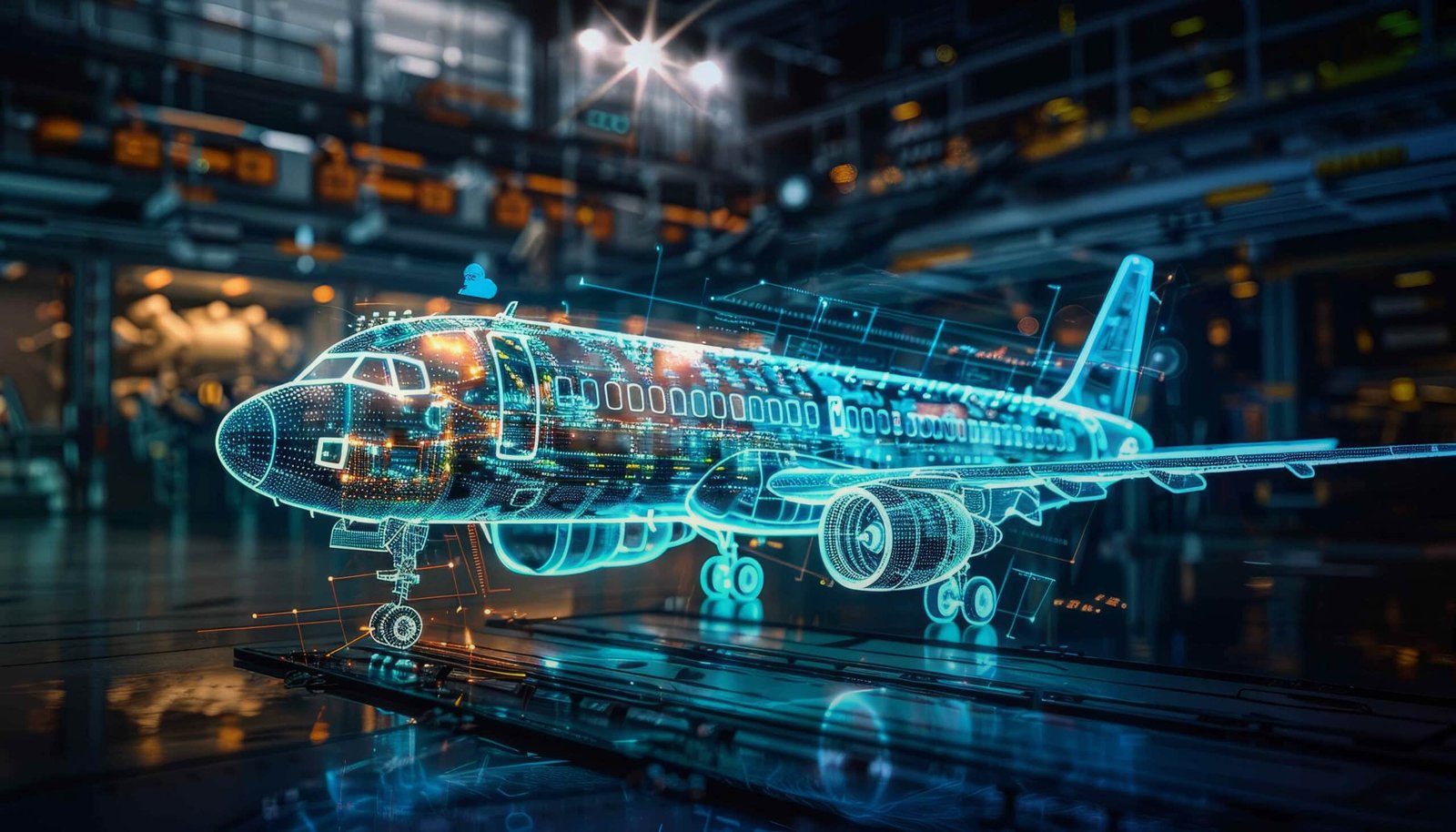
Founded in 1981, Dassault Systèmes is a leading provider of 3D aerospace and engineering design and simulation software. In fact, its 3DExperience software is used by more than 390,000 customers worldwide in multiple industries, including by big players such as Airbus, Boeing, Comac, Embraer and Lockheed Martin.
Defence industry is a major user too, and fighters such as the F-16, F-35, Mirage and Rafale, as well as complex items like aircraft carriers and nuclear-powered submarines, were all designed using Dassault Systèmes software.
Pierre Marchadier, Vice President, Value Engagement, Industry Consultant at Dassault Systèmes, told Asian Military Review, “I have to say that a submarine, and especially a nuclear submarine, is the maximum level of complexity because you have a nuclear power plant within a submarine. That means the complexity of the system is so high that you need more than a human brain to manage everything.”
This is where software such as Catia and Solidworks – powered by the company’s 3DExperience platform – come into its own. These computer programs enable end-to-end, model-based engineering across the full lifecycle of defence equipment.
Dassault Systèmes acquired Solidworks in 1997, this being a widely used 3D CAD platform utilised for product design, simulation and manufacturing.
Marchadier said defence forces and ministries are facing increasing complexity as they grapple with system of systems, interoperability between systems, connecting mission architecture and systems architecture, and whether they should manufacture indigenously or buy off the shelf. He said Dassault Systèmes software can help with these processes and decisions.
Asia-Pacific demand
Dassault Systèmes is enjoying strong demand for its products in the Asia-Pacific region. One example is the Australian Missile Corporation (AMC), which announced on 1 September 2026 a move to use Catia and Solidworks to rapidly design, simulate, test and manufacture new items for the Guided Weapons and Explosive Ordnance Enterprise.
Matt Gibson, CEO of AMC, remarked: “The adoption of Dassault Systèmes’ model-based engineering applications enhances our ability to manage complex system and mission requirements, improve engineering discipline and ensure traceability across the development lifecycle of critical defence programmes.”
Marchadier commented, “For sure, we’re working with all the key players around the world.” These include Mitsubishi Heavy Industries in Japan, and HAL in India, to name just a couple.

Referring to Asia, Marchadier said there is growing realisation that smaller countries need to be more self-sufficient in defence production. “I can see more and more small and medium countries considering the fact that they should probably anticipate some scenario and see what they have to do in terms of investment as partners or locally.”
This is where Dassault Systèmes can help, for it translates something that does not exist into “virtual perfection”. The software also permits material design, ensuring correct tolerances, strength and longevity.
Furthermore, with cost a major factor for the defence sector, Dassault Systèmes software can give pricing estimates, energy requirements and timeframes early on in the development phase. Marchadier said items “can be designed to cost, designed to timing, designed to quality, designed to whatever. And I have to say that, in defence right now, it’s quite new. People want to know exactly, as they know that they have a limited budget.”
The engineering software all assists with system integration to ensure disparate equipment can interoperate. “At the end of the day, the problem is: Are you sure that when you buy all these systems, that all of them will work together?” This is resulting in more defence agencies, such as those in Australia, India and Singapore, buying this software to ensure integration.
Marchadier also highlighted a second part of the requirement coming from governments and agencies. “They want us to help them to analyse the gap between what they have to do and what they should invest in.” The software helps nations determine whether new equipment is capable of being made indigenously, or if it is better purchased off the shelf.
Sovereignty is critical too, because today’s friend might be tomorrow’s foe. Dassault Systèmes promises full data control, compliance and protection of sensitive programmes. The software reaches down to the supply chain level, and can help determine whether a country has sufficient capacity to produce specific subsystems.

Two trends
Marchadier identified two big trends occurring today in the field of systems engineering. The first is the growing importance of data science, especially as forces collect screeds of data that can make operations more efficient via analysis of past experiences. One example is data collection that enables engineering modifications to improve longevity of parts.
This collection of data on performance also helps countries sustain equipment in-country. Also, with the advent of 3D printers, spare parts can be produced near the frontlines without having to rely on vulnerable or long supply lines. Now a digital file can be sent, and a replacement part printed. Marchadier referred to future goods being transmitted, rather than shipped. This capability “avoids this kind of logistics, which costs a lot of money, a lot of energy, lot of whatever, and it’s definitely faster”.
Furthermore, old parts can be scanned and redesigned using engineering software and then 3D-printed. Solidworks software can run simulations and help optimise these parts as well. For militaries struggling to keep old equipment operable, this application of the software is valuable. Indeed, it presents opportunities for specialist companies to supply spare parts designed and manufactured this way.
The second big trend is artificial intelligence (AI), though Marchadier pointed out this is industrial and physical AI, not large language models. “When you work in engineering, when you work in systems, you…need to have an AI which is first of all based on physics. All the systems we’re creating are under the laws of gravity, electromagnetic, fluids and so on. So these laws are very well described.”
The Frenchman said all these physical rules are embedded in its solutions. However, AI is a good way to create and design subsystems and to run different scenarios, such as the effects of wear and tear on parts.
Marchadier claimed his company is the global leader in this field. “Why? Because during the past 45 years, we’ve worked on this project of convergence. Competitors, they’re very good, but in silos. So our competitors, for example, are good in simulation, but not in system engineering. Some are good in engineering, not in simulation, not in collaboration.”
Conversely, Dassault Systèmes offers defence customers digital continuity and traceability. “We have 45 years of history, and the good point is we have a lot of trust from our customers.”
by Gordon Arthur
