

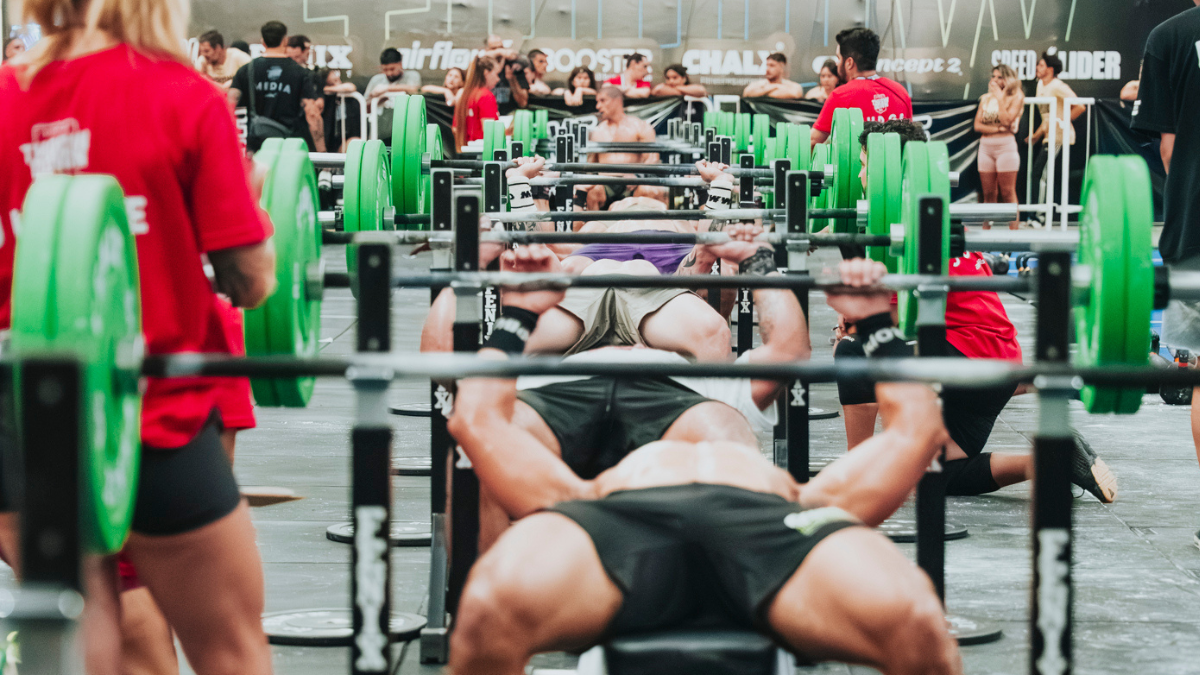
The bench press is one of the clearest ways to measure upper body pressing strength. It trains the chest, shoulders, triceps, and the ability to create full body tension under load. It is also a lift many people use to judge their progress in the gym.
However, there is no single bench press number that every person over 30 should reach. Body weight, sex, training history, shoulder health, technique, limb length, and access to coaching all affect the weight you can press. A 30 year old who has trained consistently for five years should not compare their result with someone who began lifting six months ago. The useful question is not whether you match another person’s number. It is whether your bench press is moving in the right direction for your current training experience and body size.
For most healthy adults over 30, the best approach is to use body weight based benchmarks. These make more sense than a fixed barbell number because pressing 135 pounds means something very different for a 120 pound lifter than it does for a 240 pound lifter.
What a Good Bench Press Looks Like After 30
A solid long term target for a recreationally trained man is to bench press his body weight for one controlled repetition. For a recreationally trained woman, a strong target is around three quarters of body weight. These are not medical requirements or universal standards. They are practical strength goals that reflect consistent training, sound technique, and a useful level of upper body strength.
If you are new to barbell training, your first goal should be much more modest. Learning to bench press the empty bar with control is a legitimate starting point. The standard Olympic barbell weighs 45 pounds, which can already be challenging for an untrained person. From there, progress should be gradual.
A man who can bench press around three quarters of his body weight has built a good beginner base. A woman who can bench press around half of her body weight has also developed meaningful pressing strength. These levels usually require regular practice, progressive loading, and enough total training volume to build the chest, triceps, and shoulders.
Once you have trained consistently for a year or more, body weight relative strength becomes a more useful goal. Men can aim to press their body weight, while women can aim toward three quarters of body weight. More advanced lifters may reach one and a half times body weight for men or body weight for women, although these are ambitious goals that require more time, skill, and focused programming.
Why Age 30 Is Not a Strength Deadline
Turning 30 does not suddenly make you weaker or prevent you from building muscle. Physical capacity does tend to peak in early adulthood and then decline gradually across later decades, but the pace of decline is strongly influenced by activity level. People who stay physically active preserve more strength and physical function than those who become sedentary.
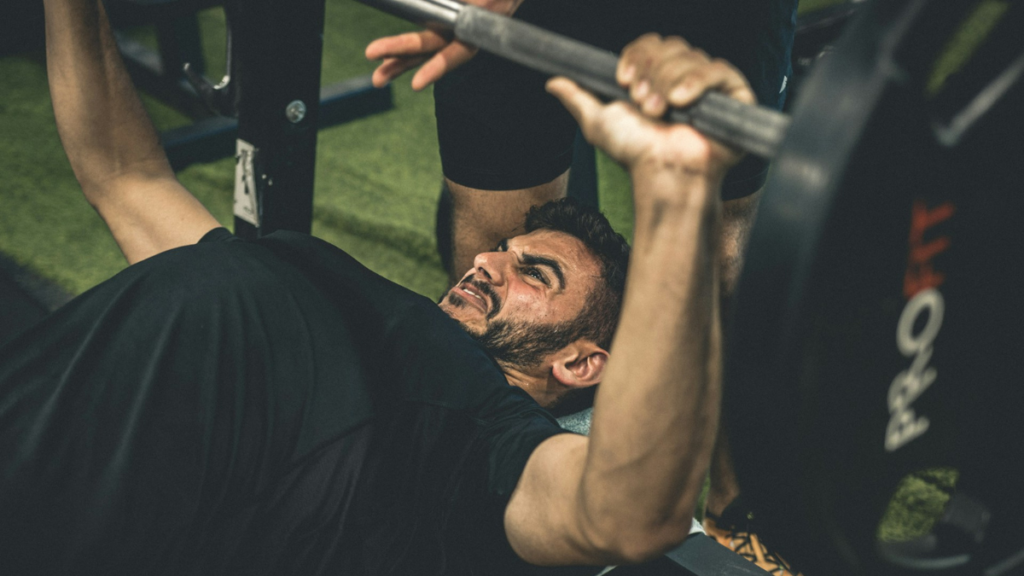
Resistance training remains highly effective throughout adulthood. Research consistently shows that adults can improve strength and muscle mass through progressive resistance exercise, including people well beyond their thirties. Your training age matters more than your chronological age in the early stages. A 38 year old beginner can often make rapid progress because their body is adapting to a new stimulus. A 38 year old experienced lifter can continue improving too, but their gains will usually come more slowly because they are already closer to their current potential.
The important point is that you should not use age as a reason to avoid challenging weights. Instead, use it as a reason to train intelligently. Good technique, sensible progression, recovery, and consistency become increasingly valuable as training loads rise.
Bench Press Targets by Experience Level
Beginner Lifters
A beginner is someone who has little or no structured bench press experience. At this stage, the objective is not to test a maximal lift every week. It is to build reliable technique and add weight gradually.
Men can work toward benching around 0.75 times body weight for one repetition. Women can work toward around 0.5 times body weight. These targets can take several months or longer, depending on your starting strength, body size, training frequency, and confidence with free weights.
A beginner should focus on lowering the bar with control, keeping the shoulder blades stable against the bench, and pressing without losing position. The bar should touch the lower chest area in a controlled manner, then return to the starting position without bouncing. This creates a more repeatable lift and helps keep the shoulders in a stronger position.
Intermediate Lifters
An intermediate lifter has usually trained consistently for at least one year and can use stable technique across a range of loads. At this stage, men can aim to bench press around their body weight for one repetition. Women can aim for around 0.75 times body weight.
These are useful targets because they represent more than simply showing up at the gym. They usually require structured sessions, enough hard sets each week, and regular exposure to moderately heavy pressing. They also demand stronger triceps, shoulders, and upper back muscles, since these areas all contribute to control and force production during the lift.
Do not worry if your progress is slower than it was during your first few months. Early gains often come quickly because your nervous system learns the movement. Later progress is slower, but it still counts. Adding five pounds to your bench press over several weeks is meaningful progress when you are already lifting close to body weight.
Advanced Recreational Lifters
For men, a bench press of around 1.5 times body weight is an excellent advanced recreational standard. For women, a bench press equal to body weight is a similarly impressive achievement. These lifts require more than general fitness. They reflect substantial practice, focused strength training, and the ability to handle heavier loads with good control.
Not everyone needs to pursue these numbers. If your main goals are health, muscle growth, sport performance, or general fitness, you can be very strong and well trained without reaching an advanced one repetition maximum. The bench press is one useful measure, not a complete scorecard for fitness.
How to Test Your Bench Press Safely
A one repetition maximum is the heaviest load you can lift once with acceptable technique. It can be a useful testing tool, but it should not be rushed. If you are new to the exercise, use sets of five to ten repetitions to build skill before attempting a true maximal lift.
Warm up with several lighter sets, gradually increasing the weight while reducing repetitions. Your final attempt should be challenging but controlled. Use a competent spotter when possible, especially if you are using a free barbell without safety arms. If you train alone, set the rack safety arms at a height that will catch the bar if you cannot complete the repetition.
Your result only counts if the technique is consistent. The bar should be lowered under control, touch the chest lightly, and be pressed to a locked out position. Excessive bouncing, partial repetitions, or hips lifting dramatically from the bench can make the number look bigger without representing a stronger press.
If a maximal test does not appeal to you, use a repetition based estimate instead. For example, a set of five controlled reps with a challenging weight can show progress without the demands of a maximal attempt. This is often a sensible choice for lifters who want to build strength while managing fatigue and joint stress.
How Often Should You Bench Press?
Training the bench press one to three times per week can work well, depending on your experience and total program. Beginners can make strong progress with two sessions per week. One session might use slightly heavier sets, while the other uses lighter sets with more repetitions and a focus on technique.
Strength improves when your muscles receive enough challenging work and enough recovery to adapt. Research shows that total weekly training volume is an important driver of muscular development, while strength can improve through a range of effective training frequencies. In practical terms, spreading your pressing work across two or three sessions can make it easier to perform high quality sets without exhausting yourself in one workout.
A useful weekly structure could include a heavier bench press day, followed by another session that uses dumbbell presses, push ups, close grip bench presses, or overhead pressing. Rows, pulldowns, and other upper back work also matter. A stronger upper back provides a more stable platform on the bench and helps keep pressing training balanced.
Build Strength Without Beating Up Your Shoulders
Shoulder discomfort is common when people bench press with poor positioning, progress too quickly, or add too much pressing volume without enough pulling work. The answer is not automatically to stop pressing. It is to assess the cause and adjust the program.
Keep your shoulder blades pulled back and down against the bench throughout each repetition. Use a grip that feels stable rather than extremely wide. Control the bar as it descends and avoid forcing repetitions through sharp or worsening pain. If pain persists, seek assessment from a qualified health professional.
Good recovery also matters. Sleep supports physical recovery and performance, while adequate protein helps support muscle repair and adaptation to resistance training. You do not need a perfect routine, but you do need enough consistency for your training to accumulate over months and years.
The Number Matters Less Than the Trend
The most useful bench press standard is one that gives you a clear next target. If you currently bench press 95 pounds, working toward 105 pounds is a meaningful goal. If you can already bench press your body weight, aiming to add five or ten pounds over the next training block is enough to create direction.
Avoid comparing your lift with elite powerlifters, social media clips, or people with very different body sizes and training histories. A controlled body weight bench press at age 30, 40, or 50 is a strong achievement. More importantly, it represents the habit of training consistently, getting stronger, and maintaining physical capacity as you get older.
Bibliography
- American College of Sports Medicine (2009) ‘American College of Sports Medicine position stand: Progression models in resistance training for healthy adults’, Medicine & Science in Sports & Exercise, 41(3), pp. 687 to 708.
- Grgic, J., Schoenfeld, B.J., Davies, T.B., Lazinica, B., Krieger, J.W. and Pedisic, Z. (2018) ‘Effect of resistance training frequency on gains in muscular strength: A systematic review and meta analysis’, Sports Medicine, 48(5), pp. 1207 to 1220.
- Ralston, G.W., Kilgore, L., Wyatt, F.B. and Baker, J.S. (2017) ‘The effect of weekly set volume on strength gain: A meta analysis’, Sports Medicine, 47(12), pp. 2585 to 2601.
- Schoenfeld, B.J., Ogborn, D. and Krieger, J.W. (2017) ‘Dose response relationship between weekly resistance training volume and increases in muscle mass: A systematic review and meta analysis’, Journal of Sports Sciences, 35(11), pp. 1073 to 1082.
- Westerståhl, M., Andersson, E., Nordgren, B. and Ekblom, B. (2025) ‘Rise and fall of physical capacity in a general population: A 47 year longitudinal study’, Journal of Cachexia, Sarcopenia and Muscle.
Key takeaways
| Situation | Practical bench press target | What to prioritize |
|---|---|---|
| Beginner man aged 30+ | Around 0.75 times body weight | Learn consistent technique and build gradually |
| Beginner woman aged 30+ | Around 0.5 times body weight | Practice stable bar control and progressive loading |
| Intermediate man aged 30+ | Around body weight | Build weekly volume and improve triceps and upper back strength |
| Intermediate woman aged 30+ | Around 0.75 times body weight | Train consistently and increase load patiently |
| Advanced recreational man | Around 1.5 times body weight | Use focused programming and manage recovery |
| Advanced recreational woman | Around body weight | Build long term strength with sound technique |
| Any lifter aged 30+ | Improve your own baseline over time | Use sustainable training, recovery, and pain free movement |
