

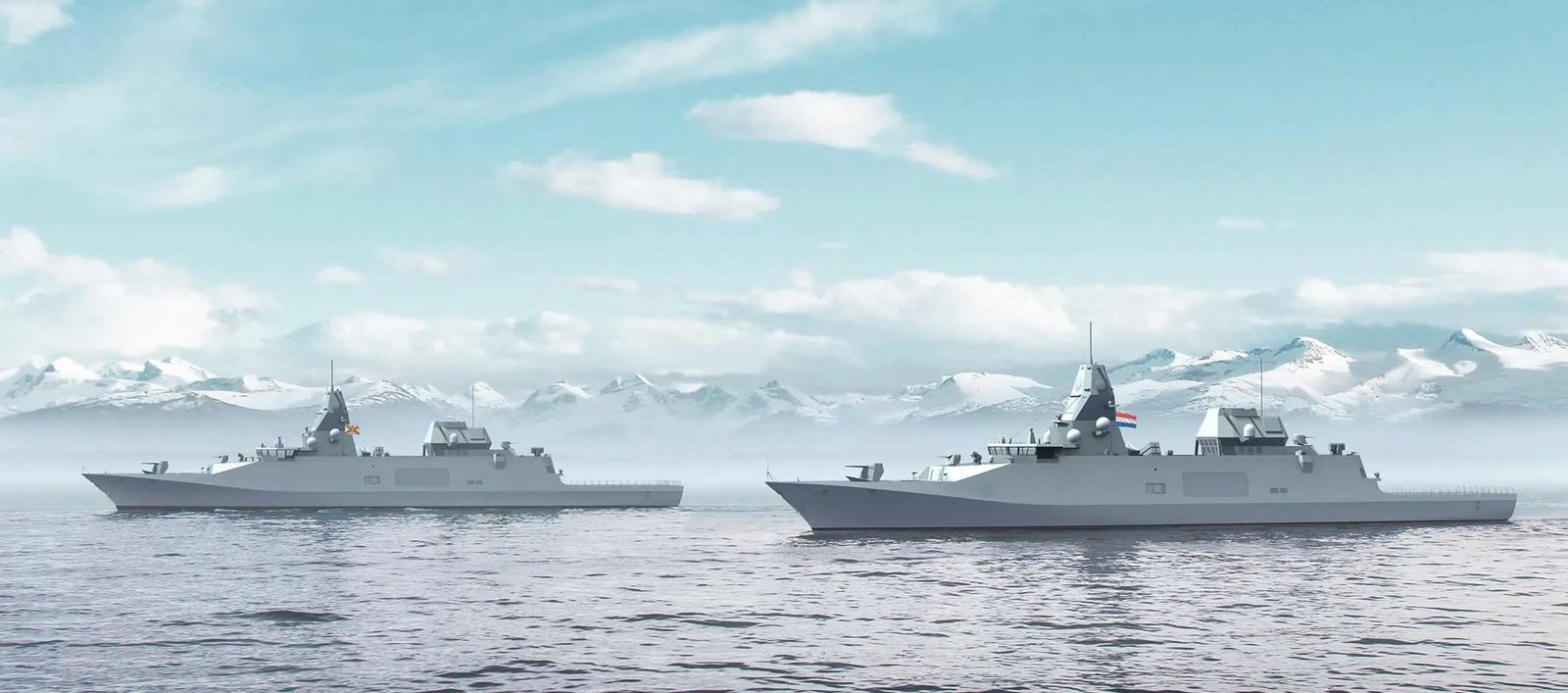
Dutch Defence outlines ASWF frigate progress and a potential pivot to F126 industrial capacity following project delays, as Belgium weighs its options.
In a letter addressed to the Dutch House of Representatives dated 18 September 2026, Dutch State Secretary of Defence Derk Boswijk provided an updated status on the Anti-Submarine Warfare Frigate (ASWF) program. The document reveals critical industrial developments following Germany’s cancellation of the F126 frigate program, even as questions persist over Belgium’s future involvement in the joint binational effort.
F126 Industrial Capacity Pivot
According to the letter, the Dutch Ministry of Defence is closely monitoring the fallout from the German government’s decision to halt the F126 frigate program. With Damen Naval as prime contractor for the F126, Dutch authorities are assessing whether engineering, design, management and industrial capacities freed up by the German program can be reallocated to accelerate or bolster the ASWF project and other national defense acquisition programs.
ASWF Engineering Underway Despite Delays
The ASWF program is facing an additional three-year delay, with the delivery of the first Dutch frigate pushed back from 2030 to 2033. The Ministry confirmed that this latest delay stems from structural stability challenges identified during the design phase. The baseline hull required enlargement and redesign to maintain proper stability margins while preserving essential space and weight reserves for future capability upgrades over the vessel’s lifespan.
However, a source familiar with the program pointed out to Naval News that this marks the second major delay for the project. Under the original 2018 Memorandum of Understanding (MoU), delivery of the First of Class was initially scheduled for 2025. Following a cost increase of approximately 40% and a revised timeline targeting a 2029/2030 delivery, a new MoU was agreed upon by Belgium in 2023, before this latest slip to 2033.
Despite the schedule shift, key execution milestones are progressing:
- Detailed engineering phase: Officially commenced in September 2026.
- Mast construction: Construction of the integrated mast for the first Dutch frigate began at the end of June 2026.
- Bilateral coordination: The Dutch-Belgian Joint Steering Committee (JSC) convened on 1 September 2026 to align on project execution and maintain momentum.
A broader project update, alongside official responses to parliamentary inquiries regarding budget shifts and schedule adjustments, is scheduled to be presented to the Dutch Parliament in the fourth quarter of 2026.
Belgian Decision Pending Amid Media Speculation
The State Secretary’s update comes amidst heightened speculation in Belgian media, notably a recent report by Belgian broadcaster VRT suggesting that Belgium may withdraw from the ASWF program in favor of purchasing Italian-built FREMM EVO frigates from Fincantieri following a Request for Information (RFI) issued earlier this summer.
However, a source with knowledge of the matter told Naval News that media reports asserting Belgium has chosen an alternative platform are premature:
- No decision taken: Belgium has not taken a final decision to exit the ASWF program or select an off-the-shelf alternative.
- Negotiations ongoing: Bilateral discussions between the Dutch and Belgian Ministries of Defence remain active and ongoing.
- Binational ties: Maintaining deep naval cooperation between the two partner nations remains a priority for both defense establishments.
- RFI context: While Belgium did evaluate alternative frigate designs under an RFI launched this summer to assess market availability, a formal decision on whether to proceed with ASWF or pivot to an alternative candidate will be made between mid-October and the end of 2026.
