

The overwhelming victory of President Vladimir Putin’s United Russia party in last weekend’s parliamentary elections was not only expected but planned. Compulsory voting in organizations dependent on the budget and in many corporations; standardized voting in the military, law enforcement agencies, and the so-called new territories; mechanical voting in the spirit of “take my vote and leave me alone”; the spread of electronic voting; and the pre-election removal of Yabloko, the only antiwar party still operating legally—all these and other factors assured a supermajority for the ruling party. Even votes cast for other parliamentary parties amounted to support for the government, because they, too, are controlled by the Kremlin.
Nonetheless, for Putin, this refreshed mandate offers renewed legitimacy for his “special military operation” in Ukraine, showing domestically what the Kremlin is projecting internationally: that Russia is in a position of strength and is ready to pursue its military objectives with even more abandon. The Kremlin’s main goal is to create the illusion of a total commanding majority, regardless of the actual situation. Everyone supports Putin, the results convey, and therefore they must also support the country’s military policies, relentless suppression of dissent, and anti-Western course; those who oppose him are outcasts and pariahs. Indeed, since 2022, elections in Russia have redefined citizenship as support for the war.
Reality is more complicated. Since April, public polling in Russia has consistently signaled that things are not going very well for the government. According to the independent Levada Center, which has been regularly asking the question, in July, the percentage of respondents who considered the special operation a success had fallen to 50 percent, a drop of nearly 20 percentage points from the previous year. In the same poll, the number of people who believed the country was moving in the right direction had fallen by ten percentage points from a year earlier, to 54 percent. Moreover, between July 2025 and July 2026, the president’s own approval rating declined 12 percent—a very significant drop in a personalist autocracy.
Alongside this, general public morale has steadily declined. There is now constant anxiety over the protracted war and the possibility of further military mobilization, as well as about inflation, far-reaching Internet restrictions, and an unending fuel crisis. According to Levada Center surveys done in August, two-thirds of respondents said they faced problems with mobile Internet access, messaging apps, and gasoline shortages. Gasoline shortages seriously disrupted the lives of one in three respondents, while Internet restrictions affected one in five. Massive military spending and rising fuel prices have been major drivers of inflation, and starting in October, a spike in utility rates will add to those pressures.
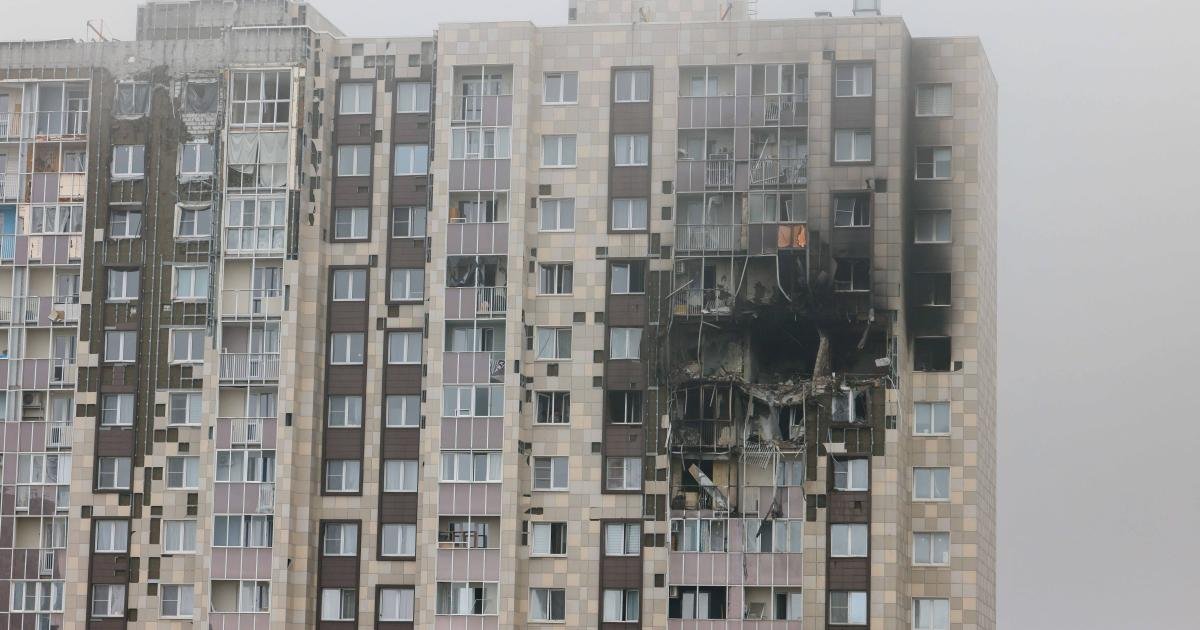
Now that elections have taken place, many Russians fear another military mobilization, although the Kremlin—wary of undermining the illusion of a somewhat normal life amid a war that has reached the heart of Russia in the form of drone attacks—seems to prefer selective and covert mobilization over a general call-up. But other new pressures cannot be ruled out. As long as Putin believes that time is on his side, and the people—apparently hypnotized by what the Kremlin calls the “unity” demonstrated during the elections—are ready to bear the burden of troubles, he will continue the war. And continuing means escalating, abroad and at home.
Already, the Russian president has rejected a new U.S. diplomatic push and stepped up the pace and nature of attacks in Ukraine. Meanwhile, pro-Kremlin foreign policy experts speak of the various ways, both nonnuclear and nuclear, that Russia can escalate further, especially during the coming winter, when the Kremlin plans to literally freeze Ukraine by striking its power grid. For Putin, escalation has become a principal means for maintaining power.
TAKE IT UP A LEVEL
For weeks now, there have been many indications that Putin is preparing for a new stage in Russia’s conflict with Ukraine and the West. The Kremlin has been stoking a continual sense of emergency, peddling threats—what the late Russian political scientist Gleb Pavlovsky called the “Russian conflict conveyor belt,” a machine that must never be allowed to stop. At the same time, the government has imposed a siege mentality on the public, along with the need to maintain absolute unity, a dynamic that has been reinforced by the intensification of Ukrainian airstrikes deep inside Russia. This kind of threat amplification explains the sweeping crackdown on Yabloko in the runup to the parliamentary elections. Not only was the party banned from taking part in the elections, its members were arrested and one of its leaders, Lev Shlosberg, was sentenced to 11 years in prison. When a country requires a unified national mindset, no anti-war voice can be legally heard.
Meanwhile, Putin has been taking trips, hosting meetings, and delivering speeches with abnormal frequency. He has addressed the military, children, scientists, and businesspeople, and even visited a disputed island in the Sea of Okhotsk with the clear aim of angering and provoking Japan. (The island is known as Iturup in Russia and Etorofu in Japan.) At the same time, since the summer, the Kremlin has stepped up its efforts to keep the masses emotionally and spiritually mobilized around the “special military operation.” No part of Russian culture, society, or history is overlooked.
In August, for example, the Russian Orthodox Church announced that the remains of Dmitry Donskoy—the legendary fourteenth-century warrior-prince who defeated the Tatars of the Mongol Horde at the Battle of Kulikovo—had been unexpectedly “discovered” at the Cathedral of the Archangel in Moscow. Immediately, Putin visited the place of burial and this historic prince was conscripted into military service—part of his relics were sent to the front to “spiritually strengthen” the Russian units fighting there. When a war drags on for so long, Russians can pin their hopes not only on the “miracle weapons” Putin boasts about but also simply on a miracle. Even as the parliamentary elections took place, thousands of Orthodox Christians were lining up to view the relics of Saint Spyridon of Trimythous in Moscow, as though they had come to vote for him. Across the country, hundreds of thousands of believers have also taken part in government-supported religious processions that are aimed at bolstering support for the armed forces. The most impressive of these was the huge, ultra-nationalist “Russian March” that took place in Moscow in early September.
The only question is: what constitutes a miracle? For most Russians, it is the end of the war. Sooner or later, Putin will have to extricate himself from the conflict, and no one but the United States can help him do that. The Trump administration appears to be making a new attempt at negotiations, ideally with a different strategy than the Anchorage summit or the Witkoff-Kushner-style “tourist diplomacy” that characterized the administration’s first year. But no replacement for this model has yet been found. CIA Director John Ratcliffe’s August blitz visit to Moscow seemed to be part of an effort to pursue a new type of diplomacy, perhaps something more like the back channel that was established between U.S. National Security Adviser Henry Kissinger and the Soviet Ambassador Anatoly Dobrynin during the era of détente. So far, it is hard to envision how a genuine, permanent channel might emerge that could steer both sides toward peace and, among other things, ease tensions between Russia and the United States. Still, for U.S. President Donald Trump, there are also new reasons to push this. After a string of spectacular foreign policy failures and facing a tough midterm election of his own, Trump urgently needs a success story.
CONFIDENCE MAN
For now, the Kremlin believes that it has both time and the means to continue fighting for as long as it takes. Putin is incapable of doubting that he is right. Along with the stage-managed Duma elections, the purging of any trace of antiwar rhetoric from the public sphere is intended to grant Putin a stronger mandate for whatever actions he sees fit to take. An unknown question is how far into the future Russians are prepared to grant this legitimacy.
So far, it has been up to citizens themselves to cope with the burning oil refineries, destroyed warehouses, empty gas stations, nonfunctioning Internet, and life-threatening risks from drone attacks. In addition to chronic inflation, the budget deficit has become a problem, and Russia’s GDP and industrial production are hovering just above zero. This is despite the fact that, until recently, arms production had formally kept these indicators at a moderately high level; now, even that is no longer helping.
In the face of these challenges, people are bearing with the system for now. It is also worth noting that the same surveys that show Russians are less satisfied with the special military operation than they were before also show that greater numbers of them prefer intensifying strikes over making concessions to achieve peace. More than half of the respondents in an August Levada Center poll think it is likely that the special military operation will last another year, and the number of those who say they are certain of this has grown. Precisely because of their utter exhaustion with war, many see increased military activity as a way to bring peace closer.
But if the Kremlin demands another rally around the flag—especially one that involves mobilizing large segments of the male population—it might tip the situation against Putin. Rumors about such a move, which could also be part of a broader Russian escalation, have been circulating for weeks, even though the changed nature of the war has made sending more men to the battlefield a pointless waste, and also risks diverting the remaining labor force away from doing needed jobs at home, not to mention the damage to the demographic situation, including the decreasing birth-rate. Still, it cannot be ruled out.
Putin still portrays what Russia is doing as a historically just defensive campaign of liberation. This is not unlike how Stalin portrayed the 1939 Winter War with Finland, or the Red Army’s “liberation campaign” in that same year, which led to the incorporation of western Belarus and western Ukraine into the Soviet Union. But to be a “people’s war,” as Kremlin propagandists and officials have sometimes referred to the special operation, the conflict must have a limited time frame. It also must, in principle, end in victory for the people, whatever that may mean. (Under current circumstances, Russians will accept any version of victory, as long as they are told that the goals have been achieved on Russia’s terms—that is how exhausted people have become.)
In reality, the “special military operation” has taken on the characteristics of a personal war waged by the head of state. In fact, from the very beginning, it was a personal war that simply involved the people in a wide variety of ways, including physical participation in combat operations and forced submission to political rules, restrictions, and systematic repression. For decades, Russians have been conditioned to live in a state of preparation for war, or, more precisely, for wars. Such a constant war footing—and actual war and the relentless militarization of economy—is what ultimately caused the Soviet system to buckle. Putin has revived this approach to serve his own goal of reconstituting Russia’s empire, but Russians may not be prepared to have their society so strongly militarized, knowing that they, too, might be mobilized or have drones hit their roofs, indefinitely. It is possible to adapt to such a world and it is possible to normalize it. But for how long?
NOWHERE TO GO
In Putin’s Russia, escalation happens on two different fronts. It is taking place on the battlefield, but it is taking place at home as well. The signs are almost everywhere. There is the continual arrest and imprisonment of those who disagree with the Kremlin’s policies, a practice that has become increasingly brutal. There is the persistent tightening, to the point of absurdity, of legislation regarding “foreign agents,” especially those who have left the country, who are now deprived not only of political rights but also of property and financial rights. There is the increasingly unsustainable tax burden, because the regime lacks the funds for war. (The Kremlin raised Russia’s value-added tax this year from 20 to 22 percent, a levy that weighs especially heavily on small and medium-sized businesses.)
In international analysis of Russian strategy, the home front is often forgotten, but it is just as important. One form of escalation cannot exist without the other. Without increasing internal pressure, the regime cannot ratchet up its external actions. Manufacturing crises has become the basis of Putin’s system and the mechanism by which he maintains his power. Yet the returns on this strategy—which he masterfully sustained by misleading Trump in 2025 and derailing the prospect of peace talks in the first half of 2026—are diminishing. Even the regime’s own spin now bears the hallmarks of hysteria. Officials such as Pyotr Tolstoy, deputy speaker of parliament and former TV host, openly speak of the need to strike at the enemy’s civilian population in order to demoralize it. Hate speech and the glorification of cruelty and violence have become another form of escalation. But again, the effect wears off with frequent use.
The Kremlin’s current embrace of escalation of every kind is not a sign of strength but of weakness. The elections have allowed Putin to bind Russians to his “special military operation” through the voting process: anyone who participated in elections has become an accomplice. But this will likely only exacerbate the frustration of many people who are tired of the living conditions imposed by the state. No one will protest; many will feign support. But just as in the late Soviet years, the very act of existing within such a system will look like the imitation of normalcy rather than the real thing. There is no longer a clear way out for a country traumatized by war, befuddled by the propaganda of violence and the ideology of national superiority, and damaged by a distorted and increasingly dysfunctional war economy.
The Putin regime’s greatest crisis is a crisis of the future. It doesn’t know where to go or why. And so it prolongs the war as a means of survival. The U.S. administration is trying to show Putin an off-ramp by dangling huge business deals or, if that status quo continues, threatening to impose “hellish” sanctions. But the most realistic scenario right now is that Putin will continue to stall for time, using winter as a weapon.
Loading…
