

Key Points
- The Defense Logistics Agency awarded L3Harris a contract worth up to $25.2 million to supply infrared sensors for the Army’s Avenger air defense system.
- The five-year, sole-source deal runs through September 2031 and covers a key sensor that lets Avenger crews track targets at night.
While some military hardware ages out quickly, the Army’s Avenger air defense system has instead spent nearly four decades getting upgraded piece by piece, and this week it received another one: a new contract worth up to $25.2 million for infrared sensors that let its crews spot targets in the dark.
The Defense Logistics Agency awarded the deal to Cincinnati Electronics, a division of L3Harris based in Mason, Ohio, covering forward-looking infrared units, essentially thermal cameras built for military use, under a five-year contract running through September 2031. The Army didn’t put this out for competitive bidding, instead going straight to L3Harris under a legal provision that allows sole-source awards when only one company realistically has the expertise to build what’s needed, a common arrangement in defense contracting for a system that has been in service since the late 1980s.
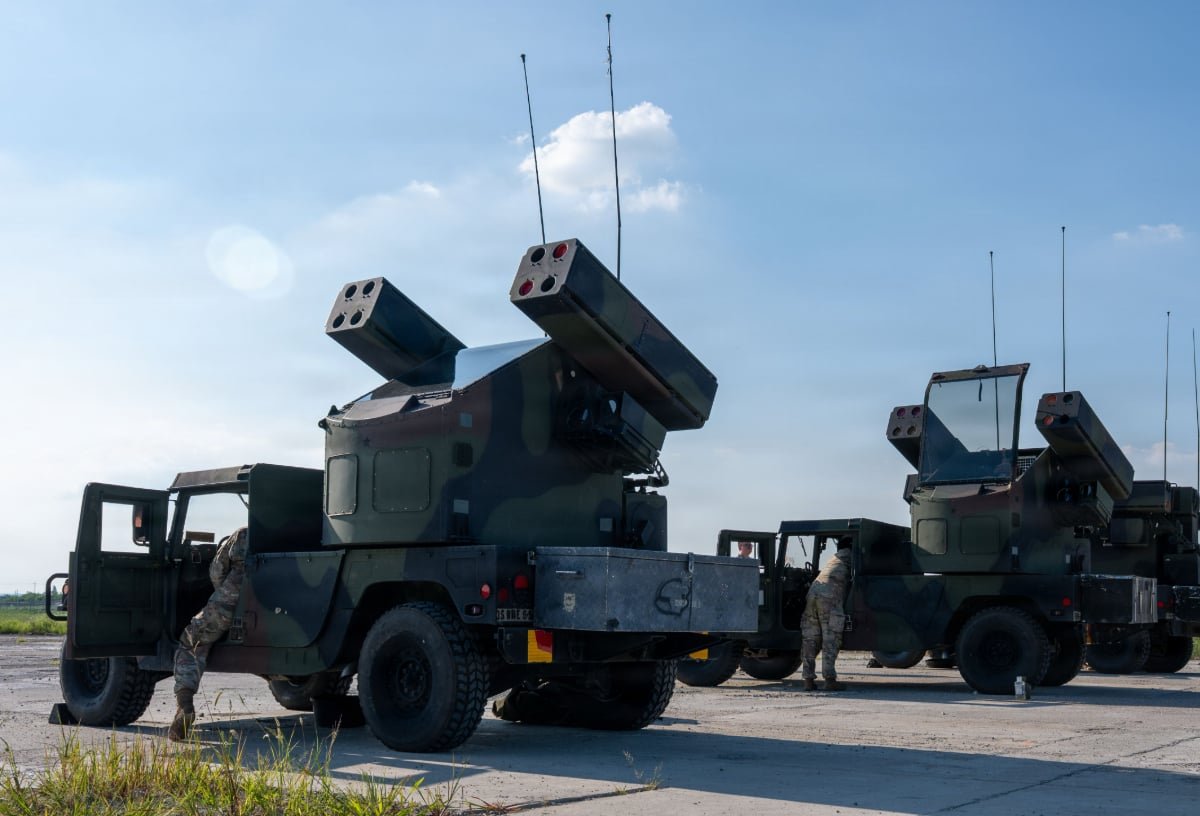
The Army first put Avenger into production back in 1987, and it remains active today as a Humvee-mounted, gyro-stabilized turret loaded with eight Stinger missiles split between two launch pods, plus a heavy machine gun mounted alongside for close-in defense. Because the turret stays pointed at its target even as the vehicle underneath bounces over rough terrain, and because its job is protecting ground troops from things flying low and fast, helicopters, drones, cruise missiles, the kinds of threats that often sneak in under conventional radar, this new contract actually addresses a real operational gap rather than a cosmetic upgrade.
– ADVERTISEMENT – CONTINUE READING BELOW –
A missile system is only as good as its ability to find something to shoot at, which is precisely what the infrared sensor provides. Paired with a laser range finder and an automatic video tracker, the FLIR unit lets an Avenger crew pick out a heat signature at night or through bad weather well before the human eye could see anything useful through an optical sight, and the system then uses that data to confirm a missile has locked onto the right target before it fires. Strip away the infrared sensor, and what remains is a weapon system that can barely operate once the sun goes down or the clouds roll in, a serious limitation for something meant to guard against threats that rarely announce themselves in advance.
Avenger’s job has never stayed confined to a motor pool. Army National Guard units have rotated the system into Washington, D.C., as part of the layered air defense that protects the nation’s capital on a continuous basis rather than only during high-profile events, while the system has also appeared overseas in multinational training exercises, including drills in North Africa where American crews fired live Stinger missiles alongside NATO partners to test performance in harsh, unfamiliar terrain. In a more consequential real-world test, the United States has sent Avenger systems to Ukraine as part of its ongoing military assistance during the war with Russia, where short-range air defense against drones has become one of the most urgently needed capabilities on the battlefield.
The Defense Logistics Agency has not disclosed exactly how many infrared units this contract will produce, largely because of how the deal is structured: rather than committing to a fixed number of sensors upfront, the Army set this up as an indefinite-delivery contract, meaning it can place individual orders as needs arise over the five-year agreement, up to that $25.2 million ceiling, giving the service flexibility to adjust purchases based on how many sensors actually wear out, need replacing, or get damaged in the field instead of guessing years in advance.
