

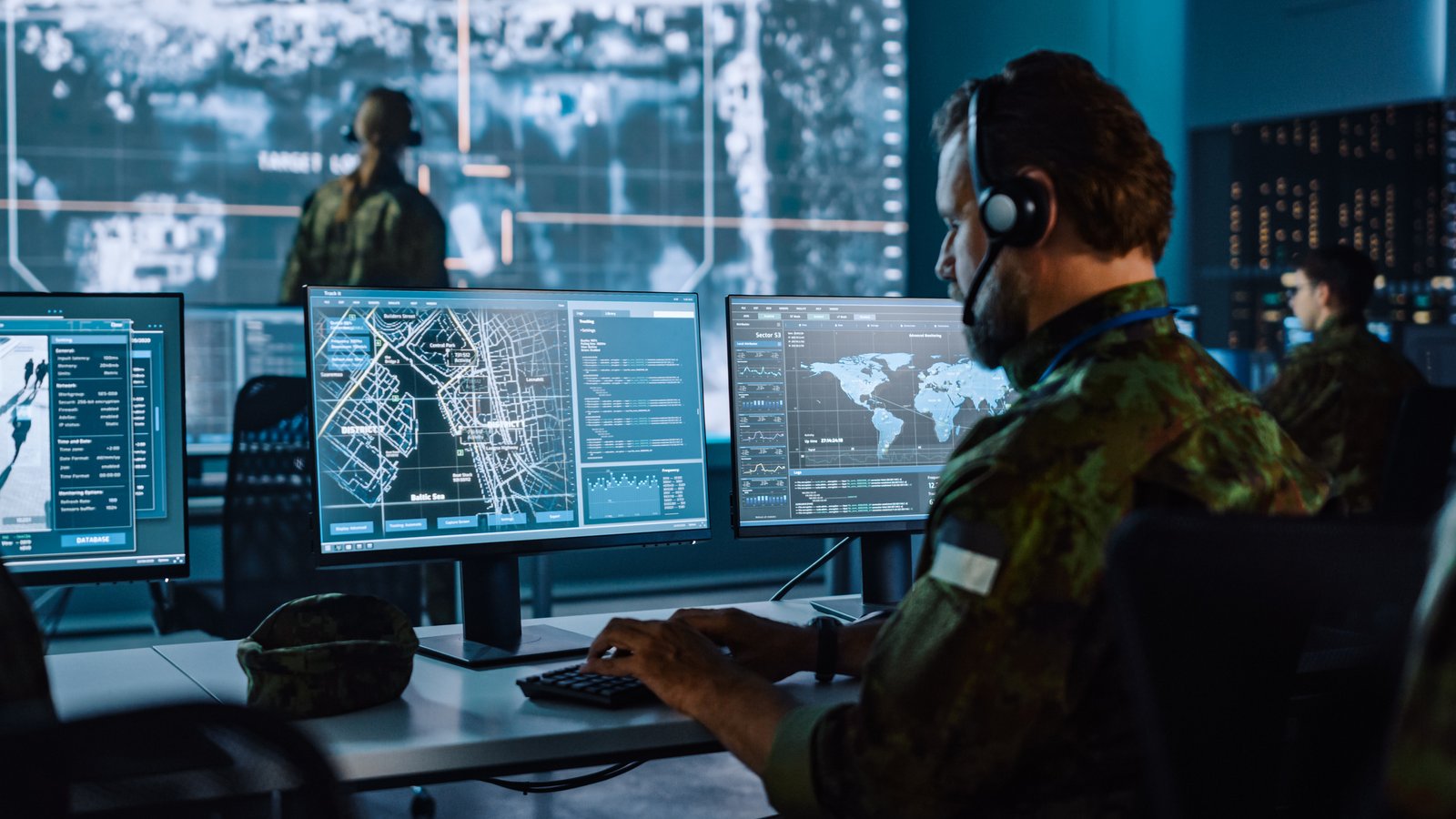
As Lt. Gen. Mark Simerly’s final weeks as the director of the Defense Logistics Agency wind down, he can easily recognize how the agency is different today.
In the two-plus years as DLA’s leader, Simerly pushed DLA to be more agile and to adapt to an increasingly changing logistics environment.
“Probably the greatest change that I’ve seen in the agency is a willingness to change within the agency. This recognition that we have to respond to the changing environment, that we have to respond to the changing technology and that we’ve got a responsibility to change as rapidly as we can, so we can continue to be relevant and offer support to the warfighters,” Simerly said today during a press briefing at DLA’s Industry Collider Day. “I believe that we’ve seen, in the history of the agency, that we were built to change from the very beginning. We’ve had to accelerate that change cycle in the last few years, and I’ve seen the willingness and the readiness of the agency to take that challenge on, and to operationalize our transformation planning into tangible outcomes.”
Defense Secretary Pete Hegseth nominated and the Senate confirmed in July Air Force Maj. Gen. David Sanford to replace Simerly, whose last day is Oct. 2. Sanford also received a promotion to Lieutenant General as part of the confirmation process. Sanford has been with DLA since July 2024, when he became the director of Logistics Operations and commander, Joint Regional Combat Support. Sanford also served in several other logistics roles, including as the director of logistics, engineering and force protection for the Air Mobility Command and as the commander of the Defense Supply Center Richmond and Defense Logistics Agency Aviation.
Long-time approaches no longer viable
DLA’s motivation to adapt to the new logistics environment is driven by several factors, most notably the war in Ukraine and now Operation Epic Fury. Simerly said DLA has closely watched the challenges the Ukraine military has had in delivering food or munitions or parts to frontline soldiers.
“We no longer could rely upon the things that would be in place like the air and domain dominance that we possessed in previous fights. That is now no longer valid or in place. So you think about how contested logistics is in that domain and how everything that we would take for granted in previous fights, such as in Afghanistan and Iraq, are no longer options,” he said. “For instance, in Iraq and Afghanistan, DLA was able to deliver food and fuel to the forward operating base without great resistance. That would never take place in a place like Ukraine in the way that they’re operating, the way they have to disperse, the way that lines of communications are contested and where everything has to be done in a different way. There’s no question that we’re learning the same lessons now in Operation Epic Fury with Iran and their ability to target a broader array of things with precision that puts much more at risk.”
These lessons are pushing DLA to think much more about alternate supply chains, how to operate with more precision and about the idea that stockpiling supplies may not make sense like it once did because they are potentially vulnerable to attack.
“I think we can move with a fair amount of agility, and we are not just responding to the current threat environment in the Persian Gulf, but in terms of our understanding of how we have to posture capability, how we have to offer solutions and options, and I’d frame some of this in terms of access, overflight and basing,” Simerly said. “This kind of a traditional way of thinking about how we can support from different locations. So, from a DLA perspective, access is really critical, and it’s not just about access to a nation or to a piece of terrain, it’s about access to markets. It’s about contracts. It’s about relationships that we have to develop and anticipate in advance of need. We’ve seen opportunities to exercise our networks globally, and it’s not just in a particular part of the world or in a particular region where we have to be able to flex those capabilities, create new operating locations rapidly through our networks of contracts and contracted partners, that is much more agile than we’ve had to be in the past.”
Playing a bigger role in exercises
DLA is integrating those lessons learned through two paths. First, Simerly said the agency has a cell, or group, that monitors and applies current changes in the logistics environment in their supply chains or operations. Second, DLA is playing a larger role in joint operational exercises.
“I’m talking about exercises pointed toward potential fights. So, for instance, in the Pacific with DLA in the training audience in this exercise series, we’re increasing the validity of the logistics lessons that are learned, and we are also developing solutions in stride with our partners on the Joint Staff, in the combatant commands and in other functional elements of the joint forces in the services, so that we can really articulate what the challenges are and develop solutions in common,” he said. “This is a new approach for the agency over the last few years that we’ve been able to implement, where we’re actively participating in these exercises as a member of the training audience, understanding that although DLA was not designed to be a warfighting headquarters, when it gets to the time that we have to support the fight, we’re going to be expected to operate like one. We’re rehearsing our ability to do that now.”
Simerly added that while DLA has participated in different exercises around the world like in Korea with PACOM or in Europe with Central Command, the agency did more to push its way into the room to be part of the more recent Joint Staff-led events.
“We realized we needed that training, and we also realized that others needed to account for us to participate as well. It’s a combination of factors, but certainly we were very aggressive and created some opportunities for us that wouldn’t have existed otherwise,” Simerly said.
As for DLA’s new commander, Simerly said the good news is Sanford has been with the agency for several years and understands its current path, strengths and weaknesses.
At the same time, Simerly said he plans to give Sanford some insights into where DLA needs to go next.
“One is maintain the focus on developing our workforce so that we have the means to employ the technology that’s becoming available, and our workforce is skilled and adaptive so they are able to take on new technology to our advantage. We have made some very specific investments in capability, developmental education and training, but it’s also about defining roles and responsibilities,” he said. “As we bring on board new technology, as we bring on board digital teammates, how do we define roles and responsibilities for our humans so that we can gain the best advantage of our machines to what we need to do? It’s going to influence not only the way that we implement the tool sets, but also the way that we reorganize around the capability, reestablish workflows that will allow us to operate more effectively and more efficiently in the future.”
Copyright
© 2026 Federal News Network. All rights reserved. This website is not intended for users located within the European Economic Area.
