

Key Points
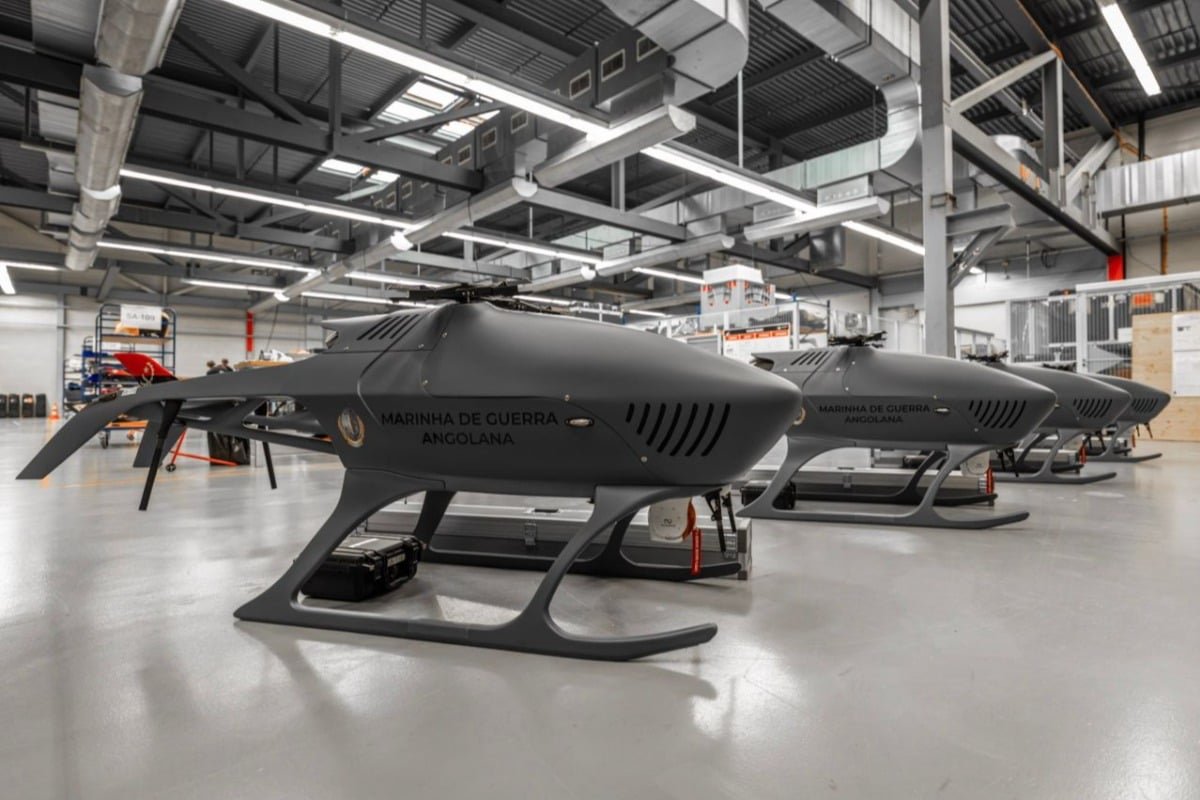
- ANAVIA completed customer acceptance of six HT-100 Naval unmanned helicopters for the Angolan Navy, to be deployed two per ship across three new BR71 MK II corvettes.
- The HT-100 Naval features an autonomous radar-guided deck landing system and a six-hour flight endurance, part of a roughly $1.1 billion Angolan naval modernization program.
Swiss manufacturer ANAVIA completed on-site customer acceptance of six HT-100 Naval unmanned helicopters purchased by the Angolan Navy, the company said, following individual flight tests and sign-offs for each aircraft delivered.
The acceptance was conducted jointly with ADSB, a partner involved in the delivery. ANAVIA said each of the six aircraft underwent its own flight test and verification process rather than a single blanket acceptance for the batch, with the customer verifying each system firsthand.
“This milestone shows our ability to deliver a complete system, closely aligned with our customer’s operational requirements,” said Ishan Sahgal, founder and co-CEO of ANAVIA.
– ADVERTISEMENT – CONTINUE READING BELOW –
The delivered package includes electro-optical and infrared sensors, maritime control stations, and the helicopters themselves, all tested together on site as an integrated system rather than as separate components. The six aircraft will be split two per ship across three new BR71 MK II-class corvettes the Angolan Navy is bringing into service, extending each vessel’s reconnaissance reach.
The HT-100 Naval is a maritime variant of ANAVIA’s HT-100 unmanned helicopter, built around a Flettner intermeshing rotor system, two counter-rotating main rotors that eliminate the need for a tail rotor. ANAVIA says that design sends roughly 30 percent more of the aircraft’s power into useful lift rather than countering torque, resulting in longer endurance and higher payload capacity compared with a conventional single-rotor design. The aircraft has a maximum takeoff weight of 120 kilograms (265 pounds), a payload capacity of 60 kilograms (132 pounds), and a flight endurance of six hours, powered by a 15-kilowatt turbine engine that burns roughly 9 liters (2.4 gallons) of Jet A-1 fuel per hour. The HT-100 has a maximum mission range of 600 kilometers (373 miles).
For shipboard use, the Naval variant adds a fully autonomous, radar-guided deck landing system that measures the aircraft’s position, velocity and attitude relative to the moving vessel independent of GPS, allowing it to land without a human operator steering the approach, even in conditions up to Sea State 3. The airframe uses a corrosion-resistant carbon composite structure with sealed electronics rated for continuous saltwater exposure, along with emergency equipment including a harpoon deck-securing system, flotation gear and an emergency locator transmitter.
The three BR71 MK II-class corvettes form part of a roughly €1 billion ($1.16 billion) naval modernization program for Angola. The first of the three vessels, the NRA Ekuikui II, was launched in Cherbourg, France, on March 4, 2026. ANAVIA is a Swiss company headquartered in Bilten, with additional operations in nearby Näfels; the UAE-based EDGE Group acquired a 52 percent majority stake in the company in late 2023.
