

Key Points
- PAE Munitions, a Department of the Navy organization, issued an RFI for a new standoff torpedo called Silent Anvil that aircraft could launch from farther away.
- Companies have until September 29, 2026, to respond, with the Navy seeking a working prototype within 18 months of any award.
The U.S. Navy is looking for companies that can help it build a new torpedo that aircraft and drones could launch from far away to hit enemy submarines, according to a notice posted publicly this week.
The Naval Air Systems Command, working on behalf of the Navy’s Strike Weapons Program Office, is calling the effort the Silent Anvil Air-Launched Torpedo, or SAA-LT for short. The Request for Information was issued by Portfolio Acquisition Executive (PAE) Munitions, an organization within the Department of the Navy responsible for naval aviation munitions programs.
“PAE Munitions is committed to advancing Naval Aviation and delivering industry leading capabilities directly to the warfighter,” the organization said in a statement announcing the RFI. “Today, we officially released a new Request for Information (RFI) on SAM.gov to explore the next generation of precision strike, air-launched solution, known as Silent Anvil Air-Launched Torpedo (SAA-LT).”
– ADVERTISEMENT – CONTINUE READING BELOW –
“Industry collaboration is key to delivering cutting-edge technology at speed,” PAE Munitions said.
Right now this is just a request for information, meaning the Navy wants to hear what industry can build before it decides whether to move forward with an actual contract.
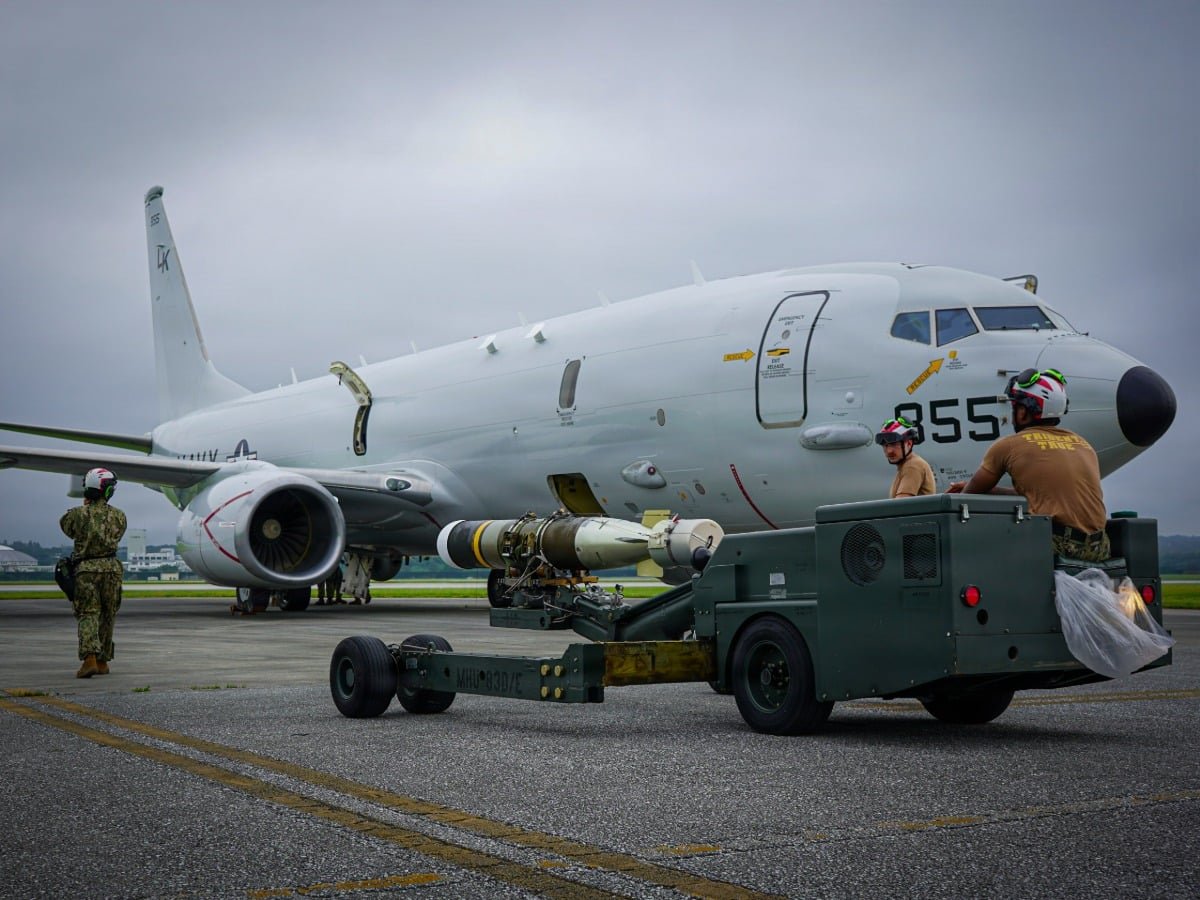
Here’s the basic idea: today’s torpedoes generally have to get fairly close to a submarine before they’re released. The Navy wants something that can be launched from much farther away, glide quietly toward the target area, and then finish the job like a traditional torpedo once it’s close. That would let pilots and drone operators stay farther from danger while still being able to hit a submarine.
The weapon is meant to work with regular U.S. military aircraft weapons systems, both hung on the outside of a plane or carried internally, so it would not require entirely new aircraft to use it.
The Navy laid out two different ways companies could approach the problem. One option is a complete system, designed from the moment it separates from the aircraft all the way down to hitting the target underwater. The other option is simpler: just the glide portion, a set of wings that would carry a torpedo the Navy already owns out to the target area, without any engine of its own.
Companies interested in the program have a tight timeline to work with. The Navy wants to see a working prototype within 18 months of any agreement being signed. If that goes well, it then wants roughly 180 prototype units built and delivered within three years after that.
To move quickly, the Navy said it may use a group called the Naval Air Systems Consortium to award agreements outside the normal, often slow, federal contracting process. That authority comes from a law, 10 U.S.C. 4022, that lets the Department of War fund early-stage prototype work without going through a full traditional contract competition.
Foreign companies can respond too, as long as they and any of their American partners follow U.S. arms export rules known as ITAR.
Companies have until September 29, 2026, to respond. PAE Munitions has not said how much money it expects the program to eventually cost, or when it might issue a formal request for actual proposals.
