

For more than 25 years, Thailand’s conservative establishment and opposition forces have been locked in a struggle for the soul of the country. Royalists want palace institutions insulated from public criticism, a military licensed to intervene in times of political crisis, deferential political parties and politicians, and free rein to clamp down on political actors who fail to toe the line. The opposition calls for a constitutional monarchy, a military that stays in the barracks, a competitive party system responsive to the people’s wishes, and predictable checks and balances that do not unduly punish elected politicians.
More often than not, the royalists have had the upper hand. They have mobilized protest movements, staged military coups, and banned opposition parties to prevent troublesome politicians from instituting changes that could limit their power and privileges. Yet every attempt to strike a decisive blow against the opposition has failed. Conservatives have not translated legal or extralegal victories into lasting governments. Opposition movements, meanwhile, have consistently reinvented themselves. Thaksin Shinawatra, the larger-than-life former policeman and telecom billionaire, built up enormous power as prime minister in the early 2000s, incurring the disdain of royalists. And even after a military coup removed Thaksin from the premiership in 2006, his parties remained electoral juggernauts. A yet more alarming challenge emerged on the horizon after a 2014 coup ousted Thaksin’s sister, Yingluck Shinawatra, from government: youth-based mass protests calling for reform of the monarchy in 2020 and progressive political parties who appealed to these younger voters.
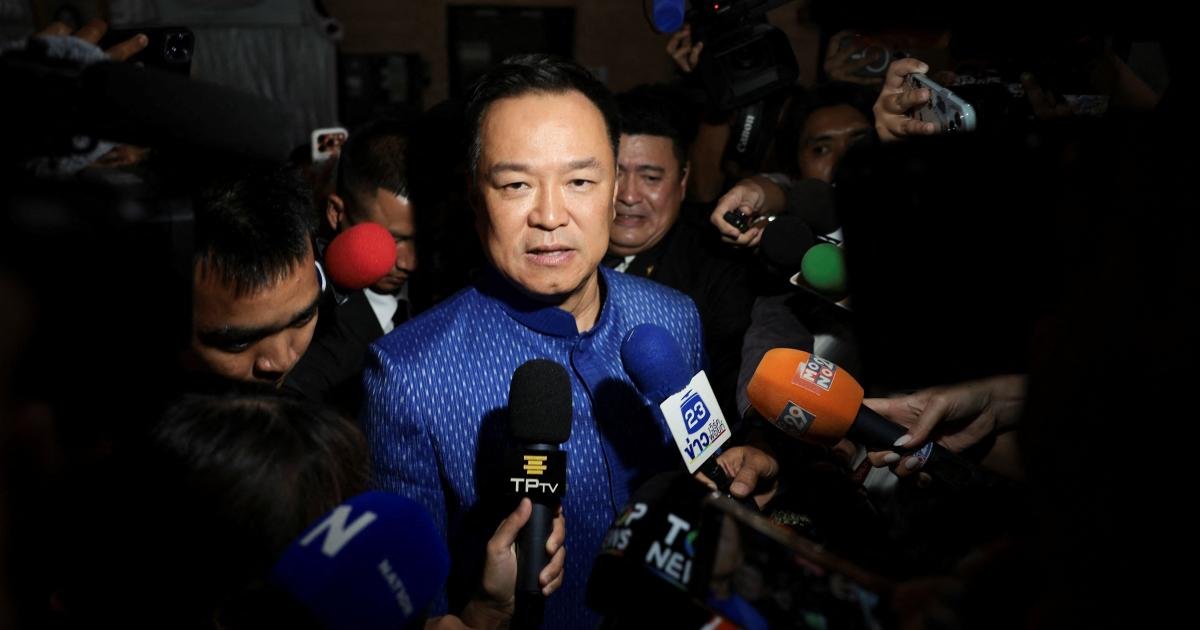
A stalemate had prevailed over Thai politics, with neither side able to overpower the other fully. That changed in February 2026, when Bhumjaithai, a low-profile party previously known primarily for campaigning to legalize cannabis, swept into power in national elections. With the implicit backing of the monarchy and the conservative establishment, Bhumjaithai has seized control of the Thai state, giving rise to a new mode of politics capable of both suppressing progressive forces in favour of cozy collaboration among elites and winning a general election without overt manipulation.
Far from an electoral anomaly, the rise of Bhumjaithai is the culmination of a long effort by conservatives to retake the levers of power. In fact, the formerly also-ran party’s February triumph was part of a methodical, behind-the-scenes campaign to commandeer the state’s nominally neutral apparatuses, including its Senate and Constitutional Court. The alliance between the monarchical network and Bhumjaithai is more a marriage of convenience than a shared ideological project, and it may not last indefinitely. But shallow as it may be, it has already succeeded in decisively strengthening the conservative position, disempowering the major rival parties that threaten elite control, and potentially remaking the Thai state for years to come.
RAINBOW COALITIONS
The origins of Thailand’s current political order date back to 1997, when a group of elite liberal royalists, claiming a mandate from civil society, introduced a landmark new charter. Often referred to as “the people’s constitution,” it was a reaction to a disastrous military coup in 1991 and its bloody aftermath, including the deadly suppression of unarmed protesters in May 1992. The reforms aimed to coup-proof the political system by introducing checks and balances to prevent elected politicians from abusing their power and facilitate a smooth royal succession. It established an electoral commission, a constitutional court, an anticorruption agency, and a human rights commission, as well as a fully elected, purportedly nonpartisan Senate.
The project backfired. It failed to stabilize Thai politics—probably an unrealistic goal to begin with—and the new parliamentary system allowed for the election of Thaksin as prime minister in 2001. A charismatic figure with populist authoritarian tendencies, he successfully mobilized lower-income voters in the heavily populated north and northeast regions of Thailand, melding them into an unbeatable electoral bloc. He used his considerable personal wealth, his party’s parliamentary dominance, and his bureaucratic connections to create a startlingly successful political machine. Thaksin bought off the Senate and the independent agencies, defanging them as neutral bodies, and installed loyalists in crucial posts intended to check the prime minister’s power.
The country’s traditional elites were deeply threatened by Thaksin’s ascendance. The so-called Yellow Shirt movement, which appropriated a royal color, sought to make Thailand ungovernable. Through mass street protests and the occupation of public spaces and buildings, it paralyzed opposition rule three times: in 2006, 2008, and in 2013-14. But for all its success in ousting opposition-led governments, the Yellow Shirt movement never solved a basic problem: conservatives could bring down an elected government, but they couldn’t win an election to replace it.
Conservatives were unable to tolerate ambitious, independent-minded administrations.
The 2006 and 2014 political crises initially followed a similar pattern. Street protests destabilized and delegitimized Shinawatra-led governments, and military coups then removed them. Each time, the establishment brought in the Royal Thai Army to reorganize politics, rewrite the constitution, and reconfigure the party system in its favor before holding fresh elections. But military force failed to bring about durable conservative rule. Coups were short-term fixes that gradually eroded the legitimacy of the establishment. The Thai public was only willing to tolerate short interludes of military rule, and coup makers had no choice but to promise the imminent restoration of democracy. Generals, however, were bad at politics. The public quickly tired of them, and voters soon welcomed back the same kinds of politicians that soldiers had kicked out. In the 2007 elections, the first called by the ruling junta after the 2006 coup, for instance, Thaksin’s party was voted back into power. The experience was imprinted on the minds of conservatives when they launched the 2014 coup; the new government postponed elections until 2019.
The inability of conservatives to break the opposition once and for all persuaded the establishment to try to cut deals with Thaksin’s Pheu Thai Party instead. A strategy of conciliation permitted the opposition to front a government so long as party leaders concentrated on managing the economy and did not challenge the special status of the monarchy. Pheu Thai, conservatives believed, could always be co-opted or browbeaten into a politics of benefit-sharing in which wealth and power were divided between a Pheu Thai figurehead and conservative power brokers. This was the deal behind Yingluck Shinawatra’s administration of 2011 to 2014, an arrangement that both conservatives and Thaksin supporters found unsatisfying and were reluctant to acknowledge.
But government by veto was inherently unstable. Eventually, the conservatives were unable to tolerate ambitious, independent-minded Pheu Thai administrations and brought them crashing down, as they did in the 2014 military coup. Where they did not want to use force, they turned to lawfare to limit the opposition’s power. Starting in 2019, a series of more progressive “orange” opposition parties proved wildly popular, especially among younger voters. After the orange Move Forward Party won the largest number of seats in Thailand’s National Assembly in the 2023 elections, the military-appointed Senate blocked its leader, Pita Limjaroenrat, from assuming the premiership. The following year, Move Forward was summarily dissolved—the fifth major opposition party to meet this fate—and the Constitutional Court banned Pita from political office for ten years.
By 2025, the establishment was running out of options to disempower the opposition. Challenged by both pro-Thaksin forces and progressive orange parties, its old methods—military coups, dodgy deals, party bans, the judicial removal of prime ministers—were wearing thin. Conservatives desperately needed an alliance with a reliably deferential party that could win elections.
HOLLOW PARTY
Enter Bhumjaithai, a previously medium-size party based in the northeastern province of Buriram. The product of a breakaway by a faction of MPs and former ministers from Thaksin’s party in 2008, Bhumjaithai had for the first 17 years of its existence no popular politicians among its ranks, no clear economic policies, and no national following.
Yet under the guidance of the shadowy Newin Chidchob, Bhumjaithai has gradually become a force in Thai politics and a crucial ally of the monarchy and its sympathizers. Known euphemistically by the party faithful as “the school principal,” Newin served as a junior minister under Thaksin and in other governments but stepped back from frontline politics two decades ago, ostensibly to concentrate on building up his Buriram United soccer team. He neither grants interviews nor appears in public but exercises tight control over Bhumjaithai’s strategy and personnel. Current Prime Minister Anutin Charnvirakul, a U.S.-trained engineer and former deputy minister whose family owns the massive Sino-Thai Engineering and Construction company, has served as the party’s leader and public face since 2012.
What Newin and Anutin lack in ideological vision, they have made up for in strategic cunning, accumulating power wherever possible and making themselves useful to the monarchical network. Correctly diagnosing the establishment’s desperate need for a reliable political party with which to collaborate, they set out to distinguish their party from other conservative contenders, which were typically packed with reliable but often-underperforming former bureaucrats. To do so, Newin and Anutin transformed Bhumjaithai into a major vehicle for influential provincial business interests.
Control of the key ministries was a crucial first step in the project to capture state power. As a precondition to joining coalition governments as a junior partner, Bhumjaithai demanded ministerial positions that would help it secure stronger local networks. In 2019, Anutin became minister of public health and subsequently boosted the pay of over one million health volunteers in villages across the country. Anutin’s support turned many of them into canvassers for Bhumjaithai—an electoral masterstroke, given that Thai elections are often won and lost in these provincial areas, where vote-canvasser networks are all-important. Then, in 2023, Bhumjaithai secured control of the powerful Ministry of Interior, which oversees local governance in Thailand, including more than 70,000 village headmen. In the right hands, the Interior Ministry can be a formidable patronage machine, exerting authority over everything from local budgets to Senate elections. The party then combined the health and headmen networks to penetrate every community in Thailand. Today, Anutin still holds the post of interior minister, in addition to his position as prime minister.
Other behind-closed-doors moves solidified Bhumjaithai’s power. For most Thai citizens, the selection of 200 new senators in 2024 through an arcane and untested self-nomination system barely registered, creating ample opportunity for manipulation. Candidates linked to Bhumjaithai gamed the system and secured around two-thirds of the supposedly neutral upper chamber—a majority that has allowed conservative forces to quietly block independent-minded candidates for the Constitutional Court, the Election Commission, and the Anticorruption Commission and to exercise veto power over any future changes to the constitution.
Missteps by the opposition also smoothed the path for the party’s ultimate takeover of the state. When the Bhumjaithai-controlled Constitutional Court removed Thaksin’s daughter, Paetongtarn Shinawatra, as prime minister in August 2025, the orange party—now known as the People’s Party—voted for Anutin, rather than another Pheu Thai member, to replace her. People’s Party leaders naively believed a Bhumjaithai government would be in office for only a brief period and that after winning an early election, progressive forces could push to amend the constitution and reduce the entrenched power of the elite. This was a disastrous miscalculation. In the February election, Bhumjaithai shocked most observers by decisively topping the polls, winning 192 seats to the People’s Party’s 120 seats. With Bhumjaithai in control of both the internal levers of power and parliament, the prospects for progressive constitutional reform evaporated.
SAME AS IT EVER WAS?
By neutralizing the Pheu Thai and the People’s Party, Bhumjaithai has made itself the most successful conservative party in modern Thai history. Far from transforming the country’s politics, however, this dominance has ground it to a halt. The incarnation of transactional conservatism, Bhumjaithai now controls every major mechanism of the state. But whereas in the past the various royalist and opposition factions jockeying for influence each stood for something tangible, the party is a cipher, favored by many conservatives, yet largely devoid of ideological or policy content or an organic base of support.
Today, a country known for mobilizing millions of people around big ideas, both during hotly contested elections and through massive extraparliamentary movements, is led by a party with no apparent ideas at all. The political reform project that began in the 1990s has run its course. So, too, have Thaksin’s project to empower the disadvantaged, the military’s nationalist project to restore order and defend the monarchy, and the progressive project to transform Thailand into a more open and equal place.
At the same time, Bhumjaithai’s vacuous opportunism reflects a new form of realpolitik that appears much more durable than previous iterations. Royalists have grudgingly rallied around the party because they have nowhere else to go. Thaksin, recently chastened by an eight-month prison term, has gone quiet. Progressives criticize and deconstruct what they decry as the “blue regime” (after the color of Bhumjaithai’s logo) but struggle to articulate a realistic strategy to challenge it. Despite the contradictions that underpin Anutin’s government, it has shown no sign of imminent collapse.
This hollow dominance has yielded a strange impasse. For the last six months, Anutin’s administration has mostly treaded water, postponing major initiatives. That impasse may not hold as younger generations become a force in Thai politics. Indeed, conservatives’ grip on power remains deeply contested and contingent. A united opposition that puts aside the long-standing differences between pro-Thaksin and progressive forces could in theory topple Bhumjaithai at the ballot box. A return to Move Forward’s winning slogan in 2023—a Thailand that is “not the same as before,” code for the dismantling of gerontocracy and unearned privilege across the country’s creaking structures and institutions—could serve as the basis for an alternative administration. But even if an anti—Bhumjaithai coalition were to take back power, it would struggle to unwind the party’s control of Thailand’s political institutions. However long Bhumjaithai’s present tenure in Bangkok lasts, that takeover of the levers of state power will be its enduring legacy.
Loading…
