

Vital infrastructure at Minot Air Force Base, N.D., and Andersen Air Force Base, Guam, is suffering due to years of deferred maintenance and climate-related stressors, government auditors said in a new report.
The Government Accountability Office said in the report released Aug. 21 the Defense Department had more than 736,000 facilities worldwide in fiscal 2025, and about one-third of those buildings are more than 50 years old.
With its budget limited, the Pentagon aims to fund 90 percent of its maintenance needs annually. But GAO found that the military actually only hits 80 percent funding, and requested almost $20 billion in 2025 for sustainment, restoration and modernization of facilities. That deferred maintenance has in many cases led to damage, corrosion and mold at facilities that house troops, dining halls, runways and maintenance depots.
As a result, the military’s maintenance backlog has grown considerably. In fiscal 2020, GAO said, the department had a backlog of $137 billion in deferred maintenance costs. Five years later, that had more than doubled to an estimated $285 billion, which GAO called “a significant and growing risk to the department’s ability to support its missions.”
The Air Force needed $5.6 billion in funding under the Pentagon’s facilities sustainment model in 2025, GAO said, but only got $4.3 billion, or 77 percent of the needed amount.
At Minot and Andersen, the situation was even worse. Andersen needed $122 million in facilities sustainment funding in 2025, but received $34.7 million, or 28 percent of the needed amount. When fiscal 2023 through 2025 were averaged together, Andersen’s funding levels equated to 37 percent of the needed amount.
Minot averaged 40 percent funding for sustainmentbetween fiscal 2021 and 2025, GAO said. In 2025, the report said that Minot needed $75 million, but received $23.5 million, or 31 percent.
GAO said the Air Force, as well as the Marine Corps, had not measured unfunded military construction and facility repair needs. But service officials told GAO they had “substantial unfunded needs” as of May 2025. Army officials identified about $140 billion in construction and repair projects that hadn’t been funded, and the Navy identified $70 billion in construction requirements and another $37 billion in needed repairs, also unfunded.
These deferred repairs negatively affect both service members’ quality of life as well as installations’ ability to accomplish their missions, GAO said, and highlighted problems with some Air Force infrastructure.
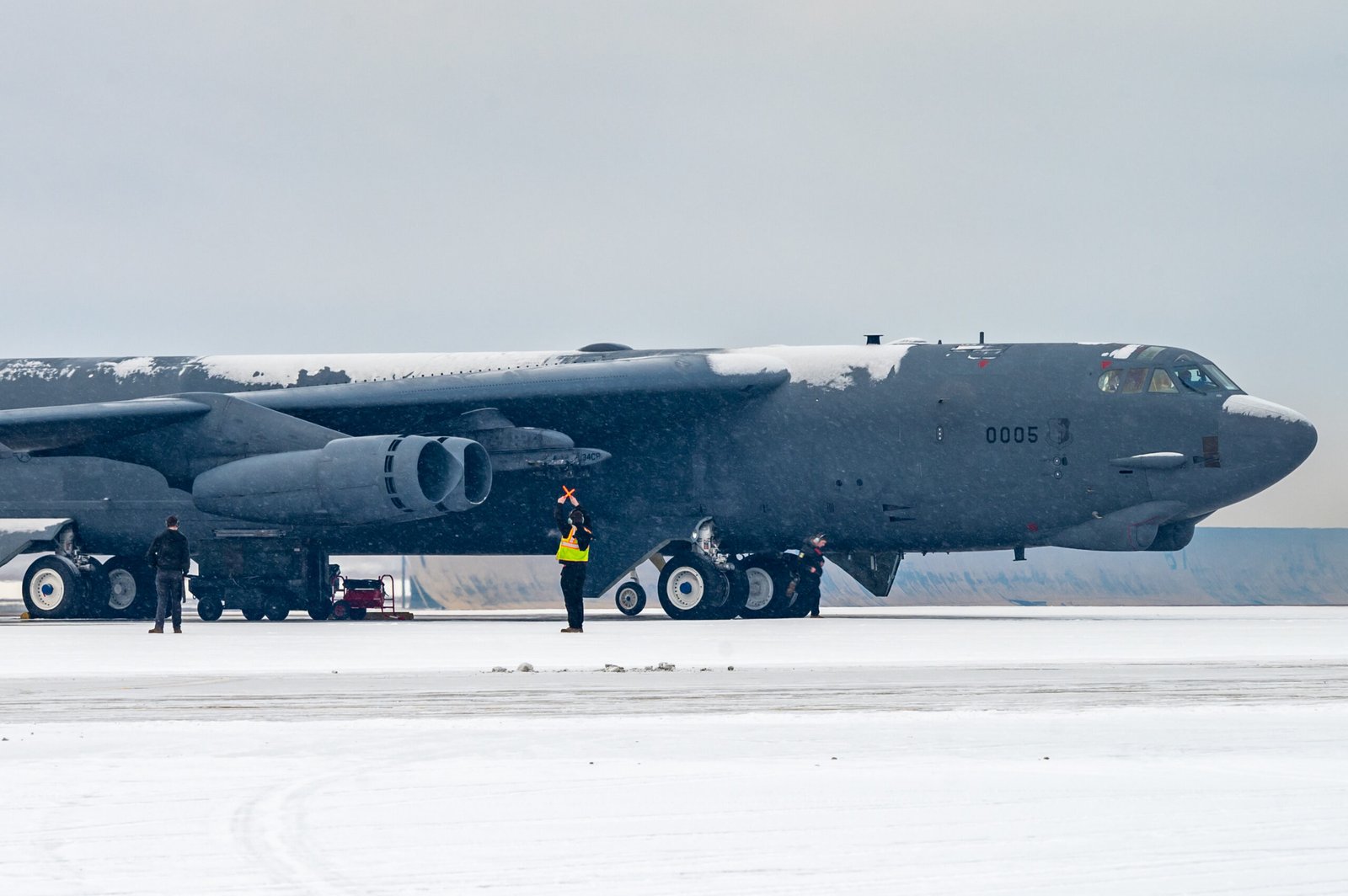
Minot officials told GAO the base’s B-52 parking area is now more than 30 years past its expected life span, and a project to replace its old pavement is overdue. Air Force leaders told Minot officials to repair the parking area in phases, the report said, and the base put together a plan to do so.
However, the B-52 parking repair project has had to compete with other maintenance needs, GAO said, and as of September 2024 Minot had only replaced about one-third of the parking area. The base has had to conduct multiple smaller repairs to maintain the old pavement, GAO said, which officials said is less cost-efficient than doing the complete overhaul and cost about $3.5 million.
Pictures included in GAO’s report show the Minot B-52 parking area visibly cracked and crumbling, with large patches completely bare of asphalt. The pictures were taken in 2018, 2022 and 2024, showing this issue has persisted for years.
At Andersen, construction of a hangar for repainting low-observable coating is years behind schedule, GAO said. This forces the base to maintain older hangars to house those aircraft and routinely fly them to other locations for repainting, which increases operations costs and reduces their mission availability.
Many DOD facilities are rapidly aging and have been in use well beyond their intended lifespan, GAO said. Auditors reported visiting a 1960s-era building at Minot where lights and elevators were out of service, and the structure was showing visible age-related decay. A photograph in the report showed water that had leaked into the building’s foundation, which led to structural concerns.
The Air Force plans to demolish that Minot building because of those problems, the report said, and scaled back its maintenance in preparation for the demolition. But the building provides necessary services to Airmen and veterans and has needed workspace, which keeps the building in high demand, GAO said.
Extreme weather and climate can worsen some bases’ repair needs, GAO said. Severe cold and freezing temperatures—for which Minot is infamously known—and heat can strain HVAC systems.
Minot officials told GAO that broken furnaces lead to pipes freezing and then bursting, and that snow melting on leaking roofs often leads to water damage. Freezing temperatures can also exacerbate cracks in pavement, such as on the B-52 parking areas.
And at coastal and island bases such as Andersen, the salt air rapidly corrodes building systems, pipes and other equipment like HVAC units, base officials told GAO. The heat and humidity can also lead to mold and mildew that is difficult to root out. GAO included a photograph of an HVAC condenser unit with visible rust.
Extreme weather such as coastal storms can also worsen bases’ infrastructure repair needs. Officials from Andersen and Naval Base Guam told GAO that Typhoon Mawar in 2023 extensively damaged their facilities, some of which has not yet been repaired.
GAO made multiple recommendations to the Pentagon, including to fully determine the risks to missions and quality of life from underfunding facility sustainment and repair backlogs, set a strategy to fix maintenance workforce shortages, and reevaluate standards and processes for facility maintenance at installations.
The Pentagon said its existing sustainment plans already help determine risks from underfunding and lagging repairs, and planned software improvements will improve those assessments. GAO said those efforts need to be paired with department-level studies of the effect of sustainment backlogs.
But the Pentagon disagreed with a GAO recommendation to strengthen oversight of installation maintenance programs, saying that it already provides maintenance standards, and that it does not have the workforce to handle this additional work. Without a department-level policy to oversee installation maintenance performance, GAO said, there is limited understanding of how well maintenance is performed across installations.
The Pentagon’s Inspector General earlier in August also released its own report raising alarms about mold, corrosion and other poor conditions at military bases in the Pacific region, including Air Force bases such as Kadena and Yokota in Japan.
