

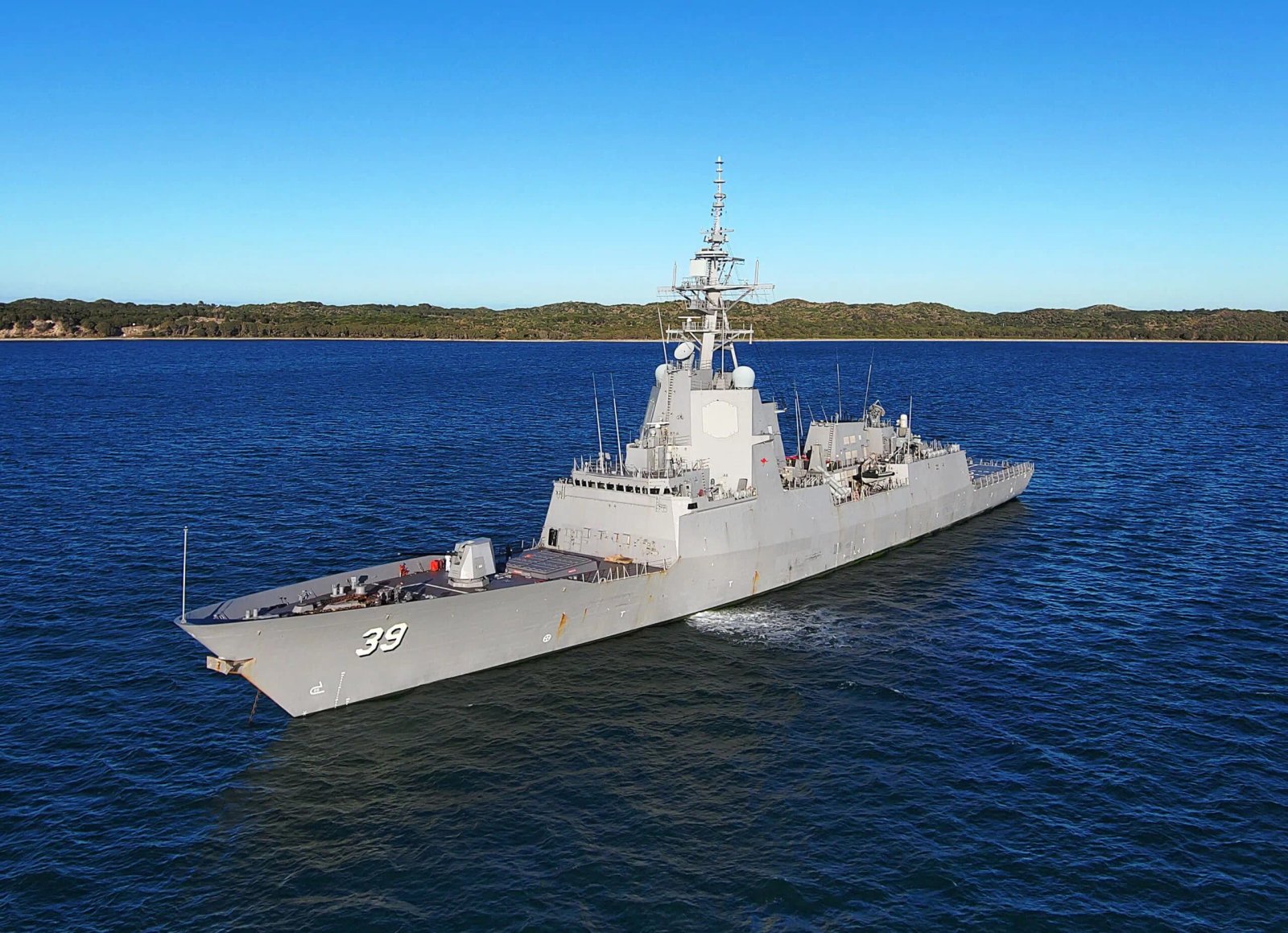
Australia undocked HMAS Hobart on 20 August 2026, marking the completion of the yard phase of the Destroyer Capability Enhancement (DCE) programme that began in February 2026.
Hobart is the first of three air warfare destroyers to undergo upgrades to their combat management systems and Aegis capabilities under this Sea 4000 Phase 6 effort. Work is being conducted by BAE Systems Australia at the Osborne Naval Shipyard in South Australia.
A key element of the programme is the Combat Systems Integration – Integrated Project Team (CSI-IPT), comprising BAE Systems Australia, Saab Australia and Lockheed Martin Australia.
This team is upgrading the ships’ Aegis combat system from Baseline 8 to Baseline 9.
The upgrade will provide the Royal Australian Navy (RAN) with enhanced integrated air and missile defence capabilities, while enabling the integration of additional weapons through commercially available interfaces, including SM-6 surface-to-air missiles and Kongsberg’s Naval Strike Missile.
Work on Hobart also involved completely dismantling the combat information centre before installing Saab Australia’s new Australian Interface.
The system will also support integration with the Tomahawk weapon system. Sister ship HMAS Brisbane became the first RAN vessel to fire a Tomahawk cruise missile in December 2024.
The Aegis Baseline 9 combat management system and Saab interface are also planned for the Hunter-class frigates currently under construction at Osborne and the Henderson shipyard in Western Australia. Unlike the Hobart class, the Hunter class will use CEA Technologies’ domestically developed CEAFAR 2 phased-array radar.
As of 12 August, BAE Systems Australia had completed the prototyping phase of the Hunter-class programme. This phase covered five ship blocks and included development of major components such as the redesigned mast and accommodation spaces.
The keel of the future HMAS Hunter is due to be officially laid on 24 August.
by Chen Chuanren
