

News
August 20, 2026

WASHINGTON, D.C. The Department of the Navy is working to establish a clearer set of minimum expectations for how acquisition programs implement a modular open systems approach (MOSA), with the goal of making open architectures a more consistent part of how the service develops and upgrades systems, a Navy official said during the Military Embedded Systems MOSA Summer Virtual Summit on Aug. 19.
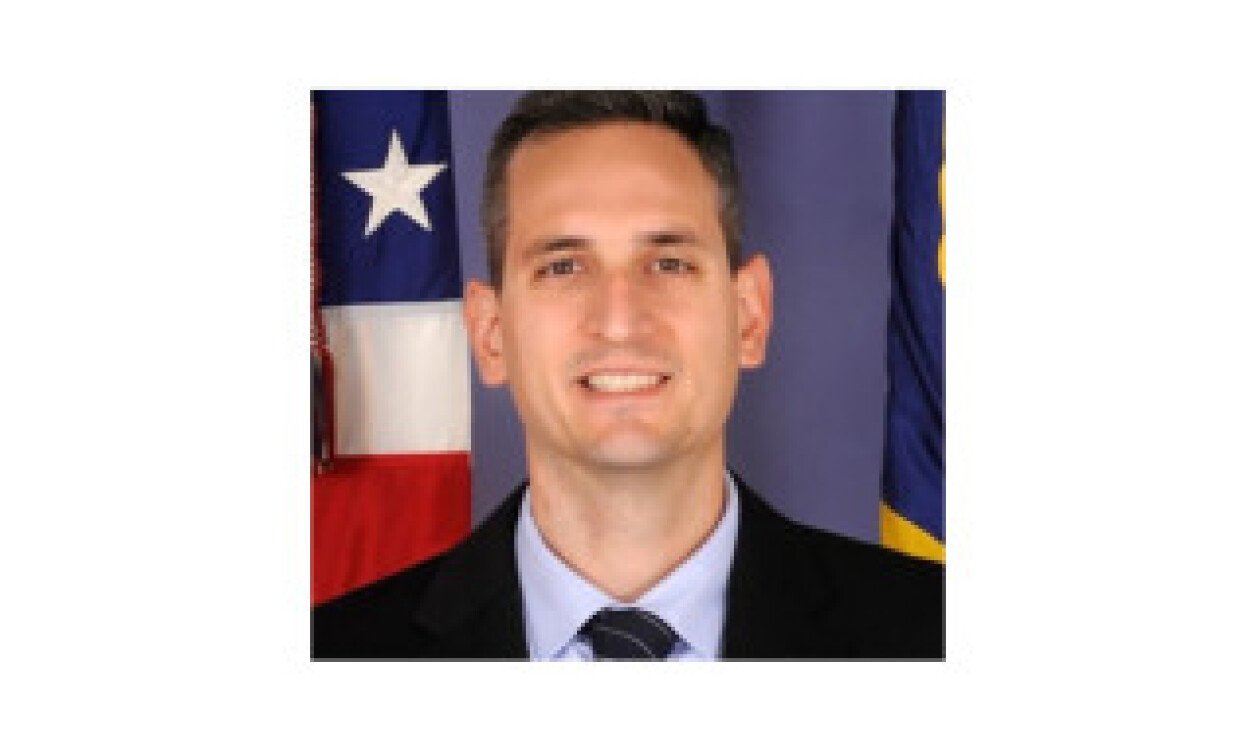
MOSA has become central to efforts to shorten acquisition and technology-insertion timelines, said Jason Thomas, director of systems engineering for the Department of the Navy in the Office of the Assistant Secretary of the Navy for Research, Development, and Acquisition.
“MOSA not only enables fast acquisition and deployment, but it really is the primary means to do so,” Thomas said. The Navy is developing an expectation memo aimed at helping programs understand baseline requirements, including “defining modules, interfaces, IP and data rights” while still allowing individual programs to apply MOSA based on their operational and technical requirements.
Thomas said the department is also looking beyond MOSA implementation at the individual program level toward reuse of architectures and technologies across broader acquisition portfolios. Government reference architectures (GRAs), for example, are being applied in programs beyond those for which they were originally developed, he said.
“We’re actually seeing a lot of really great innovative work in this space of things that, you know, GRAs that may have been used for certain applications are being reused in totally different applications, and it is definitely accelerating program delivery and/or development and delivery,” Thomas said. He added that the Navy is examining how artificial intelligence, shared repositories, and other tools could enable government and industry to reuse information and capabilities across programs.
The service is already seeing changes in how industry approaches MOSA, Thomas said. Contractors are increasingly asking detailed questions about interfaces, intellectual property, data rights, and architectures rather than questioning whether the government intends to follow through on MOSA requirements.
“I’m seeing industry come to the table more with more module-level solutions,” he said. That approach can enable companies that may not compete for an entire system to offer technology at the subsystem or module level, Thomas said.
“If we design our systems with open architectures, open interfaces, and those standards, and we have the IP and data rights and everything else, I can plug and play much quicker,” he said. “We’re seeing things be implemented much faster — really from hours, days, and weeks, really no kidding at that level on certain programs through the adoption of MOSA.”
Thomas also cautioned against treating MOSA as simply a software architecture, a particular standard, or a government reference architecture. Hardware and software dependencies must be considered together, as must the business and technical sides of acquisition, he said.
“I’ve seen MOSA is only about software architecture,” Thomas said. “There are clear dependencies between software and hardware performance for a system, so it really has to be both of those parts together.” He also said that simply adopting a standard or GRA does not necessarily mean a program has implemented MOSA effectively if it does not understand why that architecture is being used or how it connects to acquisition and technical objectives.
For industry, Thomas said one of the most useful steps is to push programs for specifics when solicitations contain broad MOSA requirements.
“If you see an RFP or a statement of work or something that says ‘shall be MOSA,’ you’re like, okay, well, I think I know what that means, but maybe it’s what the program needs, or what. Ask more questions of that program,” he said.
“Help us understand where your pain points are, where your interest areas are, specifics that affect you, because it may not only affect you, it may affect the broader ecosystem or your domain in certain areas,” Thomas said.
