

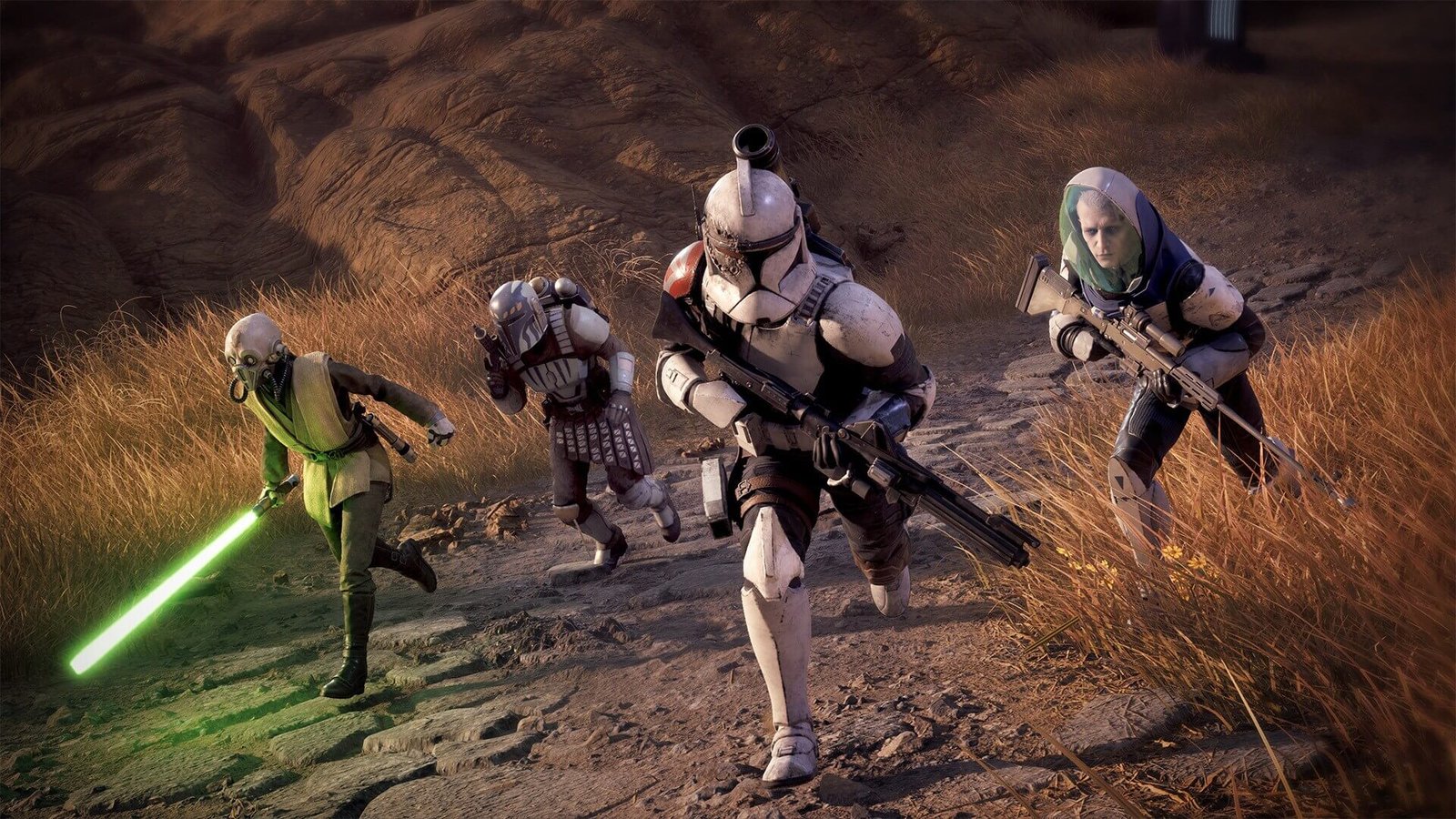
Is it a stretch to call Star Wars: Zero Company the biggest turn-based release of the year? I do not think so. The game not only carries the expectations of the entire Star Wars community, but also, and perhaps even more importantly for this particular audience, those of XCOM fans still waiting for a new tactical benchmark after the XCOM 3 that never was.
With that said, and trying to remain as humble and composed as possible, I was fortunate enough to receive a preview key from Electronic Arts and the team at Bit Reactor, the development studio headed by Greg Foertsch, former Art Director at Firaxis.
The preview build was obviously not representative of the final version arriving on August 27, 2026, but it still offered a clear idea of what the studio is building. Access to the build lasted around three days, and with the limited time I had available, I managed to play for approximately six hours.
That is not a huge amount of time for a massive game like this, but it is not insignificant either. It was certainly enough for me to gather some information about the game’s structure, which combines a tactical combat system with a strategic layer centered around the Den, the headquarters where the game’s main character can speak with the other members of the company, purchase equipment, develop new facilities, and choose which Operations and Tactical Missions to pursue.
In this preview, hands-on, or whatever you prefer to call it, I will provide a general overview of all these elements. I will do so in the informative way I usually prefer, while also sharing some impressions from the perspective of someone who loves XCOM more than he loves Star Wars.
I imagine the main thing you want to know is whether Star Wars: Zero Company is actually good. I will not beat around the bush: yes, it is. Very much so.
An original story set at the very end of the Clone Wars
Let us begin with the story and where it fits within the wider Star Wars timeline. The events of Zero Company take place toward the end of the Clone Wars, close to those depicted in Revenge of the Sith, while introducing a new cast of characters led by Hawks.
Hawks is a former Republic officer who commands a mercenary-like group of specialists drawn into a shadow war against an emerging threat that conventional armies are not equipped to handle. Along the way, the company brings together characters who would not normally fight side by side, including clones, Jedi, droids, mercenaries, and other operatives with conflicting loyalties.
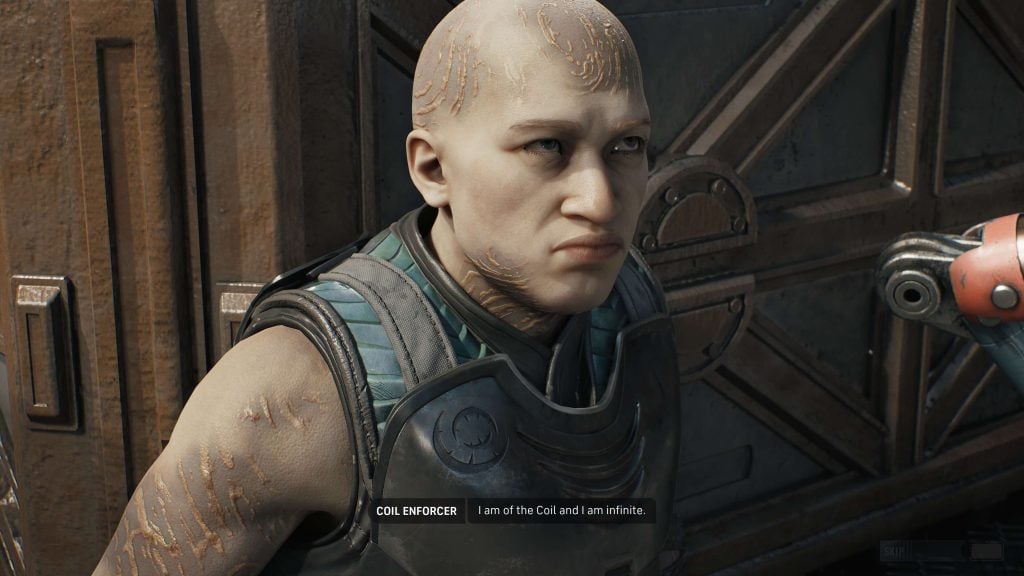
Their enemy is the Infinite Coil, a mysterious Separatist-aligned paramilitary cult operating behind the larger conflict of the Clone Wars.
The game’s story unfolds through cinematic sequences shown between missions, particularly as we progress through the main storyline. A great deal of work appears to have gone into giving Hawks and the supporting cast strong personalities while preserving the narrative style of the movies, including the music and the transitions between scenes.
Die-hard Star Wars fans should therefore find plenty to enjoy. But what about everyone who is primarily here because of the XCOM comparisons? Let us see what the combat system has to offer them.
The Combat System
The combat system includes everything you would expect from an XCOM-like. There is full and half cover, elevation advantages, percentage-based hit chances, three Action Points to spend on movement, attacks, or abilities, and, of course, Overwatch.
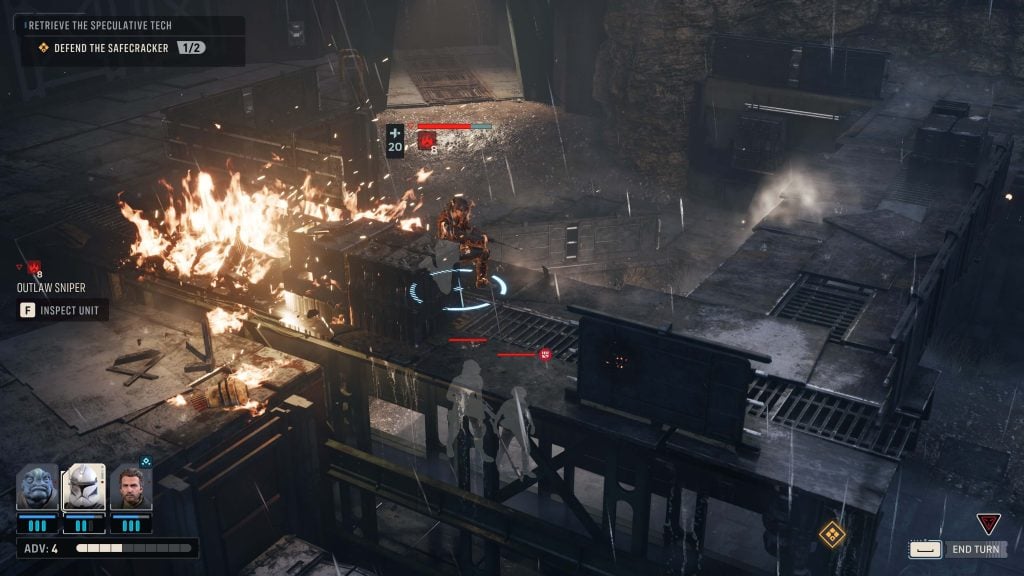
All of these elements are present and extremely well implemented. The clean and intuitive interface provides all the information needed to make informed tactical decisions. When selecting a destination for one of your operatives, for example, the game immediately shows the chance of hitting each available target from that position.
You can also see a complete breakdown of every modifier affecting a shot. These can include bonuses or penalties granted by abilities, the difference in elevation between the attacker and the target, the enemy’s cover, and other factors.
The camera can be freely rotated and moved around the battlefield, while destructible environments allow you to blow up enemy cover or flank opponents to improve both your hit chance and your probability of landing a critical attack.
I consider all of these features essential to a solid tactical combat system. Implementing them properly should never be taken for granted, but Star Wars: Zero Company handles them very well.

And I almost forgot: yes, it is possible to reach a 100% chance to hit an enemy.
One of the combat system’s most distinctive mechanics is the ability to coordinate an attack with another squad member called Call for Backup. During each round, one character can ask an ally to help attack a particular enemy. This causes the selected ally to strike immediately after the character who initiated the action, effectively creating an assist attack.
Using this mechanic also increases the Bond between the characters involved. As that relationship grows, their trust and efficiency in battle can improve in several ways that I will explain later.
Another distinctive feature is the Advantage system. Every successful hit contributes to an Advantage meter, which can then be spent by characters to activate specific abilities without consuming Action Points. One class, for example, can use heavy fire to blow up multiple enemies at once. Another can spend part of the available Advantage to grant a teammate an additional Action Point. These are only a couple of the possibilities available.

Another element worth discussing is how the game handles characters who are taken down by an enemy. When an operative loses all their health, they are downed rather than immediately killed. Another squad member can revive them and return them to the fight, but the injured character will suffer a lasting wound.
If that operative suffers two additional injuries, they will be permanently lost and can no longer be deployed in battle. This is where the Medical Bay inside the Den becomes important, as its available slots can be used to let wounded characters rest and recover from their injuries.
The missions I played during this brief hands-on session included several different objective types. Some simply asked me to eliminate every enemy, while others involved planting explosive charges and then reaching an extraction zone with every operative deployed on the battlefield. Another mission required me to escort a key character to safety while dealing not only with the enemies already on the map, but also with reinforcements arriving turn after turn.

The combat system therefore receives top marks from me. The maps are visually appealing and fairly elaborate, with plenty of elevation changes and cover positions that can be used to create effective strategies and overwhelm the enemy.
Playing on Normal difficulty, I did not encounter any major problems completing the missions available in the preview. However, several systems can make the campaign increasingly difficult as it progresses, as we will see later.
The Den – Company Headquarters
Before talking about characters and classes and their progression systems, let us examine how the Den works. The Den is the company’s headquarters and the location we return to after every tactical mission to manage our operatives and prepare for whatever comes next.

Every tactical mission advances time, which is measured in Cycles. These Cycles must be considered when evaluating the availability of new assignments. Postponing a mission for too long may cause it to disappear, while facility upgrades may require a specific number of Cycles to complete.
After each tactical mission, we take direct control of Hawks and explore the Den from a third-person perspective.
Here, Hawks can speak with the other members of the company. These conversations can sometimes unlock new missions connected to specific characters. He can also visit the shops or access the sections dedicated to the cosmetic customization of both himself and the other operatives.
This part of the game will inevitably remind you of Marvel’s Midnight Suns, because the general structure is fundamentally very similar. In my opinion, this choice was made to give Zero Company a stronger story-driven identity rather than presenting it as a more traditional strategy-management game like XCOM.

That does not mean the management side is superficial. You will still need to unlock and develop new facilities, research upgrades, recruit additional operatives, manage their equipment, send injured characters to the Medical Bay, and plan Operations and Tactical Missions around the Holotable.
For those who eventually become tired of walking around, even in a virtual environment, Bit Reactor has also included a fast-travel system. The Den’s general map lets you move instantly between its different facilities.
Characters, Classes, and Progression
Much like XCOM, Star Wars: Zero Company uses a class-based system. Each class can be developed by spending Focus Points within its own skill tree. Focus Points are earned by participating in tactical missions and by strengthening the personal relationships between characters.

I had the opportunity to test four of the eight available classes. Even within that limited selection, I found an excellent level of variety and plenty of potential synergy between their different skills.
Relationships between characters do more than provide additional Focus Points. Reaching certain Bond levels also unlocks dedicated training sessions called Cross Train that the characters involved can undertake together.

Each training session presents three potential permanent bonuses, and the player can choose one. These may include increased damage for assist attacks, additional Focus Points to spend on skills, more maximum health, and other permanent improvements.
Every character and class is primarily proficient with a particular weapon type, although weapons can still be changed whenever needed. Weapons can be fitted with modifications that improve their effectiveness. Characters can also equip Utilities, which provide additional tactical options during battle. These include familiar items such as grenades, medkits, and other useful accessories.

Utilities and weapon modifications can be earned as rewards from Operations and Tactical Missions. They can also be purchased after unlocking the Black Market, which presents a new selection of equipment at the beginning of every Cycle.
The Holotable
Once we have finished exploring the Den, spoken with the other characters, and decided which new facilities and upgrades to invest in, it is time to gather around the Holotable and plan the company’s next moves.

The Holotable displays the galaxy along with all the Operations and Tactical Missions currently available. Operations are shorter, text-based assignments that can provide equipment, credits, and other rewards. They may also open the way to new Tactical Missions.
Starting an Operation requires Intel Points and often involves sending one or more team members into the field. Depending on the mission’s difficulty and the decisions made during it, those operatives may return with injuries.
Operation rewards can also include Influence Points. Increasing your Influence improves the company’s standing within a particular sector and eventually unlocks particularly valuable items and resources.

Every Operation and Tactical Mission has a deadline represented by the Cycle system mentioned earlier. Planning is therefore essential, especially when trying to complete as many assignments as possible before they expire.
After finishing the desired Operations, it is time to select a Tactical Mission. These missions launch a full tactical battle and directly advance the current Cycle. Every Tactical Mission displays the maximum number of operatives who can be deployed, its difficulty level, and the rewards that will be received after successfully completing it.
Anyway, during the holotable planning phase, two particularly interesting elements can happen. The first is the Dilemma system. During these situations, Hawks must make critical decisions that affect not only the rewards the company receives, but also his relationships with the other members of the team. Certain characters may agree or disagree with a particular decision, causing the Bond between them and Hawks to increase or decrease accordingly.

Another welcome feature, and one that also raises the level of challenge, is the inclusion of Critical Operations. If one of these Operations is completely ignored and reaches its deadline, the enemy faction receives new upgrades for its units. Even when you decide to deal with a Critical Operation, however, you can only prevent one of two potential advantages from being granted to the enemy. Does that remind you of anything?
In any case, it is a mechanic that adds dynamism, pressure, and an additional layer of depth to the strategic decisions made throughout the campaign. I am very happy to see it included.
Release Date And Platforms
With that, I think I have provided a fairly clear picture of the game’s overall structure. There is still a huge amount left to discover, especially considering that this preview is based on only around six hours of gameplay.

Star Wars: Zero Company will launch on August 27, 2026, for PC via Steam, Xbox, and PlayStation 5. Based on what I have played so far, it appears to have all the elements needed to become an excellent strategy RPG, and perhaps one capable of distracting us, at least temporarily, from our desire for XCOM 3.
You can also find a video version of this preview on our YouTube channel, where I included several gameplay sequences recorded during my playthrough. Wish you the best. Ciao
