

Key Points
- Mistral Inc. and Uvision received an additional order worth more than $50 million for HERO 120 loitering munitions under the Army’s LUS program.
- The order came one day after HERO 120 systems successfully completed their first Lot Acceptance Tests on Aug. 4, 2026.
The U.S. Army has put more money behind a flying bomb that can circle over a battlefield for an hour, watch its target the entire time, and abort the strike mid-flight if something looks wrong, one day after the weapon proved it could pass every test the Army threw at it.
Mistral Inc. and Uvision announced they received an additional order worth more than $50 million under the Army’s Lethal Unmanned Systems program, a deal that will increase the number of HERO 120 loitering munition systems and supporting equipment delivered to American soldiers. A loitering munition, sometimes called a suicide drone, differs from a conventional missile in that it flies to a general target area and hovers there gathering intelligence before an operator commits it to a final strike, giving troops a way to confirm they are hitting the right target rather than firing blind at coordinates that might have changed by the time the weapon arrives.
The order falls under a broader Army effort called the Capability Portfolio Executive Mission Autonomy, specifically its Precision Strike Reconnaissance Systems portfolio, an organizational structure the service uses to manage how it develops, buys, and fields autonomous and unmanned weapons across multiple programs at once rather than treating each system as an isolated procurement. This particular expansion builds directly on a much larger foundation, since the Army awarded Mistral and Uvision a $982 million multi-year contract back in October 2025 specifically to procure, field, train, and sustain the HERO 120 across the Lethal Unmanned Systems program, with Mistral serving as the prime contractor responsible for system integration and program management while Uvision, the weapon’s original designer, handles the lethality package and technical development. The new $50 million-plus order represents an additional delivery under that existing umbrella agreement rather than a separate standalone contract, expanding how many systems and how much support equipment actually reach soldiers in the field.
– ADVERTISEMENT – CONTINUE READING BELOW –
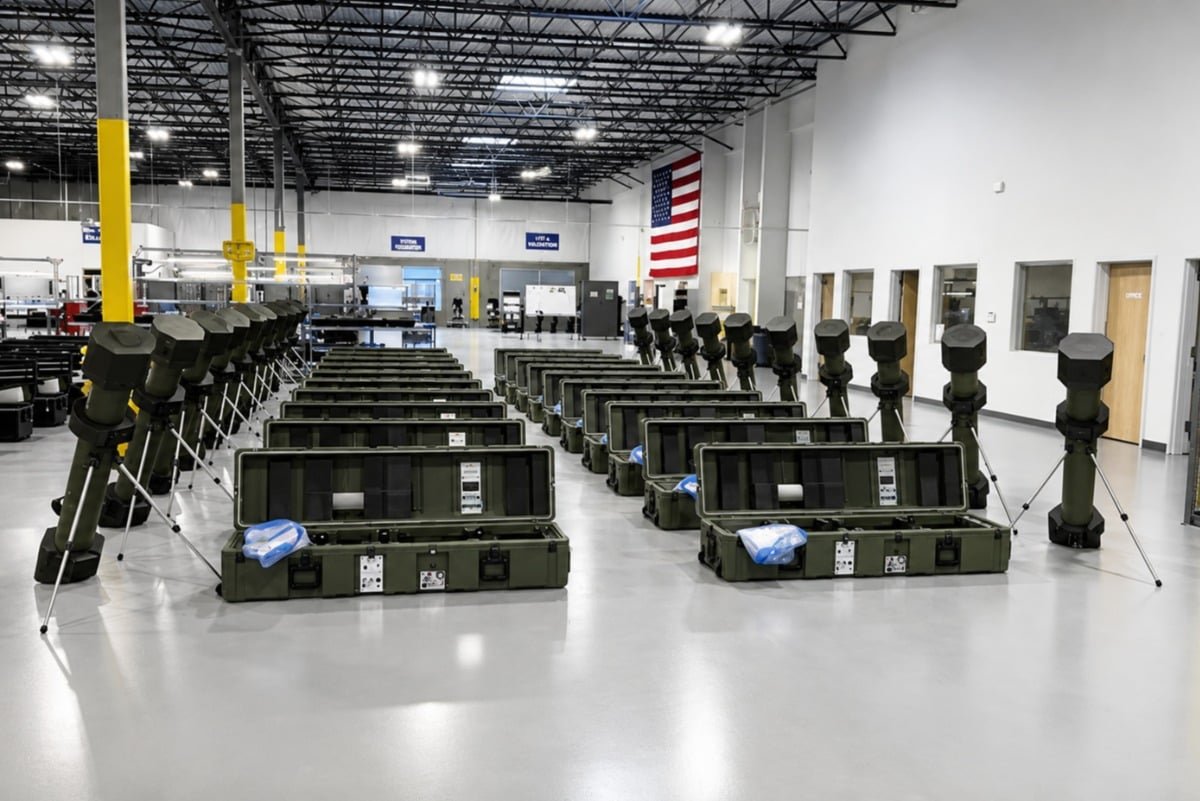
Just one day before announcing this expanded order, Mistral and Uvision confirmed that HERO 120 systems had successfully completed their first Lot Acceptance Tests, a formal quality-control milestone in which a sample batch of newly manufactured weapons undergoes required test missions to confirm the production line is turning out systems that actually meet the Army’s performance standards before the government commits to buying more. Passing that test cleared a meaningful hurdle standing between manufacturing capacity and an expanded government order, and the sequence suggests the Army moved quickly once it had that confirmation in hand, layering a substantial new delivery order on top of the existing IDIQ contract within roughly 24 hours of the testing milestone becoming public.
Yoav Banai, senior vice president at Mistral, framed the new order as a direct benefit to the soldiers who will eventually carry and operate the weapon.
“This is an important step forward for Mistral Inc., UVision, and the U.S. Army’s LUS program,” Banai said. “This award increases the number of HERO 120 systems and ancillary equipment available to our Soldiers, allowing them to train, build confidence, and prepare for mission success. Mistral Inc. and Uvision are proud to continue supporting the Army and remain committed to providing warfighters with the tools they need to win the fight.”
The HERO 120 itself is built around a specific tactical niche within loitering munitions, sitting in the middle of a broader HERO family that ranges from the roughly 3-kilogram (6.6-pound), man-portable HERO 30 designed for close-in anti-personnel strikes up to the much larger HERO 1250, which weighs 125 kilograms (275 pounds) and can strike targets 200 kilometers (124 miles) away. The HERO 120 weighs approximately 24 kilograms (53 pounds), carries a 4.5-kilogram (9.9-pound) warhead, and can operate up to 60 kilometers (37 miles) from its launch point while loitering over a target area for as long as 60 minutes before an operator commits it to a strike, giving tactical units the ability to engage armored vehicles, fortified positions, and other high-value targets from well beyond the range of typical infantry weapons. An operator maintains control over the weapon throughout its flight through a datalink terminal and handheld fire control unit, and the system includes a mission-abort capability that lets it break off an attack mid-flight, return to loitering mode, search for a different target, or return to a recovery area under a parachute if the mission needs to be called off entirely.
Jarmin Blanton, vice president of business development, sales, and marketing at Uvision, emphasized his company’s role as the weapon’s original designer and its continued responsibility for keeping the system reliable as production scales up.
“Uvision is proud to support the U.S. Army’s LUS program,” Blanton said. “As the design authority for HERO 120, UVision remains committed to delivering a mature, effective, and reliable system that supports soldier training, readiness, and mission success. The continuation of the LUS contract reflects the continued strength of the partnership between Mistral Inc. and Uvision Inc. and our shared commitment to supporting the Army’s precision strike requirements.”
That partnership structure reflects a broader pattern in how loitering munitions have entered American military service in recent years, with an established foreign design authority, in this case Uvision, an Israeli-founded company with more than a decade of experience building and fielding loitering munitions for militaries worldwide, pairing with a U.S.-based systems integrator to handle domestic manufacturing, program management, and the specific integration work American military customers require. Mistral itself operates as part of Ondas Inc., a publicly traded defense and autonomous systems company listed on the Nasdaq exchange under the ticker ONDS, giving the HERO 120 program a direct connection to public capital markets that smaller, privately held defense contractors typically lack. HERO 120 systems built under this Army program are manufactured domestically within the United States, a detail both companies have emphasized as aligning with the Pentagon’s broader push to reduce reliance on foreign-built components for weapons systems entering American military service.
Neither company disclosed the exact number of additional HERO 120 systems covered by this latest order, a detail that typically remains confidential in contracts of this type even when the overall dollar value becomes public. What is clear is that the weapon has moved from securing its foundational contract, through a successful manufacturing quality check, to an expanded delivery order in less than a year, a pace that suggests the Army intends to keep pushing HERO 120 systems into soldiers’ hands for training and eventual operational use rather than treating last October’s contract as a ceiling on how many of these precision strike weapons ultimately reach the force.
