

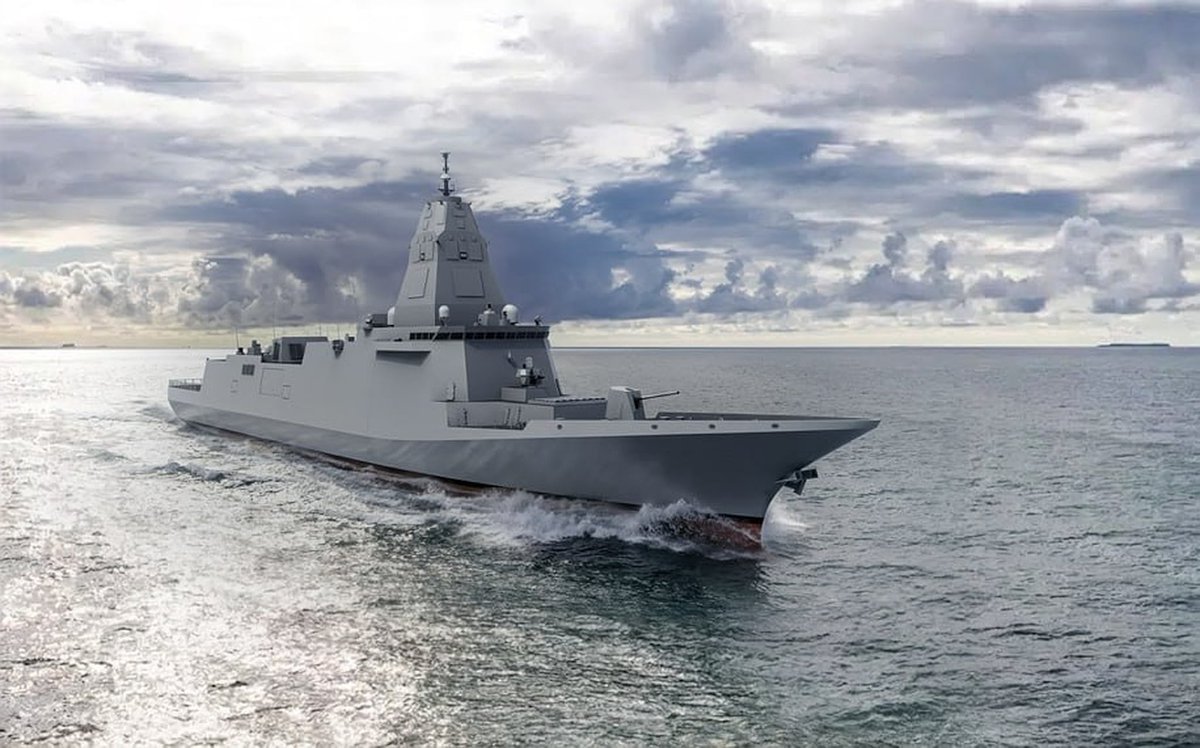
Hanwha Ocean has received a contract to build the lead KDDX destroyer for the Republic of Korea Navy (ROKN), according to an announcement issued on 31 July 2026.
The Defense Acquisition Program Administration (DAPA) signed the Korean next-generation destroyer contract, worth KRW837.9 billion (US$587 million), the same day.
The vessel, the first of six in the class, is scheduled to be delivered to the ROKN in 2032. The warships will perform air defence, anti-surface and anti-submarine warfare.
This contract enables detailed design, and then construction, to proceed. In a regulatory filing on 2 July, Hanwha Ocean had disclosed that it had been selected as preferred bidder for this phase of the KDDX programme.
The KDDX will displace approximately 6,500 tonnes, and they will replace the KDX-I destroyer class. Importantly, the KDDX will boast a high rate of indigenous weapons and sensors.
These include a multifunction phased array radar, missiles (such as the KSAM-II) launched from both KVLS-I and KVLS-II launch systems, its sonar and combat management system. It is thus described as a “Korean Aegis destroyer”. The class is also expected to have an integrated mast and integrated electric propulsion system.
The KDDX was approved as a KRW7.8 trillion project in 2018, and HD Hyundai Heavy Industries (HHI) completed the basic design in December 2023. However, the project then suffered a two-year delay after a spat between shipbuilding competitors HD HHI and Hanwha Ocean.
This involved a case of industrial espionage by HD HHI dating back a decade, as both shipbuilders vied for the right to perform the KDDX programme’s detailed design and construction. To resolve the issue, DAPA finally conducted a competitive tender process that kicked off in February, and this was duly won by Hanwha Ocean.

There is concern that the evolution of naval warfare – such as the rising drone threat and North Korea developing more capable destroyers – has made some aspects of the KDDX design outdated. It is therefore important that the detailed design be updated.
DAPA has mentioned the need for effective counter-drone systems against swarms and individual drones. This will likely required layered defences incorporating missiles, cannons, electronic warfare and other countermeasures.
DAPA also requires the need for 5G-based wireless, integrated communications. It also wants to use digital-twin technology for the ship’s design and construction.
Jeong Jae-jun, head of DAPA’s Current Capabilities Program Agency, commented, “The Korean destroyer programme is a national project that brings together the country’s highest level of shipbuilding and defence industry capability. We will examine a range of options for taking the programme forward, including the follow-on ships, so that a vessel optimised for the future operational environment can be brought into service on time.”
Orders for the remaining ships could start being placed from late 2028, with the ROKN hoping that all will be delivered by 2036 as originally scheduled.
by Gordon Arthur
